1. What Defines Japanese Green Tea
At its simplest, a Japanese green tea is any Camellia sinensis leaf grown in Japan and processed to prevent oxidation. In practice, the overwhelming majority—around 98 per cent of Japan's tea output—undergoes steam fixation rather than the pan-firing or oven-drying common in China. The steaming lasts anywhere from twenty seconds (asamushi, light steam) to two minutes (fukamushi, deep steam), depending on the style and the producer's house method.
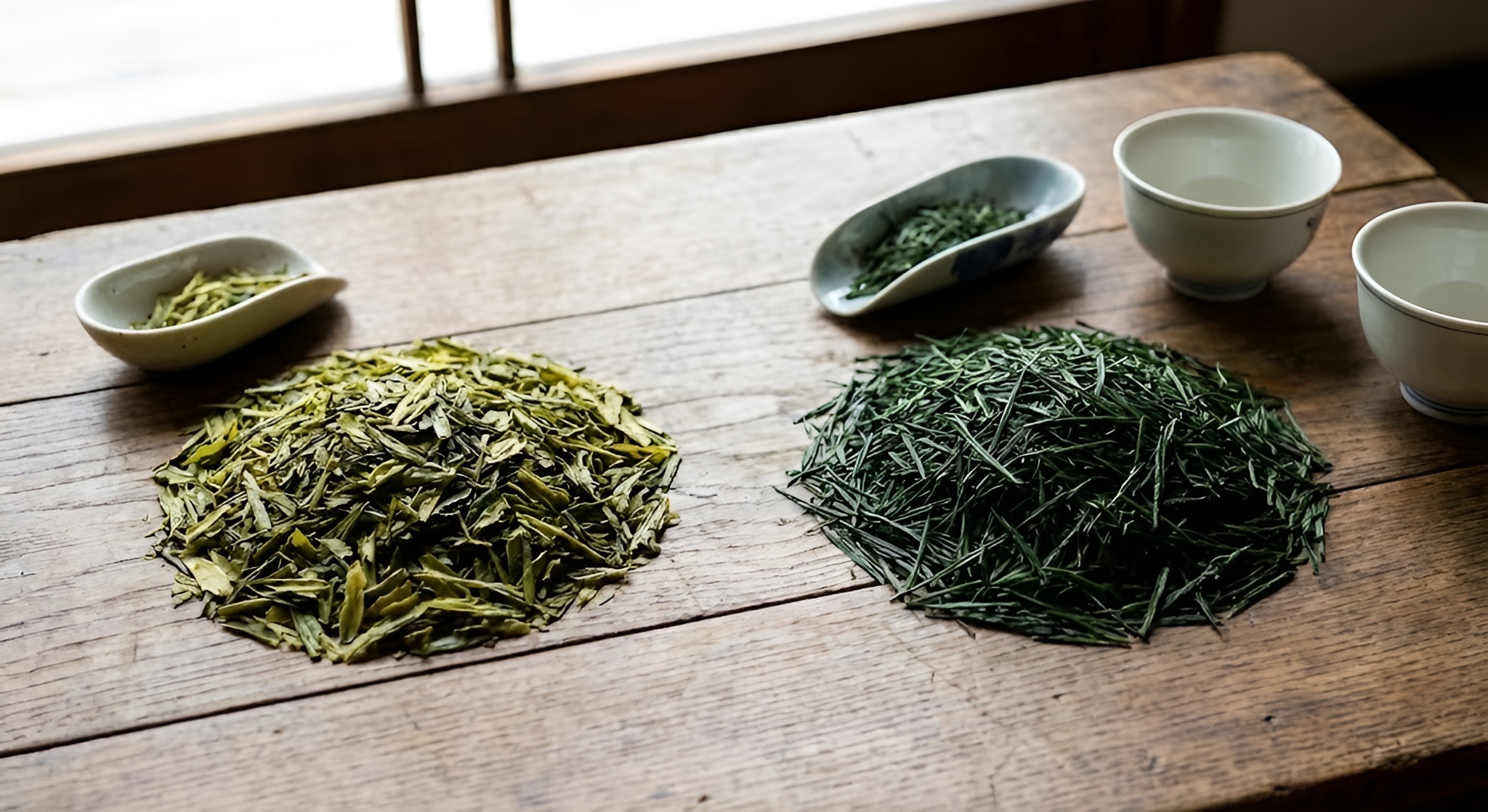
This reliance on steam has technical consequences. The moist heat ruptures cell walls more thoroughly than dry heat, releasing chlorophyll, amino acids and soluble solids into the liquor quickly. The result is a cup that is bright green, intensely vegetal—often described as grassy, marine or even reminiscent of edamame—and prone to bitterness if water is too hot or steeping too long. The leaf itself emerges a deep, almost jade green and is usually rolled into fine needles, though some styles remain more open or are cut. Understanding this foundational difference in processing method is the key to appreciating why Japanese teas taste and behave the way they do.
2. Sencha: The Everyday Standard
Sencha accounts for roughly three-quarters of Japan's domestic tea consumption. It is made from the first or second flush of unshaded, full-sun leaves, typically plucked in late April or May. After steaming, the leaves are rolled, shaped and dried in a sequence of heated drums and conveyors, producing the characteristic dark-green needles sold in vacuum-sealed foil packets.
Flavour varies with cultivar, region and steaming depth, but expect a balance of sweetness, astringency and umami. Yabukita, the dominant cultivar, offers reliability and moderate vegetal notes; smaller-production cultivars such as Saemidori or Okumidori can be sweeter or more floral. Water temperature is critical: 70 °C is a safe starting point; hotter water extracts catechins faster and risks a harsh, metallic edge. A typical brew uses 3 g of leaf per 150 ml, steeped for sixty to ninety seconds, and most sencha will yield two or three infusions before flavour fades.
In the UK market, sencha is widely available but quality varies. Supermarket packets are often stale or blended from unspecified origins; seek out importers who name the prefecture, harvest date and cultivar. Shizuoka and Kagoshima are the two largest producing regions, each with distinct microclimates and stylistic traditions.
Temperature Defines the Cup
Sencha demands 70 °C water—hotter brewing extracts excessive astringency and masks the delicate balance of sweetness, umami and vegetal character that distinguishes Japan's everyday tea.
3. Gyokuro: Shaded Luxury and Umami Depth
If sencha is the daily drinker, gyokuro—literally 'jade dew'—is the connoisseur's choice. The defining intervention is shade cultivation: roughly three weeks before harvest, bamboo or synthetic mesh screens are erected over the tea garden, blocking 80–95 per cent of direct sunlight. Photosynthesis continues under diffuse light, but chlorophyll production ramps up to capture every available photon, and the plant reduces the conversion of L-theanine (an amino acid) into catechins (astringent polyphenols). The result is a leaf unusually high in theanine and chlorophyll, low in catechins, and capable of producing a liquor that is sweet, umami-rich, almost brothlike, and startlingly green.
Gyokuro is typically brewed cooler and slower than sencha—60 °C or even 50 °C for the first infusion, steeped for two minutes or more—to coax out sweetness without triggering astringency. The spent leaves swell to reveal whole, tender shoots; some aficionados eat them with a little soy sauce and citrus. Price reflects the labour of shading, the reduced yield (shade-grown plants produce fewer shoots), and the prestige of historical growing regions, especially Uji in Kyoto prefecture.
For UK buyers, genuine gyokuro is not cheap; expect to pay £15–30 per 50 g from reputable importers. Beware vague labels: if the packet does not specify shading duration, region or cultivar, it may be an upgraded sencha rather than true gyokuro.
4. Bancha: Later Harvest, Lighter Wallet
Bancha is the thrifty sibling. It is made from the same plants as sencha but harvested later in the season—typically the third or fourth flush, from summer into autumn—or from larger, more mature leaves left behind during the spring plucking. These older leaves contain less amino acid, more fibre and a higher proportion of catechins, yielding a lighter, more astringent and less complex cup.
Processing mirrors sencha: steaming, rolling, drying. The result is a pale yellow-green liquor with a clean, sometimes slightly woody flavour and minimal sweetness. Bancha is the tea of Japanese home kitchens and izakayas, brewed hot and drunk throughout the day without ceremony. It pairs well with food—its lower tannin load means it seldom clashes—and can be infused at higher temperatures (75–80 °C) without turning harsh.
In the UK, bancha is less common than sencha but occasionally appears in health-food shops or Japanese grocery importers. It is an economical introduction to Japanese tea, though it will not convey the umami complexity of first-flush sencha or the sweetness of gyokuro.
Older Leaves, Different Economics
Bancha's later harvest and mature leaves mean less amino acid, more catechins and a lighter, more astringent cup—making it the workhorse tea of Japanese homes and restaurants, not a compromise but a different tool.
5. Hojicha: Roasted, Mellow and Caffeine-Light
Hojicha breaks the mould: it starts as bancha or sometimes sencha, then undergoes high-temperature roasting—around 200 °C—in a porcelain pot or rotating drum until the leaves turn reddish-brown and develop a toasted, almost caramelised aroma. The roasting drives off much of the caffeine and catechins, leaving a tea that is low in bitterness, gentle on the stomach, and often recommended for children or evening drinking.
The flavour is distinctly nutty and woody, with notes of roasted grain, cocoa or even coffee, depending on roast depth. Because the base leaf is typically lower-grade, hojicha is affordable and forgiving; it tolerates boiling water and long steeping without turning astringent. Some producers use stem material (kukicha) as the base, which adds a subtle sweetness.
Hojicha has gained popularity in the UK over the past few years, partly thanks to its approachability—it tastes less 'grassy' than unroasted greens—and partly because it suits lattes and iced preparations. Look for vacuum-sealed packets with a recent roast date; the volatile aromatics fade quickly once opened.
6. Genmaicha: Tea Meets Toasted Rice
Genmaicha is a blend, typically equal parts bancha or sencha and toasted rice (genmai)—usually a mix of brown rice kernels and popped grains that resemble tiny popcorn. The rice lends a warm, toasted, slightly sweet flavour that softens the tea's astringency and adds body. The resulting cup is comforting, nutty and remarkably food-friendly, which explains its popularity in Japanese restaurants and its pairing with sushi.
Genmaicha is often brewed hotter (80 °C) and shorter (thirty to sixty seconds) than pure sencha, because the rice component extracts quickly. Caffeine and catechin levels are diluted by the rice, making genmaicha another evening-friendly option. Some premium versions use gyokuro or high-grade sencha as the base, but the classic style is humble bancha plus rice—a drink with roots in post-war frugality that has since become a beloved everyday staple.
UK availability is good; many online Japanese tea specialists stock genmaicha, and it occasionally appears in supermarket 'world food' aisles. Check the ingredient list: some budget blends use flavouring rather than real toasted rice.
Rice Dilutes Caffeine and Tannin
The toasted rice in genmaicha doesn't just add nutty flavour; it dilutes caffeine and catechin levels, making this blend gentler and well-suited to evening drinking or pairing with rich food.
7. Processing and Chemistry: Why Steaming Matters
The choice to steam rather than pan-fire is not merely stylistic; it has measurable effects on chemistry and flavour. Steam delivers heat more evenly and rapidly than a hot pan, denaturing the polyphenol oxidase enzymes within seconds and locking in chlorophyll. The moist environment also leaches water-soluble compounds—amino acids, sugars, catechins—toward the leaf surface, which is why Japanese greens often appear darker and brew faster than Chinese greens of comparable grade.
Shading, the technique behind gyokuro and matcha, works by manipulating the plant's light-stress response. Under reduced light, Camellia sinensis upregulates chlorophyll synthesis and accumulates L-theanine, which it would otherwise convert into catechins under full sun. Theanine contributes to the characteristic umami or brothlike quality and is also associated with a calming, focused mental state when consumed—one reason gyokuro is sometimes recommended as an alternative to coffee. The science here is not conclusive, but plausible mechanisms exist and are consistent with traditional accounts.
Finally, roasting (as in hojicha) triggers Maillard reactions and caramelisation, creating new flavour compounds—pyrazines, furans—while volatilising caffeine and catechins. The tea becomes chemically simpler but sensorially richer, a transformation akin to the difference between raw and roasted coffee beans.
8. Buying Japanese Green Tea in the UK: What to Look For
Japanese tea was once a niche import, but the UK market has matured considerably. Specialist online retailers now offer single-origin lots with transparent sourcing: look for listings that specify prefecture (Shizuoka, Kagoshima, Uji, Kyoto), cultivar (Yabukita, Saemidori, Asatsuyu), flush (first, second) and processing notes (asamushi, fukamushi). Harvest dates matter—Japanese greens are at their best within a year of production—so check the packet or ask the vendor.
Price is a reasonable proxy for quality, but context helps. Sencha from a good producer might cost £8–15 per 50 g; gyokuro can easily double or triple that; bancha, hojicha and genmaicha are typically under £8. Avoid heavily discounted 'gyokuro' or any tea that lists only 'Japan' as its origin—it is likely commodity-grade or mislabelled. Vacuum-sealed foil packets with nitrogen flushing preserve freshness best; reseal carefully after opening and store in a cool, dark cupboard.
If you are new to Japanese tea, start with a mid-range sencha and a packet of genmaicha or hojicha. Brew at 70 °C, steep for sixty seconds, and taste without milk or sugar. Once you have a feel for the vegetal, umami baseline, try a small quantity of gyokuro to experience the effect of shading. The learning curve is steep but rewarding, and the depth of flavour available—even in a simple, well-made sencha—will quickly justify the care you take with water temperature and timing. For those interested in the broader cultural and historical context, exploring the formal tea ceremony or the aesthetics of the tea room can deepen appreciation further, though it is not a prerequisite for everyday enjoyment.
Harvest Date Trumps Marketing
Japanese greens are best within a year of production, so always check the harvest date on the packet or ask your vendor—provenance details like prefecture, cultivar and flush are reliable signals of a serious supplier.



Comments