1. What Qualifies As Iced Tea
Iced tea is simply brewed tea served cold, typically over ice, though the brewing method—hot or cold extraction—and the addition of fruit, herbs, sweeteners, or dairy can vary enormously. The term encompasses everything from unsweetened chilled earl grey to heavily sweetened peach-flavoured blends, fruit-infused rooibos punches, and milk-based iced matcha lattes. What unites them is the use of Camellia sinensis leaves (or, in the case of tisanes, herbal substitutes like rooibos or chamomile) steeped in water and subsequently chilled or poured over ice.
In the UK, iced tea has historically been a niche proposition—our climate rarely demanded it, and the afternoon-tea tradition centred on hot pots. That changed during the 2018 and 2022 heatwaves, when supermarket sales of ready-to-drink iced tea surged by more than 40 per cent. By June 2026, with consecutive years of warmer summers and a growing interest in low-alcohol garden-party alternatives, home-brewed iced tea has moved from novelty to staple. The recipes in this guide reflect that shift: they're designed for real entertaining, with attention to visual presentation, flavour balance, and the practicalities of serving chilled drinks outdoors in British heat.
2. Hot-Brew Versus Cold-Brew Methods
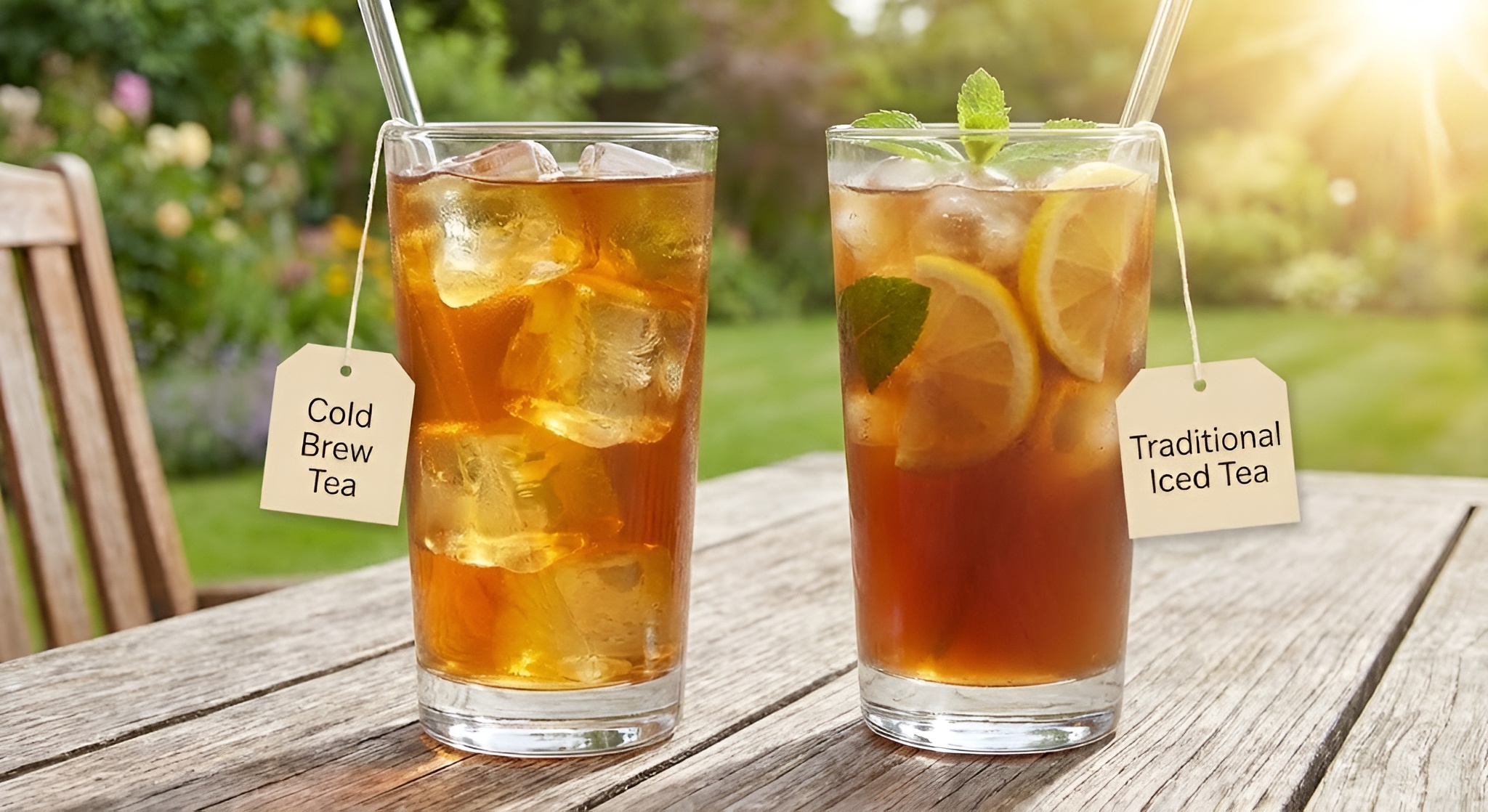
The cold-brew versus traditional iced tea debate hinges on extraction chemistry. When you steep tea in near-boiling water, you rapidly dissolve caffeine, catechins, and volatile aromatics, but you also extract astringent tannins—particularly from black and some green teas. Chilling that hot brew quickly (by pouring over ice or refrigerating) locks in brightness and aromatic complexity, yielding a drink with pronounced flavour and a slight tannic grip. This method suits robust black teas, strongly scented blends like earl grey, and most herbal infusions, which benefit from heat to release essential oils.
Cold-brewing—steeping tea in room-temperature or chilled water for twelve to twenty-four hours—extracts polyphenols and caffeine more slowly and selectively, leaving behind much of the astringency. The result is a smoother, subtly sweet liquor with lower perceived bitterness, ideal for delicate green teas, white teas, and high-quality oolongs. Cold-brew also tends to have slightly lower caffeine content (typically 20–30 per cent less than an equivalent hot brew) and a gentler mouthfeel. For batch preparation, cold-brew offers the advantage of requiring no active attention once you've combined tea and water; you simply refrigerate overnight and strain in the morning. Both methods appear in the recipes below, chosen to maximise each tea's natural character.
Heat Unlocks Aroma, Cold Smooths Tannin
Hot-brewing extracts vibrant flavour and aromatics quickly but pulls astringent tannins; cold-brewing over 12–24 hours yields a smoother, less astringent drink ideal for delicate greens and whites.
3. Classic Earl Grey Lemonade (Hot-Brew)
This recipe pairs the bergamot-scented brightness of earl grey with freshly squeezed lemon juice and a modest amount of honey, producing a refreshing, floral-citrus drink that reads as both sophisticated and thirst-quenching. Use a good-quality loose-leaf earl grey—avoiddusty supermarket bags, which turn bitter when over-steeped—and brew at 95–100°C for exactly four minutes to capture the bergamot oil without excessive tannin. For a 2-litre batch, steep 20g of earl grey in 1.5 litres of just-boiled water, then immediately strain into a heatproof jug and stir in 100ml of fresh lemon juice (roughly three lemons) and 60–80g of runny honey, adjusting to taste. Pour over ice to chill rapidly, or refrigerate for at least one hour.
Calorie count sits at approximately 35 kcal per 250ml with 70g honey for the full batch; omit the honey for a near-zero-calorie version, relying on the natural sweetness of bergamot and the tartness of lemon for balance. This drink scales beautifully: double the quantities for a large garden party, and consider garnishing each glass with a thin lemon wheel and a sprig of fresh mint. The bright, amber-gold colour and the unmistakable earl grey aroma make it a visually appealing centrepiece for outdoor entertaining, particularly when served in a large glass dispenser with plenty of ice and sliced citrus floating on top.
4. Strawberry & Basil Green Tea (Cold-Brew)
June brings the peak of British strawberry season, and this cold-brew green tea recipe showcases their natural sweetness alongside the peppery, slightly anise notes of fresh basil. For a 2-litre batch, combine 15g of a high-quality Chinese green tea (a delicate long jing or bi luo chun works beautifully) with 2 litres of filtered cold water in a large jug. Hull and halve 300g of ripe strawberries, bruise eight to ten large basil leaves to release their oils, and add both to the jug. Refrigerate for 16–20 hours, then strain through a fine-mesh sieve, pressing gently on the fruit to extract flavour without forcing pulp into the liquid.
The finished drink is pale jade-green, lightly fruity, and remarkably refreshing, with a calorie count of roughly 25 kcal per 250ml—almost all from the strawberries, as the tea itself contributes negligible energy. Serve over crushed ice, garnished with a fresh strawberry slice and a small basil leaf. The cold-brew extraction keeps the green tea smooth and non-bitter, allowing the fruit and herb to shine without competing with astringency. This recipe is particularly popular with guests who find traditional iced tea too tannic or who prefer naturally low-caffeine options; green tea cold-brewed contains roughly 15–20mg caffeine per 250ml, compared to 40–50mg in a hot-brewed black iced tea.
Bruise Basil to Release Oils
Gently bruise fresh basil leaves before adding them to the cold-brew jug—this simple step releases the peppery, anise-like essential oils that make this pale jade infusion sing alongside ripe June strawberries.
5. Elderflower & White Peony (Cold-Brew)
White peony (bai mu dan) is a lightly oxidised white tea from Fujian, prized for its delicate, honeyed character and low astringency—qualities that make it ideal for cold-brewing. Pairing it with elderflower cordial creates a quintessentially British summer drink, floral and elegant without excessive sweetness. For 2 litres, steep 12g of white peony in cold filtered water for 18–24 hours in the refrigerator, then strain and stir in 80–100ml of a good elderflower cordial (Belvoir or Bottle Green are widely available and use real elderflower extract). Taste and adjust—some cordials are sweeter than others—aiming for a subtle floral note rather than syrupy dominance.
Calorie content averages 40 kcal per 250ml with 90ml cordial for the batch; you can halve the cordial and add a squeeze of fresh lime to reduce sugar while maintaining complexity. The resulting liquor is pale straw-yellow, with a perfumed nose of elderflower and a smooth, gently sweet palate. Serve in tall glasses over ice, garnished with a thin lime wheel or a few fresh elderflower sprigs if you can forage them (they're abundant in UK hedgerows in early June, though check identification carefully and avoid roadside plants). This drink pairs beautifully with light summer foods—cucumber sandwiches, smoked salmon blinis, or strawberry tarts—and is a graceful alternative to prosecco for guests who prefer non-alcoholic options.
6. Raspberry Rooibos Punch (Hot-Brew)
Rooibos, the South African red bush tisane, is naturally caffeine-free, low in tannin, and has a slightly sweet, earthy flavour that pairs exceptionally well with tart summer berries. This hot-brew punch combines rooibos with fresh raspberries, a hint of vanilla, and optional light sweetening, producing a deep ruby-red drink that looks spectacular in a large glass bowl or dispenser. For 2.5 litres, steep 25g of good-quality rooibos in 2 litres of boiling water for 6–8 minutes (rooibos is forgiving and won't turn bitter with longer steeping), then strain into a heatproof jug. Gently muddle 250g of fresh raspberries with 50g of caster sugar and half a teaspoon of vanilla extract, add to the hot tea, stir well, and refrigerate until thoroughly chilled.
Strain again before serving if you prefer a clear drink, or leave the fruit in for a more rustic presentation. Calorie count is approximately 30 kcal per 250ml with the suggested sugar; omit it entirely for a tart, near-zero-calorie version, or substitute with a non-nutritive sweetener if desired. The punch scales brilliantly for large gatherings—triple the recipe for a barbecue crowd—and the vibrant colour and fruity aroma make it a hit with both adults and children. Garnish each glass with a skewer of fresh raspberries or a sprig of mint, and consider adding a splash of soda water just before serving for a lightly sparkling finish.
Rooibos Won't Turn Bitter
Because rooibos is low in tannin, you can steep it for 6–8 minutes—or longer—without risking the bitterness that plagues over-brewed black or green teas, making it foolproof for punch.
7. Iced Jasmine Oolong with Peach (Cold-Brew)
Jasmine-scented oolong combines the floral perfume of jasmine pearls with the rounded, slightly creamy body of a lightly oxidised oolong, creating a base that pairs beautifully with ripe summer peaches. Cold-brewing preserves the delicate jasmine aroma and prevents the oolong from developing any astringency. For 2 litres, combine 15g of jasmine oolong pearls (widely available from UK specialists like Postcard Teas or What-Cha) with cold filtered water and refrigerate for 16–20 hours. Meanwhile, blanch two ripe peaches in boiling water for thirty seconds, peel, stone, and slice thinly. After straining the tea, add the peach slices and refrigerate for a further hour to allow the fruit to infuse gently.
The finished drink is pale gold with a heady jasmine nose and a subtle peach sweetness, clocking in at roughly 20 kcal per 250ml from the fruit alone—no added sugar needed. Serve over ice in wide-mouthed glasses to showcase the floating peach slices, and consider a light dusting of edible flowers (cornflowers or borage) for a midsummer celebration. This recipe is particularly elegant for afternoon garden parties where presentation matters; the jasmine oolong offers enough complexity to satisfy serious tea drinkers whilst remaining approachable for guests unfamiliar with oolong. If fresh peaches are unavailable or underwhelming, substitute with ripe nectarines or apricots, adjusting the quantity to taste.
8. Mint & Lime Gunpowder Green (Hot-Brew)
Inspired by North African mint tea traditions but adapted for chilled service, this recipe uses Chinese gunpowder green tea—a tightly rolled green tea with a robust, slightly smoky character—paired with fresh mint and lime for a bracingly refreshing drink. For 2 litres, steep 18g of gunpowder green in 1.8 litres of water at 80°C for 3 minutes (boiling water will scorch the tea and produce bitterness), then strain into a jug. Bruise a large handful (roughly 30g) of fresh mint leaves to release their oils, add to the hot tea along with the zest of two limes and 60ml of fresh lime juice, and stir in 60–70g of white sugar. Chill rapidly by pouring over ice or refrigerating for at least an hour.
Calorie count sits at approximately 50 kcal per 250ml with the suggested sugar; reduce to 30–40g for a tarter, lower-calorie version, or omit entirely and rely on the mint's natural sweetness and the lime's brightness for balance. The drink is pale green-gold, intensely aromatic, and pairs exceptionally well with spicy or grilled foods—think Moroccan tagines, grilled lamb, or spicy vegetable skewers at a garden barbecue. Garnish each glass with a fresh mint sprig and a lime wheel, and serve over plenty of ice to maintain the bracingly cold temperature that makes this drink so refreshing in June heat. This recipe is also a good candidate for scaling up and serving from a large drinks dispenser, as the bold flavours hold up well to slight dilution from melting ice.
Keep Water Below 80°C for Gunpowder
Boiling water scorches gunpowder green and turns it bitter; steep at 80°C for just 3 minutes to preserve its smoky character and avoid astringency in this mint-and-lime cooler.
9. Buying, Storing, and Batch-Making Tips for UK Summers
Sourcing quality tea and fresh ingredients in the UK has become significantly easier over the past five years, with both supermarkets and specialist online retailers stocking a far wider range of whole-leaf teas. For the recipes above, prioritise loose-leaf or pyramid-bag formats over standard teabags: the larger leaf grade yields cleaner flavour and fewer bitter tannins, essential when brewing in large batches or cold-steeping for many hours. Reliable UK sources include What-cha, Postcard Teas, Lalani & Co, and Comins Tea House for specialist varieties; supermarkets like Waitrose and Sainsbury's now stock decent loose-leaf earl grey, green, and rooibos in their premium ranges, suitable for everyday batches.
For fresh ingredients, prioritise British-grown strawberries, raspberries, and herbs in June 2026—they're at peak flavour and significantly cheaper than imported alternatives. Farmers' markets and greengrocers often stock elderflower cordial from local producers, which tends to be less sweet and more authentically floral than mass-market brands. When batch-making, invest in a large (3–5 litre) glass or BPA-free plastic jug with a lid for cold-brewing, and a fine-mesh strainer or nut-milk bag for easy straining. Store brewed iced tea in the refrigerator for up to three days, though flavour is brightest within 24 hours; add ice, garnish, and any sparkling water just before serving to prevent dilution and maintain visual appeal. For garden parties, consider freezing some of the brewed tea in ice-cube trays and using those cubes in your serving jug—they'll keep the drink cold without diluting the flavour as they melt.



Comments