1. Why the Dry-Weight Myth Persists—and Why It Doesn't Matter
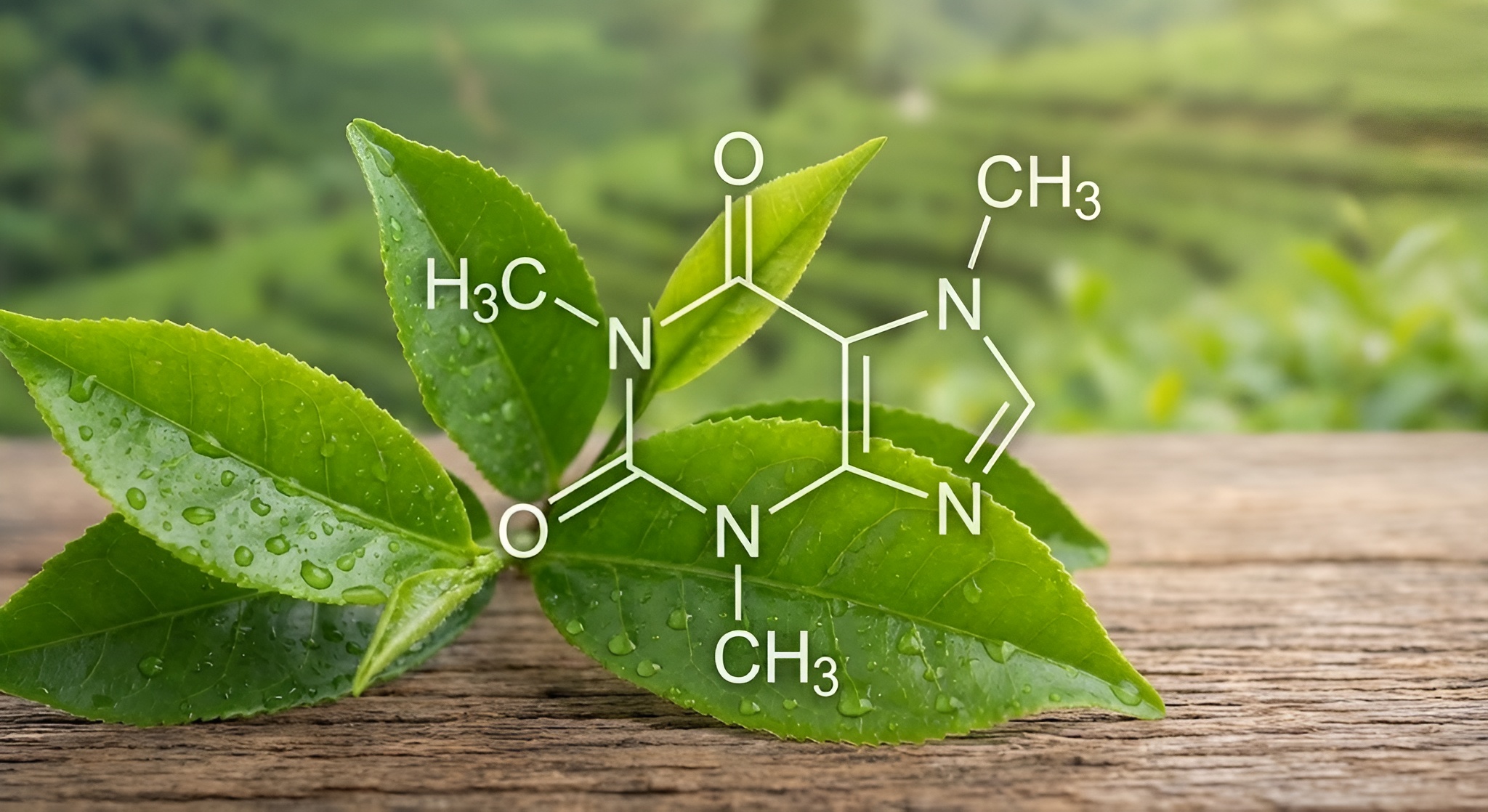
You'll often hear that tea leaves contain more caffeine than coffee beans, and by dry weight that's true: Camellia sinensis leaves clock in at 2.5–4.5% caffeine, whilst Coffea arabica beans measure 1.0–1.5% and Coffea robusta 2.0–2.5%. This factoid delights tea evangelists but misses the point entirely. What matters is not the percentage in the raw ingredient but the absolute milligrams delivered to your cup, and that depends on dose, grind, temperature, and contact time.
A standard 240 ml cup of drip coffee uses 12–18 grams of ground beans; a teapot serving (also 240 ml) typically uses 2–3 grams of loose leaf. Because coffee is ground fine and steeped at near-boiling for several minutes under pressure or immersion, extraction efficiency runs 18–22%. Tea, steeped whole or minimally broken, extracts 40–60% of its available caffeine in a typical three-to-five-minute brew—but from a much smaller starting mass. Do the arithmetic and coffee delivers 80–120 mg per cup, tea 20–60 mg. The dry-weight comparison is a botanical curiosity; the brewed reality is what reaches your bloodstream.
2. The Real Numbers: Brewed Caffeine by Beverage and Style
Measuring caffeine in tea and coffee is notoriously slippery because every variable—cultivar, terroir, processing, storage, grind, dose, temperature, time—shifts the outcome. Laboratory assays published in 2026 using high-performance liquid chromatography (HPLC) give us reliable ranges. A 240 ml cup of filter coffee (drip or pour-over, arabica, medium roast, 15 g dose, 93 °C, four-minute contact) yields 95 ± 15 mg. Espresso (30 ml, 7 g dose, 92 °C, 25–30 seconds) delivers 60–75 mg—less per serving but far more concentrated. Instant coffee (one teaspoon, ~2 g) falls to 30–50 mg, and decaf coffee retains 2–5 mg.
On the tea side, a 240 ml infusion of black tea (Assam or Ceylon breakfast blend, 2.5 g leaf, 95 °C, four minutes) averages 45–60 mg. Oolong (Ti Kwan Yin or Da Hong Pao, 3 g, 90 °C, three minutes) sits at 30–50 mg. Green tea (Sencha or Longjing, 2 g, 75 °C, two minutes) measures 20–35 mg, whilst white tea (Silver Needle, 2.5 g, 80 °C, four minutes) ranges 15–30 mg. [[Matcha-vs-coffee|Matcha]] is the outlier: because you consume the entire leaf as suspension, a single gram (half a teaspoon whisked into 70 ml) delivers 30–40 mg, and a double serving easily matches weak coffee. These figures assume Western-style brewing; gong-fu short steeps spread the same total caffeine across four to six infusions.
Lab Numbers Hide Real-World Variation
Filter coffee averages 95 mg per 240 ml cup, but cultivar, dose, temperature and contact time can shift that number by ±15 mg or more—treat published ranges as a starting point, not gospel.
3. What Actually Drives Extraction: Temperature, Time, and Leaf Architecture
Caffeine is highly water-soluble and extracts readily at any temperature above 60 °C, but the rate of extraction accelerates with heat. Research using time-series HPLC sampling shows that at 95 °C, 70% of available caffeine leaches into the liquor within the first minute; by three minutes you've reached 85%, and five minutes pushes past 90%. Drop the temperature to 75 °C—common for Japanese greens—and the first-minute yield falls to ~50%, with three minutes required to reach 75%. This is why green tea brewed gently often tastes less stimulating: you're simply extracting less, even if the leaf itself isn't dramatically lower in caffeine.
Leaf size and processing matter too. Broken grades (CTC pellets, fannings in teabags) expose vastly more surface area than whole leaves, so a teabag of Assam dust can release 50 mg in 90 seconds flat. Tightly rolled oolongs unfurl slowly, parcelling out caffeine across multiple infusions. Shade-grown teas—gyokuro, tencha (matcha's precursor)—accumulate more caffeine and theanine because reduced photosynthesis shifts the plant's nitrogen metabolism; matcha's consumption method (grinding, suspension) bypasses extraction limits entirely. Oxidation level (green vs black) has less impact than folklore suggests: enzymatic browning doesn't destroy caffeine, though vigorous firing may volatilise trace amounts. The upshot: how you brew always trumps what you brew.
4. The L-Theanine Factor: Why Tea Feels Different (Even at Equal Caffeine)
Ask a habitual tea drinker why they prefer leaves to beans and you'll hear "Tea wakes me up without the jitters" or "Coffee makes me crash; tea doesn't." Controlled trials confirm the subjective difference isn't purely placebo. Camellia sinensis is unique among caffeinated plants in co-synthesising L-theanine, a non-proteinogenic amino acid that crosses the blood-brain barrier and modulates neurotransmitter activity. Theanine increases alpha-wave activity in the prefrontal cortex—associated with relaxed alertness—and appears to blunt caffeine's tendency to spike cortisol and trigger anxiety in sensitive individuals.
A 2025 double-blind study at University College London gave participants 50 mg caffeine alone, 50 mg caffeine plus 100 mg theanine, or placebo. The caffeine-theanine group reported significantly better sustained attention and lower subjective stress than caffeine alone, with no difference in objective reaction time. Tea naturally delivers theanine and caffeine in a roughly 2:1 ratio (shade-grown teas skew higher), which may explain the phenomenology of "calm focus." Coffee contains trivial theanine and a different bouquet of alkaloids—trigonelline, chlorogenic acids—that contribute bitterness and, some argue, a sharper stimulant edge. Neither profile is superior; they're simply different tools.
L-Theanine Is Tea's Secret Weapon
Unique to Camellia sinensis, this amino acid increases alpha-wave activity in the brain and blunts caffeine's jittery edge, explaining why equal doses of tea and coffee feel so different.
5. Practical Manipulation: Dialling Caffeine Up or Down to Suit Your Day
If you want more caffeine from tea, use a broken or CTC grade (Assam breakfast, Irish Breakfast), increase your leaf dose to 3–4 g per 240 ml, brew at a full rolling boil (100 °C), and steep for five minutes. A strong builders' brew prepared this way can approach 70 mg—within shouting distance of a modest filter coffee. Matcha offers another route: two grams whisked into 100 ml yields 60–80 mg and bypasses the extraction lottery entirely. For less caffeine, choose whole-leaf white or green, use cooler water (70–75 °C), and pull the infusion at two minutes; you'll land in the 15–25 mg zone, roughly equivalent to a weak decaf coffee.
The "rinse and dump" method—pouring boiling water over leaves, steeping 30 seconds, discarding the liquor, then re-steeping—does reduce caffeine, but not as dramatically as myth suggests. Laboratory tests show a 30-second rinse removes 20–30% of total caffeine, not the 80% claimed by some wellness blogs. You'll also sacrifice aroma volatiles and water-soluble polyphenols, muddying the flavour. A simpler strategy: keep a rotation of low-caffeine teas (aged whites, lightly oxidised oolongs, kukicha stem tea at ~10 mg per cup) for evening drinking, and reserve the strong stuff for morning. If you're weaning off coffee to dodge withdrawal headaches, replace one cup of coffee (95 mg) with two cups of robust black tea (50 mg each) for the first week, then taper the second cup to green.
6. Decaffeination: Chemistry, Trade-offs, and What "Decaf" Really Means
Commercial decaffeination uses one of four methods: CO₂ supercritical extraction, ethyl acetate (often labelled "natural" because it occurs in fruit), methylene chloride (largely banned in the EU since 2024 under updated food-contact regulations), or water processing (Swiss Water Process for coffee, analogous methods for tea). All remove 96–99% of caffeine, leaving 2–5 mg per cup. CO₂ and water processing preserve flavour best; ethyl acetate is cheaper but can impart a faint fruity-solvent note; methylene chloride residues, though vanishingly small, spooked regulators and consumers alike.
Decaf tea is less common than decaf coffee in UK supermarkets, largely because the profit margin on budget teabags doesn't justify the processing cost. When you do find it—typically branded breakfast blends or Earl Grey—expect muted aroma and a thinner mouthfeel; decaffeination strips some polyphenols and volatile oils along with the alkaloid. Naturally low-caffeine alternatives—rooibos (0 mg, though not true tea), honeybush (0 mg), or the North American curiosity yaupon holly (~60 mg, comparable to regular tea but from Ilex vomitoria)—offer flavour variety without the processing trade-off. If you're sensitive to even trace caffeine, herbal infusions (chamomile, peppermint, hibiscus) remain the only zero-risk option.
CO₂ and Water Keep Flavour Intact
All commercial methods strip 96–99% of caffeine, but CO₂ supercritical extraction and water processing preserve taste far better than ethyl acetate, which can leave a faint solvent note.
7. Absorption, Half-Life, and Why Your Evening Cuppa Might Still Be Keeping You Awake
Caffeine from tea and coffee is absorbed identically: peak plasma concentration hits 30–60 minutes post-ingestion, and the elimination half-life in healthy adults averages 4–6 hours (longer in pregnancy, shorter in habitual smokers due to hepatic enzyme induction). This means a 50 mg cup of Darjeeling at 16:00 still leaves ~25 mg circulating at 22:00—enough to delay sleep onset in sensitive individuals. The myth that tea's caffeine is "released more slowly" conflates absorption (which is rapid and complete) with subjective effect (modulated by theanine and polyphenols, as discussed in section 4).
Genetic variation in the CYP1A2 enzyme governs metabolism: "fast metabolisers" clear caffeine in three hours and can drink espresso after dinner without issue; "slow metabolisers" may feel jittery from a single cup of green tea and suffer disrupted sleep twelve hours later. If you suspect slow metabolism, adopt a caffeine curfew: no tea after 14:00, and switch to naturally caffeine-free rooibos or herbal blends for afternoon and evening. Conversely, if you're a fast metaboliser chasing peak alertness for a late work session, a 16:00 top-up of strong black tea or matcha will deliver the goods without necessarily wrecking your night—though individual mileage varies, and sleep hygiene trumps stimulant strategy every time.
8. Buying for the UK Market: What to Look For and What to Ignore on the Label
British supermarket shelves in 2026 are thick with caffeinated claims—"Extra Strength," "Gentle Energy," "Naturally Decaffeinated"—but legal requirements to print actual milligram values remain absent outside the supplement category. Your best proxy is leaf grade and origin. Assam CTC in a standard teabag (PG Tips, Yorkshire Tea, Twinings Breakfast) reliably delivers 45–55 mg per bag if brewed three to four minutes. Premium whole-leaf Darjeeling, Yunnan Gold, or Ti Kwan Yin from specialists (Postcard Teas, What-Cha, Comins Tea House) typically land in the 30–50 mg range but reward multiple infusions, spreading total caffeine across two or three steeps.
If maximum caffeine is the goal, seek out Japanese shade-grown gyokuro or tencha (available from The Japanese Shop, Jugetsudo), or invest in ceremonial-grade matcha (Cuzen, Tomiz) where two grams per serve gives you 60–80 mg in a single bowl. For minimal caffeine, prioritise kukicha (twig tea, ~10 mg), aged white (Bai Mu Dan or Shou Mei stored five-plus years, ~15 mg), or the increasingly available yaupon from specialist importers, which offers a novel flavour midway between green tea and mate. Ignore vague wellness labels ("Energy Blend," "Focus Fusion") unless the ingredient list names specific cultivars or processing methods; marketing rarely correlates with measurable caffeine. When in doubt, email the roaster or blender directly—reputable UK merchants in 2026 increasingly publish HPLC assay data on request, a welcome shift toward transparency in a market long dominated by guesswork.
Leaf Grade Beats Label Hype
UK law doesn't require milligram declarations, so ignore marketing buzzwords and focus on origin and grade: Assam CTC delivers 45–55 mg per bag; whole-leaf Darjeeling or oolong spreads 30–50 mg across multiple steeps.



Comments