1. Why Tea Belongs at Autumn Dinner Parties: Shifting Social Season and the Return of Hot Service
The UK's autumn social calendar—running from early September through to late October, before the formal Christmas season begins—has always favoured intimate, sit-down entertaining. Supper clubs, harvest dinners, and informal Saturday suppers are back in full swing in 2026, and hosts are looking for ways to differentiate their tables without resorting to expensive wine pairings or complex cocktail lists. Tea offers a compelling answer: it's affordable, endlessly variable, and—crucially—it suits the season's cooler evenings and heavier menus in ways that summer's cold brews and fruit infusions cannot.
Autumn's shorter days and falling temperatures also mean that guests arrive chilled, and the warmth of a teapot becomes a psychological as well as physical comfort. The season's produce—game birds, root vegetables, stone fruits, nuts, dark berries—carries earthy, caramelised, and subtly bitter flavours that harmonise naturally with the Maillard and roast notes found in darker teas. Where a summer menu might call for cold-brewed whites or floral greens, September and October demand teas with body, warmth, and enough tannin to stand up to rich sauces and fatty cuts. This is not about replacing wine—few hosts will—but about offering a considered, elegant conclusion to the meal that extends the evening and gives non-drinkers, drivers, and the simply wine-weary a reason to stay at the table.
There is also a practical benefit: tea is easier to prepare and serve than dessert wine or digestifs, requires no special glassware, and can be brewed in batches without loss of quality. For hosts managing a multi-course meal solo or with minimal help, a well-organised tea service at the end of the evening is a manageable, high-impact flourish that signals care and culinary confidence.
2. Pairing Tea with Roasted Vegetables, Game, and Autumn Mains: Matching Maillard, Fat, and Umami
The cardinal rule for pairing tea with autumn savoury courses is to match the roast and caramelisation levels of the food with the oxidation and roast levels of the tea. Roasted root vegetables—carrots, parsnips, squash—develop sweet, nutty, browned flavours through the Maillard reaction; these harmonise beautifully with hojicha (roasted Japanese green tea), Keemun (a Chinese black with gentle smoke and cocoa notes), or a dark-roasted oolong. The shared toasted character creates resonance rather than clash, and the tea's mild astringency cuts through the natural sugars and any butter or oil used in roasting.
Game—venison, pheasant, partridge, wild duck—is leaner and more iron-rich than farmed meat, often served with tart fruit sauces (blackberry, redcurrant, sloe) or earthy accompaniments (celeriac, kale, chestnuts). Here, a robust Assam or a Darjeeling autumn flush works well: Assam's malty, full-bodied character matches the meat's richness, while Darjeeling's brisk astringency and muscatel notes complement tart fruit without sweetness. Avoid delicate teas (first-flush Darjeeling, white teas) with game; their subtlety will be overwhelmed by the meat's intensity and any accompanying red wine or jus.
If you are serving tea during the main course—a rarer but increasingly fashionable choice at vegetarian supper clubs or Asian-fusion menus—brew genmaicha (Japanese green tea with roasted rice) or a light Chinese red (such as Dian Hong). Both have enough body to coexist with food but won't dominate delicate vegetables or fish. However, for most traditional UK autumn dinner parties, it is better to reserve tea for the dessert or post-dessert stage, allowing wine to accompany mains without competition.
Match Roast Levels, Not Colours
Pair the degree of roasting or oxidation in the tea with the browning on the food—hojicha with roasted squash, lapsang with charred Brussels sprouts—rather than trying to match 'earthy' or 'gamey' in the abstract. Shared Maillard compounds create flavour harmony.
3. Service Timing and Etiquette: When to Offer Tea During a Multi-Course Meal
The question that vexes even confident hosts is: when do you offer tea? The answer depends on the formality of the meal, the presence or absence of wine, and the composition of your guest list. For a traditional dinner party with wine pairings, tea should be offered after dessert has been eaten and plates cleared, ideally 15-20 minutes into post-dessert conversation. This gap allows guests to finish their wine, signals a natural transition, and gives you time to boil water and prepare pots without rushing. Offering tea too soon—while guests are still eating pudding or sipping dessert wine—creates confusion and clutters the table.
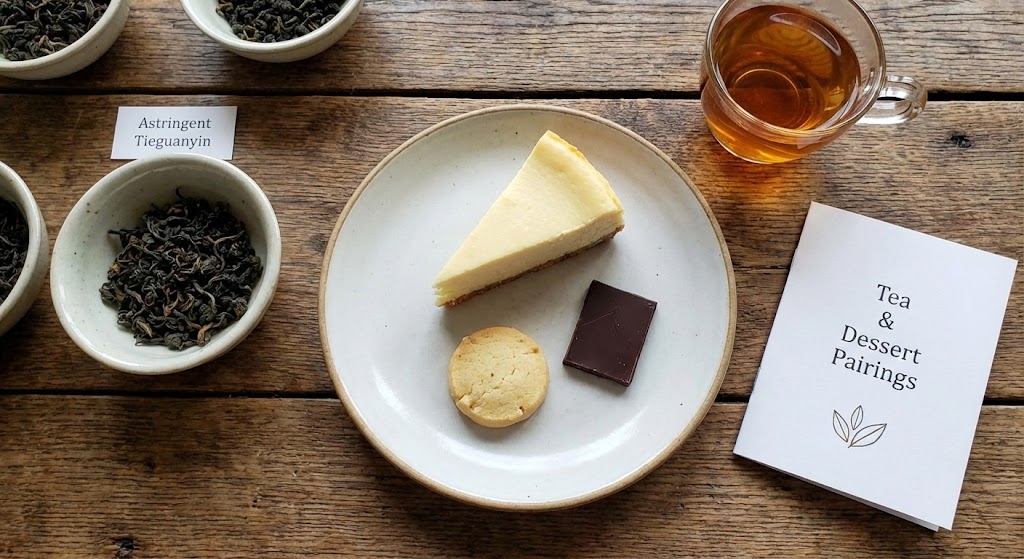
For a more relaxed supper club or kitchen-table gathering, you can offer tea alongside dessert if the pudding is simple (fruit crumble, panna cotta, cheese and biscuits) and no dessert wine is being served. In this case, brew a single, crowd-pleasing option—such as a malty Assam or a spiced autumn blend—and present it in a large teapot with milk and sugar on the side. Guests can choose to drink it immediately or let it cool slightly while they finish eating. This works particularly well if you're serving astringent tea with a very sweet dessert, where the pairing is intentional and the tea's tannins are part of the flavour experience.
If you are hosting a wholly tea-focused meal—increasingly common at modern supper clubs—you may serve different teas between courses, much as a sommelier would pour wines. In this case, clear wine glasses between courses, present each tea with tasting notes, and pour small quantities (100-120ml per guest) so the tea does not cool before it is drunk. This approach requires more choreography and works best with a small group (6-8 guests) and a confident host who enjoys performance and education as part of the evening.
The 15-Minute Rule
Wait at least 15 minutes after clearing dessert plates before offering tea. This pause lets guests finish their wine, signals a new phase of the evening, and prevents the table feeling rushed or crowded with too many vessels at once.
4. Building a Post-Dessert Tea Trolley: Choice Architecture and Flavour Presentation
A post-dessert tea service should offer choice without overwhelming. The ideal number is three to four options, each representing a distinct flavour profile: a strong, malty black; a roasted or oxidised tea (oolong, hojicha, lapsang); a lighter, floral or fruity option (white tea, light oolong, green); and a caffeine-free herbal or fruit infusion for guests who are sensitive to stimulants or prefer something gentler late in the evening. This range accommodates different tastes and dietary needs without requiring you to stock or brew a dozen varieties.
Present teas by flavour and intensity, not by varietal name or origin. Most guests will not know what 'Tie Guan Yin' or 'Bai Mu Dan' means, but they will understand 'light and floral', 'rich and malty', or 'smoky and intense'. You can print simple cards or write options on a small blackboard: 'Strong & Malty (Assam)', 'Roasted & Nutty (Hojicha)', 'Light & Honeyed (White Peony)', 'Spiced & Caffeine-Free (Rooibos Chai)'. This approach lowers the barrier to choice and prevents the awkward silence that follows 'Would anyone like tea?' when guests don't know what you're offering.
If you are using a tea trolley or side table, arrange everything before guests sit for dessert: teapots (one per option, pre-warmed), loose-leaf tea in labelled caddies or small bowls, a timer, a kettle or thermos of just-boiled water, milk jug, sugar bowl, honey pot, lemon slices, and enough cups and saucers for all guests. When the moment comes, you wheel the trolley to the table, invite guests to choose, and brew each pot in front of them. This theatre—visible, unhurried, tactile—is part of the appeal and makes the tea service feel like an event rather than an afterthought. For a less formal approach, brew pots in the kitchen and bring them to the table on a tray, but still offer verbal descriptions and let guests choose.
5. Temperature, Timing, and Logistics: Keeping Multiple Pots Hot in Autumn Room Conditions
Autumn's cooler ambient temperatures—typically 18-20°C in a UK dining room in September or October—mean that tea cools faster than in summer, and pots lose heat more quickly once brewed. A teapot sitting on the table for ten minutes can drop from 85°C to below 60°C, rendering the tea lukewarm and unpalatable. To maintain correct serving temperatures, you need to preheat every teapot (pour boiling water in, swirl, discard), use insulated tea cosies (fabric or quilted, not decorative thin cotton), and brew in batches rather than all at once.
If you are offering three teas, brew the first pot (usually the strongest black) as soon as you clear dessert plates, cover it with a cosy, and let it steep while you prepare the second. Brew the second pot (lighter or roasted option) five minutes later, then the third (herbal or white) five minutes after that. This staggered approach means each pot is at peak temperature when poured, and guests are not waiting for you to brew everything before service begins. It does require you to leave the table briefly three times, but the interruptions are short and give guests natural conversational pauses.
For larger groups (10+ guests), consider brewing in insulated carafes or vacuum flasks rather than ceramic teapots. These hold temperature far longer and allow you to brew once, then pour multiple cups over 20-30 minutes without reheating. This is particularly useful if you are hosting a larger supper club or semi-formal dinner where you cannot leave the table repeatedly. Brew strong, strain into the flask, and dilute slightly with hot water when pouring if the tea is too intense; this method sacrifices some elegance but gains practicality.
Stagger Your Brewing
Brew your strongest tea first, then lighter options at 5-minute intervals. This keeps each pot at correct serving temperature and prevents you from rushing or serving lukewarm tea to late choosers.
6. Pairing Tea with Autumn Puddings: Astringency, Sweetness, and Palate Cleansing
Autumn puddings—sticky toffee, apple crumble, plum tart, pear frangipane, chocolate fondant—are typically high in sugar and fat, and the right tea pairing can transform them from cloying to balanced. The principle is simple: match high astringency with high sweetness. Astringent teas (those with significant tannin content) create a drying sensation on the palate that cuts through sugar and fat, refreshing the mouth between bites and allowing you to enjoy more of the dessert without sweetness fatigue.
For sticky toffee pudding, treacle tart, or caramel-based desserts, serve a brisk Assam or a Darjeeling autumn flush. Their tannins counteract the sweetness, and the tea's malty or muscatel notes add complexity without competing with the caramel. For fruit-based puddings (crumble, tart, compote), a lighter oolong or a Keemun works well; the tea's gentle oxidation echoes the fruit's cooked, jammy character without overwhelming it. For chocolate desserts, consider a lapsang souchong (if your guests enjoy smoke) or a roasted oolong; the roast notes complement cocoa, and the astringency prevents the chocolate from coating the palate.
If you are serving cheese as dessert or post-dessert, the pairing changes. Hard, aged cheeses (Cheddar, Comté, Manchego) pair well with robust blacks or oolongs, whose tannins match the cheese's fat and umami. Softer, creamier cheeses (Brie, Camembert) are better with lighter, more floral teas—white or green—so the tea doesn't overpower the delicate milk flavours. Blue cheeses (Stilton, Roquefort) are notoriously difficult to pair; a sweet, malty Assam or a honeyed white tea can bridge the saltiness and pungency, but this is a matter of personal taste and experimentation. For more on the science of astringency and dessert pairing, see our dedicated guide.
7. Seasonal Etiquette and Guest Communication: How to Offer, Pour, and Present Without Fuss
The etiquette of tea service at a dinner party is less about rules and more about clarity and confidence. When the moment comes to offer tea, stand (if you've been seated), make brief eye contact with the table, and say something simple and inclusive: 'I've got a few teas if anyone would like one—there's a strong malty black, a lighter roasted option, and a caffeine-free herbal.' This phrasing signals choice without requiring expertise, and guests can self-select based on preference or simply ask for a recommendation.
If a guest asks, 'Which one should I have?', tailor your answer to what they've been drinking and eating. Someone who has been drinking red wine and ate the sticky toffee pudding will likely enjoy a robust Assam; someone who drank white wine and picked at dessert may prefer a lighter oolong or white tea. If in doubt, offer the strongest option first—'The Assam is really good with the toffee pudding if you want something bold'—and have the lighter options as backup. Most guests appreciate a gentle steer rather than an open-ended question.
Pour the first cup yourself to demonstrate strength and colour, then invite guests to pour their own if they'd like more. Provide milk, sugar, honey, and lemon on the table so guests can customise without asking, and make it clear that seconds are welcome—'There's plenty more in the pot, so do help yourselves.' This avoids the host having to monitor and refill constantly. If you are serving rare or expensive teas, you can add a brief note of context—'This is a Darjeeling autumn flush; it's got a lovely muscat-grape flavour'—but keep it conversational, not pedagogical. The goal is to enhance the evening, not to lecture.
Offer, Don't Interrogate
Say 'I've got a strong black, a roasted, and a herbal—any takers?' rather than 'Does anyone want tea?' The first version signals you've prepared options and invites choice; the second can prompt polite refusals even from willing guests.
8. Sourcing Teas and Equipment for UK Autumn Entertaining: What to Buy and Where to Find It
For a reliable autumn entertaining repertoire, you need four to six core teas in quantities of 50-100g each (enough for 3-5 dinner parties), plus the basic serving equipment. Start with a strong Assam (Twinings, Clipper, or a single-estate loose-leaf from a specialist like Postcard Teas or Rare Tea Company), a Keemun or Dian Hong (widely available loose-leaf), a hojicha (try Japanese suppliers like Cha or Matcha Maiden, or check Waitrose or Planet Organic for bagged versions), and a caffeine-free option such as rooibos, chamomile, or a spiced autumn blend. If you want a lighter option, add a white tea (Silver Needle or White Peony) or a Darjeeling autumn flush; see our buyer's guide to Darjeeling harvests for more on seasonal character and pricing.
For equipment, invest in three or four small-to-medium teapots (400-600ml capacity; two-cup size) in ceramic or cast iron, each with a built-in or removable infuser. This allows you to brew loose-leaf easily and serve directly to the table. Buy at least two insulated tea cosies (Dunelm, John Lewis, or independent makers on Etsy) that actually fit your pots—many decorative cosies are too small or thin to retain heat. You'll also need a set of matching cups and saucers (enough for all guests), a milk jug, a sugar bowl, and a small honey pot. If you are serving lemon, use a small plate with pre-sliced rounds and a cocktail fork, and remind guests that lemon curdles milk, so it's one or the other.
For larger groups or outdoor autumn entertaining (see our guide to autumn weddings and harvest receptions), consider a large insulated urn or airpot (available from catering suppliers or Amazon) that holds 3-5 litres and keeps tea hot for hours. These are practical but less elegant, so reserve them for casual garden parties or harvest festival gatherings rather than intimate dinner parties. Finally, stock up on your chosen teas in early September, as supplies of high-quality loose-leaf can run low by mid-autumn, and prices for seasonal harvests can rise as stocks dwindle into 2026.
Buy Teapots by Volume, Not Style
Choose teapots that brew 400-600ml (2-3 cups), not decorative miniatures or oversized ceremonial pots. This size suits small dinner parties, brews fast, and stays hot under a cosy without tying up your kettle for ages.


Comments