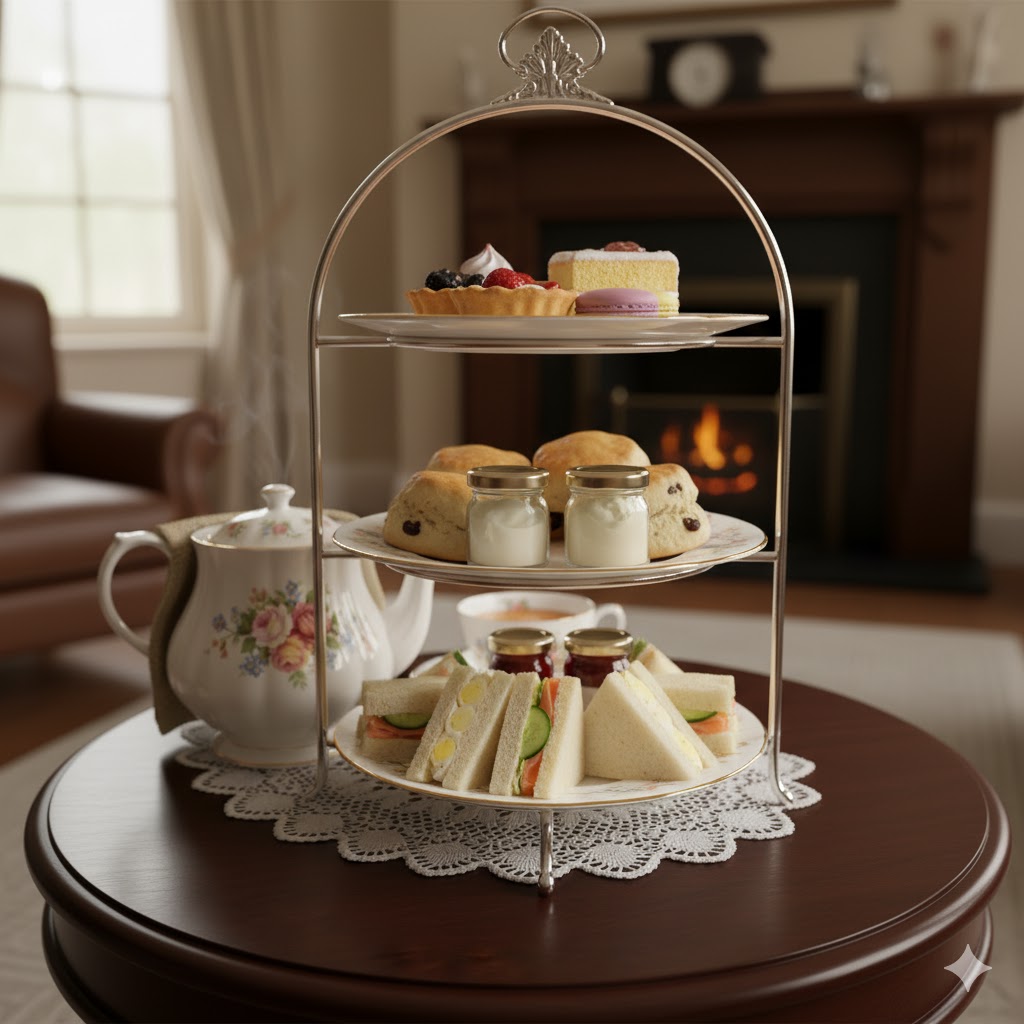
1. Why Grandparents Day Tea Gifts Require Different Criteria Than Standard Gifting
Grandparents Day tea gifts succeed or fail on usability, not novelty. Many older adults experience reduced grip strength (arthritis, tremor, general frailty), diminished close-up vision, and a preference for familiar flavour profiles that reflect decades of habit. A gift that requires reading 8-point type, unscrewing a stiff tin lid, or timing a three-minute steep with a smartphone app will gather dust, no matter how premium the leaf. The goal is to preserve independence and ritual while offering gentle variety or improved quality within a recognisable framework.
Equally important is emotional and conversational value. Tea drunk alone is comforting; tea brewed with grandchildren becomes a story prompt, a sensory anchor for memory, and a chance to pass on knowledge (or receive it). Gifts that combine accessibility with narrative – a Darjeeling from a named estate, a teacher-approved tasting journal with large boxes, or a simple glass mug that lets everyone watch the leaves unfurl – turn a beverage into an event. This dual function distinguishes a good Grandparents Day gift from a generic one.
Finally, consider care-home and sheltered-housing constraints. Many older adults no longer have full kitchens; some rely on shared facilities with basic kettles and no storage. Gifts must be compact, self-contained, and require minimal equipment. A 500 g bag of loose leaf is impractical without a caddy, scoop, and infuser; a small tin with ten sachets and a folding infuser spoon is immediately usable. Think portability, clarity, and respect for the recipient's living situation.
The Independence Test
Before buying, ask: can the recipient open, measure, brew, and clean this without assistance? If any step requires help, the gift risks becoming a burden rather than a pleasure.
2. Accessible Packaging and Labelling: Large Print, Easy-Open Tins, and Clear Instructions
Large-print labels are non-negotiable. Look for tins and packets with brewing instructions in at least 14-point type, high-contrast text (black on white or cream), and simple language. Avoid ornate fonts, metallic ink on dark backgrounds, or instructions printed on the inside of a lid that must be held at an angle to read. Several UK speciality retailers – including Rare Tea Company and Comins Tea House – now offer 'accessible' gift tins with bold type and QR codes that link to audio brewing guides, a feature worth seeking out.
Easy-open packaging matters as much as content. Vacuum-sealed foil pouches, heat-sealed tins, and shrink-wrapped boxes often require scissors, knives, or two-handed twisting force. Opt for slide-lid tins, magnetic-closure boxes, or resealable zip pouches with a thumb-notch. If you're assembling a gift yourself, repackage loose leaf into wide-mouth glass jars (IKEA's 0.5 L Korken jars have swing-top lids that open with one hand) and add a printed label with the tea name, origin, and '1 tsp per mug, boiling water, 3–4 minutes' in 16-point Helvetica.
Include a one-page brewing guide on card stock, laminated if possible, with step-by-step instructions and a photograph of the correct leaf quantity. This is especially helpful for recipients with mild cognitive impairment or who are new to loose-leaf tea. For more advanced brewing methods, point them to our comprehensive brewing guide, but keep the included card simple and specific to the teas in the gift.
3. Arthritis-Friendly Teaware: Lightweight Pots, Silicone Grips, and One-Hand Infusers
Arthritis and reduced hand strength make traditional teapots – especially ceramic or cast-iron models weighing 600–900 g when full – difficult and dangerous to pour. Look for lightweight options: borosilicate glass or thin porcelain pots under 400 g empty, with large loop handles that accommodate three or four fingers. Some UK suppliers (such as Whittard and T2) now sell teapots with silicone-wrapped handles and knobs, which offer better grip and thermal insulation.
One-hand infusers are ideal for mug brewing. Avoid ball infusers with tiny screw clasps or fine-mesh baskets that require pinching. Instead, choose basket infusers with a single lever or hook (such as the Finum brewing basket with a folding handle) or large silicone infusers (FORLIFE and Hario make versions with wide tabs). For those who prefer no infuser at all, grandpa-style brewing – leaves loose in the mug, topped up with water as you drink – eliminates all fine motor demands and has deep cultural roots in Chinese tea culture.
Consider electric pour-over kettles with auto-shutoff and stay-cool handles. Our variable-temperature kettle reviews include models under 1 kg with one-touch temperature presets, removing the need to judge boiling by sound or steam. Pair a kettle with a small, stable gaiwan with a silicone-grip rim if the recipient is curious about gongfu brewing, but only if they express interest – don't assume a gift should be educational if it adds complexity.
The Pour Test
A full 500 ml teapot can weigh over 1 kg. If the recipient struggles with a standard milk carton, they'll struggle with most ceramic pots. Opt for mug brewing or a 200 ml personal pot instead.
4. Teas That Trigger Nostalgia: Post-War Blends, Seaside Holidays, and Ration-Era Flavours
For many UK grandparents born in the 1940s and 1950s, tea means strong, malty, tannic black blends – the taste of rationed Typhoo or Co-op own-brand, brewed until mahogany and sweetened with condensed milk. Nostalgia is not mere sentimentality; it's rooted in flavour memory and chemosensory familiarity. Theaflavins and thearubigins (the oxidised polyphenols in black tea) trigger associative recall, linking taste to place, time, and emotion. A high-grown Kenyan or a robust Assam CTC can evoke a childhood kitchen more powerfully than any photograph.
Look for blends that echo mid-century British tea culture: Remains of the Day – a fictional but historically plausible style – or real-world equivalents such as Twinings English Breakfast (unchanged since 1956), Ringtons heritage blends (door-to-door tea delivery, common in the North East), or PG Tips pyramid bags (introduced 1996, but the loose-leaf blend dates to the 1930s). Single-origin Assam TGFOP or Kenyan Milima also work if the recipient enjoys strong, straightforward tea without fuss.
For seaside nostalgia, consider Lapsang Souchong (associated with post-war adventurousness and import variety) or Earl Grey (a 1950s aspirational choice, linked to genteel holidays and Cornish cream teas). These teas carry cultural memory and often prompt stories: 'My mother only drank this on Sundays,' or 'We had this in Torquay in 1968.' Pair the tea with a postcard or a photograph of the relevant region (Assam estates, the Fujian mountains, a British seaside town) to deepen the conversational hook.
Ask First, or Offer a Tasting Set
Flavour memory is personal. If you're unsure, give a small sampler of three blends (Assam, Kenyan, Ceylon) rather than a single large tin, and let the recipient choose their favourite for a follow-up gift.
5. Cross-Generational Teas: Provenance, Story, and Shared Brewing Rituals
The best Grandparents Day gifts are those that invite participation. Single-origin teas with clear geographic and seasonal provenance – Darjeeling first flush, Nilgiri winter frost, Yunnan golden needle – give grandchildren (and great-grandchildren) a reason to ask questions: Where is this from? How is it grown? Why does it taste different from the tea we usually drink? These questions turn brewing into a two-way knowledge exchange, with grandparents sharing memories of Empire-era advertising or rationing, and younger family members explaining terroir, cultivar, and modern direct-trade sourcing.
Choose teas with visual interest that can be brewed in glass: silver-needle white tea, jasmine pearls, blooming flower balls, or large-leaf oolongs. A simple glass mug or a small glass teapot (see our gaiwan and glass teapot reviews) transforms brewing into a slow, watchable event. Grandpa-style brewing in a tall glass is particularly effective: leaves sink and rise, colour deepens, and the process becomes a point of shared focus, reducing the pressure to talk while still facilitating conversation.
Consider pairing the tea with a simple tasting journal – not a fussy flavour wheel, but a notebook with large boxes for date, tea name, and 'What I noticed.' Our tasting journal reviews highlight options with 10 mm ruled lines and space for photographs or pressed leaves. This becomes a shared family record, with entries written by different generations, and a keepsake far more valuable than the tea itself.
6. Grandpa-Style Brewing: The Simplest, Most Accessible Method for Older Tea Drinkers
Grandpa-style brewing – loose leaves placed directly in a mug or glass, topped with hot water, and drunk as the leaves sink – is the most accessible method for anyone with limited dexterity, vision, or patience for timers and infusers. There is no straining, no measuring (a pinch of leaf works as well as a gram scale), and no risk of over-steeping if you choose the right tea. The method has deep roots in Chinese tea culture, particularly among farmers and labourers who needed a no-fuss, all-day brewing style.
The best teas for grandpa-style are whole-leaf greens and whites (Longjing, Bai Mudan, Mao Feng) and large-leaf oolongs (Da Hong Pao, Tieguanyin). These teas are engineered to withstand long contact with water without turning bitter, and they can be topped up multiple times, changing flavour gently across the day. Avoid CTC blacks and most blends, which release tannins aggressively and become astringent within minutes. For UK grandparents unfamiliar with Chinese tea, frame grandpa-style as 'the way tea has been drunk for centuries' rather than a novelty – it honours tradition and removes barriers simultaneously.
Gift a tall glass mug with a handle (300–400 ml, heat-resistant borosilicate), a 50 g tin of Longjing or Bai Mudan, and a one-page guide explaining the method. This is a complete, usable gift that requires no additional equipment and introduces a brewing style that may become a new daily ritual. For more detail, direct recipients to our full grandpa-style guide and its historical context.
Top-Up Throughout the Day
Grandpa-style suits people who sip intermittently. A single pinch of leaf can be refreshed with hot water four or five times, each infusion lighter and sweeter, with no waste or fuss.
7. Teas to Avoid: High Caffeine, Fiddly Preparation, and Unfamiliar Flavour Profiles
Avoid high-caffeine teas unless you know the recipient tolerates them well. Many older adults are sensitive to caffeine or take medications (beta-blockers, anticoagulants) that interact with it. Matcha, yerba mate, and young sheng pu-erh can contain 60–80 mg caffeine per cup – more than filter coffee – and may cause jitters, insomnia, or digestive upset. If the recipient enjoys strong tea, stick to moderate-caffeine blacks (30–50 mg per cup) or offer a half-and-half blend of caffeinated and decaf leaves.
Steer clear of teas that require fiddly preparation or specialist equipment. Matcha (whisking, sieving, precise water temperature) and gongfu cha (multiple vessels, short infusions, timing) are beautiful practices but demand dexterity, focus, and often instruction. Unless the recipient has specifically expressed interest, these are better suited to younger, curious drinkers. Similarly, avoid teas that require precise water temperature control (Japanese senchas at 60–70 °C) unless you're also gifting a variable-temperature kettle and are confident the recipient will use it.
Finally, avoid unfamiliar or challenging flavour profiles without context. Heavily roasted oolongs, smoky Lapsang, aged pu-erh, and herbal infusions with unfamiliar botanicals (nettle, burdock, chaga) can be off-putting if gifted without explanation or a tasting session. If you want to introduce something new, pair it with a familiar anchor – a tin of their usual blend alongside a small sample of the new tea – and frame it as 'something to try if you're curious,' not a replacement. Respect habit; offer choice.
The Comfort-Zone Principle
A gift should feel like recognition, not re-education. If in doubt, choose a premium version of what they already drink rather than something entirely new.
8. Where to Buy, When to Order, and How to Personalise for 8 October 2026
Order by late September 2026 to allow for potential postal delays (October half-term begins 24 October in most of England and Wales, and Royal Mail volumes spike in the preceding week). If you're commissioning personalisation – engraved teaspoons, custom labels, embroidered tea cosies – add an extra week. UK speciality retailers with accessible packaging and gifting services include Rare Tea Company (large-print tins, QR-code brewing guides), Comins Tea House (Herefordshire-based, excellent customer service, will accommodate custom requests), Postcard Teas (single-origin focus, beautiful but sometimes small type – check before ordering), and Cornish Tea (nostalgia-forward blends, vintage-style tins).
For teaware, see our best tea gifts reviews for curated sets, and our gaiwan reviews if you're considering a small gongfu setup. High-street options – Whittard, T2, Fortnum & Mason – often have Grandparents Day promotions in early October, but their packaging is not always accessible; inspect in-store or request a sample image of the label and instructions before buying online.
Personalisation adds emotional weight. A handwritten brewing guide on a recipe card, a photograph of you and the recipient sharing tea, or a note explaining why you chose this particular tea ('I remembered you talking about the tea you drank in Devon in 1972, so I found this Cornish breakfast blend') transforms a product into a story gift. If the recipient has limited storage, include a note offering to replenish the tea when it runs out – this turns a one-time gift into an ongoing connection and ensures the tea is actually used rather than saved for 'special occasions' that never arrive.
The Follow-Up Gift
After Grandparents Day, ask which tea they enjoyed most and send a larger tin in November. This shows you're paying attention and avoids the waste of a beautiful gift that doesn't suit their taste.



Comments