1. Why Tea Degrades: The Four Environmental Enemies
Tea leaves are hygroscopic, porous, and rich in volatile oils and polyphenols—characteristics that made them valuable for trade but also render them vulnerable once harvested. The compounds responsible for aroma (aldehydes, esters, terpenes) and flavour (catechins, theaflavins, amino acids) begin to change the moment oxidation is arrested during processing. At home, four environmental factors accelerate this decline: light, which drives photochemical degradation of chlorophyll and polyphenols; oxygen, which continues slow oxidation and staling; moisture, which can trigger enzymatic activity, mould growth, or simple sogginess; and odour, as tea readily absorbs volatile compounds from its surroundings, acquiring off-notes from coffee, spices, detergents, or even strong-smelling fruit.
The speed of degradation depends on tea type. Green teas, with their delicate, unoxidised leaf and fresh vegetal aromatics, fade fastest—often noticeably within three to six months if poorly stored. White teas, though minimally processed, are similarly fragile. Oolongs span a wide spectrum: lightly oxidised, floral styles behave like greens, while dark-roasted or aged examples improve or hold stable for years. Black teas, fully oxidised, are more forgiving but still lose brightness and develop cardboard or musty notes if exposed to air and light over many months. Aged teas—sheng and shou pu-erh, liu bao—are intentionally stored for years, but even they require stable conditions to mature well rather than simply going stale or mouldy.
2. Light: The Photochemical Threat
Ultraviolet and visible light catalyse chemical reactions that break down chlorophyll (in green and lightly oxidised teas), degrade catechins and other polyphenols, and cause colour and aroma loss. This is why tea merchants have long favoured opaque tins and why vacuum-packed foil bags are standard in Japan and Taiwan. Sunlight is the worst offender—direct rays on a kitchen shelf can noticeably fade green tea in a matter of weeks—but even ambient daylight and artificial lighting contribute over time.
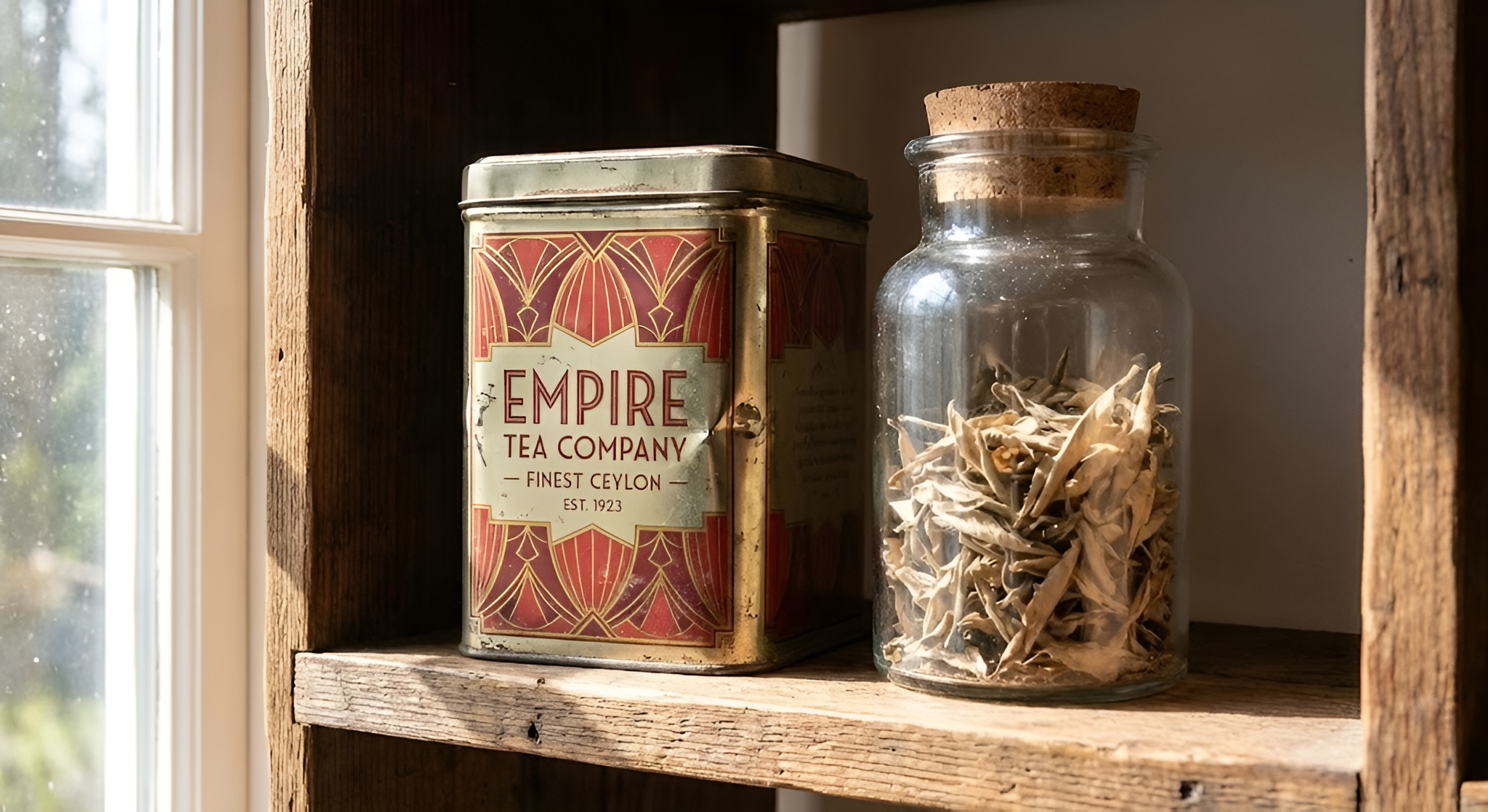
The solution is straightforward: store tea in opaque containers or in the dark. Metal tins (aluminium or tinplate with tight-fitting lids), UV-blocking foil-lined pouches, or ceramic caddies are all excellent. If you prefer glass jars for aesthetic reasons or to see remaining quantities, place them inside a cupboard or drawer; never leave them on a windowsill or open shelf in a bright kitchen. Many UK tea drinkers underestimate the cumulative effect of indoor lighting—even a north-facing room provides enough ambient light to degrade delicate teas over months.
Choose Opaque Over Instagram-Worthy
Sunlight can visibly fade green tea on a kitchen shelf in just a few weeks, and even ambient daylight degrades polyphenols over time. Metal tins, foil pouches, or ceramic caddies protect far better than clear glass.
3. Air and Oxygen: Staling and Oxidation
Once tea is plucked and processed, the polyphenol oxidase enzymes are largely deactivated (by steaming, pan-firing, or full oxidation in the case of black tea), but slow, non-enzymatic oxidation continues in the presence of oxygen. Volatile aroma compounds evaporate; lipids in the leaf can oxidise and turn rancid; catechins polymerise or degrade, leading to a stale, flat, or cardboard-like flavour. This process is slower than photochemical damage but relentless, especially in half-empty packets with large headspaces of air.
To minimise exposure, transfer opened tea into airtight containers as soon as possible. Resealable foil pouches with zip-locks are better than paper bags; double-lidded tins (an inner and outer seal) are better still. Some enthusiasts vacuum-seal portions or use inert-gas flush systems for long-term storage, but for everyday home use, simply reducing headspace and ensuring a snug seal is sufficient. If you buy tea in 100 g quantities and drink it within two months, oxidation will have minimal impact; if you buy 500 g and leave it in a loosely closed bag for a year, you'll taste the difference. For high-value or delicate teas, consider decanting a week's supply into a daily caddy and keeping the bulk portion sealed and undisturbed.
4. Moisture: Mould, Sogginess, and Enzymatic Havoc
Tea is dried to around 2–5% moisture content during processing, a level low enough to inhibit microbial growth and enzymatic activity. If stored tea absorbs atmospheric moisture—common in humid UK kitchens, especially near kettles, dishwashers, or sinks—it can climb above 8–10% moisture, at which point mould spores may germinate, enzymes reactivate, and the leaf becomes soft, clumpy, or develops musty, sour, or fermented off-flavours. Even short-term condensation, such as opening a cold tin in a warm, steamy room, can be damaging.
Practical measures: never place tea near the kettle, hob, or dishwasher; store it in a cool, dry cupboard away from plumbing and steam sources. Always use a dry spoon or scoop—never a damp one—and avoid handling tea with wet hands. If you live in a particularly humid climate or have a damp kitchen, consider adding a food-safe silica-gel sachet to each tin (available inexpensively from homeware suppliers) to buffer moisture fluctuations. Do not refrigerate or freeze tea unless vacuum-sealed in portions; the risk of condensation when removing and opening packets usually outweighs any preservation benefit, and odours from the fridge are a major hazard.
Keep Tea Away from the Kettle
Tea stored near steam sources can absorb moisture, climbing above the critical 8–10% threshold where mould germinates and off-flavours develop. A cool, dry cupboard well away from the hob or sink is essential.
5. Odour: The Invisible Contamination
Tea leaves are famously absorbent—a property exploited in the production of jasmine, osmanthus, and other scented teas, where fresh flowers are layered with leaf to impart fragrance. At home, this same porosity is a liability. Leave a tin of delicate white tea next to a jar of curry powder, a bag of coffee beans, or a cake of scented soap, and within days you may detect cross-contamination. The volatile compounds responsible for these odours migrate through plastic, cardboard, and even some metal seals, binding to the tea's surface and altering its aroma.
To protect your tea, store it in a dedicated, odour-free location—a cupboard or shelf reserved for tea and perhaps a few neutral staples like sugar. Avoid the spice rack, the under-sink cupboard (detergents and cleaning products), and anywhere near strong-smelling foods. If you keep flavoured or scented teas (Earl Grey, chai blends), store them separately from unflavoured leaves; bergamot oil and spice notes can migrate. Metal tins with rubber gaskets offer better odour isolation than simple friction lids; double-bagged foil pouches are also effective. If a tea has picked up an off-smell, it's usually irreversible—better to prevent than to cure.
6. Choosing Containers: Tins, Bags, Jars, and Caddies
The ideal tea container is opaque, airtight, inert, and sized appropriately to minimise headspace. In the UK market, traditional round or rectangular tinplate caddies remain popular and perform well; look for double lids or inner gaskets. Japanese-style washi-lined tins (paper or foil laminate) are excellent for green and white teas. Stainless-steel containers with silicone-sealed lids are durable and effective, if sometimes pricier. For bulk storage, resealable metallised foil pouches (often sold by speciality tea vendors) offer an excellent combination of light-blocking, airtight sealing, and space efficiency.
Glass jars—ubiquitous in lifestyle magazines and Instagram flatlays—are acceptable only if stored in complete darkness; a clear Kilner jar on a sunny shelf is one of the worst environments for tea. Ceramic caddies are charming and functional provided they have well-fitting lids; unglazed interiors can absorb moisture and odour over time, so favour glazed or sealed designs. Avoid cheap tins with loose lids that rattle or let in light around the seams. As a general rule, smaller containers for teas you drink frequently (50–100 g capacity) and larger, rarely opened vessels for bulk reserves work better than one big tin you open daily, exposing the entire contents to air and humidity each time.
Match Container Size to Stock
The best containers are opaque, airtight, and sized to minimise headspace; traditional tinplate caddies with double lids or metallised foil pouches excel. Glass jars may look stylish but expose tea to damaging light.
7. Where and How Long: Practical Storage Lifespans by Tea Type
Assuming good storage—dark, sealed, cool, dry, odour-free—green and white teas are best consumed within 6–12 months of harvest (or opening); after that, grassy freshness fades and astringency or flatness increases. Lightly oxidised oolongs (Taiwanese high-mountain, Tieguanyin) follow a similar timeline, though vacuum-sealed and refrigerated competition-grade examples can hold for longer. Dark or roasted oolongs (Wuyi yancha, charcoal-roasted Tieguanyin) and black teas remain enjoyable for 12–24 months, sometimes longer; they lose aromatic brightness but rarely become unpleasant. Aged teas—raw and ripe pu-erh, liu bao, dark-fired oolongs—can be stored for years or decades, but require stable temperature, moderate humidity (50–70%), and good air circulation; UK homes are often too dry or too sealed, so enthusiasts sometimes use dedicated cabinets or clay jars to maintain micro-climates.
In the UK, where central heating in winter and occasional summer humidity create fluctuating conditions, the safest approach is to buy tea in quantities you'll drink within a few months and prioritise turnover over long-term ageing unless you're seriously committed. Label each container with the purchase or opening date to track freshness. If you acquire more tea than you can drink promptly—common after a visit to a tea shop or an online sale—seal unopened packets in secondary airtight containers and store in the coolest, darkest cupboard you have, ideally not in the kitchen itself (a larder, linen cupboard, or bedroom wardrobe may be better).
8. Common UK Kitchen Pitfalls and How to Avoid Them
British kitchens are often compact, warm, and multifunctional, which poses specific challenges. The cupboard above the kettle—convenient, frequently used—is actually one of the worst places for tea, subject to rising steam and temperature swings. The windowsill herb garden, charming as it is, should not extend to tea caddies; direct sun will fade even black tea. Open shelving and pegboard storage, popular in contemporary kitchen design, expose tea to constant light and airborne odours from cooking. The fridge or freezer, sometimes recommended for long-term storage, risks condensation and cross-contamination with pungent foods unless tea is vacuum-sealed and never opened until fully thawed.
Practical advice: dedicate a low, cool, dark cupboard—perhaps one away from the cooker or sink—to tea storage. If space is tight, use a drawer lined with an opaque tray or basket. Keep a small daily caddy on the counter if you must, refilling it weekly from a sealed reserve. Resist the urge to display tea in attractive but transparent containers unless they live in a closed cupboard. And remember that home-roasted teas or smoked teas benefit from the same careful storage—perhaps even more so, since their post-processing aromas are delicate and can dissipate or be overtaken by ambient smells.
Avoid the Above-Kettle Cupboard
That convenient spot above your kettle is subject to rising steam and temperature swings—one of the worst places in a British kitchen for tea. Windowsills and open shelving are equally problematic for light and odour exposure.


Comments