1. What Is Withering Humidity Control and Why It Matters
Withering humidity control is the deliberate management of relative humidity (RH) in the air surrounding freshly plucked tea leaves as they lose moisture and undergo enzymatic changes. During withering—the post-pluck resting phase that precedes rolling, oxidation, or fixation—leaves shed 15–50 % of their fresh weight, depending on the target tea style. As water evaporates from stomata and cuticle, the leaf's internal water activity (aw) drops, which in turn modulates the concentration and mobility of enzymes, substrates, and co-factors inside the vacuole and cytoplasm.
Relative humidity acts as the driving gradient for moisture loss: a low-RH environment accelerates evaporation, while high RH slows it. But speed alone is not the goal. Enzyme-catalysed reactions—polyphenol oxidation, glycoside hydrolysis, amino-acid deamination—require a critical window of water activity (roughly 0.85–0.95 aw) to proceed efficiently. If ambient RH is so low that the leaf dries below this threshold in less than six hours, enzymes denature or substrates precipitate before significant aroma precursors can form. Conversely, if RH remains above 80 % for extended periods, moisture loss stalls, microbial spores germinate, and unwanted fermentation (lactic, acetic) can overtake the desired polyphenol oxidation, yielding sour or musty off-flavours.
Historically, tea makers relied on weather patterns and room geometry—open windows, bamboo trays, night air—to stabilise humidity. Modern factories supplement natural ventilation with fans, steam humidifiers, or desiccant dehumidifiers, sometimes logging RH in real time with digital hygrometers. The precision required depends on tea type: delicate whites and high-grade oolongs demand tighter control (± 5 % RH) to preserve floral volatiles, while robust black teas tolerate broader swings because their final oxidation level is higher and aroma profile less sensitive to early moisture gradients.
The 70/12 Rule of Thumb
Many artisan oolong makers target 70 % RH for 12 hours as a baseline for floral character, adjusting up or down by 5 % depending on leaf cultivar and ambient temperature. It's a starting point, not a formula—but a useful one.
2. The Chemistry of Moisture, Enzymes, and Aroma Precursors
Inside the fresh leaf, polyphenol oxidase (PPO) and peroxidase (POD) are compartmentalised in chloroplasts and vacuoles, separated from their catechin substrates. When the leaf is bruised or begins to desiccate, cell membranes become permeable and enzymes encounter substrates. PPO catalyses the oxidation of catechins (particularly epigallocatechin gallate, EGCG) to quinones, which polymerise into theaflavins and thearubigins—the pigments and astringent compounds of black tea. POD, meanwhile, oxidises phenolic acids and can generate hydrogen peroxide, which in turn drives secondary oxidations.
Both enzymes require water as a reaction medium. Their activity peaks at water activities between 0.90 and 0.95 aw—corresponding to leaf moisture content of roughly 70–75 % (wet basis) and ambient RH of 65–75 %. Below 0.85 aw, enzyme mobility drops sharply; above 0.95, substrate concentration becomes too dilute and reaction rates plateau. This narrow sweet spot is why withering RH matters so much: it dictates how long the leaf remains in the optimal enzymatic zone.
Equally important are glycosidase enzymes that cleave sugar moieties from bound aroma precursors. Fresh leaves contain odourless glycosides of linalool, geraniol, benzyl alcohol, and methyl salicylate. During withering, β-glucosidase hydrolyses these glycosides, liberating free volatiles that contribute floral, fruity, and honey-like notes. Glycosidase activity is also water-dependent and sensitive to pH shifts that occur as cell sap concentrates. Rapid, low-humidity withering can halt glycoside cleavage before significant aroma release, leaving the finished tea one-dimensional. Conversely, excessively humid, slow withering can allow microbial β-glucosidases (from surface yeasts or bacteria) to dominate, producing off-odours such as sour-milk lactones or acetic volatiles.
3. Regional Withering Philosophies and Natural Humidity Regimes
Tea-growing regions have evolved distinct withering practices shaped by local climate. In the high-elevation cloud forests of Taiwan—Alishan, Lishan, Shanlinxi—morning fog and afternoon cloud cover maintain RH between 70 and 85 % year-round. Oolong producers exploit this natural humidity to wither leaves slowly over 12–18 hours on open bamboo trays, sometimes moving them indoors at night to avoid condensation. The cool, moist air slows evaporation, allowing enzymes ample time to generate the delicate orchid, lilac, and cream notes that define high-mountain oolong.
By contrast, Darjeeling first-flush estates in the eastern Himalayas contend with wide diurnal humidity swings: mornings may reach 80–90 % RH, dropping to 50–60 % by midday. Tea makers adjust by withering overnight or in shaded lofts, using the cool, humid night air to extend the process to 14–16 hours. The resulting teas—often categorised as 'clonal blacks' or 'muscatel oolongs'—display bright, fruity esters (ethyl butanoate, isoamyl acetate) that emerge when glycosidase activity is prolonged without excessive oxidation.
In the humid lowlands of Assam, Sri Lanka, and southern China, ambient RH often exceeds 75 % during monsoon months, risking mould and unwanted fermentation. Factories install large-bore fans and dehumidifiers to bring withering-room RH down to 60–70 %, sometimes supplementing with gentle heating (30–35 °C) to accelerate moisture loss without scorching. This forced-air withering shortens the cycle to 8–12 hours, trading some aromatic complexity for consistency and throughput. The challenge is to avoid over-drying: if RH drops below 50 %, leaf edges curl and brown prematurely, locking in grassy aldehydes and suppressing theaflavin formation.
Traditional Fujian white tea production—especially for Bai Mu Dan and Bai Hao Yin Zhen—relies on open-air withering in covered sheds where RH hovers near 70–75 %. Leaves rest for 24–72 hours with minimal disturbance, allowing slow, gentle oxidation. The high humidity prevents rapid desiccation, preserving the pale colour and sweet, hay-like apricot aromatics. Producers monitor weather forecasts closely: a sudden drop in RH (from a dry wind) can ruin a batch by over-oxidising the leaf tips, while a spike above 80 % (from rain) invites spoilage.
Weather as the Silent Partner
Artisan producers often delay or advance plucking by a day to align withering with favourable humidity windows. A stable 68–72 % RH forecast will prompt heavier picking; unstable, swinging RH may mean a smaller, safer batch.
4. Controlled-Environment Withering: Tools, Targets, and Trade-Offs
Modern tea factories employ mechanical withering troughs—long, perforated beds through which fans blow conditioned air. By adjusting fan speed, air temperature (typically 22–30 °C), and humidity (via steam injection or desiccant cartridges), operators can hold RH within ± 3 % of a target setpoint. Digital controllers log temperature and RH every minute, triggering alarms if parameters drift. This precision is especially valued for competition-grade oolongs and single-estate blacks, where batch-to-batch consistency commands premium prices.
Typical RH targets by tea type are:
- White tea: 65–75 % RH, 20–26 °C, 24–72 hours
- Oolong (light oxidation): 65–72 % RH, 22–26 °C, 10–16 hours
- Oolong (dark/roasted): 60–68 % RH, 24–28 °C, 8–14 hours
- Orthodox black: 50–65 % RH, 26–30 °C, 10–18 hours
- CTC black: 45–55 % RH, 28–32 °C, 6–10 hours
The trade-off is cost and complexity. Humidification systems add capital expense (£5,000–£20,000 for a mid-sized trough) and require clean water to prevent mineral deposits and microbial growth. Dehumidifiers consume electricity—often 2–4 kW per trough—raising operating costs in humid climates. Some estates compromise by using fans alone, accepting wider RH variation (± 10 %) in exchange for simplicity. Others employ hybrid schedules: natural withering at night when RH is favourable, then moving leaves to climate-controlled troughs at dawn if weather turns dry.
5. Diagnosing Withering Humidity Through Tactile and Olfactory Cues
Experienced tea makers assess withering progress by handling the leaf. Properly withered leaves at the end of the cycle should feel supple and pliable—neither crisp nor limp—with a slight elasticity when gently stretched. The midrib should bend without snapping, and the leaf surface should show no wet sheen or condensation. If humidity was too high, leaves remain turgid and release a grassy, vegetal smell when crushed, indicating that chlorophyll breakdown and volatile formation lagged. If RH was too low, edges curl tightly, the midrib may crack, and the aroma skews towards hay, straw, or even tobacco—signs of premature oxidation and membrane rupture.
Olfactory cues are equally revealing. Optimal withering under controlled humidity yields a clean, sweet fragrance: floral (jasmine, orchid, rose), fruity (peach, apricot, lychee), or honey-like, depending on cultivar and oxidation target. This sweetness comes from the balance of linalool oxide, geraniol, and benzyl alcohol released by glycosidase activity. Under-withered leaves (high RH, insufficient time) smell fresh and green, like cut grass or cucumber, with sharp grassy aldehydes (hexanal, trans-2-hexenal) dominating. Over-withered leaves (low RH, too rapid) emit musty, flat, or slightly sour notes—evidence of cell lysis, lipid peroxidation, and possible microbial contamination if ambient RH spiked after the initial dry-down.
In the factory, withering-room managers sometimes conduct a crush test: a handful of leaves is squeezed and the released juice inspected. Clear, slightly viscous sap with a sweet aroma signals good progress; cloudy, frothy, or sour-smelling juice suggests microbial activity (too humid) or oxidative browning (too dry). These subjective checks complement instrumental measures—moisture analysers, gas chromatography—but remain the frontline quality control in artisan production.
The Midrib Bend Test
Fold the midrib back on itself. It should bend 180° without breaking and spring back slightly. A brittle snap means over-drying; a wet crease means under-withering. Simple, reliable, no equipment needed.
6. Humidity Interactions with Temperature, Airflow, and Leaf Thickness
Withering RH cannot be considered in isolation. Temperature directly affects both the vapour-pressure deficit (VPD)—the driving force for evaporation—and enzyme reaction rates. At 20 °C and 70 % RH, VPD is roughly 0.9 kPa; raise the temperature to 28 °C at the same RH and VPD jumps to 1.3 kPa, accelerating moisture loss. Conversely, enzyme kinetics roughly double with each 10 °C rise (the Q10 effect), so warmer withering can compensate for slightly higher RH by speeding catechin oxidation. Tea makers balance these variables: cool, humid withering (22 °C, 72 % RH) for floral oolongs; warm, moderate-humidity (28 °C, 60 % RH) for brisk black teas.
Airflow determines the boundary-layer thickness around each leaf. Stagnant air allows a humid microclimate to build at the leaf surface, effectively raising local RH above the room average and slowing evaporation. Gentle, laminar airflow (0.2–0.5 m/s) sweeps away this boundary layer, maintaining the intended VPD. Too vigorous (> 1 m/s) and leaves dry unevenly, with edges desiccating while midribs stay moist, leading to patchy oxidation. Many troughs use reversible fans that alternate direction every 30–60 minutes, ensuring even exposure.
Leaf morphology also modulates humidity sensitivity. Thick, waxy cultivars (e.g., Assamica, some Fujian landrace oolongs) have lower stomatal density and cuticle permeability, withering more slowly even at low RH. Thin-leaved, high-elevation clones (e.g., Qing Xin, AV2) lose moisture rapidly and require higher ambient RH to prevent over-drying. Some factories grade incoming leaf by thickness and wither each grade separately at different RH setpoints—a practice common in Darjeeling and Taiwan but rare in volume CTC production, where uniformity is sacrificed for throughput.
7. Seasonal and Storage Humidity Considerations for UK Buyers
For UK tea enthusiasts, understanding withering humidity offers a window into provenance and quality signals. When evaluating a new oolong or white tea, ask the vendor about harvest season and withering conditions. Spring-plucked high-mountain oolongs from Taiwan or Darjeeling first-flush teas are often withered in naturally humid, cool conditions (65–75 % RH, 18–24 °C), which favour delicate florals. Summer or autumn harvests from the same estates may be withered at lower RH (55–65 %) to counteract warmer ambient temperatures, sometimes yielding fruitier, less floral profiles. Neither is superior, but knowing the humidity regime helps set expectations.
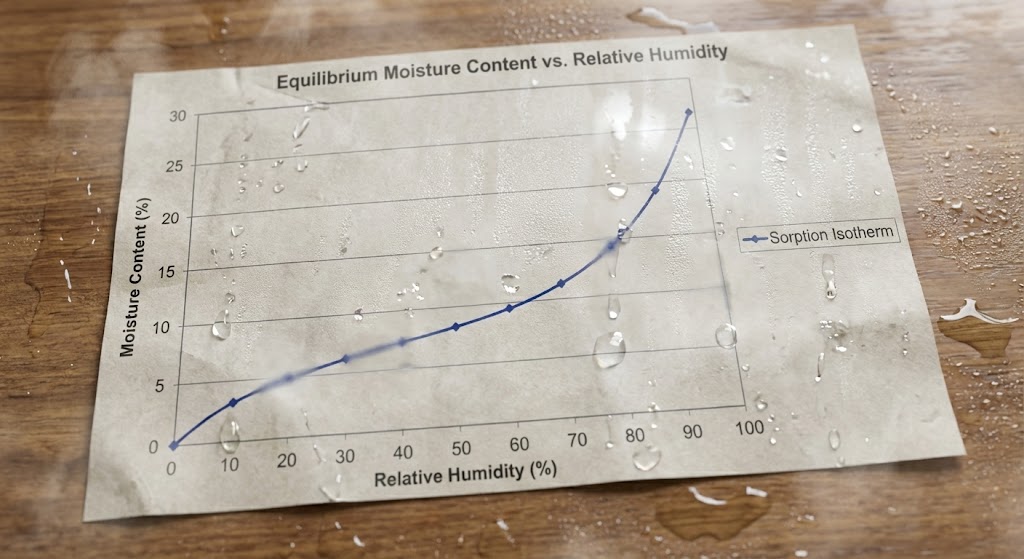
Once the tea reaches the UK, storage humidity becomes the buyer's concern. Properly withered teas have already shed 40–60 % of their fresh-leaf moisture and reached equilibrium moisture content of 3–7 % (dry basis) after firing. They will equilibrate with local RH: at typical UK indoor conditions (50–60 % RH), teas stabilise around 5–6 % moisture. During the central heating season, RH can drop to 35–45 %, pulling moisture from the leaf and degrading volatile esters. Conversely, summer humidity above 65 % risks condensation inside tins, especially if teas are moved between warm and cool rooms.
For long-term aging—particularly sheng pu-erh—withering humidity is less relevant (pu-erh leaves are minimally withered), but the principles of seasonal humidity control apply equally. Maintain storage RH between 55 and 65 %, avoiding rapid swings that can condense moisture on leaf surfaces. Hygrometers (£10–£30) and small electric dehumidifiers (£40–£80) are worthwhile investments for serious collectors. Many UK buyers also integrate tea storage into the autumn and winter humidity management routines they use for pu-erh, recognising that the same environmental discipline that preserves aged tea also protects the delicate aromatics shaped by withering humidity months or years earlier.
Cupping as Humidity Forensics
Brew 3 g in 150 ml at the recommended temperature. If high notes (floral, fruity) fade after the first steep and give way to flat vegetal or hay flavours, suspect rapid, low-RH withering. Persistent sweetness across multiple infusions signals slow, humid withering done right.
8. How to Evaluate Withering Rigour When Buying Tea in the UK
UK vendors rarely publish withering parameters, but discerning buyers can infer quality through cupping, dry-leaf inspection, and vendor transparency. Begin with the dry leaf: look for uniform colour and intact structure. Leaves withered under stable humidity show consistent curl or twist, with minimal breakage. Patchy colouration—some leaves green, others brown—suggests uneven airflow or humidity gradients in the withering room. Excessive stem breakage or shattered leaf fragments indicate over-drying (low RH, high airflow), which compromises both aroma and infusion clarity.
During cupping, evaluate the tea across three or four infusions. A well-withered tea will reveal layered aromatics: initial floral or fruity high notes (linalool, geraniol), middle honey or cream (lactones, furaneol), and a clean, sweet finish with minimal astringency. If the first infusion is bright but subsequent steeps turn flat, grassy, or astringent, the withering may have been rushed or conducted at sub-optimal RH, leaving aroma precursors incompletely cleaved. Conversely, sour, fermented, or musty undertones point to excessive humidity, microbial contamination, or poor hygiene in the withering room.
Seek out vendors who provide provenance details: estate name, elevation, harvest date, and ideally processing notes. Specialists in high-grade oolong and white tea—whether online or at London tea retailers—often share withering duration and sometimes ambient conditions, especially for limited-production lots. If a vendor lists 'slow-withered, 18 hours, spring harvest,' that signals attention to humidity and enzyme kinetics. Generic labels ('traditional process,' 'handcrafted') may or may not reflect rigorous humidity control; don't hesitate to ask. For those exploring withering's impact firsthand, consider ordering comparison sets: the same cultivar from different elevations (e.g., Alishan vs. mid-mountain) or seasons (spring vs. summer), which often wither under contrasting humidity regimes and display markedly different aromatic profiles.
Finally, remember that withering is only one link in the processing chain. Even perfect humidity control can be undermined by poor rolling, careless oxidation, or excessive firing. But when all steps align, the result is a tea in which you can taste the moisture in the air, the patience of the maker, and the quiet interplay of water, enzyme, and time—a reminder that tea quality is as much about the invisible as the visible.
Comments