1. The Villains: caffeine and Menthol
Most people reach for Green Tea or Peppermint when they are sick. For a singer, this is a mistake.
- Caffeine: Found in Black, Green, and Oolong tea. It dehydrates the mucous membranes. Dry cords = friction = vocal damage.
- Menthol: Found in Peppermint and Spearmint. It has a drying effect. While it clears sinuses, it strips the protective mucus layer from the throat.
Expert Tip: The "Numbing" Danger
Menthol (and numbing sprays) are dangerous for singers because they mask pain. Pain is a warning signal. If you numb your throat, you might belt out a high note and damage your cords because you couldn't feel the strain.
2. The Heroes: Slippery Elm & Licorice
To repair and protect the voice, you need demulcents. These are herbs that become viscous or slimy when mixed with water (like chia seeds).
When you drink them, they physically coat the pharynx and esophagus. While the liquid doesn't touch the vocal cords directly (or you'd drown), the hydration permeates the surrounding tissue and calms the "urge to cough" reflex.
| Herb | Function | Flavor Profile |
|---|---|---|
| Slippery Elm Bark | Coats throat, reduces irritation | Woody, mild, slightly sweet |
| Licorice Root | Anti-inflammatory, sweetener | Intensely sweet (50x sugar), anise-like |
| Marshmallow Root | Hydrates tissues, soothing | Earthy, subtle |
Expert Tip: Honey is Magic
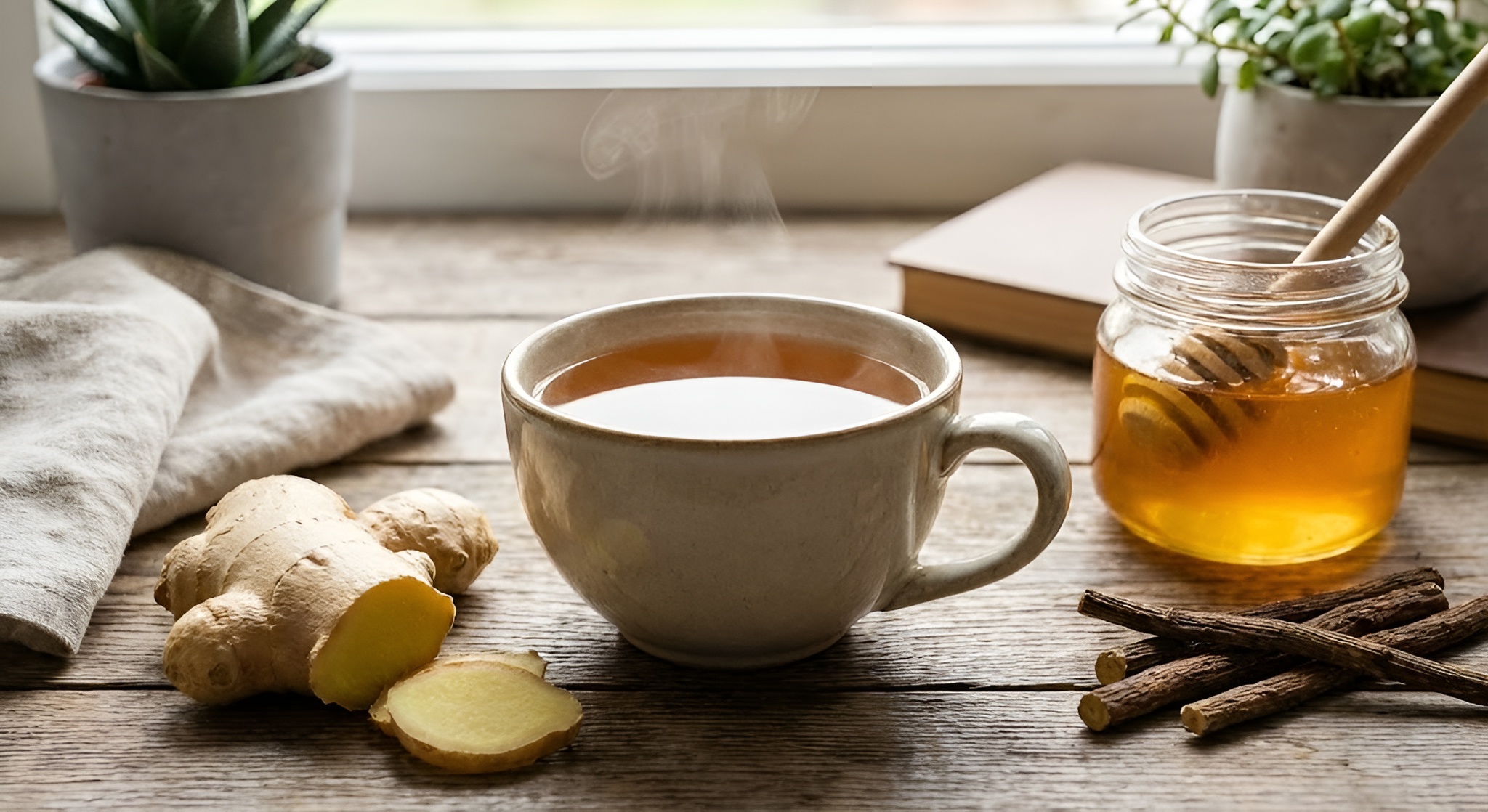
Honey isn't just for taste. It is a humectant (attracts moisture) and antibacterial. Manuka honey is best, but any raw honey will help coat the throat. Add it to your herbal tea, but only after the water has cooled slightly to preserve the enzymes.
3. The "Stage Water" Strategy
If you are performing, tea is great 30 minutes before you sing. On stage, stick to room temperature water.
Why room temp? Ice water constricts the blood vessels (bad for warm-up). Hot water increases blood flow too much (inflammation risk). Room temp is neutral and keeps the mechanism flexible.
Need a Voice Saver?
We've reviewed the best commercially available teas that contain the "Golden Trio" of vocal herbs (Licorice, Slippery Elm, Marshmallow). See our top picks here: The 5 Best Teas for Singers & Sore Throats →
Comments