1. Hand Luggage Rules for Tea: What You Can (and Cannot) Legally Pack in 2026
Dry loose-leaf tea, tea bags, and solid tea bricks are not classified as liquids under UK Civil Aviation Authority, EU, or US TSA regulations, so you may carry any quantity in your hand luggage without breaching the 100 ml liquids rule. Security officers may open pouches or tins for visual inspection or swab them for traces, so pack tea in clearly labelled, resealable containers—opaque foil pouches with the tea name written on the outside, or small metal tins with tight lids—to speed screening and avoid confusion with powders or food supplements.
Liquids derived from tea fall under the standard restriction: any brewed tea, cold brew, syrup, or concentrate must be in containers of 100 ml or less, all fitting inside a single transparent, re-sealable plastic bag measuring approximately 20 × 20 cm (one litre capacity). If you plan to bring a pre-brewed flask, you must empty it before security; most UK airports provide water fountains and hot-water stations airside where you can refill. Solid items such as honey sticks, sugar cubes, or dry milk powder are permitted and do not count toward the liquids allowance, making them useful travel sweeteners.
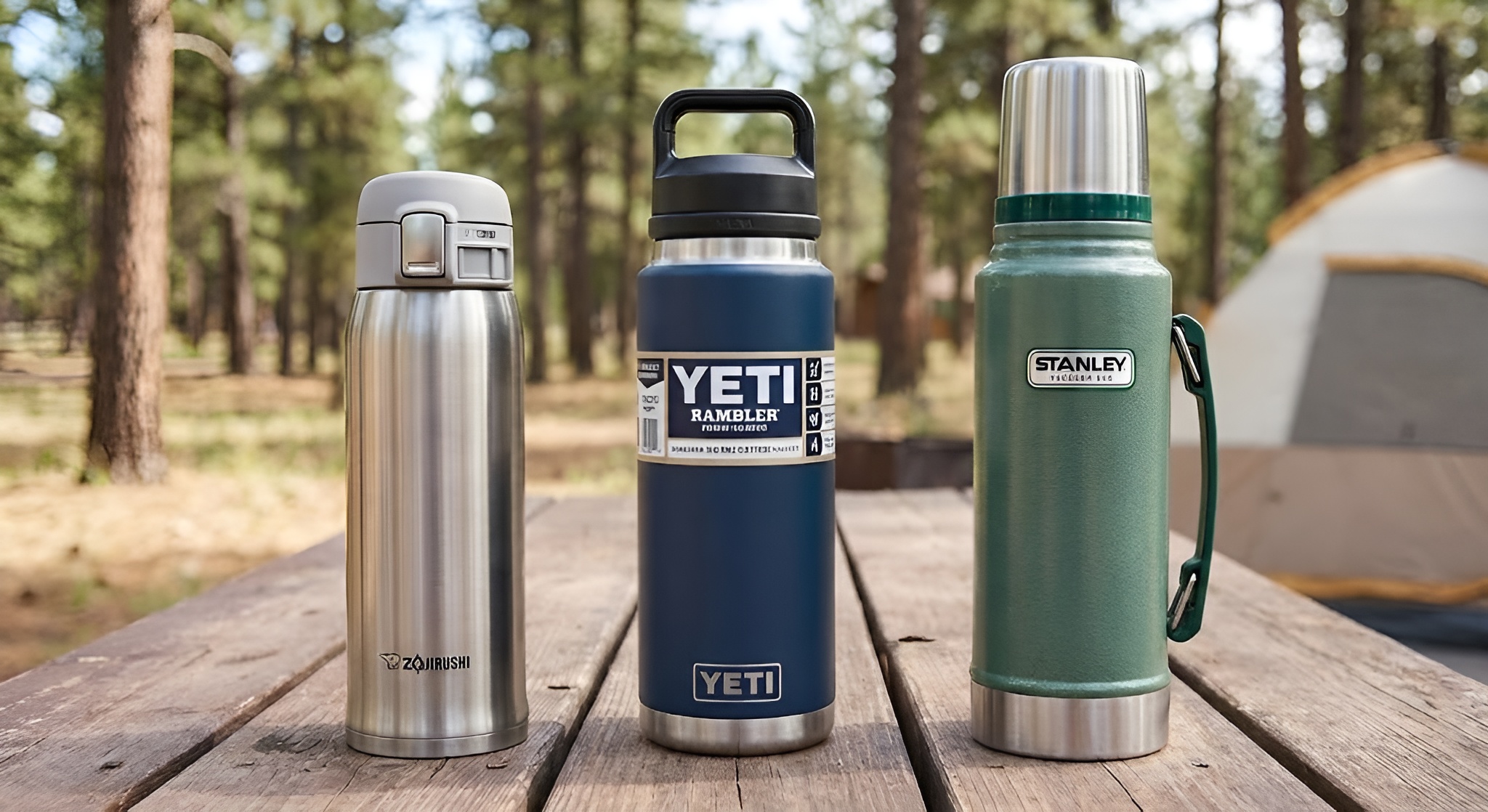
Brewing equipment—ceramic gaiwans, glass infusers, stainless-steel strainers, travel thermoses—is allowed in hand luggage provided it contains no liquid and poses no sharp-edge risk. Foldable silicone infusers and titanium mesh baskets pass screening easily; avoid scissors or metal tea knives unless they meet the 6 cm blade-length limit and are clearly packed. Battery-powered electric kettles and USB heating coils are technically permitted but are unlikely to be useful (UK airport power sockets are rare pre-security, and airlines prohibit use of personal heating elements in-flight), so save space and rely on lounge facilities or ask cabin crew for hot water.
The Clear-Label Rule
Write the tea name and type (Darjeeling SFTGFOP, Ti Kuan Yin oolong) on every pouch or tin with a permanent marker. Security staff are more likely to wave through a clearly identified food item than an anonymous sachet of loose brown leaves.
2. Choosing Travel-Friendly Teas: Which Leaves Survive Packing, Altitude, and Variable Water
Not all teas tolerate the stresses of travel equally. Delicate, high-aroma leaves—Japanese first-flush sencha, Chinese silver-needle whites, lightly oxidised Oriental Beauties—are vulnerable to temperature swings, humidity changes, and mechanical crushing in a bag jostled through overhead lockers. Their subtle volatile compounds dissipate quickly once vacuum-sealed packaging is opened, and cabin air (typically 10–20 per cent relative humidity) accelerates staleness. For summer 2026 flights, prioritise robust, forgiving categories: fully oxidised Assam or Yunnan blacks, medium- to dark-roasted oolongs (Wuyi yan cha, Taiwanese Dong Ding), and aged or ripe pu-erh, all of which retain flavour even after rough handling and brew acceptably with imperfect water.
Pre-portion your tea before you travel. Single-serving foil sachets or small zip-lock bags (2–3 g per serve) eliminate the need to carry scales, reduce the risk of spillage, and let you mix a curated selection without committing to a 50 g tin of one varietal. For a week-long trip, ten sachets cover you comfortably—five for outbound lounges and flights, five for the return—and leave room for other kit. If you're heading to a self-catering cottage or festival camp, pack those sachets as a stopgap and plan to buy larger quantities at your destination or order ahead for delivery.
Avoid teas that require precision—competition-grade greens needing 70 °C water, volatile oolongs demanding specific steep times—because you will not have the control to brew them well in a lounge or on a plane. Instead, choose leaves that tolerate a range of temperatures (85–100 °C) and steep durations (2–5 minutes): strong cold-brew blacks work hot or chilled, roasted oolongs forgive over-steeping, and aged pu-erh actually benefits from long contact time and boiling water, making it nearly foolproof in transit.
3. Packing Your Tea Kit: Essential, Minimal, and Lounge-Optimised Gear for 2026
A functional travel tea kit for hand luggage balances weight, security compliance, and brewing capability. At minimum, carry: (1) a collapsible silicone or mesh infuser (30–50 g, fits any cup), (2) a 300–500 ml insulated vacuum flask with a secure, leak-proof lid (empty at security, fill airside), (3) pre-portioned tea in labelled sachets, and (4) a small digital thermometer or temperature strips (optional but valuable if lounge water is unregulated). This combination fits inside a single packing cube or washbag corner and covers gate-side brewing, in-flight refreshment, and immediate post-arrival needs.
For travellers who plan extended lounge sessions or overnight layovers, add a compact gongfu set: a 100 ml ceramic gaiwan, two tasting cups, and a foldable drip tray. Modern designs nest inside a padded pouch no larger than a paperback and weigh under 200 g, making them viable for carry-on if tea is a centrepiece of your journey ritual. Pair this with a timer app on your phone and a microfibre cloth (lounges rarely provide proper tea towels), and you can execute controlled, multi-infusion sessions in most premium airport tea bars or quiet gate seating areas.
What not to pack: glass teapots (fragile, heavy), ceramic travel mugs without screw lids (leak risk), full-size tins of tea (bulky, slower through security), and any liquid-based flavourings or milk that exceed 100 ml. If you want milk, bring a few single-serve UHT pods (widely available in UK supermarkets) or plan to request it from lounge staff or cabin crew. Similarly, skip portable kettles—most UK and European lounges have filtered hot-water dispensers, and asking flight attendants for boiling water is straightforward and usually welcomed.
The One-Bag Test
If your entire tea kit doesn't fit inside a single one-litre freezer bag alongside your toiletries liquids pouch, you've over-packed. Ruthlessly edit down to three or four tea sachets, one infuser, and one flask for short trips.
4. Brewing in Airport Lounges: Navigating Water Quality, Equipment, and Etiquette
UK airport lounges in summer 2026—especially upgraded facilities at Heathrow T2, T3, and T5, Gatwick North, and Manchester T2—increasingly feature self-service beverage stations with filtered hot water at controllable temperatures, a response to growing demand from speciality-coffee and tea travellers. Look for multi-temperature dispensers (common in Plaza Premium, No1 Lounges, and BA Galleries clubs) that offer 80 °C, 90 °C, and 100 °C settings; these let you brew greens and oolongs correctly without relying on guesswork or cooling time. If only a single boiling tap is available, fill your flask, wait two minutes, and check with a thermometer—water cools roughly 10 °C per minute in a thin-walled cup—or simply brew robust blacks and aged pu-erh that thrive at full boil.
Water quality varies. Most UK lounges use municipal mains passed through carbon filters, which removes chlorine but not dissolved minerals; expect medium-hard water (150–250 ppm calcium carbonate) in London and the South East, which emphasises body and mutes high notes in the same way home brewing does. If the water tastes metallic or flat, a pinch of dissolved baking soda (if you've packed a tiny vial) can raise pH slightly and improve extraction, though this is overkill for casual drinking. The key practical step is to rinse your infuser and flask with a splash of hot water before brewing—lounge sinks are available, and a quick rinse removes residual soap, odours, or stale tea from previous uses.
Etiquette: using your own tea and kit in a lounge is generally welcomed, especially if you purchase it from a visible shelf or dispenser area rather than monopolising a staff-service counter. Clean up after yourself—wipe spills, dispose of spent leaves in compost bins if provided (or general waste), and don't leave infusers or cups scattered. If you're brewing gongfu-style with multiple infusions, choose a quiet corner table rather than the busy bar seating, both to avoid disturbing others and to give yourself space for your tray and timer. Most lounge staff are curious rather than hostile; a polite explanation ('I'm using my own oolong') usually prompts interest and occasionally leads to better water access or an invitation to use the staff kettle.
The Lounge Recon Walk
On arrival, do a quick lap to locate the hot-water station, check its temperature settings, find the nearest sink, and identify the quietest seating zone. Two minutes of reconnaissance prevents mid-brew frustration and interruptions.
5. Brewing and Drinking Tea on the Plane: Altitude, Taste Perception, and Cabin Realities
Cabin pressure at cruising altitude is equivalent to 1,800–2,400 metres elevation, which has two direct effects on tea: water boils at 92–95 °C (rather than 100 °C at sea level), reducing extraction efficiency for robust leaves, and your taste buds and olfactory receptors are significantly dulled—studies on airline catering consistently show a 20–30 per cent reduction in perceived sweetness and aroma intensity, along with heightened perception of umami and saltiness. This means that a delicate Darjeeling or floral oolong you adore on the ground will taste muted, thin, and one-dimensional in flight, while a strong Assam, a roasted Tie Guan Yin, or a shou pu-erh—already bold and tannic—will come through more recognisably.
To brew on board, request boiling water from cabin crew; most long-haul flights carry electric kettles for hot beverages, and crew are usually happy to fill your flask or cup if you bring your own infuser. Do not attempt to brew in the lavatory sink—the water is non-potable and comes from holding tanks treated with chemicals. If the flight attendant can only provide water from the coffee machine (common on short-haul or budget carriers), it will be around 85–90 °C, acceptable for blacks and roasted oolongs but too cool for aged pu-erh or very compressed teas. In that case, extend your steep time by 30–60 seconds to compensate for the lower temperature.
Because your palate is compromised, over-leaf slightly—use 3 g instead of 2.5 g, or steep for four minutes instead of three—to punch through the sensory dampening. Add a small amount of honey or sugar (request packets from the crew) to restore perceived sweetness, and avoid milk unless you genuinely enjoy it; the combination of UHT milk, altitude, and tannic tea often produces a flat, chalky flavour. If you find in-flight brewing unrewarding, consider it a hydration exercise rather than a tasting experience, and save your prized leaves for the lounge or your destination.
6. Hydration, Caffeine, and Timing: How to Drink Tea Strategically on Long Summer Flights
Cabin humidity is extremely low (10–20 per cent), and air circulation accelerates moisture loss from skin and mucous membranes, so you lose roughly 250 ml of fluid per hour on a long-haul flight through respiration and evaporation alone, independent of urination. Tea does count toward your fluid intake—the diuretic effect of caffeine is mild and does not offset the water content—but balancing caffeinated and non-caffeinated teas across the flight helps manage both hydration and alertness without triggering jitteriness or disrupting sleep.
A practical strategy for a daytime eastbound flight (e.g. UK to Mediterranean, departing morning): drink a strong black tea (cold brew or hot Assam) in the lounge before boarding to maintain morning alertness, switch to a light oolong or white tea mid-flight to stay hydrated without heavy caffeine, and finish with a herbal or sleep-friendly tisane (chamomile, rooibos) an hour before landing to ease the transition. For westbound or overnight flights, reverse the sequence: start light, use a robust black or pu-erh only if you need to stay awake during layovers, and prioritise hydration over stimulation once cabin lights dim.
Avoid drinking only black tea throughout a ten-hour flight—cumulative caffeine (a strong cup contains 40–70 mg) can reach 300–400 mg, equivalent to four espressos, and combined with dehydration and disrupted circadian rhythm, this often leads to headaches, irritability, and poor sleep on arrival. Alternate every second or third cup with plain water or herbal tea, and resist the temptation to drink simply because the trolley passes; intentional, timed sips from your flask are more effective than opportunistic cups of mediocre airline tea.
The Two-Flask System
If space and weight allow, pack a second small flask (200 ml) and fill one with black tea and one with herbal or white tea before boarding. You can then alternate without needing to rinse, rebrew, or ask crew repeatedly for water.
7. Security and Customs: Declaring Tea, Avoiding Confiscation, and Returning to the UK
Loose-leaf tea is not a controlled substance and does not require declaration when entering or leaving the UK, EU, or most international destinations, provided it is clearly a dried plant product intended for personal consumption and you are not carrying commercial quantities (typically defined as over 2 kg). However, agricultural import rules apply in some regions: Australia, New Zealand, and the US require tea to be commercially packaged or declared on arrival, and fresh or partially dried leaves may be refused or inspected. If you're travelling with rare or expensive tea (aged pu-erh, competition oolong), keep original retail packaging or a receipt to demonstrate provenance and avoid suspicion of smuggling or misclassification.
When returning to the UK from EU or non-EU countries, you may bring unlimited tea for personal use without paying duty, but if you are transiting through an airport with strict biosecurity (e.g. connecting through Australia or certain US hubs), be prepared to declare and possibly surrender leaves if they appear unprocessed. If you've purchased tea abroad and are unsure whether it meets UK import standards, pack it in checked luggage rather than hand luggage to reduce the chance of on-the-spot confiscation; checked bags are less likely to be opened for minor food items.
A common mistake: returning from a summer holiday with a flask of cold-brewed tea still in your bag and forgetting to empty it before security on your return leg. Even 50 ml over the limit can trigger a bag search, delay, and confiscation. Always empty, rinse, and dry your flask and infuser the night before your return flight, or immediately after your last brew in the departure lounge, so you pass through screening smoothly.
8. Destination Planning: Linking Air Travel Tea Strategy to Your Summer 2026 Itinerary
Your air travel tea plan should connect to the broader context of your trip. If you're flying to a UK holiday cottage or European self-catering rental, treat your hand luggage tea as a two-day bridge supply—enough to cover the journey and your first morning—and plan to buy a larger stash locally or have it delivered to your accommodation. If you're attending a festival or beach trip, your travel tea becomes your only tea unless you pack a separate camp kit in checked luggage, so choose hardy, forgiving leaves and over-pack slightly to avoid running out mid-festival.
For short city breaks or business trips where you'll have hotel access to a kettle, flying with a small travel set and five sachets is often more satisfying than relying on hotel tea bags, which are almost always low-grade dust in paper sachets. If your destination has a strong tea culture (Lisbon, Istanbul, Tokyo), research local suppliers in advance and plan to buy sample sizes on arrival, using your hand luggage tea only for the flights and lounges. Conversely, if you're heading somewhere with limited speciality tea access (many Mediterranean beach resorts, for example), increase your carry-on allocation and accept that your summer tea ritual will be simpler and more utilitarian than at home.
Finally, consider weight and space for the return journey: if you buy tea abroad, you'll need room in your bag. Many travellers pack an empty tote or foldable duffel in their hand luggage for this purpose, but if you're already maxing out your cabin allowance with brewing kit and clothes, plan to ship tea home separately or check a bag on the return leg. The key is to think through the full loop—outbound packing, in-destination use, and inbound return—so your tea strategy supports rather than complicates your summer travel.
The Home-Base Refill
If you're returning to a UK hub (Heathrow, Gatwick) with a long layover, some premium lounges now stock speciality UK tea brands. Use the opportunity to restock your sachets or try something new before your onward domestic leg.



Comments