1. Why Holiday Cottages Are Hard on Tea (and What Actually Matters)
The typical UK self-catering property is optimised for families heating up pasta, not for anyone attempting a controlled brew of loose-leaf tea. Kettles are often budget models that boil unevenly or roar like a jet engine; water comes from local mains or, in rural Scotland and Wales, from private bore-holes or hillside springs with wildly varying mineral content. Worktops are cluttered, there's rarely a timer, and the kitchen may be shared with people who consider a 'tea break' an interruption rather than a ritual.
What matters most is accepting that you won't replicate your home setup. The goal is a good enough cup that doesn't require fussing, doesn't create mess that annoys your travel companions, and doesn't demand equipment you'll struggle to pack. That means choosing teas that tolerate imprecision, bringing a small amount of the right kit, and—crucially—knowing when to simplify. A thermos of strong black tea brewed in the morning will serve you better on a windswept Pembrokeshire beach than any attempt to gongfu-brew oolong in a caravan.
The single biggest mistake is over-packing. Bringing six different teas, a full gaiwan set, a scale, and a temperature-controlled kettle is a recipe for frustration and resentment from whoever has to share the car boot. Instead, choose one or two reliable teas, one or two pieces of kit, and one or two simple methods. The rest is holiday.
The One-Tea Rule
If you can only pack one tea for a week-long cottage stay, choose a robust, malty Assam or a roasted oolong—both forgive hard water, over-steeping, and boiling temperatures, and both taste good black or with milk.
2. Which Teas Travel Well (and Which to Leave at Home)
Not all teas survive the journey. Delicate, high-moisture leaves—young white teas, first-flush Darjeelings, lightly oxidised oolongs—are vulnerable to compression, humidity changes, and accidental exposure to strong-smelling items in your luggage. A week in a suitcase next to sun cream and wet swimwear can leave Silver Needle tasting faintly of coconut and disappointment.
The best travellers are tightly rolled, low-moisture, and robust: Gunpowder green tea, tightly rolled into pellets, is almost indestructible and brews consistently even with boiling water. Hojicha, a roasted Japanese green tea, travels beautifully, tolerates hard water, and has a toasty, low-tannin profile that appeals even to non-tea-drinkers in your group. Genmaicha—green tea blended with toasted rice—is similarly forgiving, and the rice aroma masks any off-notes from variable water. Strong, malty Assam and robust Ceylon blacks are workhorses: they handle hard water, over-steeping, and milk without complaint.
Oolongs sit in the middle. Heavily roasted Dan Cong or Wuyi oolongs (often labelled 'rock tea') are excellent travellers and reward re-steeping even in a mug. Lightly oxidised, floral oolongs like Tieguanyin are riskier—they need softer water and precise temperatures to shine. Leave at home: delicate white teas, first-flush Darjeelings, sheng pu-erh (which can overwhelm a small cottage with its earthiness), and anything loose and fluffy that will crumble into dust. Also avoid strongly scented teas like lapsang souchong unless you want your clothes smelling of bonfire for the rest of the trip.
3. Hard Water, Soft Water, and the Cottage Water Lottery
Water is the invisible variable that determines whether your holiday tea tastes like home or like a chemistry experiment. Most UK holiday cottages are connected to mains water, which means limestone-heavy supplies in Cornwall, Devon, the Cotswolds, Yorkshire, and much of the South East. Hard water—rich in calcium and magnesium—creates a chalky scum on the surface of tea, flattens delicate flavours, and makes tannins taste metallic. Soft water, more common in Scotland, Wales, and the North West, is gentler on tea but can sometimes amplify bitterness if you over-steep.
You won't know what you're getting until you arrive, so plan for the worst. Hard-water strategies: brew with cooler water (80–85 °C instead of boiling) to reduce scum formation; add a tiny pinch of citric acid (available in the baking aisle of any supermarket) to soften the water; or cold brew overnight, which sidesteps the mineral interaction entirely and produces a clean, sweet infusion. Cold brewing works especially well for green teas and oolongs, which are most affected by hard water.
If the cottage has a water softener or filter jug, use it. If not, consider buying a small bottle of supermarket spring water for your first pot—tasting the difference will tell you whether the tap water is workable or whether you need to adjust your approach for the rest of the week. In rural properties with private water supplies, the water may be soft and pure (often delicious for tea) or heavily treated with chlorine (in which case, let it stand uncovered for an hour to off-gas before brewing).
The Cold-Brew Bypass
If the tap water tastes harsh or you can't control the kettle temperature, skip hot brewing altogether. Cold brew 5 g of gunpowder or hojicha per 500 ml in a jug overnight—no scum, no bitterness, no fuss.
4. The Minimal Packing List: What to Bring and What to Borrow
A full tea kit—gaiwan, pitcher, scale, thermometer, timer, filters—can fill half a suitcase and will earn you mocking looks from your travel companions. The goal is to bring the smallest possible set of tools that unlock good brewing in a cottage environment. Here's what actually matters:
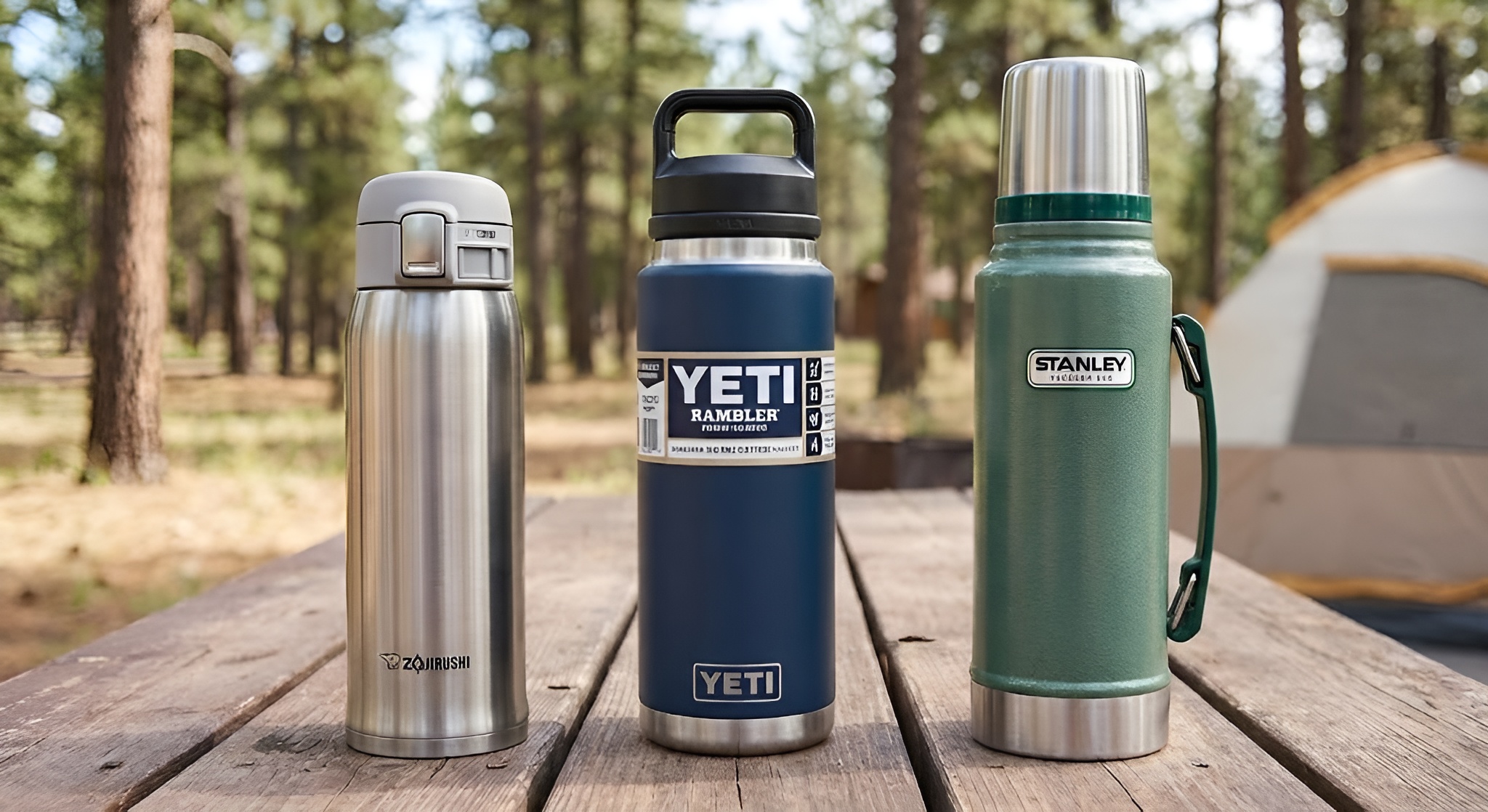
Essential (pack every time): A collapsible silicone infuser basket (15–20 g; fits any mug or small teapot; wash and fold flat). A small digital thermometer with a probe (check the kettle's actual temperature rather than guessing). A 5 or 10 g measuring spoon or scoop (brass or stainless steel; no batteries, no breakage). A resealable pouch or two of pre-portioned tea (see section 5). Useful but optional: A small 300–500 ml travel teapot or bottle with a built-in infuser (if you plan to brew multiple times a day and the cottage lacks a teapot). A thermos or insulated bottle (brew once in the morning, pour throughout the day; ideal for walks or beach trips). A tiny bottle of citric acid (10 g is enough for a week; softens hard water).
Borrow or improvise: Mugs, spoons, jugs, and the kettle are always provided. If the cottage has a French press, it doubles as an excellent large-volume tea brewer. If there's a filter coffee jug, use it for cold brew batch brewing. If you're brewing for a group and the cottage lacks a teapot, brew directly in a large Pyrex jug and strain through a small sieve (every rental kitchen has one). The less you pack, the more likely you are to actually brew rather than letting your kit sit unused in the car.
5. Pre-Portioning, Packaging, and Preventing the Exploded-Tea-Tin Disaster
Loose-leaf tea and luggage are natural enemies. Tins pop open under pressure, paper bags tear, and zip-lock bags develop mysterious pinholes that leave your suitcase interior dusted with tea fragments. The solution is pre-portioning at home before you leave. Work out how much tea you'll realistically drink per day (for most people, 10–15 g—enough for two or three mugs), multiply by the number of days, and divide that amount into individual resealable pouches.
Small, foil-lined stand-up pouches (available from any home-brew or packaging supplier) are ideal: they're light, airtight, and can be labelled with the tea name and suggested brewing parameters. Alternatively, use small screw-top plastic tubs (the sort sold for travel cosmetics) or even cleaned-out film canisters if you can still find them. Avoid: bringing your entire tea caddy or tin; decanting into unmarked bags (you'll forget which is which); packing tea in the same compartment as anything wet, fragrant, or likely to leak.
For a typical week-long stay, two pouches of 50–70 g each—one robust black or roasted oolong, one forgiving green or genmaicha—will cover most needs without excess. If you're travelling with family or friends who don't share your tea habit, consider packing a small stash of good-quality teabags (loose leaf's forgiving cousin) as a backup or to share. Proper storage principles still apply: keep pouches in a cool, dark part of your luggage, away from spices, toiletries, and anything that smells.
The Day-Sachet Method
Portion your tea into one small sachet per day of travel—it eliminates over-packing, stops you fussing over quantities in the cottage, and gives you a clear count of how much you've brought.
6. Adapting Your Brewing: Mug Method, Grandpa Style, and Cold Overnight
Forget gongfu. Forget precise gram measurements and thirty-second infusions. In a holiday cottage, you need methods that work with limited equipment, limited attention, and limited patience from the people waiting for you to finish so they can make toast. Three approaches cover almost every scenario:
Mug method (the workhorse): Drop your infuser basket into a large mug, add 3–4 g of tea, pour water at the appropriate temperature (use your thermometer or just wait 90 seconds after the kettle clicks off), and steep for 3–4 minutes. Remove the basket, drink. Reliable, repeatable, no mess. Works for blacks, greens, oolongs, and herbal infusions. If you're brewing for two, use a small teapot or a large French press; if you're brewing for a group, scale up in a jug and pour through a sieve.
Grandpa style (the no-kit solution): Drop a small pinch of tea (2–3 g) directly into a large mug or thermos, add hot water, and sip as the leaves settle to the bottom. Top up with more water as you drink. This works best with robust, whole-leaf teas like Longjing, gunpowder, or rolled oolong—the leaves are heavy enough to sink and won't clog your mouth. It's how much of China drinks tea daily, and it's near-impossible to ruin. Cold brew overnight (the lazy genius method): Add 5–10 g of tea to a jug or bottle, fill with cold tap water, leave in the fridge or on the counter overnight, and strain in the morning. No kettle, no temperature control, no timing stress. Cold extraction produces a naturally sweet, low-tannin infusion that tolerates hard water and keeps in the fridge for up to three days. Ideal for families, for hot weather, and for cottages where the kitchen is chaos in the mornings.
7. No-Mess Solutions for Families and Shared Kitchens
If you're travelling with family—especially with children—tea-making can become a source of tension. Loose leaves on the worktop, infusers dripping on the table, and kettles boiling at 6 a.m. are not universally popular. The key is containing the mess and minimising disruption. Use a small tray or plate as your designated tea station: everything—leaves, infuser, spoon, mug—stays on the tray, and any spills are contained. Brew early or late, when the kitchen is empty, and consider cold brewing overnight in a sealed jug so there's no morning scramble.
If you're sharing the cottage with non-tea-drinkers, bring a couple of good-quality teabags (loose leaf in a sachet) to offer them—it's a gesture of goodwill and prevents the 'why do you need all that stuff just for tea?' conversation. If space and patience allow, a small insulated bottle or thermos lets you brew once and drink throughout the day, freeing up the kitchen and keeping your tea habit out of everyone else's way.
For children, mugicha (Japanese roasted barley tea) is an excellent option: it's caffeine-free, naturally sweet, delicious cold, and can be brewed in large batches and kept in the fridge. Alternatively, genmaicha or hojicha have very low caffeine and a toasty, approachable flavour that children often prefer to standard black tea. The goal is for your tea habit to be invisible, efficient, and—above all—not a source of stress on what's supposed to be a relaxing holiday.
The Tray Trick
Keep all your tea kit—infuser, spoon, thermometer, leaves—on one small tray. It contains mess, makes clean-up instant, and signals to others that this is your corner of the kitchen, not communal clutter.
8. Buying Tea on Holiday and What to Do If You Forget Your Kit
If you arrive at the cottage and realise you've left your tea at home (it happens), or if you simply want to try something local, most UK holiday destinations have at least one independent café, deli, or farm shop that stocks loose-leaf tea. Cornwall, the Lake District, the Scottish Highlands, and the Welsh borders all have thriving small tea suppliers, and many stock local or British-grown blends that make excellent souvenirs. Look for robust blacks, flavoured blends, or herbal infusions that reflect the local terroir—Cornish breakfast blends, Scottish Highlands breakfast, or Welsh-grown green tea from Pembrokeshire's Dà Chá estate.
If you've forgotten your infuser, improvise: a small sieve or tea strainer (every cottage kitchen has one) works for straining brewed tea from a mug or jug; a clean muslin cloth or even a coffee filter can be draped over a mug and held in place with an elastic band to make a disposable infuser; or brew grandpa style (leaves directly in the mug) and sip carefully. If the cottage has a French press, that's your large-volume brewer sorted. If there's a cold brew jug or filter coffee jug, you can cold brew with nothing more than loose leaves and time.
The worst-case scenario—truly no kit, no loose leaf, no time—means falling back on supermarket teabags. Choose the best available (often a premium own-brand Assam or Breakfast blend), brew strong, and accept that this is what holidays sometimes look like. A mug of slightly mediocre tea, drunk while watching the rain on the cottage window or the sun setting over the coast, is still a mug of tea. The point is not perfection; the point is the pause, the warmth, and the ritual, however simplified.



Comments