Medical Disclaimer
The content on this page is for educational purposes only and does not constitute medical advice. Lion's Mane and other adaptogens may interact with certain medications. Always consult your GP or healthcare provider before adding new supplements to your diet.
1. The Science: Why "Borrowing" Energy Fails
To understand why mushrooms are trending, we have to look at why coffee fails. caffeine works by blocking Adenosine receptors in your brain. It doesn't actually give you energy; it just hides the chemical signal that tells you you're tired. Eventually, the dam breaks, and you crash.
Functional Mushrooms work differently. They are Adaptogens. Instead of forcing your body into a "fight or flight" state (adrenaline), they help your body regulate stress hormones (cortisol) and improve cellular efficiency.
The Star Player: Lion's Mane (The Brain Builder)
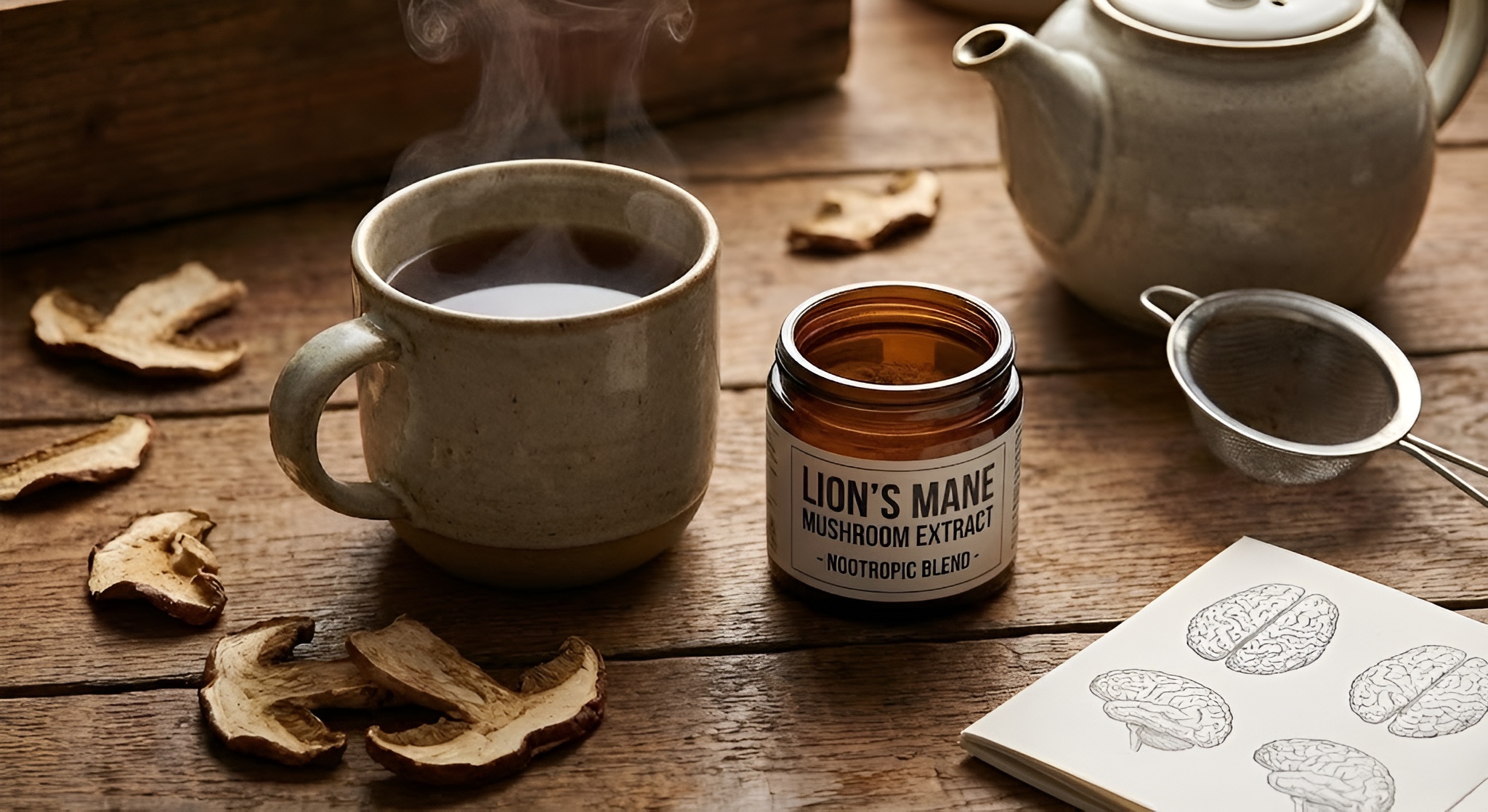
[Image of Lion's Mane mushroom]Lion's Mane (Hericium erinaceus) is unique because it stimulates the production of Nerve Growth Factor (NGF). This protein is essential for the growth and repair of neurons. While caffeine creates a temporary buzz, Lion's Mane is literally helping your brain promote nerve health for better memory and focus over time.
2. The Taste Test: Does It Taste Like Soup?
This is the #1 objection. People imagine drinking salty mushroom broth for breakfast. The reality is very different.
Medicinal mushrooms are usually sold as Dual-Extracted Powders. This process concentrates the beneficial compounds (beta-glucans) and removes the fibrous, "fungal" taste.
- Chaga: Tastes distinctively like vanilla and dark earth. It is often used as a coffee substitute because it is dark and bitter.
- Reishi: Very bitter and woody (like 100% dark chocolate). It pairs perfectly with cacao.
- Lion's Mane: Mild, savory, and slightly sweet. It disappears into any tea blend.
Love Earthy Tea? You'll Love This.
If you are a fan of Ripe Pu-erh, you are already drinking "functional fungus." Pu-erh gets its earthy, smooth flavor from microbial fermentation (mold). Mushroom tea hits that exact same flavor profile—smooth, dark, and grounding. Read more about earthy teas: The Connoisseur's Guide to Pu-erh →
3. The "Big 3" Functional Fungi Explained
Don't just buy a random "Mushroom Blend." You need to match the fungus to your need.
| Mushroom | Superpower | Best Time to Drink |
|---|---|---|
| Lion's Mane | Focus, Memory, Nerve Repair | Morning (Work/Study) |
| Cordyceps | Oxygen Uptake, Athletic Performance | Pre-Workout / Mid-Day |
| Reishi | Calm, Sleep, Stress Reduction | Evening (Wind Down) |
| Chaga | Immunity, Antioxidants | Anytime (Daily Defense) |
4. How to Blend Mushrooms into Your Tea
You don't have to give up your favorite leaf. Mushroom powders are designed to be "boosters."
- The "Brainy" Matcha: Whisk 1 tsp of Matcha with 1/2 tsp of Lion's Mane powder. The grassy notes of Matcha mask the savory mushroom perfectly.
- The "Immunity" Chai: Add 1 tsp of Chaga powder to your Masala Chai. The spices (cinnamon, ginger) complement the vanilla notes of Chaga.
- The "Sleepy" Cocoa: Mix Reishi powder with hot chocolate or Rooibos tea. The bitterness of Reishi mimics dark chocolate.
Avoiding the Jitters?
If you are exploring mushrooms because caffeine gives you anxiety, you are on the right track. Lion's Mane provides focus without the "fight or flight" response. Learn more about caffeine management here: Tea vs. Coffee Anxiety Guide →
5. Verdict: Is It Worth The Hype?
If you are looking for a magic pill that works instantly like a double espresso, you might be disappointed. Adaptogens work cumulatively. You need to drink them for 2-3 weeks to feel the full "lifting of the fog."
However, for sustainable, crash-free focus that actually heals your brain rather than just whipping it into action, Mushroom Tea is superior to coffee in every way.
Comments