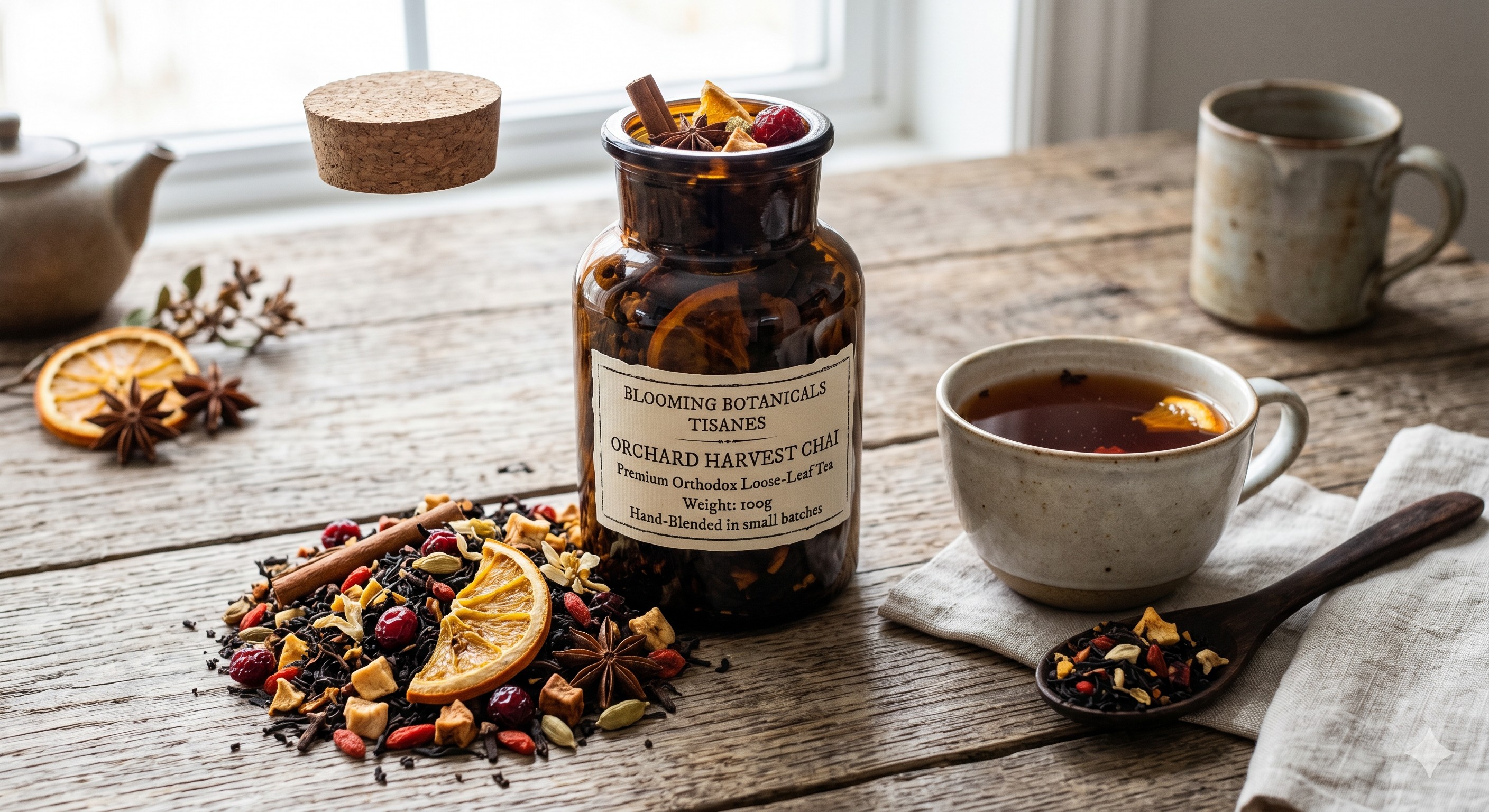
1. What “Tisane” Actually Means — And Why The Category Exploded
The technical definition: A tisane is any infusion made from plant material that is not Camellia sinensis. Chamomile, peppermint, rooibos, honeybush, hibiscus, ginger, fruit pieces and spice blends all qualify; black, green, white, oolong and pu-erh do not. The distinction matters legally (only Camellia sinensis can be sold as “tea” in several jurisdictions) and chemically (no caffeine, no tannic astringency from tea polyphenols), see our full primer on herbal teas. The modern speciality category, however, deliberately blurs the line: many of the most successful “tisanes” on the shelf today are actually fruit-and-spice blends sitting on top of a real tea base, sold for the flavour rather than the botanical classification.
Why the category exploded after 2019: Three independent forces converged. First, declining alcohol consumption among under-35s created demand for “occasion” non-alcoholic drinks that felt indulgent. Second, the post-pandemic wellness boom pushed consumers to spend more per cup on something that signalled self-care. Third, the loose-leaf revival — driven partly by US speciality houses such as Harney & Sons, Mariage Frères and Adagio Teas — normalised the idea of paying £10–25 for a tin instead of £2.50 for 80 bags. Mintel reported the UK speciality tea and tisane segment grew at roughly 7% CAGR from 2020 to 2025, against flat performance for everyday black tea. The shape of the shelf has changed: clear caddies showing whole flowers and visible fruit chunks have replaced opaque cardboard boxes, see market trend analysis.
2. The Whole-Fruit Standard: Why Visible Inclusions Matter (When Done Right)
The honest version of the inclusion argument: We have written at length about why dried strawberries often taste like cardboard — air-drying soft fruit at 60°C destroys 80–95% of its volatile aromatic compounds. But that critique applies to cheap dried fruit in cheap blends. Premium tisane producers have largely solved the problem with two techniques: freeze-drying (which preserves 60–80% of volatiles by sublimating ice rather than evaporating water) and pairing fruit pieces with a small dose of natural fruit extract to restore the volatiles that drying inevitably costs. The result is a blend that looks like fresh fruit and also tastes like it.
What to look for on the label: Genuinely premium fruit tisanes will name the drying method (“freeze-dried strawberry pieces” rather than just “strawberry pieces”), specify the cultivar or origin where it matters, and disclose any added flavouring as “natural flavouring from real fruit extract.” Adagio’s Berry Creme Compote, for example, lists hibiscus, blackcurrants, strawberries, raspberries and natural flavour on a 95-rated cup — the visible berries do the visual work, the extract carries the aroma, and the hibiscus delivers the colour and tang. That is the premium playbook. The supermarket failure mode — a sprinkle of nondescript red bits with no extract backup — produces the cardboard cup most consumers associate with herbal tea, see how to identify artificial vs. natural flavouring.
3. The Spice Half Of The Equation: Why Whole Beats Ground
Volatile oil chemistry of common spices: Cardamom, cinnamon, cloves, star anise, fennel and ginger all derive their character from essential oils stored in cell structures — cardamom seeds in their green pods, cinnamon in the inner bark layer, cloves in unopened flower buds. Once those structures are ruptured (i.e. ground), the oils begin to oxidise within hours. Pre-ground supermarket cinnamon loses roughly 40% of its cinnamaldehyde within 6 weeks of grinding and 70% within 6 months. A stick of cinnamon kept whole loses less than 10% over the same period. Premium spice-blend tisanes that arrive as visible spice pieces — cardamom pods, cinnamon shards, peppercorns, clove buds — therefore deliver dramatically more aroma than ground equivalents at the same retail price, see DIY chai spice chemistry.
Where the speciality houses pull ahead: The premiumisation playbook for spice blends is straightforward: source whole spices, lightly crack rather than grind, blend with whole-leaf tea, and let the consumer break the pods themselves at the point of brewing. Adagio’s Masala Chai and Pumpkin Spice ranges follow this pattern, as do Bird & Blend’s spice-forward blends and Pukka’s Three Ginger. The contrast with a standard supermarket chai bag — a fine brown powder of ground spice and tea dust that has been sitting in a warehouse for nine months — is enormous. The cup tells you immediately: whole-spice chai is fragrant from the first sniff of the dry leaf, dust chai has to be over-brewed to deliver any spice character at all, see our deep dive on whole vs. crushed chai.
4. The Tea Base Becomes The Story
What “pairing” actually means: The premium tisane category has quietly absorbed a lesson from wine and coffee: the base matters as much as the flavouring. A fruit blend on top of a tannic, low-grade CTC dust will taste astringent and one-dimensional no matter how good the fruit is. The same fruit on top of a malty Yunnan, a clean Ceylon high-grown or a delicate white tea base will taste integrated and layered. Adagio’s Earl Grey Bravo (95-rated) and Earl Grey Moonlight (96-rated) are good case studies: both pair bergamot oil with named tea bases — Ceylon for Bravo, white tea for Moonlight — and the difference in the cup is immediately legible to anyone who has drunk a generic supermarket Earl Grey, see our Earl Grey base comparison.
The grading vocabulary you need: Look for OP (Orange Pekoe), FOP (Flowery Orange Pekoe), SFTGFOP (Special Finest Tippy Golden Flowery Orange Pekoe) or named single-origin descriptors (“Ceylon Dimbula,” “Assam Mangalam,” “Yunnan Dianhong”). These signal that the producer cared enough about the base to name it. Avoid blends where the ingredient list reads simply “black tea” or “green tea” with no origin — that is almost always low-grade CTC fannings priced as filler. The premium move is the opposite: name everything, hide nothing, and trust the consumer to recognise the upgrade. See our complete grading guide and single-origin explainer.
| Tier | Typical Format | Tea Base | Fruit / Spice | Retail Price (100g equiv.) | Volatile Aroma Retention |
|---|---|---|---|---|---|
| Supermarket Bag | String & tag, fannings | Unnamed CTC dust | Powdered, sprayed flavouring | £3–5 | 10–20% |
| Mid-Tier Pyramid | Nylon / PLA pyramid bag | Broken leaf, unnamed origin | Small visible pieces + extract | £6–10 | 30–50% |
| Speciality Loose-Leaf | Tin, pouch, sample | Named single-origin / blend | Freeze-dried fruit, whole spices, named extract | £12–25 | 60–85% |
| Luxury / Artisan | Hand-blended small batch | Estate-level single-origin | Whole flowers, essential oils, hand-cracked spice | £30+ | 80–95% |
5. Honeybush, Rooibos and the Caffeine-Free Premiumisation Wave
Why honeybush is having a moment: South African honeybush (Cyclopia spp.) has become the premium tisane base of choice for fruit and dessert blends, overtaking rooibos in the speciality segment. Honeybush is naturally sweeter, contains less of the slightly woody mineral character that some palates dislike in rooibos, and pairs cleanly with banana, vanilla, caramel and stone fruit flavours. Adagio’s Honeybush Banana Nut sits on a 97-rated cup precisely because honeybush’s native sweetness amplifies a small amount of natural banana and walnut flavouring without needing added sugar. Premium producers have rediscovered that the base is doing most of the flavour work; the inclusion is just steering it.
The dessert-tisane category: Honeybush, rooibos and chamomile are also the bases behind the “dessert-in-a-cup” trend — butterscotch, sticky toffee, salted caramel, blackforest, tiramisu. These blends combine a sweet caffeine-free base with natural flavouring derived from cocoa shells, vanilla bean, caramelised sugar and roasted nuts. They sit in the same psychological category as mindful evening rituals: an indulgent cup that doesn’t carry caffeine, calories or alcohol. Adagio’s Butterscotch (95-rated) is a leading example — honeybush base, caramelised sugar shards, a touch of natural butter flavouring — and the format is being copied across the speciality market.
6. Reading An Ingredient List Like A Pro
The order is doing work: EU and UK food labelling rules require ingredients to be listed in descending order by weight. In a premium tisane the named tea or named tisane base should always be first. If “sugar,” “maltodextrin” or “natural flavouring” is listed before the tea, the product is functionally a flavoured powder, not a tea. If “hibiscus” is listed first in a “berry” blend, that explains the deep red colour and the tartness but also tells you that there is more hibiscus than berry in the cup. Reading the order alone tells you what the dominant flavour and budget allocation will be, see how blenders calculate ratios.
Red flags to avoid: “Tea aroma,” “tea-like infusion,” “flavouring (artificial),” unspecified “spices,” or a long list of E-numbers all indicate a budget product. Acceptable terms in premium tisanes include “natural flavouring,” “essential oil of bergamot,” “freeze-dried [fruit],” “whole [spice],” and named origins. Be wary of the word “blend” with no detail — it usually means the producer doesn’t want to disclose what is doing the heavy lifting. Speciality houses like Adagio, Harney & Sons, Bellocq and Mariage Frères tend to err on the side of over-disclosure precisely because their consumers know how to read the list, see certifications guide.
How To Stress-Test A Premium Tisane Before You Commit
The sample-first principle: Premium speciality houses have caught up to coffee culture on this — most now sell 5–15g sample pouches at low cost specifically so consumers can audition a blend before paying for a 100g tin. Adagio’s 75p / 75¢ sample programme is the most visible example, but Whittard, Bird & Blend, Hampstead Tea and Postcard Teas all run similar formats. The rational consumer move with any new premium tisane is therefore: buy three samples for the price of one tin, brew them blind side-by-side with the same water and the same gear, and only commit to whichever survives the test. This is the same logic that turned third-wave coffee into a category — speciality tisanes are now mature enough to deserve the same treatment, see structured tasting protocol.
The dry-leaf sniff test: Before you even brew, open the pouch and inhale. A genuinely premium fruit-and-spice tisane should smell vivid and specific in the dry leaf — you should be able to name the dominant fruit and spice without reading the label. If the dry leaf smells vague, dusty or faintly perfumed, the volatiles have already escaped or were never there. The best blends — Berry Creme Compote, Honeybush Banana Nut, a properly fresh whole-spice masala chai — give you 60–70% of the cup’s pleasure from the dry-leaf aroma alone.
7. The Economics: Why £15 Tisanes Cost Less Per Cup Than £3 Boxes
The cup-cost arithmetic: A £3 box of 80 supermarket tisane bags works out at roughly 3.75p per cup. A £15 tin of 100g loose-leaf premium tisane — brewed at the standard 3g per cup — yields 33 cups, or 45p per cup. On paper the premium product is 12× more expensive. In practice, however, a properly made loose-leaf blend re-steeps two or three times, so the real cost falls to 15–20p per cup. Compare that to a high-street coffee shop tisane (£3.50–4.50 for one cup, same tea bag you can buy in the supermarket) and the speciality option is dramatically cheaper per occasion, see full cost breakdown.
Why this matters for the category: The premiumisation of tisanes is not a luxury squeeze — it’s a value re-allocation. Consumers are moving budget away from low-margin daily bags and towards higher-margin occasion blends, and the per-cup cost is roughly the same. This is why the speciality segment has been compounding while the standard segment has been flat: the same household drinks fewer cups of better tea, not more cups of cheaper tea. Brands that have built their range around this consumer — Adagio Teas, Bird & Blend, Pukka at the upper end of its range, the entire third-wave US tisane wave — have been the visible winners. The full ranking of which fruit and spice blends actually deliver against this brief is covered in our dedicated fruit & spice tisane review, with eight blends scored against a single brewing protocol.
8. Where The Category Goes Next
Three signals to watch: First, microencapsulation — spray-drying fruit volatiles inside a protective maltodextrin shell that releases on contact with hot water — is moving from instant tea into premium loose-leaf. Expect to see “encapsulated fruit aroma” as a feature claim by 2027. Second, named-cultivar fruit (Gariguette strawberry, Alphonso mango, Yubari melon) is appearing in luxury blends the same way named-origin coffee did a decade ago. Third, sustainability metrics — specifically the carbon cost of freeze-drying versus spray-drying versus simple air-drying — are starting to drive ingredient selection at the upper end, see carbon footprint analysis.
What this means for the buyer right now: The premium tisane segment is in its third-wave moment — the same point coffee was at in 2010. Producers are over-disclosing, ingredients are getting more specific, sample programmes are normal, and the consumer who learns to read the label gets a dramatically better cup for similar money. Speciality houses that have been pushing this since the early 2000s — Adagio Teas being one of the most visible — are positioned as the reference points: their best-reviewed blends define what “good” looks like in the category, and the rest of the market is now benchmarking against them. The next time you stand in front of the tisane shelf, the question to ask isn’t “what flavour do I want?” — it’s “what is the base, what is the inclusion, and is anyone naming either?” If both answers are yes, you are holding a premium product. If both are no, put it back.



Comments