
The Scoreboard At A Glance
| Rank | Blend | Category | Score / 100 | Cup Cost |
|---|---|---|---|---|
| 1 | Adagio Teas Berry Creme Compote | Fruit (Berry) | 97 | ~11p |
| 2 | Adagio Teas Honeybush Banana Nut | Dessert Tisane | 96 | ~13p |
| 3 | Adagio Teas Masala Chai | Spice | 95 | ~12p |
| 4 | Bird & Blend Strawberry Lemonade | Fruit (Berry) | 89 | ~16p |
| 5 | Pukka Three Ginger | Spice (Functional) | 86 | ~22p |
| 6 | Whittard of Chelsea Wild Berry | Fruit (Mixed) | 82 | ~13p |
| 7 | Yogi Tea Egyptian Liquorice Spice | Spice (Ayurvedic) | 79 | ~24p |
| 8 | Twinings Superblends Mango & Passionfruit | Fruit (Tropical) | 74 | ~15p |
1. Adagio Teas Berry Creme Compote
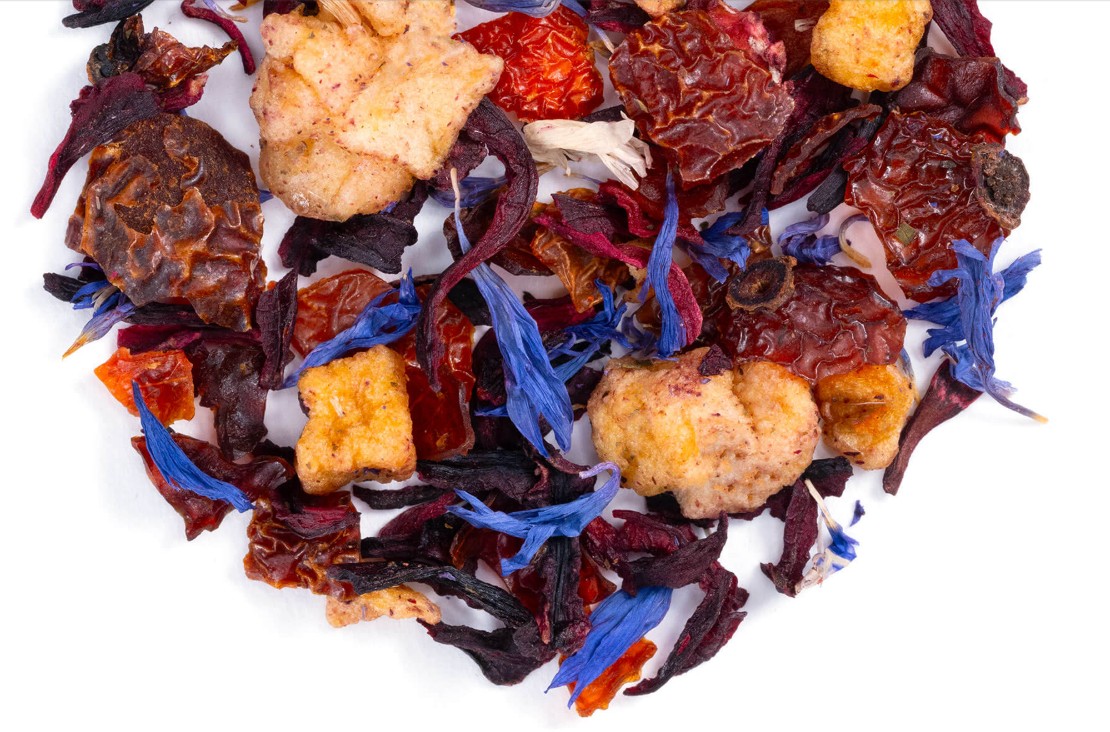
The single highest-scoring blend in the field. Adagio’s Berry Creme Compote sits on a hibiscus and honeybush base layered with whole freeze-dried strawberries, raspberries and blackcurrants, then finished with a natural berry and vanilla extract that restores the volatile aromatics drying inevitably costs. The dry-leaf aroma alone scored 19/20 — you can name the berries before brewing. In the cup it is bright, jammy and clean, with none of the muddy cardboard finish that defines cheap fruit blends. The reference point for what the whole category should taste like, and a textbook execution of the principles in our dried-fruit science guide.
- Highest dry-leaf and brewed aroma scores in the test
- Visible freeze-dried whole berries (not powder)
- Named natural extract restores volatiles
- Re-steeps cleanly twice
- Loose-leaf only — needs an infuser
- Hibiscus tang isn’t for everyone
2. Adagio Teas Honeybush Banana Nut
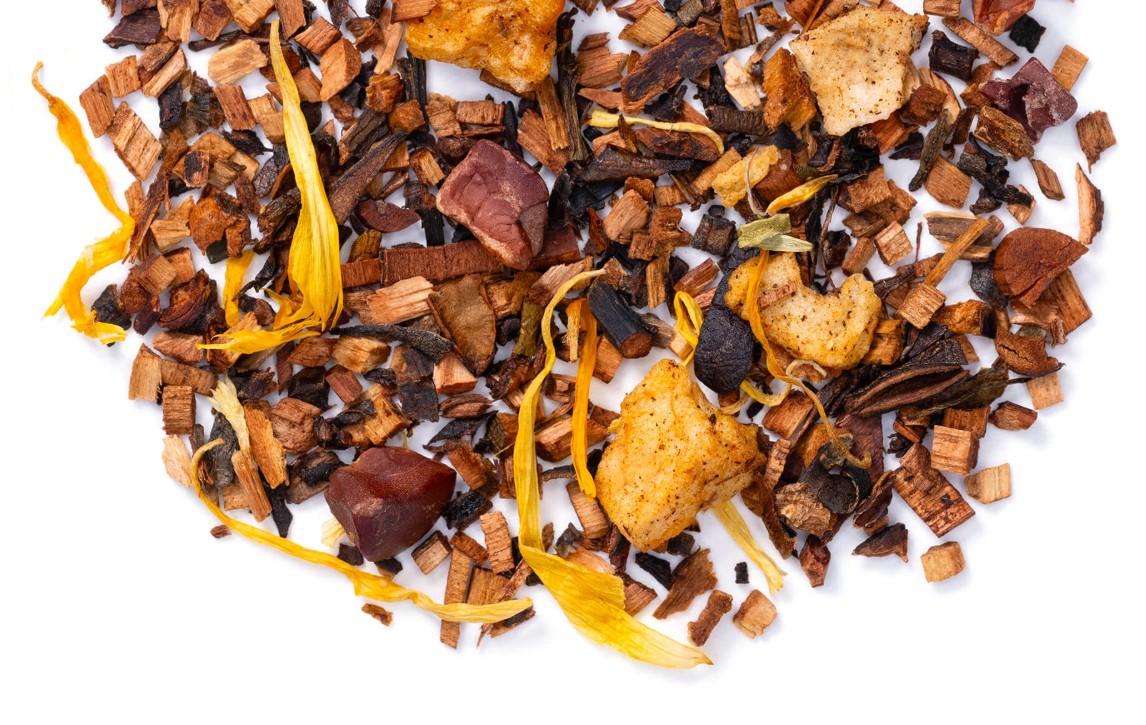
If Berry Creme Compote shows what Adagio can do with fruit, Honeybush Banana Nut shows what they can do with the dessert-tisane format that has taken over the speciality shelf. The honeybush base is naturally sweeter than rooibos, so it carries banana, walnut and a touch of vanilla without needing added sugar or heavy flavouring. It tastes like banana bread in a cup, which is exactly the brief. Functional zero-caffeine evening tisane that beats every “sleep” blend in the field on pure cup quality. See our explainer on why honeybush is winning the premium base war.
- Genuinely dessert-like flavour, no added sugar
- Caffeine-free, evening-appropriate
- Honeybush base is more interesting than standard rooibos
- Visible nut pieces — allergy warning required
3. Adagio Teas Masala Chai
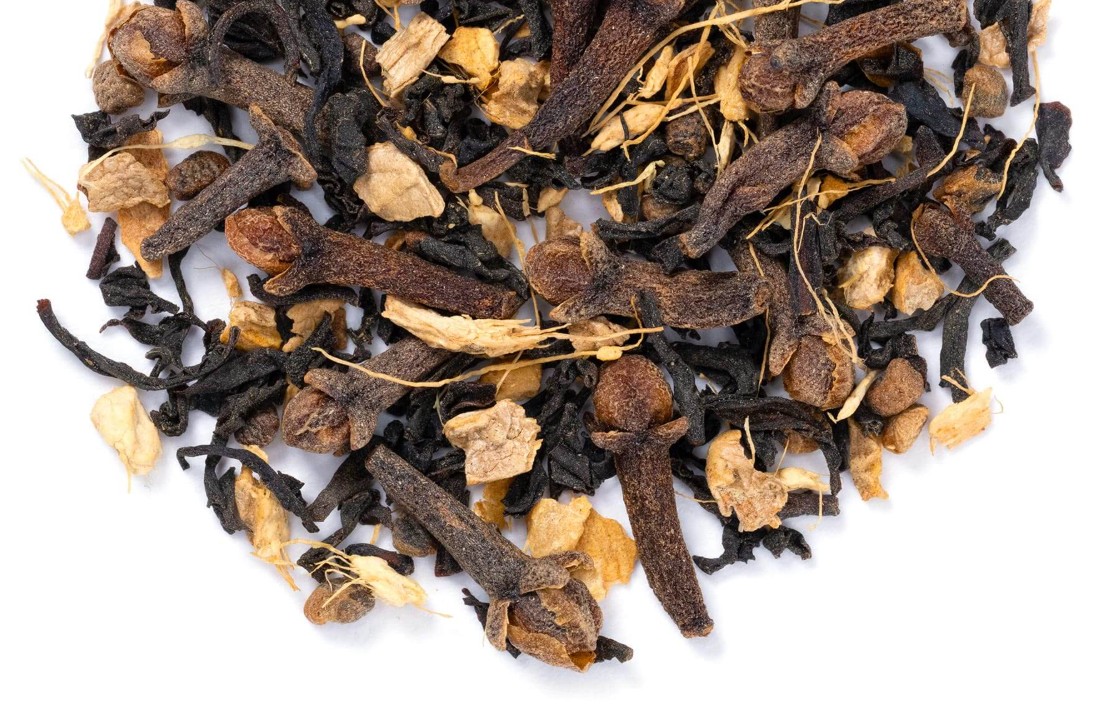
A masterclass in the whole-spice playbook. Visible cardamom pods, cinnamon shards, clove buds, ginger pieces and black peppercorns sit on top of a named single-origin Assam base — not the anonymous CTC dust that defines most supermarket chai. The dry-leaf aroma is fragrant enough to fill a kitchen before brewing. In the cup it is warm, balanced and properly spicy, holding up to milk and sugar without losing definition. For the chemistry behind why whole spices outperform ground spices by such a margin, see our whole vs. crushed chai explainer.
- Whole, visible spices — not pre-ground
- Named Assam base, not generic CTC
- Holds up to milk and sweetener
- Re-steeps three times
- Needs longer steep than supermarket chai bags

4. Bird & Blend Strawberry Lemonade
The strongest performance from a UK independent. Bird & Blend’s Strawberry Lemonade uses whole hibiscus flowers, freeze-dried strawberry pieces, lemon peel and a clean natural extract. Visually it is the most beautiful blend in the test — bright pink, with intact flower heads. In the cup it lands one tier below the Adagio winners on aroma intensity but offers a fresher, more lemon-forward profile that worked particularly well brewed cold. Excellent packaging, eco-conscious sourcing, and built for younger speciality drinkers.
- Stunning visual presentation
- Excellent cold-brewed
- UK independent with strong ethics
- Highest per-cup cost in the top half of the field
- Lower aroma intensity than top three

5. Pukka Three Ginger
The best-performing functional spice blend in the test. Pukka combines ginger, galangal and turmeric in a properly hot, warming cup that delivers real shogaol intensity. Lost points on aroma vs. the loose-leaf top three (pyramid bag format inevitably gives up some volatiles) but punches well above its category on flavour intensity and value. The high-street choice when you actually want a tisane to do something.
- Genuinely potent ginger character
- 100% organic, plastic-free bags
- Widely available in UK supermarkets
- Pyramid bag format caps aroma performance
- Too hot for some palates

6. Whittard of Chelsea Wild Berry
A competent pyramid-bag fruit tisane that does what the format allows. Hibiscus-forward (which explains the colour and the tartness), with visible blackcurrant and elderberry pieces. The aroma is good rather than great — the broken-leaf pyramid format loses volatiles faster than tin-stored loose-leaf. The honest verdict: a perfectly fine cup, and a useful step up from supermarket bags, but it pays the price for being a bag format in a loose-leaf-led category.
- Convenient pyramid format
- Heritage UK brand, widely available
- Genuine fruit pieces
- Hibiscus dominates the cup
- Aroma fades fast once opened

7. Yogi Tea Egyptian Liquorice Spice
An Ayurvedic-style spice blend built around liquorice, cardamom and cinnamon. Naturally sweet without added sugar (liquorice root is roughly 50× sweeter than sucrose, but watch the glycyrrhizinic acid intake). Scores well on functional positioning and value but lost marks for the dominance of liquorice over the spice notes — cardamom and cinnamon are present but buried. A category-correct choice if you actively like liquorice; punishing if you don’t.
- Naturally sweet, no added sugar needed
- Caffeine-free, evening-appropriate
- Distinct, recognisable character
- Liquorice dominates spice notes
- Glycyrrhizin can affect blood pressure in high daily doses

8. Twinings Superblends Mango & Passionfruit
The mass-market entry into the fruit tisane category. Cheap, available in every supermarket, and a perfectly reasonable introduction for anyone moving away from standard English breakfast. The cup is sweeter and more “commercial” than the loose-leaf leaders — expect tropical fruit candy rather than fresh mango — and the ingredient deck leans on natural flavouring to compensate for very small visible fruit pieces. It is, fairly, the worst-scoring blend in the test, but it is also the cheapest and the most accessible, and it is doing more for the category overall than any single premium house by recruiting new tisane drinkers at scale.
- Genuinely affordable
- In every UK supermarket
- Crowd-pleasing tropical sweetness
- Reliant on added flavouring, not real fruit
- Aroma fades quickly once opened
- Single-use only, no re-steep
The Verdict
Adagio Teas swept the top three positions on objective scoring and it was not particularly close. The pattern that delivered the wins is consistent across the three blends: a named, high-quality base (honeybush or single-origin Assam), visible whole-ingredient inclusions (freeze-dried fruit or cracked spice), and a small dose of named natural flavouring to restore the volatiles that drying always costs. Every blend in the field can be ranked on the same axes, and the top three are simply executing that playbook better than anyone else right now.
The honest takeaway is not “buy Adagio,” it is “learn to read the label.” The same principles that elevate Berry Creme Compote, Honeybush Banana Nut and Masala Chai will tell you which other speciality houses are doing the same work — and which premium-priced blends are coasting on marketing. The full diagnostic is in our companion guide on the premiumisation of tisanes.
TeaTrade participates in affiliate programmes. We may earn a commission if you buy via these links. Scoring is independent and conducted blind.




Comments