1. What Is Tea Mould—and What Isn't?
Tea mould refers to filamentous fungi—chiefly Aspergillus, Penicillium and Rhizopus species—that colonise dried Camellia sinensis leaves when moisture, warmth and oxygen align. Unlike the controlled, beneficial fermentation that shapes pu-erh or the enzymatic oxidation behind black tea, these opportunistic moulds are unplanned contaminants. They produce visible mycelia (the fuzzy or powdery growth), liberate volatile organic compounds responsible for musty odours, and in some cases secrete mycotoxins—secondary metabolites that can be hepatotoxic or carcinogenic at sufficient doses. The presence of mould signals a storage or processing failure: the leaf's moisture content has climbed above the critical 12–14 % threshold, breaking the microbial stability that keeps tea shelf-stable for years.
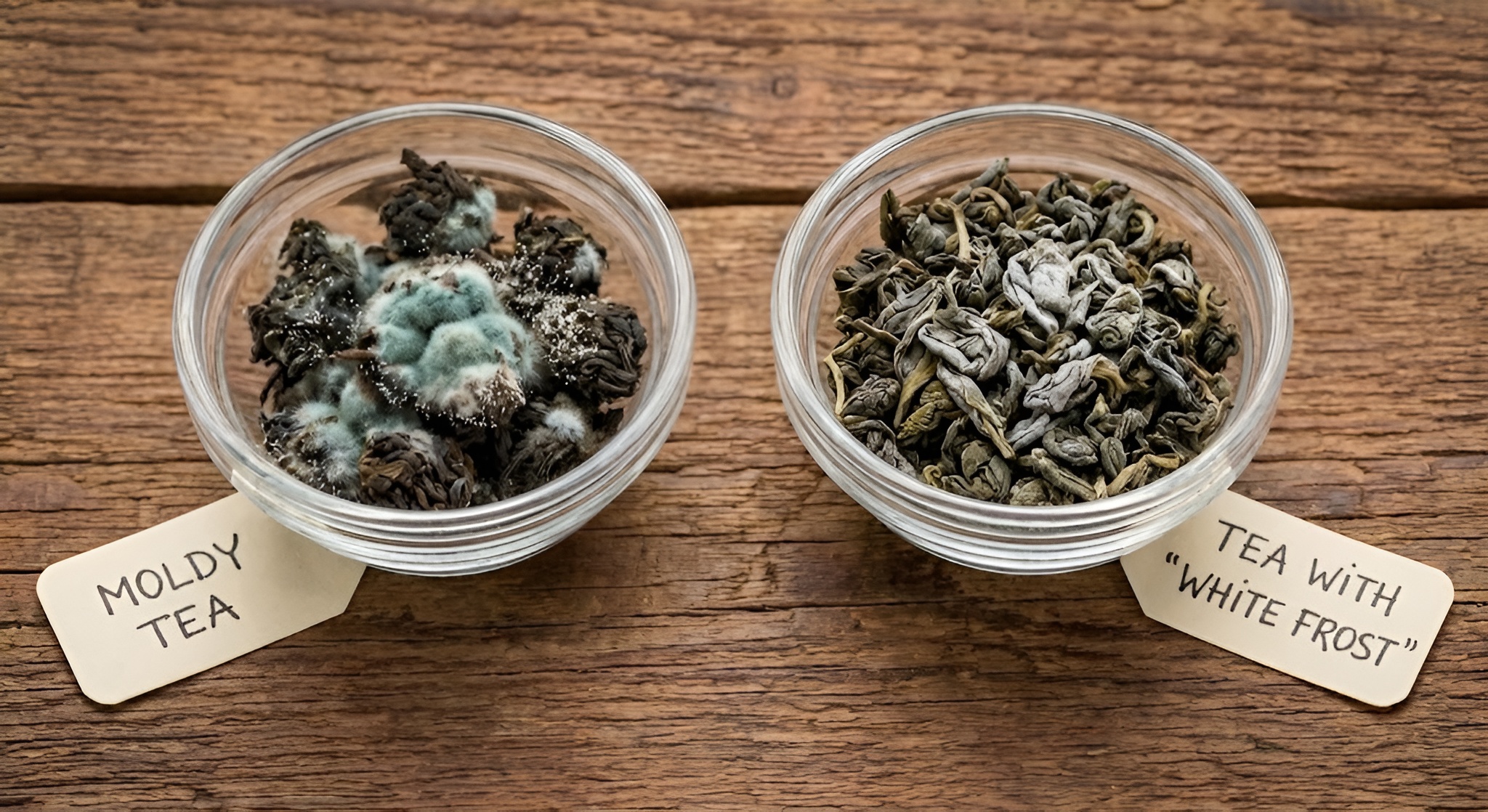
Yet not every white or coloured spot is fungal. Trichomes—fine, silvery hairs clothing young buds—are structural features of the plant, especially prominent on white teas like Silver Needle and some high-grade greens; they catch light and can look frosted or downy. Bloom or wax efflorescence sometimes appears as a pale, dusty sheen on oolong or pu-erh cakes; it's a migration of natural plant waxes and polishes off with a finger. Leaf scorch or sunburn—covered in depth in our UK heatwave quality-control guide—leaves brown or bleached patches but no fuzz. Finally, well-aged sheng pu-erh may develop beneficial 'golden flowers' (Eurotium cristatum), a controlled fungus prized in fu brick tea; its colonies are golden-yellow, uniform, and smell pleasantly floral or fruity, never musty. Distinguishing these requires looking at distribution (uniform vs. random), texture (integral to the leaf vs. sitting on the surface), smell, and whether the appearance matches the tea type's known characteristics.
Trichomes vs. True Mould
Run a dry finger over suspect fuzz: trichomes are fixed and won't brush off; mould detaches as powder or threads and often leaves a residue. If in doubt, smell it—trichomes have no odour; mould reeks.
2. Visual Cues: What Mould Looks Like on Tea
Genuine fungal colonies on tea begin as pinpoint dots—white, grey, blue-green, yellow, orange or black—then expand into irregular, cottony or velvety patches. Penicillium often appears blue-green and powdery, reminiscent of bread mould; Aspergillus can be black, grey or yellow; Rhizopus presents as white or grey 'whiskers' that darken as spores mature. The growth is three-dimensional: it stands proud of the leaf surface, casts tiny shadows, and can mat adjacent leaves together. Check the underside of the leaf as well; mould favours crevices and the join between leaf and stem, where residual moisture pools.
Contrast this with the features routinely mistaken for mould. White-tea trichomes are evenly distributed across buds, silvery rather than grey, and integral to the leaf architecture—gently tug and the bud remains intact. Frost or dew marks from faulty storage may leave circular, flat stains without texture. Colour variation within a batch—patches of brown among green, or reddish streaks—usually reflects uneven oxidation, leaf grade or cultivar mix, not microbial action. Dust or tea particles can accumulate in the folds of large-leaf oolong or pu-erh, appearing as fine sediment; blow lightly, and it disperses. If you're uncertain, isolate the suspect leaves on a white plate under good light and photograph them; comparing images day-to-day will reveal whether the feature is static (benign) or growing (fungal).
Pay special attention to compressed tea—pu-erh cakes, bricks, tuos. Mould on these often starts at the perimeter or any crack where damp air infiltrated, showing as localised fuzzy spots. Because the interior is denser and less exposed, surface mould can coexist with clean core layers, tempting salvage attempts; we address that risk in section 5.
3. Smell: The Defining Diagnostic
Your nose is more reliable than your eyes. Mouldy tea smells unequivocally off: musty, dank, reminiscent of wet cardboard, cellars, damp laundry left in the machine, or the earthy-sour tang of decomposing leaves. Some people describe a medicinal or chemical edge; others liken it to old books or mildew. The key is that the aroma is unpleasant and foreign to tea's normal scent palette. Even if visual growth is minimal—early-stage contamination, or mycelia confined to the leaf interior—the volatile organic compounds (geosmin, 1-octen-3-ol, various aldehydes) diffuse and announce the problem.
By contrast, properly aged or fermented teas have complex but clean earthy notes. A well-stored sheng pu-erh might smell of forest floor, camphor, dried mushrooms or old wood—deep and slightly sweet, never rank. Shou (ripe) pu-erh, having undergone wet-piling, carries a strong earthy, sometimes fishy or barnyard character when young, which mellows to chocolate, dates or loam with age; crucially, there's no ammonia spike or sour mildew. Fu brick tea with intentional golden flowers has a pleasantly funky, almost sake-like or floral note. If you detect even a hint of basement damp, trust your nose and investigate further. A useful test: brew a small quantity and smell the wet leaf in the gaiwan or pot; heat volatilises the off-compounds, making mustiness unmistakable.
The Sniff-and-Rinse Test
For borderline cases, rinse the dry leaf briefly with boiling water, drain, then smell the damp leaves. Mould's musty volatiles intensify with heat; clean aged tea smells richer but not foul.
4. Why Tea Moulds: Moisture, Temperature and Time
Tea leaves exit the dryer at roughly 3–7 % moisture by weight, low enough to inhibit microbial activity. Mould germination requires the water activity (aw) to rise above approximately 0.70–0.75, which corresponds to a leaf moisture content of 12–14 % or higher. In the UK, ambient relative humidity (RH) swings between 60–80 % across the year; if tea is stored in a breathable container—paper bag, non-airtight tin, or a jar with a loose lid—it will equilibrate with room air, pulling moisture from the atmosphere until the leaf's internal aw matches the external RH. At 70 % RH and 20 °C, tea can reach the danger zone within weeks.
Temperature accelerates the process. Most common tea moulds grow optimally between 25–30 °C but remain active down to 10 °C; the warmer the storage environment, the faster spores germinate and colonies expand once moisture is sufficient. Thermal cycling—tea moving from a cold cupboard to a warm kitchen worktop, or a fridge to room temperature—promotes condensation on the leaf surface, delivering a pulse of liquid water that kickstarts growth even if average RH is moderate. Oxygen is the third leg: fungi are aerobic, so vacuum-sealed or nitrogen-flushed packets resist mould even at higher moisture, while tins with rubber seals that leak slowly allow enough air exchange to support spores.
Duration matters less than conditions: a single damp spell of a few days at high temperature can be enough. Conversely, bone-dry tea in an airtight, opaque container can sit for decades without issue. This is why proper storage protocols—cool, stable temperature; low, controlled humidity; true airtight seals; and protection from light—are non-negotiable for any tea you intend to keep beyond a few months.
5. Health Risks: Mycotoxins and When to Worry
The visible fuzz is merely the fruiting body; the real concern is mycotoxins—toxic secondary metabolites produced by certain fungal species. Aspergillus flavus and A. parasiticus can generate aflatoxins, potent liver carcinogens; Penicillium species may produce ochratoxin A or citrinin, both nephrotoxic. Not every mould on tea is toxigenic—many environmental Penicillium and Cladosporium strains are largely harmless—but you cannot identify species or toxin production by eye. Surveys of market tea have occasionally detected aflatoxins and ochratoxin A at low levels, typically in samples from humid-climate origins or poor storage, though concentrations usually fall below regulatory limits. The risk escalates with heavy contamination and regular consumption; a single accidental sip of mouldy tea is unlikely to cause acute harm, but repeated exposure over weeks or months is inadvisable.
Mycotoxins are heat-stable: boiling water will not destroy aflatoxins or ochratoxin A, so brewing mouldy tea does not render it safe. They are also chemically persistent, resisting breakdown during storage. Because fungal hyphae penetrate the porous structure of dried leaves far beyond visible growth—microscopy studies show mycelia threading through intercellular spaces and vascular bundles—surface removal or trimming contaminated sections (as one might with a firm cheese or bread crust) is ineffective for tea. The entire batch in contact with the mould must be considered compromised.
Sensitive individuals—those with asthma, allergies, or immunocompromise—may react to mould spores themselves, experiencing respiratory irritation, coughing or allergic symptoms from inhaling airborne spores when opening a contaminated tin. For most people the primary hazard is ingestion, which is why the standard advice is categorical: discard mouldy tea entirely.
No Second Chances
Even if only one corner of a pu-erh cake shows mould, the mycelia and toxins have likely spread invisibly. Cutting away the fuzzy bit leaves you brewing the rest of the contamination—bin the whole piece.
6. Can You Salvage Mouldy Tea? (Spoiler: No)
The temptation to salvage is strongest with expensive aged pu-erh or rare vintage teas, where a 200 g cake may represent significant investment. Some online forums suggest sun-drying mouldy pu-erh, brushing off surface growth, or even rinsing and re-drying. These methods are microbiologically unsound. Sunlight and desiccation will halt further fungal growth and may kill surface spores, but they do nothing to mycotoxins already synthesised, which remain in the leaf matrix. Brushing disperses spores into the air and your respiratory tract, increasing inhalation risk. Rinsing may wash away loose mycelium but also drives water deeper into the compressed cake, potentially worsening the problem if not dried rapidly and completely—a feat difficult to achieve in a home kitchen without specialised dehydrators.
For loose-leaf tea, salvage is even less defensible: the contamination spreads rapidly through the fluffy mass, and isolating 'clean' leaves is guesswork. The small financial loss of discarding 50 g of mouldy tea is trivial compared to the health uncertainty of consuming it. For compressed tea, if mould is confined to a tiny surface spot and the rest looks and smells entirely clean, some collectors will excise a generous margin around the visible growth and monitor the remainder closely—storing it separately, checking weekly for new growth, and binning it at the first sign of recurrence. We cannot recommend this as safe practice; it is a calculated gamble, and the bet is your liver and kidneys.
A more rational approach: treat any mould as a sentinel event. Inspect all other teas stored nearby—spores are airborne and can cross-contaminate. Check your storage conditions, fix the underlying cause (leaking tin, high ambient humidity, thermal cycling), and move forward with better protocols. The money is already spent; the question is whether you compound the loss with a health risk.
7. Prevention: Storage Practices That Stop Mould Before It Starts
Preventing mould is straightforward: keep tea dry, sealed and cool. Use airtight, opaque containers—tin caddies with snug lids, amber glass jars with rubber-gasketed lids, or vacuum-seal bags for long-term reserves. Avoid decorative ceramic caddies unless they have a fitted inner lid; many are not truly airtight. Store containers in a cool, stable location—a cupboard away from the kettle, oven and dishwasher—ideally below 20 °C. UK loft spaces and garages swing too hot in summer and too cold in winter, promoting condensation; a kitchen cupboard on an interior wall is usually better, provided it's not above a heat source.
For teas you plan to keep beyond six months, add a food-grade silica-gel sachet to each tin; these buffer the internal RH, absorbing any moisture that sneaks in when you open the lid. Replace or regenerate sachets (by oven-drying) every few months. Never introduce moisture directly: use a dry spoon to scoop leaves, and never return a wet or damp utensil to the caddy. If you decant tea from a larger bag into a smaller tin, ensure both origin pack and destination container are absolutely dry; wipe any condensation from lids or interiors before sealing.
For pu-erh and other aged teas, traditional advice emphasises some air exchange to support gentle maturation, but in the humid UK climate this is risky. A compromise: use a lidded cardboard box or fabric bag inside a larger airtight plastic bin or drum, with a small silica sachet in the bin to control overall humidity. Open the outer bin quarterly to refresh air, inspect for mould, and rotate stock. Loose-leaf tea and all tea types benefit from these principles, though robust, fully oxidised teas (black, dark oolongs, shou pu-erh) tolerate mild lapses better than delicate greens and whites.
Finally, practice rotation: mark tins with purchase or opening dates and consume older stock first. Even in perfect storage, volatile aromatics fade; drinking tea within 12–24 months of opening ensures you enjoy it at its peak and never face the mould dilemma. For more granular advice, see our comprehensive UK kitchen storage guide.
The Quarterly Inspection Ritual
Every three months, open each tin, smell the dry leaf, check for discolouration or fuzz, and feel for clumping (a sign of moisture). Catching problems early lets you rescue adjacent teas before cross-contamination spreads.
8. What to Do If You Find Mould
Step one: isolate the contaminated tea immediately. Seal it in a disposable plastic bag to contain spores, then discard it in your household waste—do not compost, as this may spread spores to your garden. Wash your hands thoroughly. Step two: inspect all other teas stored in the same cupboard or shelf. Open each container in turn, smell, and look for telltale fuzz or off-odours. If any are suspect, repeat step one. Even if others appear clean, consider them at higher risk; tighten their seals and monitor weekly for the next month.
Step three: clean the storage area. Wipe shelves, tins and jars with a dilute vinegar solution (1 part white vinegar to 4 parts water) or a mild bleach solution (1 teaspoon bleach per litre), then dry completely. This removes settled spores. Leave cupboard doors open for a few hours to air out. If the contamination was widespread or recurs despite cleaning, you may have a broader damp problem—check for leaks, poor ventilation or high household humidity (a £10 hygrometer will tell you if you're routinely above 65 % RH), and consider a dehumidifier or better extraction in the kitchen.
Step four: review and upgrade your storage protocol. Were any tins not truly airtight? Was the cupboard too warm? Did you ever return a damp spoon? Make the necessary fixes—new silica sachets, better containers, a cooler spot—and reset. Mould in tea is almost always preventable; treat an outbreak as a one-time lesson rather than an ongoing hazard, provided you address the root cause. If you're building or refreshing your collection, our tea buyer's guide includes notes on packaging and storage-friendly suppliers, many of whom offer resealable, opaque pouches that integrate seamlessly into a rotation system.



Comments