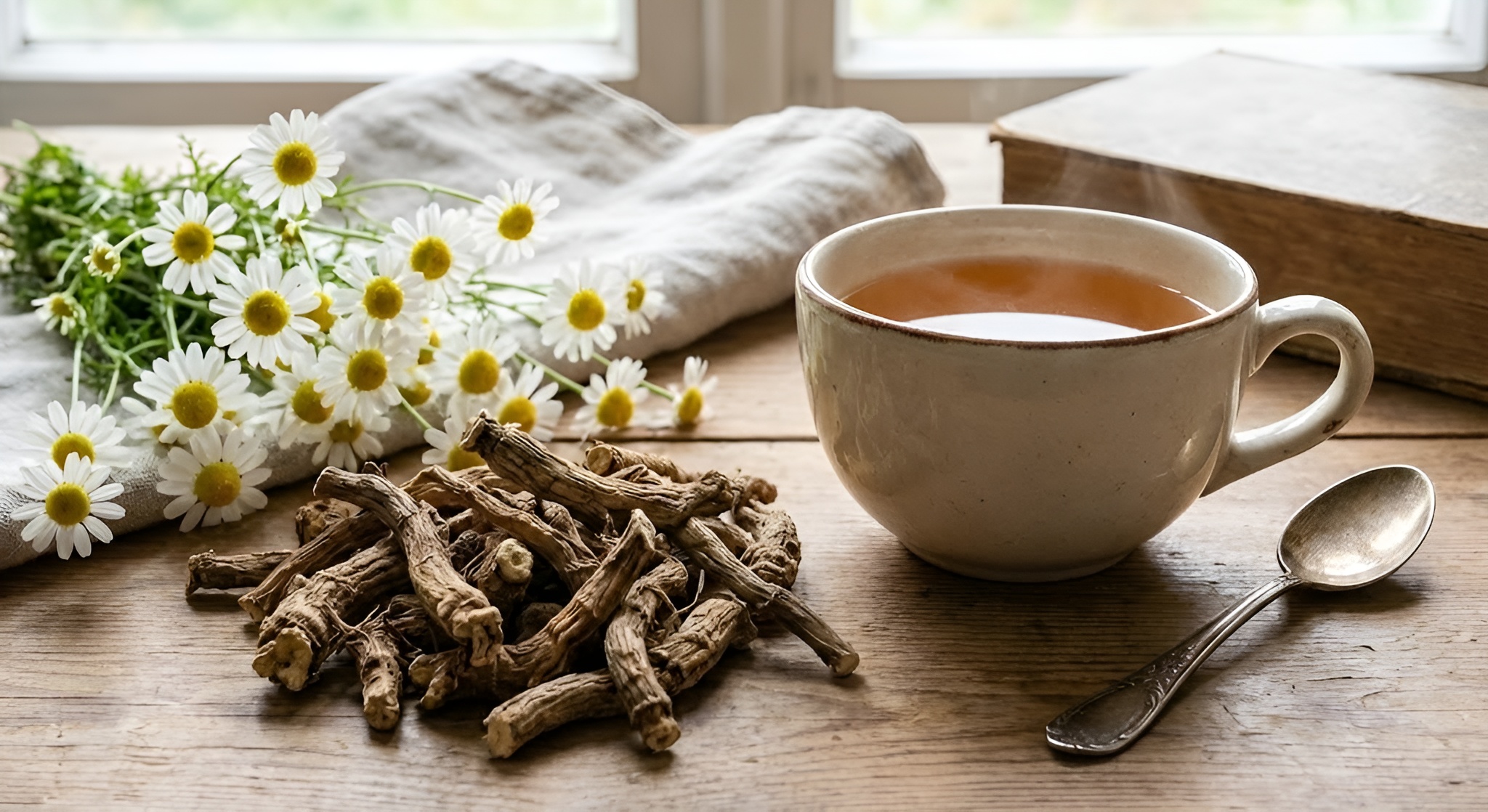
1. Valerian Root: The Heavy Hitter
Valerian (Valeriana officinalis) has been used since ancient Greece. Its primary active compounds are valerenic acid and valepotriates. These compounds inhibit the breakdown of GABA in the brain.
GABA is the "brakes" of the brain. By keeping GABA levels high, Valerian sedates the nervous system, making it physically difficult to stay awake. It is often compared to a mild version of benzodiazepines (like Valium).
Expert Tip: The Smell Test
If your sleep tea doesn't smell a bit funky (like gym socks or old cheese), it probably doesn't contain enough Valerian to work. This smell comes from isovaleric acid. Manufacturers often mask it with peppermint or licorice, but a potent tea will always have that underlying "earthy" funk.
2. Chamomile: The Gentle Soother
Chamomile works differently. It contains an antioxidant called Apigenin. Apigenin binds to specific receptors in the brain (the same ones Valium binds to, but much more weakly).
It doesn't force you to sleep; it simply reduces anxiety and initiates the relaxation response. It is perfect for "racing thoughts" but might not be strong enough for chronic sleep deprivation.
Expert Tip: Cover Your Cup!
The essential oils in Chamomile (bisabolol) are volatile and evaporate in steam. When brewing, always cover your mug with a saucer. This traps the medicinal oils so they drip back into your cup instead of floating away into the air.
3. Comparison: Which is Right for You?
| Feature | Chamomile | Valerian Root |
|---|---|---|
| Primary Effect | Relaxation / Anti-Anxiety | Sedation / Sleep Induction |
| Taste | Floral, Apple-like, Sweet | Earthy, Musky, Pungent |
| Onset Time | 20 - 30 Minutes | 30 - 60 Minutes |
| Morning Grogginess | Rare | Common (in high doses) |
Ready to find your sleep aid?
We've reviewed the top commercially available blends, identifying which ones are heavy on Valerian (for knock-out power) and which are gentle Chamomile blends. See our Top 5 Sleep Teas of 2025 →
Comments