How we assess these products
Our picks are research-led. We compare like-for-like on quality, value, ease of use and suitability for the job, drawing on manufacturer specifications and patterns across large numbers of verified customer reviews rather than cherry-picked quotes. We may earn a commission if you buy through our links, but this never affects how we rank or what we recommend. Read our full editorial standards.

1. Puerh Tea Cake 200g / 7.05oz 2006-2008 - Ripe/Shu Chinese Pu erh Tea - Top Aged Lucky Dragon - Yunnan Puer Pu'er
GOARTEA's 200 g Lucky Dragon shou bridges the gap between affordable daily tea and genuine collector interest. Sourced from Yunnan's high-altitude ancient trees and aged between 2006–2008, it delivers the hallmark sweet, earthy smoothness of well-fermented ripe pu-erh without the wet-pile funk that plagues cheaper cakes. The leaf compression is tidy, golden tips are visible, and the brew is forgiving—steep it short for sweetness or long for bold, loamy depth. It's a rare example of a cake that rewards both impatient newcomers and patient agers, and at this size it won't monopolise your wrapper collection.
- 18–20 year age delivers mellow, clean shou character
- High-altitude Yunnan leaves with visible golden tips
- Versatile steeping—works hot, iced, or blended
- 200 g format ideal for sampling or daily rotation
- Smaller cake may disappoint collectors seeking 357 g standard
- Vintage range (2006–08) lacks single-year precision
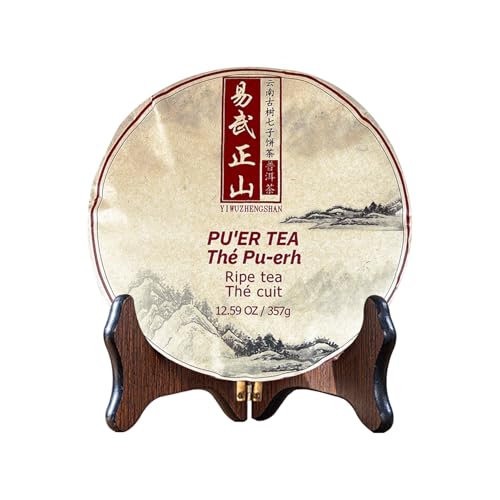
2. Yiwuzhengshan 357g Ancient Tree Pu'Er Tea Cooked Tea Qizi Cake
MIHUNTANG's 357 g Yiwu Zhengshan shou is a serious proposition: ancient-tree early spring leaves, moderate fermentation, and a distinctive mineral-spring water fermentation process that shortens wo dui time while preserving sweetness. The result is a thick, honey-like liquor with the waxy mouthfeel Yiwu is famous for and a persistent, almost floral sweetness. The cake is oily, tightly compressed, and visually impressive—golden buds peeking through dark, glossy leaves. It's the kind of shou that justifies the ancient-tree premium, though the lack of a stated vintage may frustrate purists. Best for collectors who value terroir and mouthfeel over provenance paperwork.
- Yiwu terroir delivers signature honey sweetness and waxy texture
- Mineral-spring fermentation adds complexity and shortens wo dui
- Full 357 g standard cake, tightly compressed with golden buds
- Early spring ancient-tree material
- No stated fermentation or harvest year
- Higher price point without vintage transparency

3. Jin ZHen Ripe Puerh Tea Cake 357g Shu Puer Aged Fermented Black Tea
MIHUNTANG's Jin Zhen 357 g shou offers impressive quality at an accessible price. Fermented with Menghai mountain spring tea, the cake showcases high-grade golden tips (jin zhen translates as 'golden needle') and a soft, sweet, clear profile that belies its affordability. The soup is red-bright, the aroma clean and steady, and the mouthfeel silky without the astringency that sometimes creeps into budget ripe pu-erh. Leaf tenderness is notably high, and the fermentation appears controlled—no off notes, no wet-pile mustiness. It won't replace a decade-aged gushu in your collection, but for everyday brewing or introducing friends to aged tea science, it punches well above its weight.
- Exceptional value for high golden-tip content
- Clean, sweet, smooth profile with no mustiness
- Red-bright soup and soft leaf base indicate careful fermentation
- Full 357 g cake
- No vintage or harvest year stated
- Less complexity than ancient-tree or longer-aged cakes

4. 10 Years Aged Puerh Black Tea, 357g, Yunnan Bulang Mountain Imperial Pu'er Ripe Tea Cake
HQZMCTE's '10 Years Aged' 357 g Bulang Mountain shou promises a decade of maturation and imperial-grade leaves, but the description's confusion between sheng and shou characteristics—and the generic 'ancient tea system' language—raises eyebrows. The cake itself is visually sound: dark, shiny leaves, clear brownish-red liquor, and a pure aged fragrance consistent with ripe pu-erh. Taste is smooth and mellow, without obvious flaws, but lacks the depth or sweetness of truly well-aged material. It's drinkable and won't offend, but the provenance feels hazy, and serious collectors will want more transparency around fermentation date, storage history, and leaf grade. Suitable for casual drinkers curious about Xishuangbanna terroir, less so for investment stacking.
- Visually attractive: dark, shiny compression
- Clear soup and clean aged aroma
- Standard 357 g cake format
- Confusing sheng/shou description suggests listing errors
- Lacks depth expected from genuine 10-year ageing
- No transparency on fermentation or storage provenance
TeaTrade participates in affiliate programs. We may earn a commission if you buy via these links.
Affiliate disclosure: TeaTrade is a participant in the Amazon EU Associates Programme, an affiliate advertising programme designed to provide a means for sites to earn commission by linking to Amazon.co.uk. We may earn a small commission if you buy through links on this page, at no extra cost to you. Prices and availability shown on Amazon are current at the time of click.



Comments