1. What Counts As 'Permitted' Tea on Campus: Definitions, Container Rules, and Institutional Policies
Most UK universities do not publish a single, institution-wide tea policy; instead, rules cascade from exam boards (for formal assessments), library codes of conduct (for silent study spaces), and individual school or faculty guidelines (for lecture theatres and seminar rooms). The Joint Council for Qualifications (JCQ) Instructions for conducting examinations document—adopted by AQA, Edexcel, OCR, and others for A-level, GCSE, and many undergraduate exams—states that candidates may bring a transparent drinks container with no label into the exam hall. The liquid inside must be recognisable as water or a clear/translucent beverage; amber or pale-green tea infusions typically pass visual inspection, whereas milk tea, fruit smoothies, or opaque herbal blends may be challenged by invigilators who cannot verify contents at a glance.
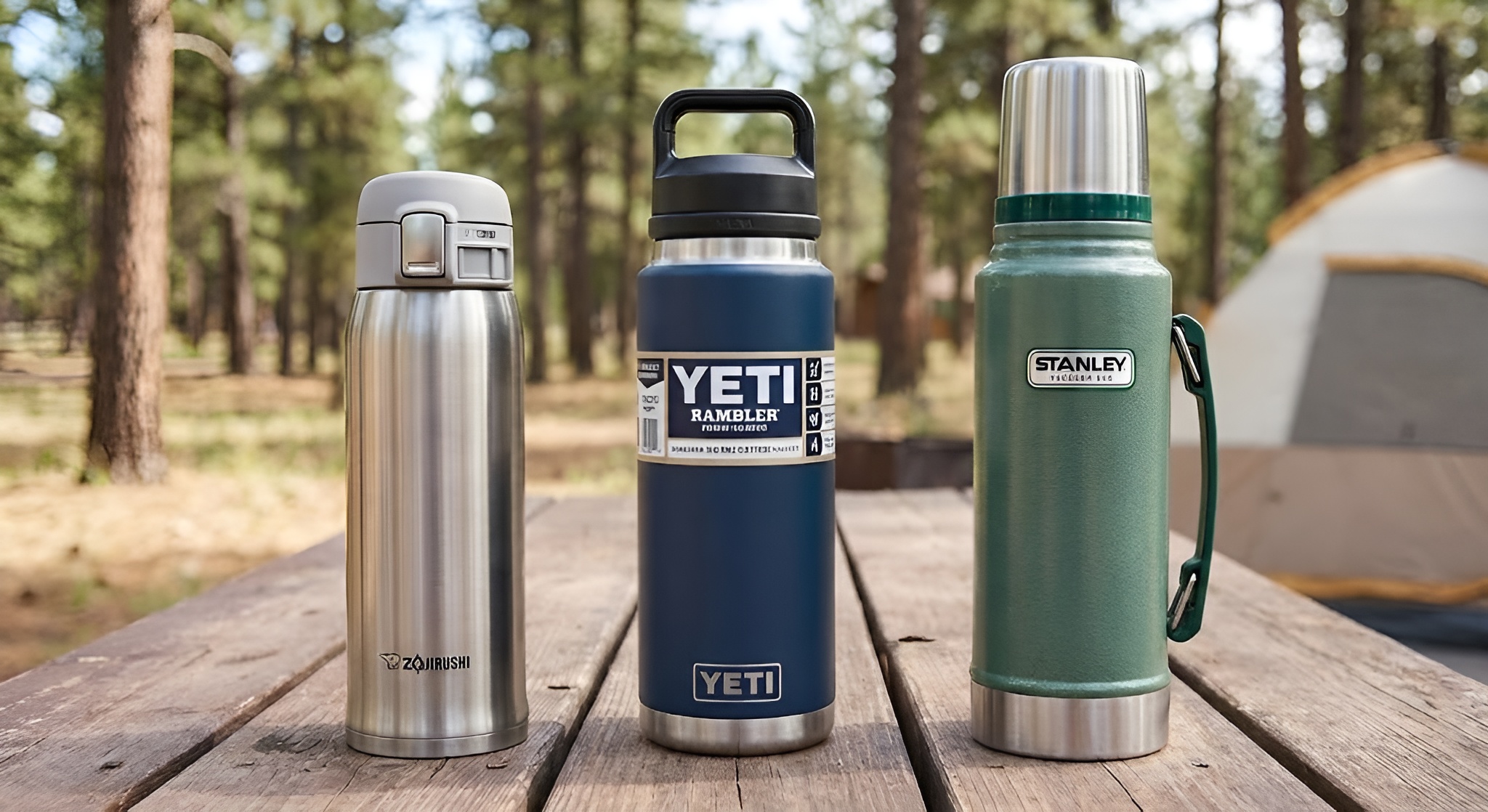
Library policies focus on noise and spillage. Silent study floors—common in the Bodleian annexes, Cambridge UL, and the British Library reading rooms—prohibit any container that emits sound when opened or closed. In practice, this means vacuum flasks with smooth screw-top lids are acceptable; spring-loaded 'Autoseal' buttons, flip caps with detent clicks, and traditional Thermos stoppers that release pressure with a hiss are not. Lecture halls vary: some departments allow any sealed container, others require that you transfer tea to a spill-proof travel mug before entering, and a few ban hot liquids entirely on fire-safety grounds (check your student handbook or the room-specific notices posted outside tiered theatres).
For the purposes of this guide, 'permitted campus tea' means any brew you can legally carry, open, and consume in the study or teaching space without breaching written rules or disrupting others. That excludes loose leaf steeped at your library desk (mess, smell, and usually explicitly banned), any flask that clicks or pops, and any drink whose contents cannot be identified if challenged. It includes pre-brewed tea in a silent vacuum flask, cold-brew tea in a clear bottle, and tea bags steeped in a common-room kitchenette then transferred to a compliant cup before you return to your seat.
Check Your Exam Board's Equipment List Early
Download the Instructions for Candidates PDF from your awarding body (JCQ, SQA, or WJEC) at the start of term. Rules on container transparency, label removal, and lid type are published months in advance—knowing them means you can buy the right flask once, not panic-purchase a clear bottle the night before finals.
2. Silent-Flask Acoustics: Lid Mechanisms, Vacuum-Seal Design, and the Decibel Test
The sound a flask makes comes from three sources: pressure release (built-up steam escaping when you unscrew a stopper), mechanical detents (spring-loaded buttons, flip hinges, or locking tabs snapping into place), and material resonance (stainless steel walls amplifying the click of a plastic closure). A library invigilator or fellow student doesn't measure decibels with a meter; they notice the character of the noise—a sharp click, a sibilant hiss, or the scrape of metal on metal—and whether it carries across a silent reading room.
The quietest design is a double-wall vacuum flask with a wide-mouth screw-top lid lined with an EPDM or silicone gasket. You turn the lid slowly (no detent points, no locking ratchet), and the gasket compresses smoothly against the bottle rim; there's no pressure differential because you're not sealing steam—you've let the tea cool for 30 seconds before closing, or you've left a small air gap when you filled it. Examples include the Klean Kanteen TKWide (café cap removed), the Sigg Hot & Cold screw lid, and some Thermos 'Everyday' models sold in the UK with a plain threaded cap rather than the push-button variant.
Avoid: Autoseal and flip-top lids (Contigo, CamelBak, some Thermos ranges) that lock with a button press and release with an audible click; traditional Thermos stoppers with a cork or rubber bung and a pouring cup that unscrews with a squeak; and any flask marketed as 'one-touch' or 'quick-release.' Before you buy, visit the shop, fill the demo unit with tap water, close it, and open it in your hand—if you hear it, so will the student next to you in the library. If you already own a noisy flask, you can sometimes buy a replacement screw-top lid from the manufacturer's spares catalogue; many brands sell a 'café cap' or 'wide loop cap' that threads silently onto the same bottle neck.
The 30-Second Cool-Down Rule
Pour your tea into the flask, wait 30 seconds with the lid off, then seal it. This lets steam escape and prevents pressure build-up, so when you unscrew the cap hours later in the library, there's no hiss. Your tea stays above 60 °C for 6+ hours in a good vacuum flask, so the cooling cost is negligible.
3. Exam Hall Regulations: What Invigilators Check, Label Removal, and Transparent-Container Rules
The JCQ Instructions for conducting examinations (2026 edition, Section 5.8) specifies that drinks must be in a clear or translucent bottle, free of labels, and that the invigilator may inspect the container before the exam begins. The intention is to prevent hidden notes or formula sheets; the practical upshot is that you need a bottle through which an invigilator can see the liquid's colour and confirm it's not obscuring printed material. Standard single-wall plastic bottles (500 ml sports caps, supermarket own-brand) meet this standard easily. Vacuum flasks with an outer stainless-steel shell do not, even if the inner liner is glass—the invigilator cannot see through the casing.
If you want hot tea in an exam, your options are: (1) a double-wall glass or Tritan travel mug with a transparent outer layer (brands like Bodum, Hario, or some KeepCup models), which shows the liquid and provides some insulation but rarely holds heat beyond 90 minutes; (2) a clear plastic flask filled with cold-brew tea, which remains at room temperature and is unambiguously transparent; or (3) accept that you cannot bring a vacuum flask into the exam hall, and instead brew and drink a cup of tea 45 minutes before the exam starts, timing the caffeine peak to coincide with the first hour of the paper.
Some universities and colleges apply stricter local rules: the University of Cambridge tripos exams historically required plain water only, though faculty-level exceptions are sometimes granted for medical or religious reasons. Scottish Qualifications Authority (SQA) guidance mirrors JCQ on transparency but adds that lids must be non-spillable—a sports cap or screw-top, not an open cup. Always check your student portal or exam-officer email in the fortnight before formal assessments; last-minute clarifications are common, and being turned away at the door with a non-compliant flask wastes time and focus.
4. Lecture-Theatre and Seminar-Room Etiquette: Sealed vs. Open Containers, Spill Zones, and When to Pour
Lecture halls operate under a patchwork of faculty custom and risk-management policy. Medical and science schools often ban all food and drink in tiered theatres (slip hazard, laptop damage, and the legacy of spilled coffee seeping into hundred-seat upholstery), while humanities and social-science faculties tend to permit sealed containers. The dividing line is usually whether you can close the container securely while it's in your hand or bag. A screw-top flask, a travel mug with a locking slider, or a flask-infuser combo with a leak-proof cap all qualify. A ceramic mug, a glass, or an open Thermos lid-cup do not.
Best practice: pour your tea before you enter the room (in the corridor, common room, or library foyer), close the flask or mug, then take your seat. If the lecture runs 90 minutes and you need a second cup, wait for a natural break (the lecturer pauses for questions, starts a video clip, or explicitly says 'quick stretch') before you unscrew the flask. Never open a vacuum flask during continuous speech—even a silent lid makes a faint metallic scrape, and the movement draws eyes in a darkened room. If your flask has a built-in infuser, remove the tea leaves before you leave home or your hall kitchen; fishing out a dripping basket mid-lecture is disruptive and messy.
Seminar rooms (10–30 students, discussion-based) are generally more relaxed: you can often sip openly from a mug, and some tutors keep a kettle in the corner. Still, pour quietly, avoid clinking your spoon against china, and if you're making fresh tea in the room's kettle, offer to make a round—it's the oldest British academic courtesy, and it builds goodwill when you need to borrow notes or swap revision tips later in term. For group study sessions in bookable library pods, the same principle applies: everyone should agree the brewing protocol (one shared pot, individual flasks, or a rota) before the session starts, so you're not negotiating kettle access when you should be working through problem sheets.
The Corridor-Pour Protocol
Brew a full flask at breakfast, pour your first cup in the hall kitchen, then top up from the flask in the corridor outside each lecture theatre. You look prepared, you never disturb the room, and your tea stays hotter than if you'd brewed it in a campus café microwave an hour earlier.
5. Caffeine Timing for Lectures, Tutorials, and Revision: Pharmacokinetics, Peak Windows, and Sleep Hygiene
Caffeine in tea is absorbed through the small intestine, reaches peak plasma concentration 45–60 minutes after ingestion, and has a half-life of 4–6 hours in healthy adults (longer if you're on certain medications or oral contraceptives, shorter if you're a habitual consumer). For a 9 a.m. lecture, that means drinking your tea by 8:15 a.m. if you want maximum alertness when the lecture starts; a cup at 8:45 a.m. won't peak until 9:30–9:45, so you'll be sharpest halfway through. For a two-hour seminar starting at 2 p.m., drink by 1:15 p.m. to catch the peak in the first hour, when you're expected to contribute most.
The evening cut-off is more individual. If you go to bed at 11 p.m. and need 7–8 hours' sleep, avoid caffeine after 4–5 p.m.; even a modest 30 mg dose (one cup of green or white tea) still has 15 mg circulating at 10 p.m., enough to delay sleep onset in sensitive individuals. If you're pulling a late library session and need to stay awake until midnight, a cup of black tea at 6 p.m. will sustain focus through the evening—but accept that you'll sleep less deeply and wake groggier. Do not chase caffeine with more caffeine after 9 p.m.; the returns diminish (tolerance builds within hours), and you risk next-day sleep debt that compounds across the week.
For exam revision, consider a split strategy: moderate caffeine (20–40 mg, roughly one cup of green or light oolong) in the morning to support encoding and active recall, then switch to caffeine-free herbal or rooibos after lunch, so your brain can consolidate memory during deep sleep that night. There's no strong evidence that caffeine during an exam improves performance beyond what you'd get from being well-rested and hydrated; if you're relying on tea in the exam hall, you're often compensating for poor sleep the night before, not gaining an edge. Better to time your last caffeinated brew for 45 minutes pre-exam, so you enter the hall alert, then rely on cold-brew water or herbal tea to stay hydrated over the three-hour paper.
Track Your Personal Half-Life
For one week, note the time you drink tea and the time you fall asleep. If you consistently struggle to sleep on nights when you had tea after 3 p.m., your effective half-life is longer than average—shift your cut-off earlier, or switch to lower-caffeine whites and greens in the afternoon.
6. Cold-Brew and No-Kettle Strategies: Overnight Batching, Room-Temperature Stability, and Library-Friendly Prep
If your hall has a shared kitchen with kettle queues every morning, or your library is a 15-minute walk from the nearest hot-water point, cold-brew tea solves the logistics. Steep loose leaf or bags in cold tap water for 6–12 hours (overnight in your room's mini-fridge or on a shelf), strain, and pour into a clear bottle or flask. The result is a smooth, low-astringency infusion with 40–60 % of the caffeine you'd extract from a hot brew of the same leaf weight—enough to notice, gentle enough to sip all day without jitters.
Cold-brew chemistry favours amino acids (L-theanine, arginine) and some catechins over tannins and volatile aromatics, so the flavour is subtly sweet and less bitter than hot-brewed tea left to cool. Green teas (sencha, longjing, mao feng) and white teas (silver needle, white peony) work especially well; black teas can taste flat unless you increase the leaf ratio or add a slice of lemon. For maximum convenience, invest in a cold-brew pitcher with a removable infuser—you load the basket with leaf, fill to the line, refrigerate overnight, pull the basket in the morning, and pour straight into your bottle. No kettle, no heat, no noise, and the tea stays fresh at room temperature for 8–12 hours, which covers a full day of lectures and library.
One caveat: cold-brew is not sterile. Use clean, potable water and a rinsed vessel; if you leave the pitcher out on a warm desk for 24 hours, you risk bacterial growth. Refrigerate during the steep, pour what you need each morning, and store the remainder in the fridge for up to 48 hours. If you're brewing directly in a personal bottle (no pitcher), use a cold-brew tea bag or a small muslin sachet of loose leaf, fill your 500 ml sports bottle before bed, and pull the bag when you wake—zero mess, zero kit, and you're out the door with a full day's tea.
The Lecture-Block Cold-Brew Formula
For three back-to-back lectures (9–12 or 1–4), cold-brew 750 ml the night before using 6–8 g of green or white tea. Pour 250 ml per break, stay hydrated, and keep a gentle caffeine baseline without the crash of a single strong cup at 9 a.m.
7. Recommended Flask Features for Campus Use: Size, Infuser, Mouth Width, and One-Handed Operation
A 350–500 ml capacity is the sweet spot for a student flask: enough for a morning lecture and a tutorial, light enough to carry in a backpack side pocket alongside a laptop, water bottle, and textbooks. Larger flasks (750 ml+) hold heat longer but add weight and bulk; smaller ones (≤300 ml) need frequent refills, which defeats the point if you're spending six hours in the library. Look for a wide mouth (≥5 cm diameter) so you can add ice cubes if you want iced tea in summer, or drop in a tea bag without fiddling, and so you can clean the interior properly with a bottle brush—narrow-neck flasks trap residue and develop stale odours.
A built-in infuser basket means you can brew loose leaf directly in the flask, pull the basket after 3–5 minutes, and drink all day without over-extraction. This is faster and cleaner than brewing in a pot, straining into the flask, and washing two vessels. Choose a basket that sits snugly in the neck and doesn't rattle when you walk; some cheaper models use a shallow clip-on filter that lets leaves escape into the main chamber. Stainless-steel mesh is more durable than nylon; silicone gaskets around the basket rim prevent leaks.
For one-handed operation (you're holding a phone, book, or door handle with the other hand), a screw-top with a thumb loop or wide grip is easier than a slender twist cap. Avoid flasks where the entire lid assembly must be unscrewed and set down—you need a flat surface, and there often isn't one in a crowded lecture corridor. Some models offer a half-turn pour spout: you unscrew 180°, the cap stays attached by a hinge, and you pour without removing anything. This is ideal if you're standing, but check that the hinge doesn't click or snap when you open it. Finally, prioritise leak-proof certification (many brands print 'leak-proof guaranteed' or show a diagram of the seal); if the flask can survive being horizontal in your bag without dripping, it passes the campus test.
8. Buying and Budgeting: Where to Shop, What to Spend, and Multi-Use Versatility for Student Life
A quality vacuum flask costs £15–35 in the UK (September 2026 high-street prices); budget £20–25 for a name-brand 500 ml model with a screw-top lid and solid reviews for heat retention. Avoid £5–8 supermarket own-label flasks unless you've tested one and confirmed it's silent and leak-proof—many use thinner steel, cheaper gaskets, and lids that warp after a few washes. Brands to consider: Klean Kanteen, Sigg, Thermos (check the lid variant), Chilly's (screw-cap series), and Qwetch. All are sold at outdoor retailers (Cotswold Outdoor, Go Outdoors), department stores (John Lewis, Fenwicks), and online (Amazon UK, specialist tea suppliers).
If you're also commuting by train or cycling, a flask that fits a bike-bottle cage or rucksack mesh pocket adds versatility. If you brew both tea and coffee, a dual-use cold-brew jug (one basket for coffee grounds, one for tea) spreads the cost across more use-cases. For students on a tight budget, consider one flask for hot tea (vacuum, screw-top, exam-hall compliant when poured into a clear mug) and one clear 750 ml sports bottle for cold-brew, which you prepare in a borrowed jug or directly in the bottle. Total outlay: £25–30, and you're equipped for every campus scenario from fresher induction to finals.
Look for end-of-summer sales in late August and early September, when outdoor and travel retailers clear stock before autumn ranges arrive. Student-discount schemes (UNiDAYS, Student Beans) often secure 10–15 % off list price at major brands. And if you're buying in a group—flatmates pooling an order—some suppliers offer bulk discounts or free delivery above £50. A flask is a three-year investment: properly cared for (hand-wash the lid gasket, descale every term with dilute vinegar), it will see you through your degree and beyond, making it one of the better-value purchases in your student kitchen arsenal.
Test Before Term Starts
Buy your flask in the week before classes begin, fill it with boiling water at breakfast, and carry it around campus during orientation events. By lunchtime you'll know if it leaks, clicks, or cools too fast—and you'll have time to exchange it before the returns window closes.


Comments