1. Why Dog Walkers Need a Different Tea Strategy
Dog walking imposes constraints that differ sharply from commuter routines or leisure brewing. Timing is non-negotiable—the dog decides when you leave, often before dawn in summer to beat the heat, and walks frequently extend beyond the 30–40 minutes that a standard travel mug stays hot. You're carrying waste bags, leads, treats, a phone, and possibly a ball-chucker; every extra gram counts, and anything fragile will break. Unlike a road-trip brew where you control rest stops, dog walks involve unpredictable pauses, sudden sprints, and the occasional need to free both hands to untangle a spaniel from a blackberry bush.
The hydration demands are real. A two-hour forest walk in July heat can see an adult lose 500–800 ml of fluid through perspiration, and many walkers underestimate this because they're moving at a gentle pace. Runners and cyclists have formalised their hydration protocols; dog walkers have not, despite often covering comparable distances. Meanwhile, the caffeine timing is delicate: a strong breakfast tea at 5:45 a.m. can feel necessary to get out of the door, but it may also spike cortisol when your body is already producing its natural morning peak, leading to jitters and an energy crash by mid-morning. The ideal dog-walker's tea balances gentle stimulation, genuine hydration, portability, and—particularly for tick-prone countryside routes—some basic first-aid utility.
The Two-Flask System
Experienced walkers carry a hot flask for themselves and a collapsible water bottle for the dog. Trying to share one container leads to either inadequate dog hydration or a mouthful of backwash-flavoured oolong.
2. Early-Morning Brews: Caffeine, Cortisol, and the Pre-Dawn Start
The UK's summer sunrise arrives between 4:30 and 5:30 a.m. across most of the country in July 2026, and many dog owners are out before that to avoid the midday heat. The temptation is to reach for a strong black breakfast tea, but cortisol levels peak naturally within 30–60 minutes of waking, and adding a large caffeine dose on top can overshoot the body's arousal systems, leaving you wired but not alert. Anecdotal reports from early-rising walkers describe a 'crash' around 9–10 a.m., often accompanied by irritability and difficulty concentrating.
A better strategy is to choose a moderate-caffeine tea that supports wakefulness without overwhelming the endocrine system. Bao zhong oolong (~20–30 mg caffeine per 200 ml infusion), white peony (15–25 mg), or a light Japanese sencha (20–35 mg) provide enough lift to make the walk pleasant without the jangle. These teas also tend to be lower in tannins when brewed at moderate temperatures (75–85 °C), so they sit comfortably in the stomach during exercise. For those who must have stronger flavour, halving the usual leaf dose and extending the steep time slightly will deliver body and aroma with less caffeine.
If you're walking before 6 a.m. and plan to work a full day afterwards, consider delaying your main caffeine intake until you return. A thermos of warm white tea or a cold-brewed oolong prepared the night before offers hydration and a gentle sensory wake-up, reserving your cortisol-caffeine synergy for mid-morning when the natural peak has passed.
3. Hydration Chemistry: Electrolytes, Oxalates, and Summer Heat
Tea is often assumed to be hydrating, but the reality is more nuanced. All tea contains caffeine (except herbal infusions), which has a mild diuretic effect, and many teas—especially black and strong green varieties—contain significant oxalates, compounds that can bind calcium and, in high doses, contribute to kidney-stone formation in susceptible individuals. For short walks (under an hour), this is irrelevant; for longer summer rambles, particularly in heat, it's worth understanding which teas hydrate effectively and which are better enjoyed at home.
White teas and light oolongs are lower in both caffeine and oxalates, making them the most hydration-friendly options. A 2019 study in the Journal of Food Science found that white tea contains roughly one-third the oxalate content of black tea per gram of leaf. If you're walking for two hours in 26 °C heat, a flask of silver-needle white tea with a pinch of sea salt (about 0.5 g per 500 ml) provides sodium and a trace of other electrolytes without the sugar load of commercial sports drinks. Some walkers add a squeeze of lemon for flavour and a modest vitamin C boost, though this increases acidity and may not suit sensitive stomachs mid-exercise.
For those who prefer stronger flavour, cold-brewed black tea offers a compromise: the long, low-temperature extraction reduces both tannin astringency and caffeine concentration (by roughly 20–30 per cent compared to hot brewing), while preserving the malty, rounded character that many UK drinkers expect. Prepare it the evening before, strain, and refrigerate; pour into a chilled thermos just before you leave. It will stay palatable for the entire walk and beyond.
The Pinch-of-Salt Rule
Add 0.5 g sea salt per 500 ml of tea for walks over 90 minutes in warm weather. It's enough to support sodium balance without making the tea taste savoury, and it's far cheaper than isotonic sachets.
4. Portable Tea Kits: What Actually Survives a Forest Walk
The romantic image of gongfu brewing in a woodland glade collapses the moment a Staffie pulls you into a stream. Dog-walking tea gear must be robust, leakproof, and operable with one hand, ideally while the other hand is holding a lead or a soggy ball. Glass is out. Ceramic is out. Anything with more than two components that need to be unscrewed, aligned, and resealed is asking for trouble.
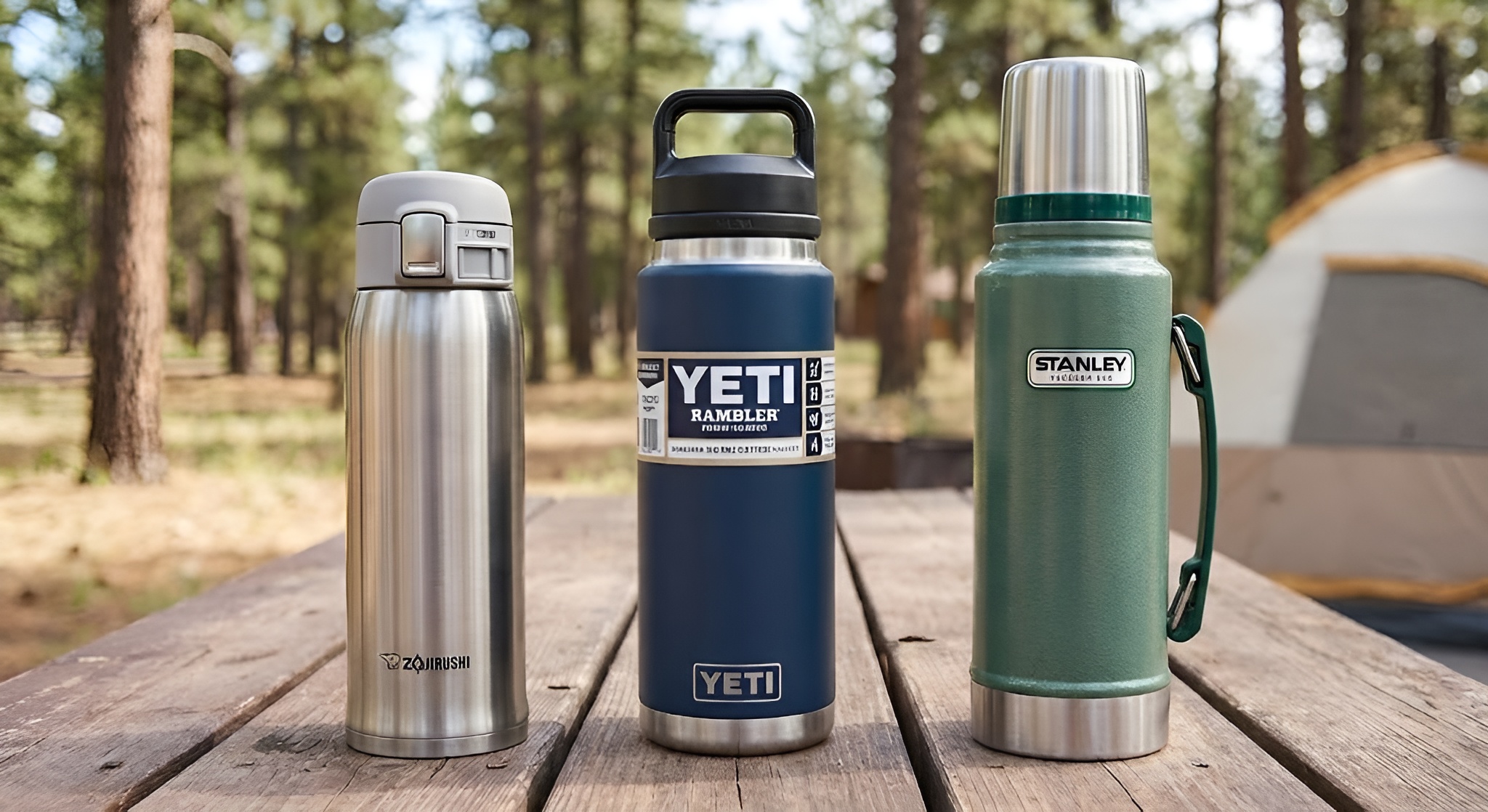
The most practical solution is a stainless-steel vacuum flask with an integrated infuser basket, capacity 500–750 ml. Look for models where the infuser can be removed and stored in the lid once steeping is complete, preventing over-extraction. Test the lid seal by filling the flask with water, shaking it vigorously, and leaving it on its side for ten minutes; if it leaks, it will do so spectacularly when bouncing around in a rucksack. A good flask will keep tea above 60 °C for two to three hours, and above 50 °C—still drinkable—for four to five hours, which covers most extended walks.
For those who prefer cold tea in summer, a wide-mouth insulated bottle (the kind sold for smoothies) works well: brew your tea at home, chill it, pour it into the bottle with a handful of ice, and it will stay cold for the duration of a long walk. Avoid bottles with complex lids or straws—they're difficult to clean and prone to harbouring bacteria in warm weather. A simple screw-top that you can rinse under a tap at a park water fountain is far more hygienic.
Hip flasks and belt-mounted bottles are popular with ultralight walkers, but they're less suitable for tea unless you're committed to cold-brew or iced tea. Hot liquid in a metal hip flask can scald if the flask is knocked, and the narrow opening makes filling and cleaning awkward. For a detailed comparison of portable systems, see our buyer's guide to outdoor brewing kits.
The Rucksack Lid Test
Before you trust a new flask on a walk, fill it, seal it, and bury it under your dog's kit in your rucksack. Walk around the block. If the lid has even a minor flaw, you'll find out before it soaks your phone and treats.
5. Tick Season and Traditional Antiseptic Teas
Tick activity across the UK now extends from April through October, with peak reports in southern England, the New Forest, the Scottish Highlands, and parts of Wales. Public Health England (now the UK Health Security Agency) recorded a steady increase in Lyme disease cases between 2015 and 2025, and many dog walkers are hyper-alert to bites. While the primary response to a tick bite is proper removal with a tick-removal tool and medical monitoring, there's a long tradition—particularly in rural areas—of using tea as a mild antiseptic wash for minor skin irritations, scratches, and insect bites.
Green tea contains polyphenols (notably EGCG) with demonstrated antimicrobial activity in vitro, and a cooled green-tea compress has been used for generations to clean small wounds and reduce localised inflammation. The evidence for efficacy in field conditions is largely anecdotal, but the practice is low-risk: brew a strong green tea (use double your usual leaf dose), allow it to cool to body temperature, soak a clean cloth, and apply to the affected area. This is not a substitute for removing the tick promptly or seeking medical advice if a rash develops, but it offers reassurance and a basic clean when you're miles from a tap.
Chamomile infusions are similarly used, particularly for soothing irritated skin after bramble scratches or nettle stings—common hazards on overgrown footpaths in July. Again, the science is limited, but chamomile's anti-inflammatory compounds (bisabolol, chamazulene) are well-documented, and a cool chamomile wash is at worst harmless and at best mildly soothing. Some walkers carry a small bottle of pre-brewed, cooled chamomile or green tea in their rucksack specifically for this purpose during tick season.
6. Late-Evening Walks and Caffeine-Free Options
Many UK dog owners take their final walk of the day between 8 p.m. and 10 p.m. in summer, exploiting the long daylight and cooler temperatures. The challenge is that even moderate caffeine consumed after 6 p.m. can delay sleep onset and reduce overall sleep quality, particularly in individuals over 40 or those sensitive to stimulants. A mug of standard black tea contains 40–70 mg of caffeine, enough to add 20–40 minutes to the time it takes to fall asleep if consumed within four hours of bedtime.
The obvious solution is to switch to caffeine-free herbal infusions—chamomile, rooibos, peppermint—but many UK drinkers find these unsatisfying after years of 'proper' tea. A middle ground is to choose very-low-caffeine true teas: aged ripe pu-erh (which has lost much of its caffeine through microbial fermentation), kukicha (Japanese twig tea, naturally low because stems contain less caffeine than leaves), or a highly oxidised, roasted oolong. These retain the complexity and body of real tea while delivering perhaps 10–20 mg of caffeine per cup, a level most people tolerate without sleep disruption.
Alternatively, prepare a cold-brew white tea in the morning and take a chilled flask on your evening walk. The combination of low temperature and long extraction keeps caffeine levels modest, and the tea remains refreshing even as the air cools after sunset. For further advice on managing caffeine and sleep during summer, see our guide to sleep teas for hot nights.
The 6 p.m. Caffeine Cut-Off
If you walk your dog after 8 p.m., switch to caffeine-free or kukicha from 6 p.m. onwards. Even a 'weak' cup of black tea at 7 p.m. can shave 30 minutes off your deep-sleep window.
7. Recommended Teas for Specific Walking Scenarios
Urban park loops (30–60 minutes, early morning): A light, floral oolong such as bao zhong or a Taiwanese high-mountain oolong. Moderate caffeine, low tannin, and enough aromatic complexity to make the walk a small ritual rather than a chore. Brew at 80 °C, fill a 500 ml flask, and it will stay pleasant for the full hour.
Countryside rambles (90+ minutes, mixed terrain): Cold-brewed Assam or Ceylon, prepared the night before and carried in a chilled flask. Add a pinch of salt for electrolyte support. Robust, hydrating, and forgiving if you forget about it for two hours. Pairs well with the sandwich you packed for a mid-walk break.
Forest walks in tick season (any duration): Carry your usual tea for drinking, plus a small bottle (100–200 ml) of cooled strong green tea (sencha or gunpowder) for use as an antiseptic wash if needed. Pack a clean cloth and a tick-removal tool. The green tea is insurance, not a treatment, but it's reassuring to have.
Late-evening loops (45–90 minutes, post-8 p.m.): Ripe pu-erh or kukicha, both naturally low in caffeine, or a caffeine-free rooibos if you prefer something sweeter. Brew slightly stronger than usual to maintain flavour interest. If you're walking in near-darkness and want something warming, a rooibos with a cinnamon stick is comforting without being cloying.
8. Where to Buy and What to Avoid
For portable flasks and brewing kits, prioritise durability and simplicity. The travel tea sets marketed to gongfu enthusiasts are beautiful but impractical for dog walking; look instead at outdoor retailers (Decathlon, Cotswold Outdoor) for vacuum flasks designed for hiking. Brands such as Stanley, Thermos, and Klean Kanteen offer models with integrated infusers, and they're widely available in the UK with next-day delivery. Avoid flasks with complex multi-part lids or those that require two hands to open—you will resent them within a week.
For the tea itself, buy loose-leaf in moderate quantities (100–250 g) from reputable UK specialists: What Cha, Postcard Teas, or local independents. Avoid supermarket pyramid bags for outdoor brewing—they're designed for convenience at a desk, not for repeated steeping in a flask, and the quality ceiling is low. If you're experimenting with cold-brew, start with a robust, malty black tea (Assam, Ceylon, or a breakfast blend) before moving to more delicate varieties; it's forgiving and delivers consistent results. For cold-brew equipment, a simple glass jug with a removable infuser is all you need at home; transfer the finished tea to your flask in the morning.
Finally, avoid anything marketed as 'detox' or 'cleansing' tea for dog-walking purposes. You're looking for hydration, moderate stimulation, and durability, not laxative senna or dubious wellness claims. Stick to real tea (Camellia sinensis) or well-established herbal infusions (chamomile, rooibos, peppermint), and ignore the influencer-endorsed nonsense. For further reading on summer hydration and tea selection, see our guides to hydration for runners and cyclists and caffeine timing for endurance athletes—the principles are directly transferable to long dog walks.
Buy a Spare Infuser Basket
If your flask has a removable infuser, order a spare when you buy the flask. They get lost, chewed by curious dogs, or dropped into streams. A replacement costs £5–8; emergency-ordering one mid-summer costs you three days without your preferred brewing method.


Comments