
1. Why Car Travel Demands Different Tea Strategies
The fundamental challenge is time. A typical UK summer road trip—say, Bristol to the Lake District—takes six to eight hours, far longer than the 30–90 minutes most teas are designed to remain drinkable after brewing. During that window, several processes degrade quality: volatile aromatics (the esters and aldehydes responsible for fresh, floral notes) evaporate or oxidise; catechins and theaflavins polymerise into larger, more astringent tannins; and amino acids like L-theanine break down or react with polyphenols, dulling the tea's sweetness and umami.
In a static thermos at home, you might pour and drink within the hour. In a car, the flask sits in a cup-holder or footwell, subject to vibration, sunlight, and temperature swings. Even a well-insulated flask loses heat: a typical double-walled stainless steel model drops from 95 °C to around 70–75 °C after four hours, and to 60 °C by hour eight. For robust black teas, this is tolerable; for Japanese greens or lightly oxidised oolongs, it crosses the threshold into murky, bitter disappointment. The solution is threefold: choose teas that age gracefully in the flask, invest in superior insulation, or bypass the problem entirely with cold brew.
The Four-Hour Rule
Most delicate teas (greens, whites, light oolongs) turn unpleasantly astringent or flat after four hours in a flask. If your journey exceeds that, either brew fresh at a layby stop or pack cold brew from the start.
2. Choosing a Vacuum Flask: Insulation, Seal Design, and Capacity
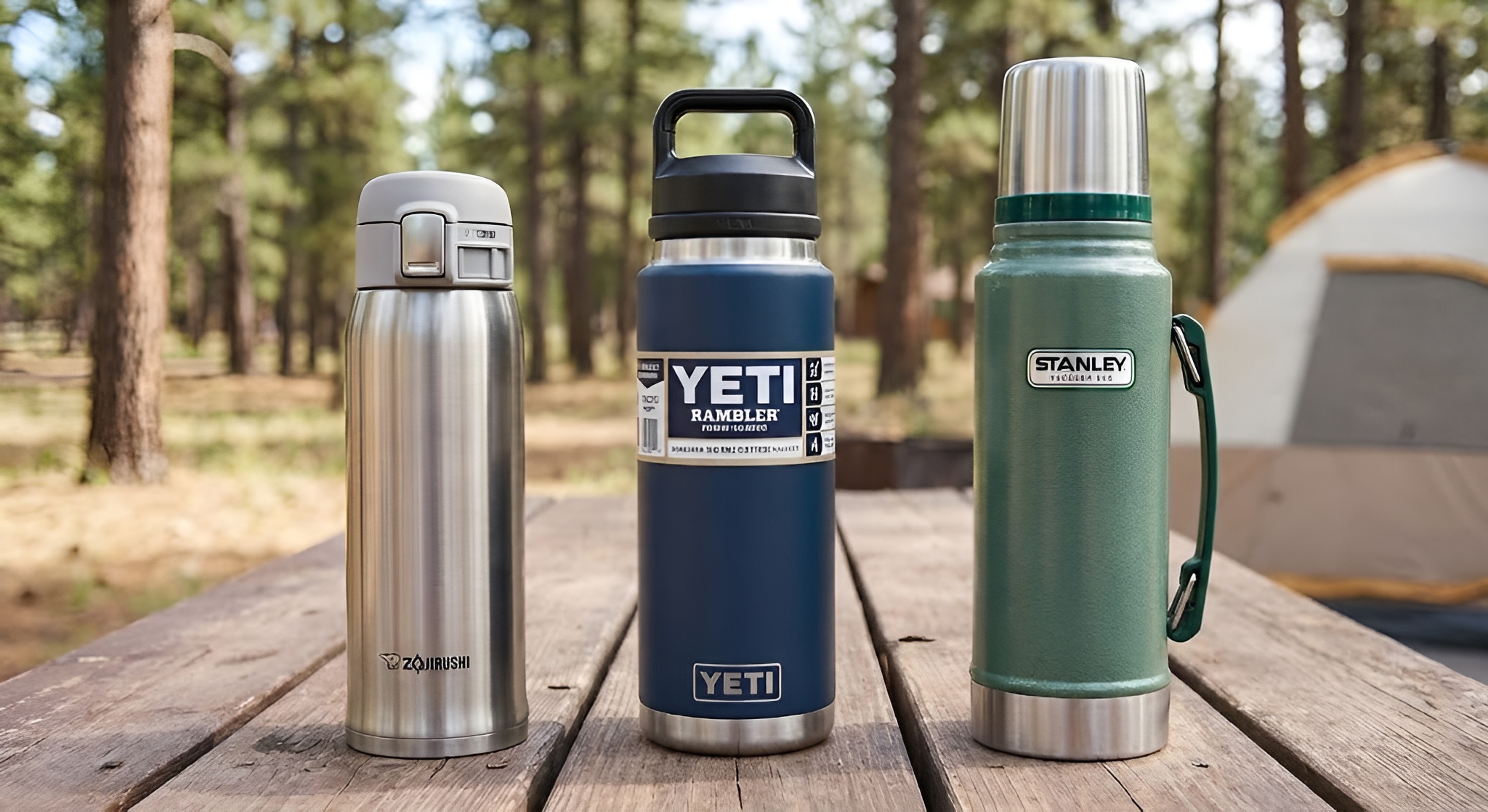
Vacuum quality is the single most important specification. A true vacuum flask uses a double-walled construction with the air pumped out of the gap between inner and outer walls, creating a near-vacuum that prevents conductive and convective heat loss. Cheaper flasks may use foam insulation or leave a small air gap, which performs far worse. Check the manufacturer's published heat-retention claim: a good flask should hold liquid above 70 °C for at least 8 hours and above 60 °C for 12. Some premium models add a reflective copper or silver coating to the inner wall to reduce radiant heat transfer, extending retention to 24 hours.
Seal design matters as much as insulation. A screw-top lid with a silicone or EPDM rubber gasket is standard, but quality varies. Test the seal by filling the flask with water, closing it, shaking hard, and inverting it over a sink; any drips indicate a poor gasket or misaligned thread. For car use, look for a secondary locking mechanism (a flip lever or twist-lock) to prevent the lid unscrewing in a bag or cup-holder. Wide-mouth flasks (60–80 mm opening) are easier to clean and allow you to add ice or fruit, but they lose heat slightly faster when opened; narrow-mouth designs (30–40 mm) retain temperature better and pour more controllably.
Capacity is a trade-off. A 1-litre flask is the sweet spot for a full day's solo drinking (roughly four to five mugs), while 500 ml suits short trips or pairs well with a backup. Anything over 1.5 litres becomes heavy and awkward in a car. Stainless steel is near-universal for vacuum flasks; avoid glass-lined models, which are fragile and offer no performance advantage on the road.
Check the Gasket Every Season
Silicone seals degrade with UV exposure and heat cycling. If your flask has sat in a hot car all summer, inspect the gasket for cracks or stiffness before your next trip, and replace it if needed—most manufacturers sell spares.
3. Travel Mugs vs. Flasks: When to Use Each
Travel mugs and vacuum flasks serve overlapping but distinct roles. A travel mug is designed for immediate consumption: it has a sip-lid (flip, slide, or button-release), fits a car cup-holder, and typically holds 300–500 ml. Most sacrifice some vacuum performance for a slimmer, single-hand form factor, meaning they hold temperature for 2–4 hours rather than 8–12. This makes them ideal for the first hour of a journey or a quick service-station top-up, but poor for all-day sipping. Many travel mugs also lack a fully sealed lid, so they can drip or leak if knocked over—check reviews and test yours before trusting it with loose leaves in a bag.
A vacuum flask, by contrast, is built for endurance. It is larger, heavier, and requires two hands to pour, but it will keep tea hot (or cold) for the entire day. The best strategy for a long road trip is to use both: brew a full flask of your main tea at home, and carry a travel mug for the first leg or for sampling a second variety. If you are driving solo and want to drink from the flask directly, choose a model with a built-in cup-lid that doubles as a mug; this keeps the main body sealed and minimises heat loss.
For cold brew, insulation is less critical—temperature stability matters more than heat retention—so a simple screw-top water bottle or cold brew pitcher with a silicone seal works well. In fact, some drivers prefer a non-insulated glass or Tritan bottle for cold tea, as it lets you see the colour and feels lighter to handle. Just keep it out of direct sun to avoid warming.
4. Which Teas Stay Drinkable for Hours in a Flask
Not all teas tolerate extended flask time. The guiding principle is oxidation and roast level. Teas that have already undergone significant oxidation, fermentation, or roasting are chemically more stable; their polyphenols have already polymerised or transformed, so further exposure to heat and air has less dramatic effect. Conversely, minimally processed teas—steamed greens, unroasted oolongs, delicate whites—contain high levels of reactive catechins and volatile esters that degrade quickly, turning the tea bitter, flat, or grassy.
Best for long flask time (6–12 hours): Roasted oolongs (Taiwanese Dong Ding, Tieguanyin, or Wuyi yancha) hold their toasted, mineral character and develop a mellow, slightly sweet edge as they cool. Ripe (shou) pu-erh remains earthy and smooth, with minimal astringency. Japanese hojicha, being roasted green tea, avoids the vegetal bitterness of sencha and stays pleasant even cold. Strong breakfast blacks—Assam, Ceylon, or blended English Breakfast—are robust enough to tolerate cooling, though they do become more tannic; adding a splash of milk before sealing the flask can buffer some of that astringency.
Acceptable for medium flask time (3–5 hours): Lightly oxidised oolongs (Ali Shan, Baozhong) and raw (sheng) pu-erh can work if brewed lighter and drunk warm; once they drop below 50 °C, they often turn sharp. Darjeeling and other high-grown blacks are more delicate than Assam and can develop a sour, wine-like note after four hours. Keemun and Yunnan Dian Hong blacks hold up better.
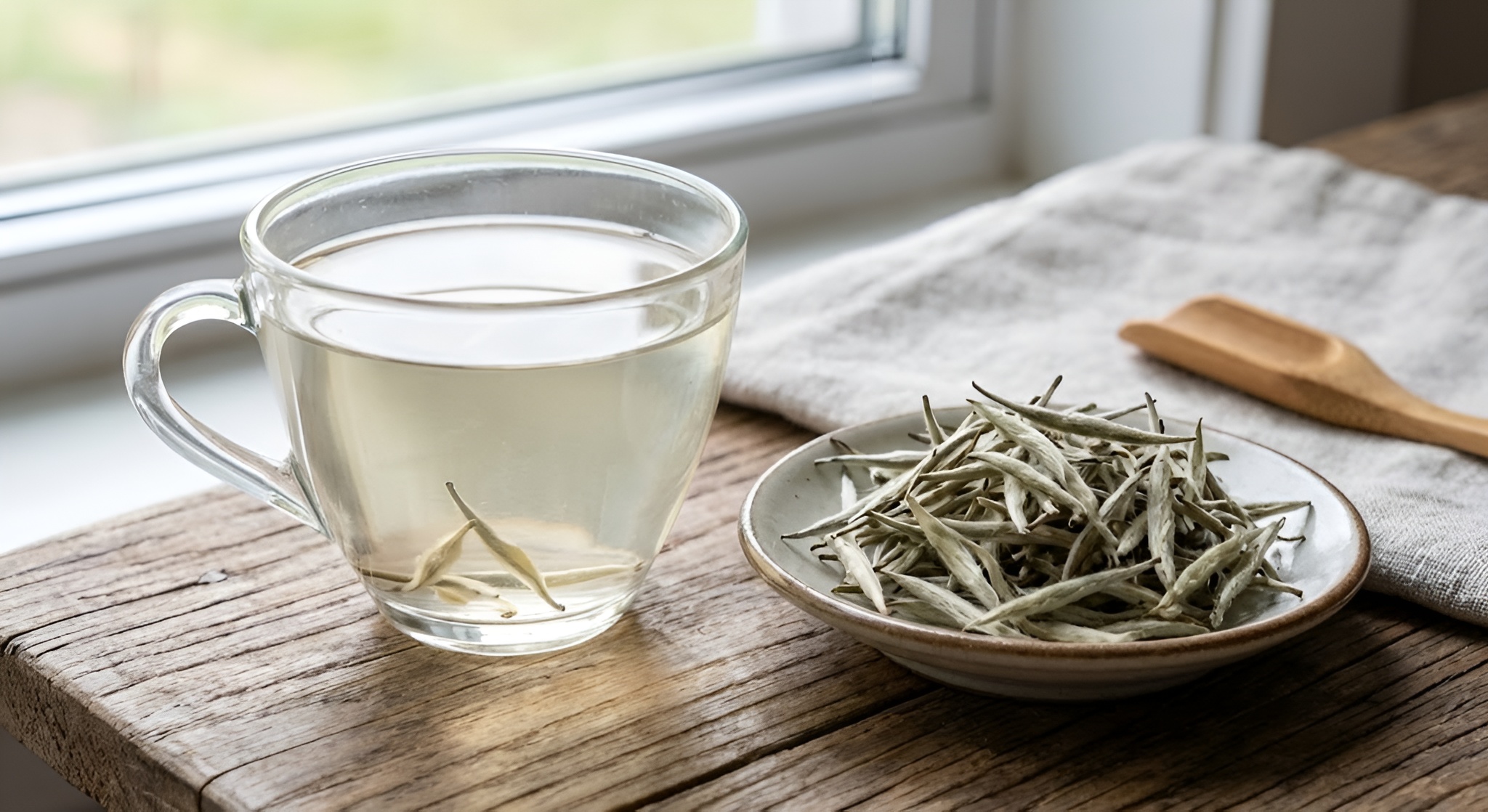
Poor for flask time (avoid or drink within 2 hours): Japanese steamed greens (sencha, gyokuro, kabusecha) turn intensely bitter and develop a seaweed-like sliminess as catechins precipitate. Chinese pan-fired greens (Longjing, Bi Luo Chun) fare slightly better but still lose their fresh, sweet character and become grassy. White teas (Silver Needle, White Peony) oxidise rapidly in a warm flask, developing hay-like or stale notes. Jasmine and other scented teas lose their aromatic top notes within an hour, leaving a flat, vegetal base.
Brew Lighter, Not Stronger
For any tea going into a flask, reduce the leaf quantity by 10–20% or shorten the steep by 30 seconds. The tea will continue to extract slowly in the sealed flask, and a lighter initial brew prevents over-astringency later.
5. Cold Brew for the Car: Overnight Prep and Stability
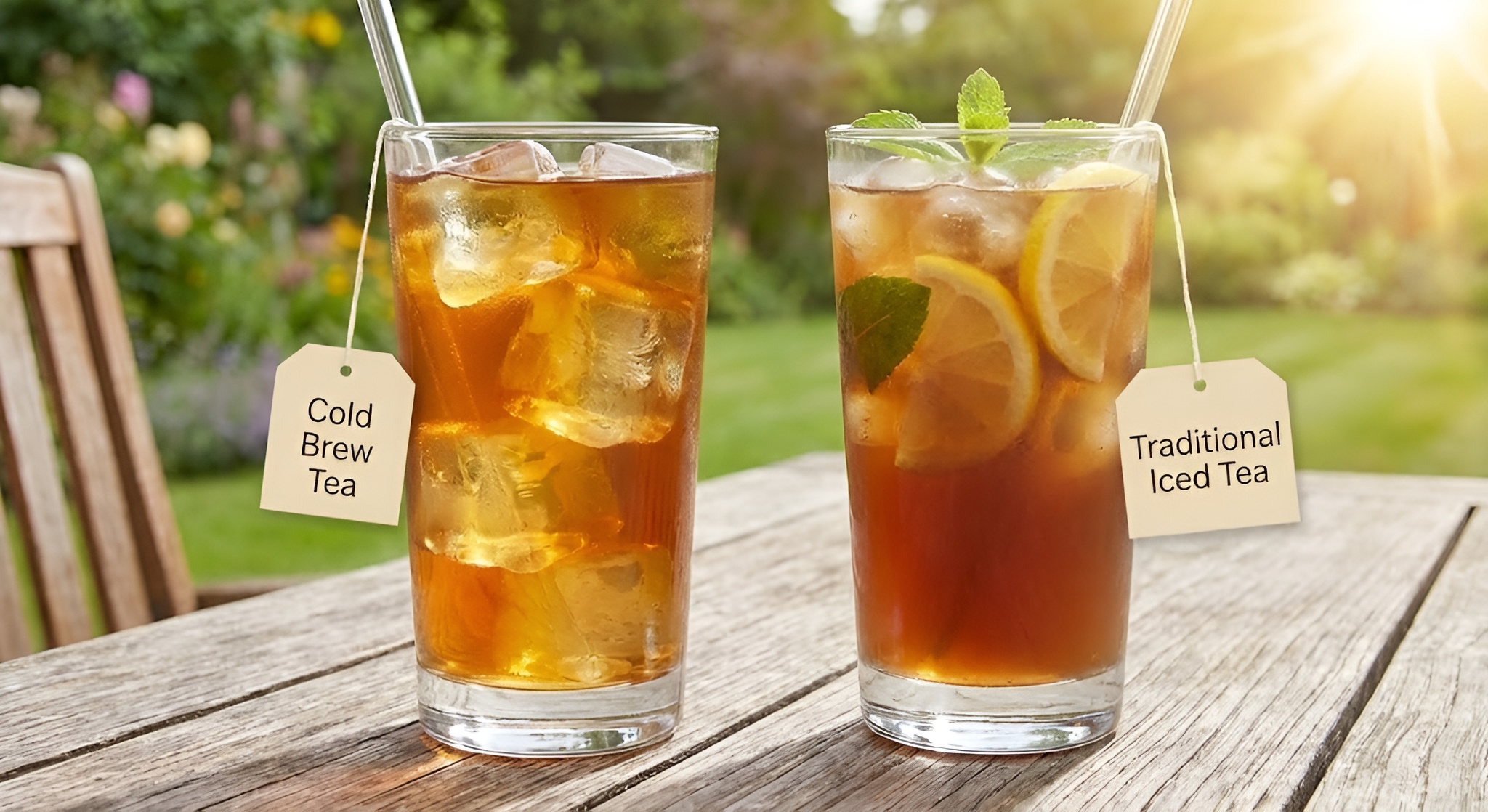
Cold brewing—steeping tea in refrigerated water for 8–12 hours—solves nearly every road-trip problem. Because extraction happens at 4 °C, bitter catechins and harsh tannins remain largely locked in the leaf, while sweetness (from sugars and amino acids) diffuses freely. The result is a smooth, naturally sweet tea that stays stable for 24–48 hours without refrigeration, as long as it is kept sealed and out of direct sun. For a summer road trip, this means you can brew a litre the night before, pour it into a flask or bottle at 6 a.m., and drink it all day without worrying about bitterness, heat, or degradation.
Best teas for cold brew: Japanese greens (sencha, genmaicha, kukicha) shine here, yielding clean, umami-rich liquor with none of the astringency they develop when hot-brewed and left to cool. Chinese greens (Longjing, Mao Feng) produce delicate, floral cold brews. Lightly oxidised oolongs (Taiwanese high-mountain styles) offer a creamy, orchid-like sweetness. Even robust blacks like Assam and Ceylon cold-brew well, though they yield a lighter, less malty profile than their hot counterparts. For detailed cultivar recommendations and timing, see our Japanese cold brew sencha guide.
Method: Use roughly 5–8 grams of leaf per litre of cold tap or filtered water (adjust to taste). Place loose leaf in a pitcher with a removable infuser or a large jar, cover, and refrigerate for 8–12 hours. Strain, transfer to your flask or bottle, and go. If your tap water is heavily chlorinated or very hard (common in London, the Southeast, and parts of the Midlands), consider using filtered or bottled water to avoid off-flavours. For more on the science and ratios, see cold brew science and cold brew math.
6. Layby Brewing Kits: What to Pack for Fresh Tea on the Move
If you prefer hot tea and want to brew fresh during a long journey, a compact layby kit gives you independence from service stations. The essentials: a portable heat source, pre-portioned loose leaf, a strainer or infuser, and a secondary small flask or mug. For the heat source, a small gas camping stove (single-burner canister type, widely available and legal to use in UK laybys and car parks) is the most reliable; boil 500 ml of water in 3–5 minutes. Alternatively, a 12 V car kettle plugs into the cigarette lighter socket and heats water to boiling in 10–15 minutes—slower, but requires no flame or fuel canister. Some drivers also carry a battery-powered USB kettle (capacity usually limited to 300–400 ml), though these are slower still and suited only to short top-ups.
For the tea itself, pre-portion your leaf into small resealable bags, paper sachets, or reusable cloth tea bags before you leave. This saves fumbling with loose leaf in a layby and prevents spillage. Pack a fine-mesh basket strainer or cone that fits your mug or flask mouth; avoid cheap metal balls, which restrict leaf expansion and often leak bits. If you are brewing directly into your main flask, use a jug or spare mug as an intermediate vessel so you can control steep time and strain properly.
Other useful additions: a small bottle of filtered or bottled water (especially if you are touring areas with very soft or hard water, which can skew flavour—see very soft water brewing for Glasgow and Manchester tips), a packable silicone funnel for pouring into narrow-mouth flasks, and a microfibre cloth for wiping up spills. Keep the whole kit in a compact stuff-sack or rigid case to prevent crushing or leaks. For summer festivals and outdoor events, many of these principles overlap; see festival tea guide and festival camping tea kits for related advice.
The Two-Kettle Safety Rule
Never use a camping stove or 12 V kettle inside a moving vehicle or an enclosed car, even with windows open. Pull into a layby, turn off the engine, and step outside or open all doors to ensure ventilation and stability.
7. Motorway Service Station Tea: What to Expect and How to Improve It
UK motorway service stations have improved their tea offerings since 2020, but quality remains patchy. Most now provide self-service hot-water dispensers alongside branded coffee machines; the water temperature typically sits at 70–85 °C, which is marginal for black tea and too cool for proper extraction of robust breakfast blends. The water itself is often heavily treated (chlorinated, softened, or running through limescale-caked pipework), which can impart a flat, chemical, or metallic note. Tea-bag selection is usually limited to mass-market English Breakfast, Earl Grey, and a token fruit or peppermint option, with quality varying by chain.
If you must brew at a service station, rinse your cup first with a splash of the hot water to check temperature and taste. If it tastes strongly of chlorine or limescale, it will ruin even a decent tea bag. In that case, either buy a bottle of still water and brew cold (pour hot water over the bag, let it steep two minutes, then top up with cold bottled water for a lukewarm but drinkable result), or skip the tea entirely and opt for plain hot water to refresh your palate. Some service stations now stock higher-quality loose-leaf sachets or pyramid bags from independent roasters; these are worth the extra 50p if available.
A better strategy is to treat the service station as a refill point for your own kit: top up your flask with hot water from the dispenser, then add your own pre-portioned leaf from your layby kit. This gives you control over leaf quality and steep time, and you avoid paying £2.50 for a mediocre bag. For long summer road trips, many drivers also pack a small insulated bag with cold brew or iced tea from home, bypassing the service station entirely.
8. Hygiene, Cleaning, and Preventing Flask Taint
Stainless steel flasks are durable and non-reactive, but they can develop persistent odours or staining if not cleaned properly—a problem magnified by the confined, warm environment of a summer car. After each trip, rinse the flask immediately with hot water and a drop of washing-up liquid, then scrub the interior with a bottle brush to dislodge any tannin residue. For stubborn tea stains, fill the flask with hot water and add a tablespoon of bicarbonate of soda or a denture-cleaning tablet, leave overnight, then rinse thoroughly. Avoid bleach or harsh abrasives, which can damage the steel or leave chemical residues.
Pay special attention to the lid and gasket, where tea residue, mould, and odours accumulate. Disassemble the lid fully (most have a removable inner plug and silicone seal) and wash each part separately in warm, soapy water. If the gasket smells musty or rubbery, soak it for 30 minutes in a solution of 1 part white vinegar to 3 parts water, then rinse and air-dry completely before reassembling. Some drivers keep a spare gasket for rotation, allowing one to dry fully while the other is in use.
Storage: Never seal a flask while it is still damp inside, as trapped moisture encourages bacterial growth and metal corrosion. After washing, leave the lid off and stand the flask upside-down on a drying rack overnight. Store it with the lid off or loosely placed, not screwed tight. If your flask has been sitting unused in the car boot for weeks, give it a full clean before filling—heat and sunlight can activate latent odours from previous brews. For related hygiene advice on outdoor and travel brewing, see travel tea kits and dog-walker hydration kits.
The Overnight Vinegar Soak
If your flask smells of old tea or rubber, fill it with equal parts white vinegar and warm water, seal, shake, and leave overnight. Rinse thoroughly in the morning—the acidity breaks down tannin films and neutralises odours without harsh chemicals.



Comments