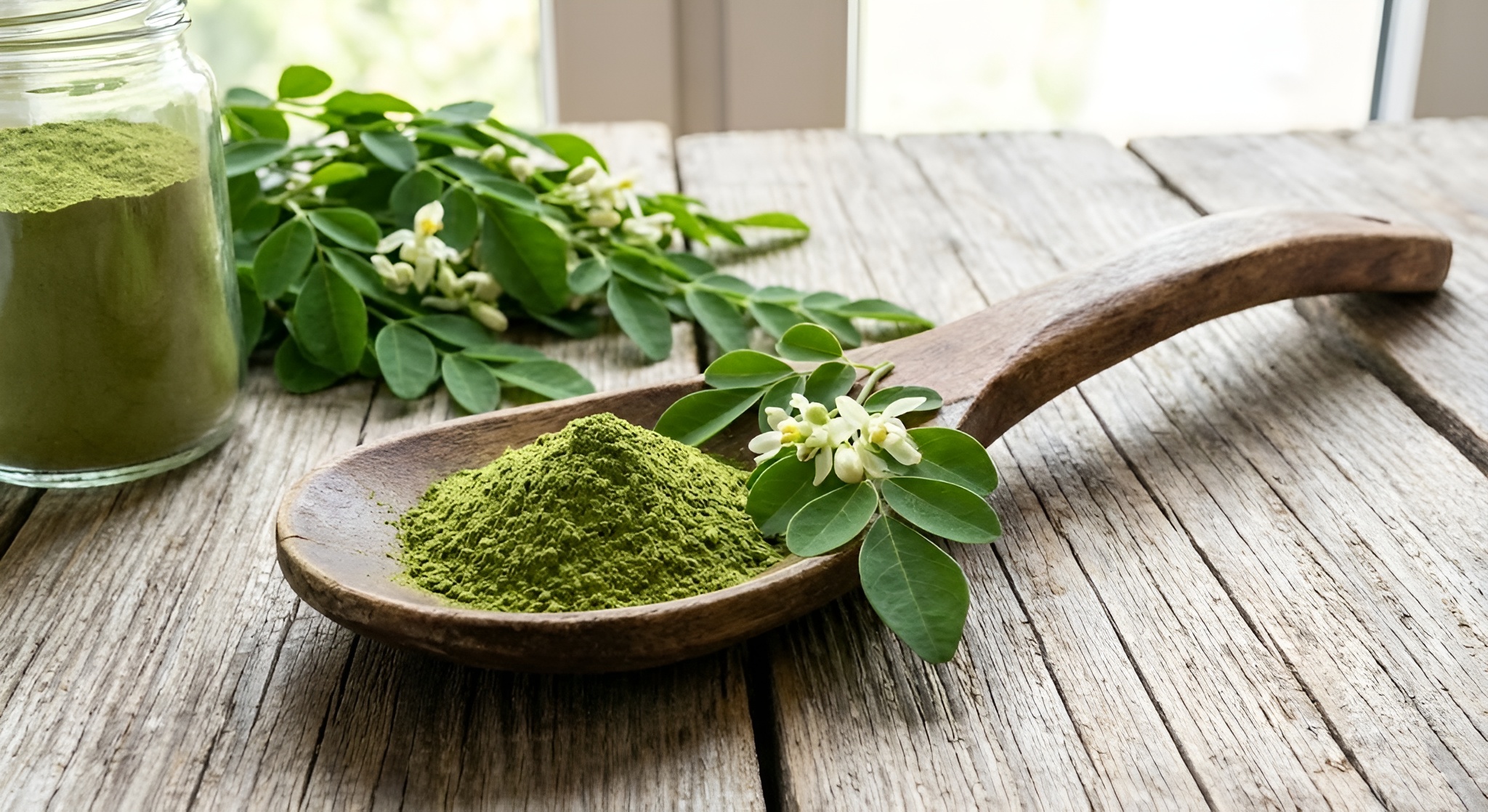
1. Moringa vs. Matcha: The Green Showdown
They look identical—bright green powders—but they are chemically very different.
| Feature | Matcha (Green Tea) | Moringa (Tree Leaf) |
|---|---|---|
| caffeine | High (35-70mg) | Zero |
| Primary Antioxidant | EGCG (Catechins) | Quercetin & Chlorogenic Acid |
| Flavor | Umami, Grassy, Sweet | Earthy, Spinach, Spicy |
| Best Use | Focus & Alertness | Nutrition & Recovery |
Expert Tip: Masking the Taste
Because Moringa tastes a bit like spicy spinach, it isn't great with just water. If using powder, blend it into a smoothie with banana or pineapple. If brewing tea, add lemon and ginger to cut through the vegetal flavor.
2. Blood Sugar & Inflammation
Moringa contains Chlorogenic Acid, the same compound found in green coffee beans. This compound is known to slow the absorption of sugar in the bloodstream, reducing post-meal spikes.
Additionally, the isothiocyanates (which give it the horseradish bite) are potent anti-inflammatory agents, similar to those found in broccoli and kale.
3. Leaf vs. Powder: Which to Choose?
Tea Bags (Cut Leaf): These are best for a gentle daily drink. You get the water-soluble vitamins, but you discard the fiber. The taste is much milder.
Powder (Ground Leaf): This is the "Superfood" way. You consume the entire leaf, fiber and all. This provides significantly more iron and calcium but has a stronger taste and gritty texture.
Ready to boost your energy?
We've reviewed the best organic Moringa teas on the market, from convenient tea bags to premium superfood powders. The 5 Best Moringa Teas of 2025 →
Comments