1. What Counts As Smoked Tea
Smoked tea is any tea—usually black, occasionally oolong—whose leaves are exposed to wood smoke during processing, typically in the final drying stage. The smoke adheres to the leaf surface and permeates the cell structure, imparting volatile phenols (guaiacol, syringol), creosote compounds, and aromatic hydrocarbons that survive hot water and dominate the cup. Not all 'smoky' teas are smoked: some oolongs and aged pu-erh acquire charcoal or roasted-grain notes from roasting or storage, but true smoked tea is defined by intentional exposure to combustion smoke from specific woods.
The category is small. Outside China's Wuyi region and a handful of Taiwanese experiments, smoked tea is rare; most of the world's production comes from Fujian's Tongmu Village (桐木村, Tóngmù Cūn) and adjacent Wuyi townships, plus cheaper imitations from Anhui, Guangxi, and India. Western blenders then create secondary styles—Russian Caravan, smoked Earl Grey, 'gunpowder' blends—by mixing authentic smoked leaf with unsmoked blacks, greens, or flavourings. If a tea tastes of campfire, check the label: is it single-origin Zheng Shan Xiao Zhong, export-grade Lapsang souchong, or a blend? The answer shapes every aspect of brewing and pairing.
Legally and culturally, Zheng Shan Xiao Zhong (正山小種, 'proper-mountain small-leaf') holds Protected Geographical Indication status in China for tea grown above 1,200 m in the Tongmu National Nature Reserve and smoked using traditional pine and longan wood. Everything else—including most tins labelled 'Lapsang souchong' in UK supermarkets—is technically Wai Shan (外山, 'outer-mountain') or a generic export style, often smokier, cheaper, and coarser.
The Ashtray Test
If your smoked tea tastes more like cold bonfire ash than dried fruit and pine resin, it's over-smoked or stale. Fresh Zheng Shan Xiao Zhong should smell sweet and woody before you catch the smoke.
2. Origin & History: Accident, War, and the Caravan Trade
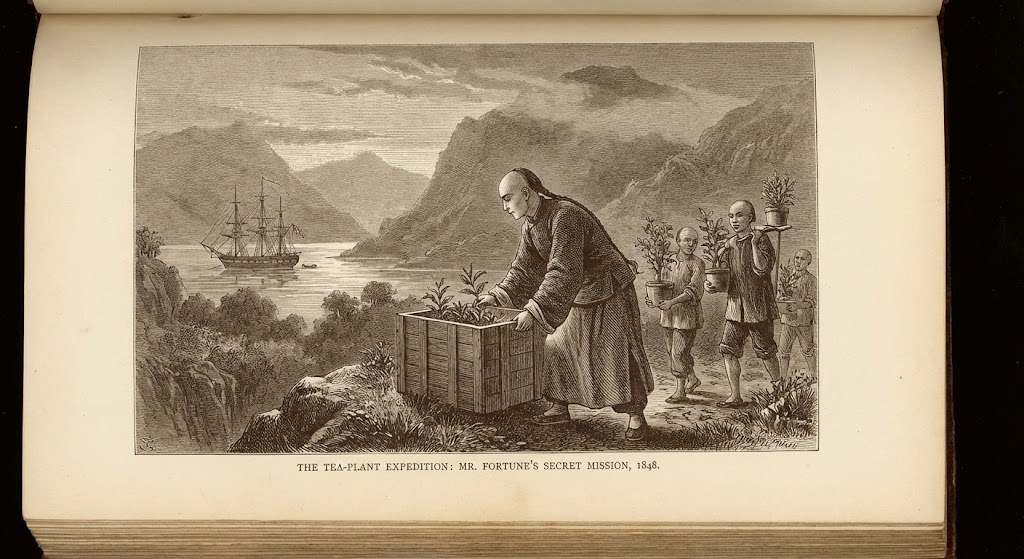
The canonical origin story places Zheng Shan Xiao Zhong's invention in the late Ming or early Qing dynasty (17th century), when—according to local lore—a passing army commandeered a Tongmu tea workshop, forcing farmers to abandon partly processed leaves. To salvage the crop and speed drying before spoilage, they lit pine-wood fires beneath the leaves. The result was dark, sweet, and smoky; Dutch and British traders loved it, and a regional accident became an export staple. Like many tea legends the details are unverifiable, but archaeology confirms that Wuyi's black-tea production surged in the 1600s, and smoke-drying over wood fires was a practical solution in a wet, mountainous climate with abundant pine.
By the 18th century Lapsang souchong (the Anglicised name, possibly from 'Zheng Shan Xiao Zhong' or the Hokkien lāp-sáng sió-chéng) was a luxury in London coffeehouses and St Petersburg salons. Russian Caravan, the blend, allegedly arose because tea shipped overland via camel caravan absorbed campfire smoke during the months-long journey across Siberia and Mongolia; when tastes shifted to faster sea routes, blenders recreated the smoky profile by mixing Lapsang with milder Keemun. This story is almost certainly apocryphal—most caravan tea travelled in sealed chests—but it stuck, and 'Russian Caravan' remains shorthand for smoke plus malt, regardless of actual Russian involvement.
Today Tongmu Village produces roughly 500 tonnes of Zheng Shan Xiao Zhong annually, a fraction of global black tea output, and competition from cheaper Wai Shan Lapsang and flavoured blends has squeezed margins. In 2009 a subset of Tongmu producers launched Jin Jun Mei (金骏眉), an unsmoked or lightly smoked Tongmu black made from early-spring buds, which now commands higher prices and greater prestige among Chinese consumers; as a result, some traditional Zheng Shan Xiao Zhong makers have dialled back smoke intensity to chase the sweeter, fruitier Jin Jun Mei profile, blurring the line between 'smoked' and 'lightly roasted' further.
3. Wood Types, Smoke Chemistry & Flavour Compounds
The flavour of smoked tea hinges on which wood burns and how completely. Pine root (马尾松根, Pinus massoniana) is the historic Tongmu fuel: resinous, slow-burning, producing thick white smoke rich in guaiacol (the phenol that gives Scotch whisky and barbecue their smoky backbone), syringol, and various terpenes. Pine smoke reads as medicinal, tarry, or 'Christmas tree' depending on concentration and the drinker's threshold. Longan wood (龙眼木, from Dimocarpus longan) is prized for its sweeter, fruity volatiles—furfural and maltol—that add caramel, dried-date, and baked-orchard notes. Traditional Zheng shan Xiao Zhong workshops use both: pine root for the initial heavy smoke, then longan for the final, gentler pass, layering complexity.
Cheaper or export-focused operations may substitute any available softwood—spruce, fir, or even construction off-cuts—which can introduce acrid, bitter, or petrochemical notes if the wood is treated or burns too hot. Hardwoods (oak, cherry) are rare in Chinese smoked tea but appear in Western DIY stovetop smoking and craft blends; they yield milder, sweeter smoke with less phenolic bite. Some mass-market 'Lapsang souchong' is not smoked at all but sprayed with liquid-smoke flavouring (a legal additive in many jurisdictions), which delivers one-dimensional creosote without the fruit or resin layers of real wood combustion.
Smoke chemistry is dose-dependent. Light exposure—leaves suspended above smouldering embers for 20–40 minutes—deposits a thin aromatic film; the tea retains its underlying black-tea character (malt, cocoa, dried fruit) with smoke as an accent. Heavy smoking—multiple hours, or direct contact with dense smoke—saturates the leaf, masking origin and cultivar and pushing the cup toward tar, ash, and phenolic astringency. Because smoke compounds are hydrophobic they bind tightly to the leaf's waxy cuticle and are slow to dissipate, so over-smoked tea stays over-smoked; under-smoked tea, by contrast, can be refreshed with a second smoking if the producer wishes.
Sniff Before You Steep
Quality smoked tea should smell of pine forest and dried longan, not rubber or petrol. If the dry leaf stings your nose, it's either过烟 (over-smoked) or adulterated with artificial smoke.
4. Lapsang Souchong vs. Zheng Shan Xiao Zhong vs. Russian Caravan: A Three-Way Comparison
Zheng Shan Xiao Zhong is the benchmark: whole-leaf, orthodox-processed black tea from Tongmu's high-elevation gardens (1,200–1,500 m), withered, rolled, oxidised, then smoke-dried over pine root and longan. Expect a deep reddish-brown liquor; aroma of campfire, longan, and pine resin; flavour that balances sweet malt, dried plum, and subtle medicinal smoke; and a clean, lasting finish. Smoke is present but not dominant; a well-made Zheng Shan Xiao Zhong tastes first like a fruit-forward Fujian black, second like a smoked one. Caffeine is moderate (40–50 mg per 200 ml cup, comparable to other black teas). Price in the UK ranges from £12–30 per 50 g for estate-grade leaf; harvest year and specific village (Tongmu Guandun, Matouyan) matter.
Lapsang souchong, by contrast, is the export workhorse: typically Wai Shan (outer-mountain) leaf from lower elevations in Wuyi or neighbouring Anhui and Guangxi, often machine-processed, then heavily pine-smoked to a uniform tarry profile that masks terroir. The liquor is darker, almost black-red; aroma is bonfire, creosote, and occasionally rubber; flavour is smoke-forward with secondary notes of leather, tobacco, and dry wood, minimal fruit. It is cheaper (£4–12 per 50 g in UK supermarkets and online), more forgiving of rough brewing, and better suited to culinary use—smoking poultry, infusing salt, or adding to marinades—than daily drinking. The name 'Lapsang souchong' is often used interchangeably with Zheng Shan Xiao Zhong in English, but in practice it signals heavier smoke, lower price, less geographical specificity.
Russian Caravan is not a single tea but a blender's formula, usually 20–40 % Lapsang souchong or Zheng Shan Xiao Zhong mixed with Keemun (祁门, a malty Anhui black), Yunnan Dian Hong, or sometimes oolong. The goal is to temper smoke with sweetness, body, and maltiness, creating an approachable middle ground for drinkers who find pure Lapsang too aggressive. Flavour varies by house: some Russian Caravans are smoke-dominant with a honey chaser; others are malty Keemun with a whisper of campfire. Quality is middling to good—you are paying for convenience and consistency, not terroir. Expect £6–15 per 100 g from UK blenders (Fortnum & Mason, Whittard, Twinings' premium range). There is no Chinese or Russian 'original' to benchmark against; each blender's recipe is effectively its own standard.
5. How to Brew Smoked Tea: Temperature, Time & Vessel
Smoked black teas are orthodox blacks first, smoked second, so the brewing fundamentals follow standard black-tea guidelines: boiling or near-boiling water (95–100 °C), 3–5 minutes steep, and a preheated pot or gaiwan to maintain temperature. The twist is balancing extraction: under-brewing leaves smoke on the surface and fruit locked inside, yielding thin, one-note astringency; over-brewing pulls excess tannin and phenolics, amplifying bitterness and tar. For Zheng Shan Xiao Zhong, start with 3 g per 200 ml, 98 °C, 3 minutes; taste, and if the smoke overwhelms the longan and malt, drop to 2.5 g or 2 minutes next time. For Lapsang souchong, which is coarser and more robust, 4 g per 200 ml and a full 4-minute steep is safe; it is nearly impossible to over-brew cheap Lapsang into undrinkability. Russian Caravan splits the difference: 3 g, 95 °C, 3–4 minutes, adjusting for your blend's smoke ratio.
Vessel choice affects smoke perception. Porous clay (Yixing, unglazed stoneware) absorbs and concentrates smoke aromatics over multiple sessions, eventually dedicating the pot to smoked teas only; this intensifies the experience but limits versatility. Glazed porcelain or glass leaves no residue, making it easier to switch between tea types and to taste the base tea beneath the smoke. If you are new to smoked tea or comparing styles side by side, use porcelain. If you love Lapsang and want to deepen its character, season a small Yixing pot over ten or twenty infusions.
Multiple infusions are viable for high-grade Zheng Shan Xiao Zhong: the first steep extracts smoke and surface sweetness; the second reveals the black tea's backbone (cocoa, dried fruit, mineral); the third fades to a gentle malt with woody echoes. Increase temperature and time slightly with each round (e.g. 98 °C / 3 min, 100 °C / 4 min, 100 °C / 5 min). Lapsang souchong and Russian Caravan, being more heavily processed or blended, typically yield two good infusions before turning flat and woody; push for a third only if you enjoy a lighter, campfire-ash finish.
The Cold-Start Trick
For maximum fruit and minimum tar, try a cold rinse: cover the leaves with room-temperature water for 30 seconds, discard, then brew normally. This lifts surface smoke and tar without extracting the deeper fruit and malt compounds.
6. Food Pairing: Smoked Meats, Cheese, Chocolate & More
Smoked tea's affinity for rich, savoury, and umami-laden foods is unmatched in the tea world. Zheng Shan Xiao Zhong, with its balance of fruit, smoke, and maltiness, pairs beautifully with mature hard cheeses (aged Cheddar, Comté, Manchego), smoked salmon or mackerel, charcuterie (salami, bresaola), and dark chocolate (70–85 % cacao). The tea's longan sweetness bridges the gap between smoke and fat, while its tannins cut through richness without clobbering delicate flavours. It is also a strong match for British barbecue classics—grilled sausages, sticky ribs, charred vegetables—where smoke meets smoke and the tea's fruit notes lift the char.
Lapsang souchong is a culinary ingredient as much as a beverage. Its heavy tar and resin make it a powerful addition to marinades for beef brisket, lamb shoulder, or injected pork; steep 2 tablespoons in 200 ml boiling water, cool, and use as part of a soy-garlic-sugar base. It is the traditional leaf for Chinese tea-smoked duck and works in any stovetop-smoking setup for fish (trout, sea bass) or vegetables (aubergine, tofu). As a drink, pair it with the biggest flavours: blue cheese, smoked brisket, aged Scotch whisky, or a post-barbecue digestif. It also anchors cocktails: a Lapsang-infused whisky sour or a smoky iced tea with bourbon and lemon.
Russian Caravan is the most versatile at the table. Its malt-smoke balance suits both the cheese board and the biscuit tin; try it with buttery shortbread, ginger biscuits, or fruit cake. It is excellent with a full English breakfast (the malt complements bacon and sausage, the smoke echoes the grill), and gentle enough for afternoon tea with scones and clotted cream if you prefer a savoury edge. Because it is a blend, you can also nudge it in either direction by adjusting steep time: shorter for a malty, breakfast-like cup; longer for more campfire character and pairing power with grilled lamb or venison.
Tea-Smoked Salt in 10 Minutes
Steep 3 tablespoons of Lapsang in 100 ml boiling water for 5 minutes, strain, then toss 200 g flaky sea salt in the hot liquor. Spread on a baking tray and dry in a 100 °C oven for 10 minutes. Instant finishing salt for steak, eggs, or roast vegetables.
7. Buying Smoked Tea in the UK: What to Look For & What to Avoid
When shopping for Zheng Shan Xiao Zhong, provenance is everything. Look for listings that name Tongmu Village (桐木村) or Tongmu Guandun (桐木关) explicitly, give a harvest year (spring 2026, summer 2025), and specify pine-root or longan smoking. Reputable UK vendors include What-Cha, Mei Leaf, and Postcard Teas; expect £12–30 per 50 g. The leaves should be whole, twisted, and dark brown-black with a slight oily sheen, not dusty or broken. Smell the dry leaf: you should get sweet wood, dried fruit, and resin before any acrid smoke. Avoid any listing that simply says 'Lapsang souchong' without geographic detail—it is almost always the cheaper export style, not true Zheng Shan.
For Lapsang souchong, if you want it for cooking or bold daily drinking, supermarket own-brands (Tesco Finest, Waitrose, M&S) and budget online sellers (£4–8 per 50 g) are fine; you are paying for smoke intensity, not terroir. Loose leaf is preferable to teabags for better leaf quality and control over strength. Check the ingredient list: if it mentions 'flavouring' or 'smoke flavouring', you are getting liquid-smoke spray, which is not inherently bad but is one-dimensional. If the packet smells like a tyre fire, walk away—proper Lapsang is smoky, not chemical.
Russian Caravan quality depends on the blender. Fortnum & Mason, Whittard, and Twinings' premium lines use decent Keemun and real smoked leaf; budget supermarket versions often blend floor-sweepings and add flavouring. Read the label: if it lists 'black tea' without specifying Keemun, Lapsang, or origin, assume the cheapest available components. Expect £6–15 per 100 g. Because Russian Caravan is a blend, freshness matters less than with single-origin teas, but still check for a best-before date and avoid anything over two years old—smoke fades and the tea turns flat and papery.
The Tongmu Postcode Test
Genuine Zheng Shan Xiao Zhong will often list the Chinese postcode 354311 (桐木村, Wuyishan City, Fujian) or name sub-villages like Matouyan or Guandun. If the listing is vague ('Fujian black tea'), it is not the real thing.
8. Storage, Shelf Life & When to Drink
Smoked tea is more stable than most: the smoke compounds act as mild preservatives, and the robust oxidation of black tea resists further degradation. Stored correctly—sealed, dark, cool, away from moisture—Zheng Shan Xiao Zhong and Lapsang souchong will hold their character for 18–24 months, and some drinkers prefer them slightly aged (6–12 months post-purchase), when the smoke mellows and the fruit and malt come forward. Russian Caravan, being a blend, is best consumed within a year; the Keemun component fades faster than the smoked leaf. Follow the same storage principles as any black tea: airtight tins or Mylar bags, away from spices, coffee, and strong odours (ironically, smoked tea can impart its aroma to other teas if stored together, so keep it separate).
Unlike pu-erh or aged oolong, smoked tea does not improve indefinitely. Beyond two years the smoke turns stale and acrid, the base tea loses sweetness, and the cup becomes thin and woody. If your Lapsang has been sitting in the cupboard since 2023, brew a test cup: if it tastes flat or bitter rather than smoky and sweet, relegate it to the kitchen for smoking meats or infusing broths rather than drinking straight.
When to drink smoked tea is a matter of mood and meal. Zheng Shan Xiao Zhong's balance makes it an all-day proposition—morning with toast and marmalade, afternoon with biscuits, evening with cheese. Lapsang souchong's intensity suits post-meal or cold-weather sessions when you want something warming and assertive. Russian Caravan is the breakfast champion, pairing with bacon, eggs, and kippers without overwhelming them. All three are excellent iced: brew double-strength, chill, and serve over ice with a twist of lemon or a dash of whisky for a smoky summer long drink.



Comments