
1. What Professional Tea Tasting Actually Means
Professional tea tasting—cupping—is not simply drinking tea with attention. It is a standardised, comparative evaluation protocol designed to isolate the intrinsic qualities of the leaf from the variables introduced by personal brewing habits, water chemistry, or vessel choice. In the trade, cupping serves quality control, blending decisions, auction grading, and procurement; a buyer might cup fifty samples in a single session, each brewed to identical parameters, to detect subtle differences in terroir, plucking standard, or processing skill. The method is intentionally rigorous and, to the uninitiated, unforgiving: steeping times are often longer than you'd ever use at home, water temperatures are prescribed, and the taster works through the entire sensory sequence—dry aroma, wet aroma, liquor colour, taste, mouthfeel, aftertaste—in a fixed order.
The discipline originated in the nineteenth-century London tea auctions, where brokers needed a reproducible way to value chests sight-unseen. Today's cupping sets—lidded porcelain bowls, serrated cupping spoons, white saucers for examining wet leaf—are direct descendants of that commercial infrastructure. The format varies slightly by region (ISO 3103 specifies one approach; Chinese gongfu cupping uses smaller vessels and multiple infusions), but the principle remains: eliminate variables, maximise signal. If you brew every sample the same way, differences in taste are the tea's, not yours.
For the home enthusiast, cupping offers a different reward: it trains your palate to separate what you want to taste from what's actually in the cup. It teaches you to notice off-notes, to distinguish vegetal bitterness from tannic astringency, and to track how flavour evolves from the first sip to the cool dregs. Once you've cupped a dozen green teas side by side, you'll never again mistake freshness for quality or oxidation for complexity.
Start with Three, Not Thirty
Your first cupping session should compare just three similar teas—say, three Sencha or three Assam breakfast blends. Tasting too many samples overwhelms the palate and turns the exercise into guesswork; a small set lets you notice real contrasts and build confidence in your sensory vocabulary.
2. The Cupping Protocol: Equipment, Ratios, and Timing
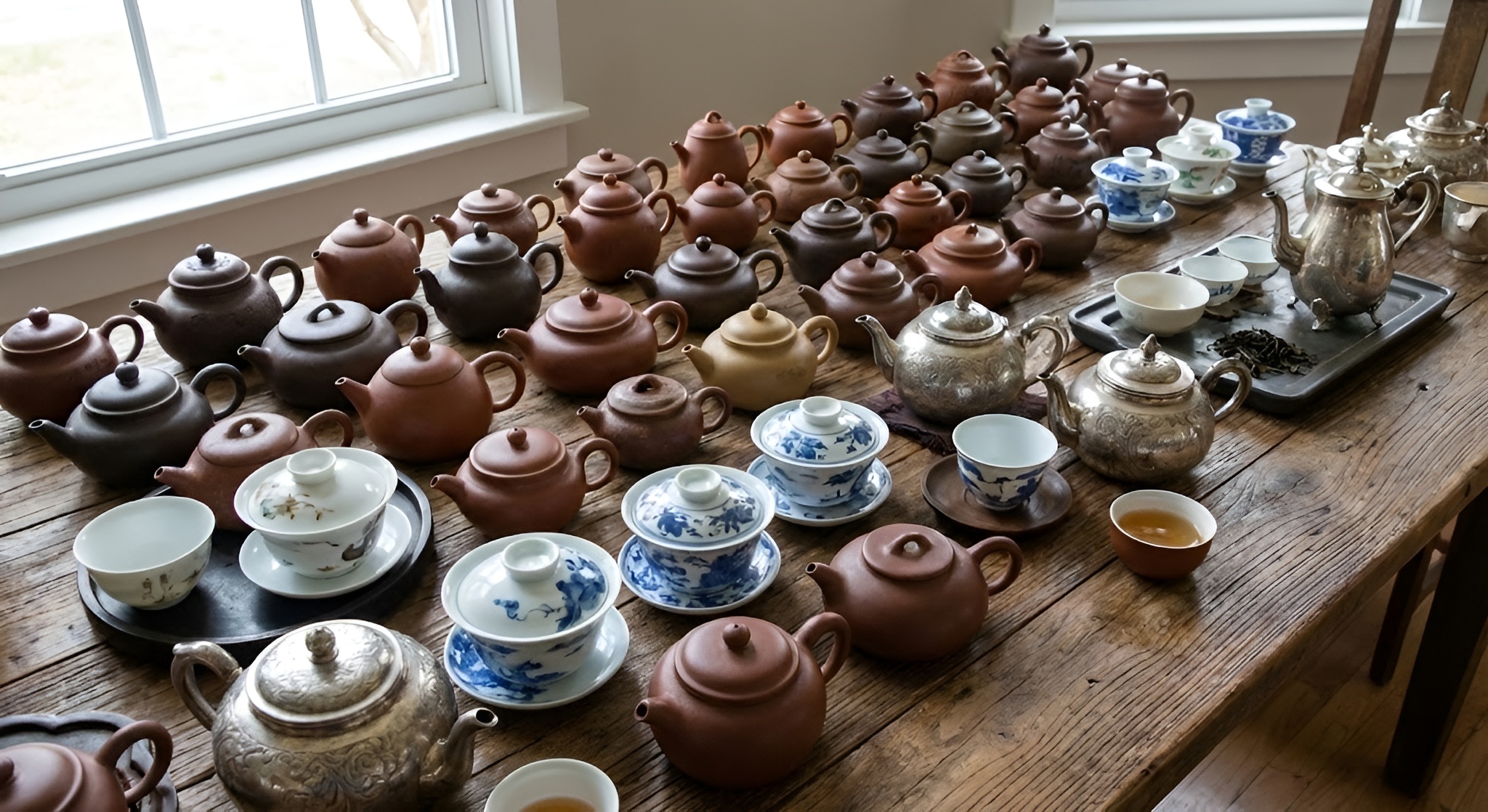
A professional cupping set consists of a lidded white porcelain bowl (typically 150–200 ml), a matching saucer or tasting cup, and a serrated cupping spoon (the serrations help aerate the tea when you slurp). White porcelain is non-reactive and allows you to judge liquor colour accurately. If you don't own a cupping set, a small white teapot or gaiwan and a white mug will suffice, provided you use consistent volumes and timings. You'll also need a precise scale (0.1 g resolution), a timer, a kettle with temperature control, and a notebook.
The standard ratio is 3 g of dry leaf to 150 ml of water, though some tasters use 2.5 g for delicate teas or 3.5 g for compressed pu-erh. Water temperature depends on tea type: 70–75 °C for Japanese greens, 80–85 °C for Chinese greens and whites, 85–90 °C for oolongs, 95–100 °C for blacks and pu-erh. Steeping time is fixed, not adjusted to taste—typically 3 minutes for greens, 4 minutes for oolongs, 5 minutes for blacks. This intentional 'over-brewing' stresses the tea, revealing tannins, bitterness, and structural flaws that shorter infusions might hide. You're not aiming for the most pleasant cup; you're aiming for the most informative one.
Start by weighing the dry leaf into the cupping bowl. Note the appearance: whole leaves or fannings? Twisted, rolled, or flat? Colour uniformity? Next, pour the pre-heated water directly onto the leaf, start your timer, and cover with the lid. While the tea steeps, smell the dry leaf aroma from the packet or tin—this 'pre-steep' assessment captures volatile aromatics that will change once the leaf is wet. When the timer sounds, remove the lid, hold it close to your nose, and inhale the wet leaf aroma; this is often the most expressive stage. Finally, use the lid to hold back the leaf and decant the liquor into your tasting cup or saucer. The spent leaf remains in the bowl for later inspection.
3. Aroma Assessment: Dry, Wet, and Residual
Aroma is the first and, for many professionals, the most revealing stage of evaluation. The human nose can distinguish thousands of compounds; the tongue, by contrast, detects only five primary tastes (sweet, sour, salty, bitter, umami) plus textural sensations. A tea's aromatic profile tells you about varietal character, processing choices, and storage conditions before you've tasted a drop. You assess aroma in three distinct phases: dry, wet, and residual (the lingering scent in the empty cupping bowl after the liquor is poured).
Dry aroma: Before adding water, smell the leaf directly from the packet or cupping bowl. Is it grassy, floral, fruity, smoky, marine? Intensity matters as much as character—a faint dry aroma may signal age, poor storage, or low-grade leaf. Greens and whites should smell bright and vegetal; oolongs often show orchid, stone-fruit, or roasted-grain notes; blacks range from malty and cocoa-sweet to winey or resinous. Any mustiness, sourness, or chemical sharpness is a red flag.
wet aroma: Immediately after steeping, remove the lid and smell the saturated leaf. Heat volatilises aromatic compounds, so this stage is often the most intense. You're looking for complexity—how many distinct notes can you pick out?—and for balance. A well-made tea will reveal layers (e.g. jasmine over honey over fresh hay) rather than a single blunt note. Watch for discordant smells: chemical or synthetic hints may indicate heavy fertilisation; a flat, cooked-vegetable smell in a green tea suggests poor firing or re-drying.
Residual aroma: After you've poured the liquor, smell the empty cupping bowl. Residual scent—sometimes called the 'cup fragrance'—can persist for minutes and often reveals base notes (wood, earth, dried fruit) that were masked by brighter top notes. In high-quality oolongs and aged teas, the residual aroma is as important as the taste; a clean, long-lasting fragrance is a hallmark of careful processing and good leaf.
Calibrate with Known References
Keep a small library of benchmark teas—a fresh Longjing, a classic Keemun, a roasted Tieguanyin—and re-cup them periodically. Smelling and tasting known references trains your memory and gives you a sensory anchor when you encounter unfamiliar samples.
4. Visual and Liquor Evaluation: Colour, Clarity, and Leaf Quality
Once the liquor is decanted, pour a small amount into a white saucer or shallow tasting cup and hold it against a white background or natural light. You're assessing colour, clarity, and brightness. Colour tells you about oxidation level, cultivar, and sometimes seasonal variation: spring-plucked greens tend towards pale jade; first-flush Darjeelings show a champagne or apricot hue; fully oxidised blacks range from deep amber to mahogany. Any cloudiness, sediment, or dullness suggests either poor processing (incomplete filtering, over-firing) or contamination.
Clarity is not the same as colour intensity. A dark liquor can still be brilliantly clear, and clarity is prized because it signals clean manufacturing and freedom from particulate matter. Brightness—a reflective, almost glossy quality to the surface—is a visual proxy for liveliness on the palate; dull, flat liquor often tastes the same way. In professional cupping, a bright, clear liquor earns points even before tasting begins.
After evaluating the liquor, return to the spent leaf in the cupping bowl. Unfurl a few leaves on the white saucer and examine them: Are they whole or broken? Uniform in size and colour? Can you see the bud and two leaves of orthodox plucking, or is it a mix of stems and mature leaves? The wet leaf reveals what the dry leaf conceals—stems, vein damage, uneven oxidation, or the characteristic red edges of a well-made oolong. A high proportion of stems or broken leaf indicates lower grade or mechanical processing; uniform, intact leaves suggest hand plucking and careful handling.
5. Palate Assessment: Slurping, Mouthfeel, and the Five-Point Taste Map
Now you taste. Professional tasters use a distinctive slurp—a sharp inhalation that draws a spoonful of tea across the tongue and atomises it into a fine spray, coating the entire oral cavity. This technique, which sounds uncouth but is essential, achieves three things: it aerates the liquid, which releases aromatic compounds into the retronasal passage (the 'nose' of the flavour); it ensures contact with taste receptors across the tongue, cheeks, and soft palate; and it reveals astringency and body that polite sipping masks. The first slurp should be vigorous; subsequent slurps can be gentler as you focus on specific qualities.
Begin by noting the entry—the immediate impression as the tea hits your tongue. Is it sweet, sour, bitter, umami, or some combination? Does it feel thin (watery body) or viscous (full body)? Next, swish the liquid around your mouth and focus on the mid-palate: this is where complexity unfolds. A well-made tea will show layered flavours—perhaps a floral top note, a malty middle, and a faint mineral finish. Pay attention to where you feel sensations: sweetness often registers on the tip of the tongue, bitterness at the back, astringency (a drying, puckering sensation) on the sides and gums. Genetic variation means not everyone tastes the same compounds with equal intensity, but tracking your own response patterns is key.
Finally, assess the finish—the flavour and sensation that linger after you've swallowed (or spat, if you're cupping many samples). A long, clean finish is a hallmark of quality; it should be pleasant, not harsh or metallic. A short or muddled finish often signals poor leaf or rushed processing. Note any aftertaste that develops: a returning sweetness (hui gan in Chinese terminology) is prized in oolongs and pu-erh; a lingering bitterness or soapy note is not. Mouthfeel matters as much as flavour—creamy, silky, chalky, drying—and can be the difference between a good tea and a great one.
The Two-Temperature Rule
Taste each tea hot and then again at room temperature. Heat masks faults; as the cup cools, off-notes (sourness, mustiness, chemical harshness) become more apparent, and some delicate flavours—florals, honey—emerge more clearly. A tea that tastes good cold is almost always a good tea.
6. Building a Personal Flavour Lexicon
Generic tasting wheels—those colourful charts divided into 'fruity', 'floral', 'earthy' wedges—are useful starting points, but they remain abstract until you anchor each term to a lived sensory memory. A flavour lexicon is personal and iterative: you build it by tasting widely, noting recurring patterns, and refining your vocabulary over months and years. The goal is not to memorise someone else's list of adjectives, but to develop a working vocabulary that captures what you actually perceive and can communicate to others.
Start by cupping the same tea multiple times and writing down everything you notice, however mundane or fanciful: 'wet stone after rain', 'the smell of a new book', 'tinned peaches', 'linen cupboard'. Over time, patterns emerge—perhaps you consistently describe a certain Darjeeling as 'muscatel' because it reminds you of Muscat grapes, or you note 'seaweed' in every Japanese Sencha. These recurring descriptors become your reference points. When you encounter a new tea, you compare it to teas you've already mapped: 'More roasted than last week's Tieguanyin but less fruity than the Baozhong.'
Supplement your tasting practice with deliberate sensory training. Smell fresh herbs, citrus peel, roasted nuts, dried flowers, and try to commit those scents to memory. Taste single-origin chocolates, honeys, and fruits alongside your tea sessions, noting overlaps. Some professionals keep a 'scent library'—small jars of jasmine, rose, cinnamon, hay—to recalibrate their noses. The more non-tea references you have, the richer and more precise your tea descriptions will be. Avoid vague intensifiers ('smooth', 'bold', 'complex') unless you can explain what is smooth, why it's bold, or how it's complex. Precision is the point.
Anchor Words to Specific Teas
Choose one representative tea for each major descriptor you use—'malty' = Assam TGFOP, 'vegetal' = Longjing, 'roasted' = charcoal Tieguanyin—and re-taste them regularly. This grounds your vocabulary in repeatable experience, not abstraction.
7. Common Pitfalls and How to Avoid Them
The most common mistake in professional tasting is inconsistency: changing your water source, vessel, or timing between samples. Even small variables—a kettle that's 5 °C hotter today, a slightly heavier dose of leaf—will skew results. The fix is simple but requires discipline: use the same equipment, the same filtered or bottled water, and the same protocol every time. If you're comparing multiple teas, cup them all in one session rather than spread across days; your palate's sensitivity shifts with diet, hydration, and even circadian rhythm.
Another pitfall is palate fatigue. After four or five samples, your ability to distinguish subtle differences drops sharply; tannins build up, your mouth dries out, and everything starts to taste alike. Professional tasters take breaks, rinse with plain water or unsalted crackers (which scrub the palate without adding strong flavours), and limit sessions to no more than a dozen samples. If you must cup more, do it in batches with rest periods in between.
Finally, beware of confirmation bias: if you know a tea is expensive, rare, or from a famous producer, you may unconsciously describe it in flattering terms. Blind cupping—where someone else codes the samples and you taste without labels—is the gold standard for honest evaluation. It's humbling (you will misjudge teas you thought you knew) but invaluable for calibrating your palate and separating reputation from reality. Even if you cup alone, try covering labels or numbering samples randomly before you begin.
8. Applying Professional Tasting Skills in the UK Context
For UK tea buyers, professional cupping skills are immediately practical. If you're sourcing teas for a café, shop, or blending business, cupping lets you compare samples from multiple suppliers on equal footing and spot quality differences that price alone won't reveal. It also helps you communicate precisely with your suppliers: rather than saying 'I want something smooth', you can request 'a Keemun with low astringency, malty mid-palate, and a cocoa finish'—the kind of specificity that gets you better samples and builds supplier trust.
Even if you're buying for personal use, cupping a few teas side by side before committing to a large order is good practice. Many UK specialist retailers—independent tea merchants and online vendors—offer sample sets or cupping packs precisely for this purpose. When you taste comparatively, you quickly learn which styles suit your palate and which producers deliver consistency batch to batch. It's also the best way to assess seasonal variation: a spring-plucked Sencha cupped against an autumn harvest will show you how plucking time affects flavour, and whether you prefer the grassy intensity of the first flush or the rounder body of the second.
Finally, cupping is a surprisingly effective way to evaluate brewing equipment and water treatments. If you've invested in a new infuser, filter, or kettle, cup the same tea with and without it; the side-by-side comparison will tell you immediately whether the change improved clarity, flavour release, or mouthfeel—or introduced unwanted metallic or plastic notes. Over time, professional tasting skills make you a more confident, discerning, and articulate tea drinker, whether you're buying, blending, or simply choosing your morning cup.
Keep a Cupping Journal
Record every session: date, tea name, supplier, weight, water temp, steeping time, and your full tasting notes. After six months, patterns become visible—you'll see which origins you gravitate toward, which descriptors you overuse, and how your palate has sharpened. The journal is both training tool and reference library.


Comments