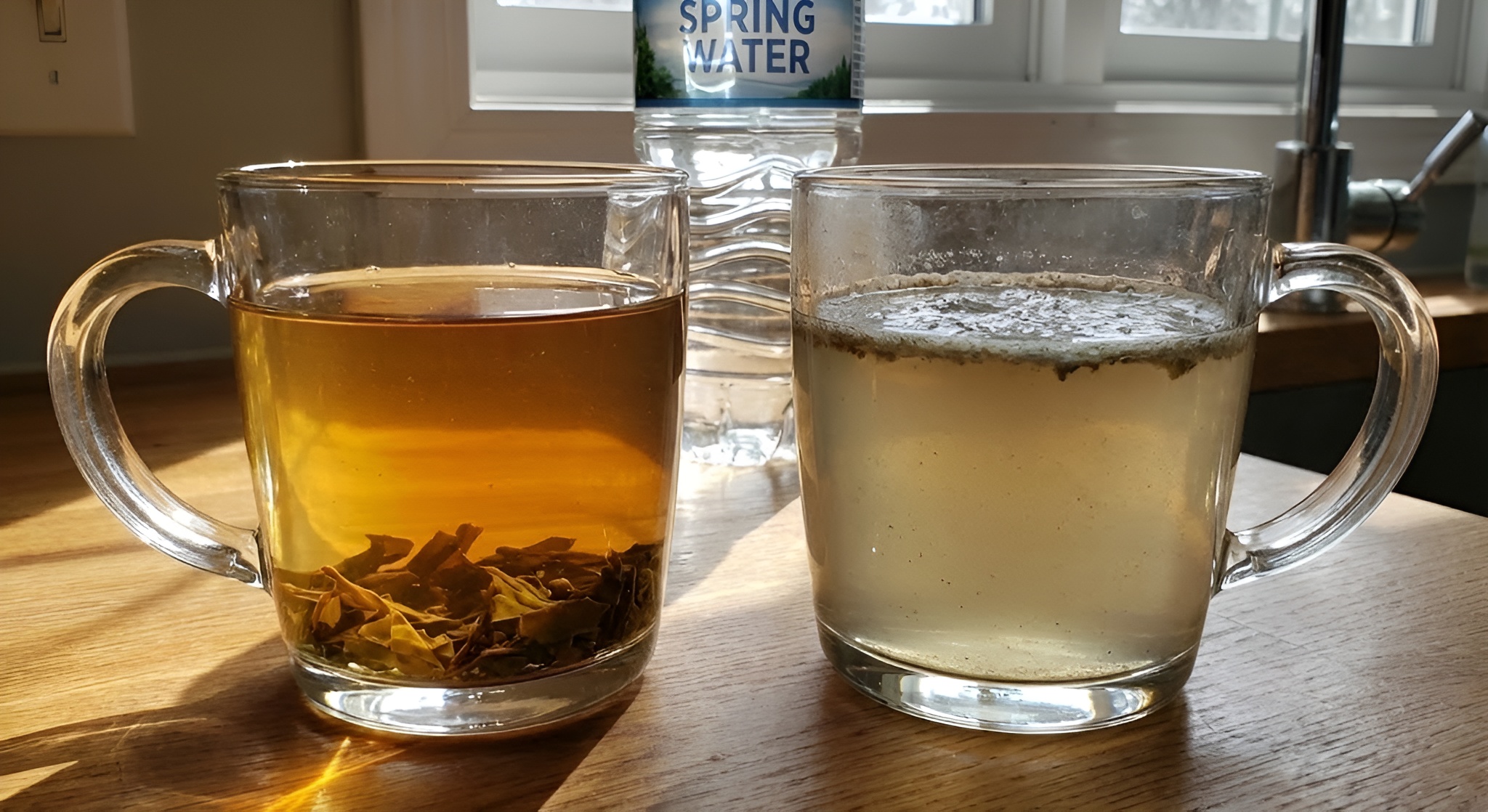
1. Understanding UK Water Hardness: The 2026 Regional Map and What the Numbers Mean
Water hardness is the concentration of dissolved calcium and magnesium ions, reported in the UK either as mg/L calcium carbonate equivalent (CaCO₃) or in degrees Clark (°Clark); 1 °Clark ≈ 14.3 mg/L. The Environment Agency and water companies class anything above 200 mg/L as 'very hard,' 100–200 mg/L as 'moderately hard,' and below 100 mg/L as 'soft.' As of 2026, Thames Water, Anglian Water, and Southern Water supply some of the hardest mains water in the country—routinely 250–350 mg/L—because they draw from chalk and limestone aquifers across the South and East. Yorkshire Water, United Utilities (covering much of the North West including Manchester), and Scottish Water deliver soft water—often below 50 mg/L—sourced from upland reservoirs in granite and sandstone catchments.
Your postcode matters more than your kettle brand. Within a single utility's territory, hardness can vary by ward; inner London boroughs on the Thames Water network may see 280 mg/L, while outer zones blend sources and drop to 220 mg/L. Severn Trent (Birmingham, the Midlands) ranges from 150 mg/L in soft-water pockets to 280 mg/L in areas reliant on groundwater. If you don't know your local figure, most suppliers publish annual water-quality reports by postcode online, or you can test at home with TDS meters (total dissolved solids) and hardness strips. For tea, the salient division is above or below 150 mg/L: below that threshold, scum formation is minimal and delicate teas extract cleanly; above it, you'll see visible interference, and mineral composition begins to dominate flavour.
The map is not static. Prolonged drought—such as the 2022–2025 dry spell across East Anglia—forces utilities to shift source ratios, sometimes blending harder groundwater into previously softer supplies. Conversely, wet winters can flush reservoirs and soften the mix. If you notice a sudden change in scum or kettle scale, check whether your supplier has published a source-change notice; these are more common than most drinkers realise, and they explain why a tea that tasted clean in January may turn filmy in July.
2. The Chemistry of Scum Formation: Why Hard Water Ruins Delicate Teas (and Helps Some Others)
When water containing calcium and magnesium carbonates is heated, two reactions occur. First, temporary hardness (bicarbonate ions, HCO₃⁻) precipitates as solid carbonate scale on kettle elements and walls; that's the white crust you scrape off. Second, permanent hardness (calcium and magnesium sulphates and chlorides) remains dissolved, and when tea polyphenols—especially theaflavins and thearubigins in black tea, and catechins in green—enter the water, calcium ions bind to their negatively charged hydroxyl groups, forming insoluble complexes that float to the surface as the familiar oily film. This scum is not dirt; it's a tannin–mineral chelate, and it strips colour, astringency, and aromatic volatiles from the liquor.
Magnesium has a different effect. It doesn't form scum as readily as calcium, but it interferes with chlorophyll, dulling the vibrant green of sencha and gyokuro, and it binds to amino acids like L-theanine, flattening the sweet, umami notes that define high-grade Japanese greens. Hard water also raises brew pH slightly (from around 5.5 in soft water to 6.0–6.5 in very hard water), which slows tannin extraction and can make astringent blacks taste flabby rather than brisk. Paradoxically, some teas benefit from moderate hardness: robust CTC Assam and Kenyan blacks, which rely on body and colour rather than nuance, gain viscosity and depth when calcium enhances tannin polymerisation. A strong breakfast blend brewed in 200 mg/L water will look darker and taste fuller than the same tea in distilled water, which can come across thin and one-dimensional.
The threshold for visible scum is roughly 150 mg/L calcium; below that, you may see faint iridescence but no solid film. Above 250 mg/L, scum forms within seconds of pouring, especially on oolongs and lightly oxidised blacks like First Flush Darjeeling. Understanding this chemistry means you can predict which teas will suffer in your tap water and which will thrive, rather than blaming the leaf for a water-induced fault.
The 150 mg/L Threshold
If your water is below 150 mg/L calcium carbonate, you'll get clean extraction on all tea types. Above 250 mg/L, expect visible scum on anything delicate—filter first or switch to bottled spring water for high-grade greens and whites.
3. Hyperlocal Testing: Which Teas Taste Better in London, Manchester, and Birmingham Tap Water
Water hardness varies considerably across the UK: Thames Water (London, ~280 mg/L), United Utilities (Manchester, ~45 mg/L), and Severn Trent (Birmingham, ~220 mg/L) illustrate the range. These differences affect clarity, aroma, body, and scum formation when brewing tea.
In London's very hard water (280 mg/L): Kenyan CTC and Assam Golden Tips produced deep amber liquor with thick body and minimal bitterness; scum formed but settled quickly, and the teas tasted bold and malty. First Flush Darjeeling and Silver Needle white both threw heavy scum within 30 seconds, the liquor appeared cloudy, and the delicate floral and muscatel notes were almost entirely muted—drinkable, but unrecognisable to anyone who'd tasted them in soft water. High-mountain Taiwanese oolong (Alishan) showed moderate scum and lost its signature sweetness, tasting flat and mineral-forward. Sencha turned dull green-grey, and the fresh, grassy aroma collapsed into a generic vegetal note.
In Manchester's soft water (45 mg/L): the same First Flush Darjeeling was crystalline, bright, and perfumed; Silver Needle brewed pale gold with pronounced apricot and hay aromas. The Kenyan CTC and Assam, however, tasted thin and astringent, lacking the roundness and colour depth they'd shown in London. The Taiwanese oolong was clean and floral, and sencha retained its vivid green and umami lift. No scum formed on any tea. In Birmingham's moderately hard water (220 mg/L): results were intermediate—scum appeared on whites and First Flush but was less aggressive than in London; blacks had good body but slightly muted top notes compared to soft water. This is the zone where filtration makes the biggest proportional difference, because you're close to the 150 mg/L tipping point.
The takeaway: if you live in a hard-water area and primarily drink robust, oxidised teas, your tap water is doing you a favour. If you favour greens, whites, high-mountain oolongs, or estate Darjeelings, hard water is costing you most of what makes those teas worth drinking—and filtration or bottled spring water is not optional fussiness, it's corrective chemistry.
Regional Tea Shopping Strategy
Match your tea purchases to your local water: hard-water drinkers should prioritise robust blacks and roasted oolongs; soft-water areas can justify the premium on delicate First Flush and competition-grade Japanese greens, because you'll actually taste what you paid for.
4. Practical Filtration Solutions: Charcoal, Ion Exchange, and Zero-Water Systems Compared
Activated charcoal filters—including Binchotan (white charcoal) sticks and granular-carbon cartridge filters—work by adsorption: chlorine, some organic compounds, and a modest portion of dissolved minerals bind to the carbon's porous surface. Binchotan reduces hardness by roughly 20–30 per cent over a 12-hour soak, which is enough to drop London water from 280 mg/L to ~200 mg/L—still hard, but below the heavy-scum threshold for most teas. Charcoal also removes chlorine taste and odour, which is valuable in areas where utilities dose heavily during summer. The downside: slow (overnight filtration), limited capacity (sticks need boiling and sun-drying every two weeks, replacement every three months), and incomplete mineral removal. Charcoal is best for moderate improvement without stripping all character from the water.
Ion-exchange resin filters—the technology in Brita, BWT, and most jug filters—swap calcium and magnesium ions for sodium or hydrogen ions, reducing hardness by 70–90 per cent in a single pass. A jug filter will take 280 mg/L London water down to 30–80 mg/L, well into the soft zone, and the process is fast (a few minutes per litre). The trade-off: resin cartridges add a small amount of sodium, which some tasters detect as a faint salty or flat note, and they require regular replacement (typically every 150 litres or one month). For everyday brewing of all tea types, ion-exchange jugs are the most practical solution in hard-water areas, and if you rinse the first filtered litre through and discard it, the sodium taste is negligible.
Zero-water and reverse-osmosis (RO) systems strip all dissolved minerals, producing water at 0–10 mg/L TDS. This is too pure for tea: it extracts aggressively, over-emphasising bitterness and astringency, and tastes 'empty' because there's no mineral scaffold for flavour compounds to bind to. Competitive brewers and gongfu enthusiasts sometimes use RO water as a blank canvas, then remineralise it with precise additions of calcium and magnesium salts to hit a target profile (typically 50–100 mg/L with a 2:1 calcium-to-magnesium ratio). For home use, this is elaborate; if you do invest in an RO system for other reasons (aquarium, coffee), cut the output 1:1 with tap water or add a pinch of bicarbonate of soda per litre to bring it back into balance. Our full filtration product testing and reviews cover specific models, flow rates, and running costs.
The Two-Stage Approach
If your water is above 250 mg/L, run it through an ion-exchange jug then finish with Binchotan in your kettle or teapot. You'll get hardness reduction plus chlorine removal, and the charcoal polishes any residual resin taste.
5. Descaling Your Kettle: Citric Acid, Vinegar, and Proprietary Descalers for British Hard Water
Scale is inevitable in hard-water areas, and left unchecked it reduces heating efficiency, harbours stale mineral deposits, and eventually clogs or damages concealed elements. The white crust is primarily calcium carbonate (CaCO₃), which is insoluble in water but dissolves readily in weak acids. Citric acid (available as powder from supermarkets or homebrew suppliers) is the gentlest and most effective domestic descaler: dissolve 1–2 tablespoons in a full kettle of cold water, bring to the boil, leave for 15 minutes, then rinse thoroughly three times. The acetic reaction breaks carbonate bonds into soluble calcium citrate, which pours away with no residue or odour. Citric acid is safe for all kettle materials—stainless steel, glass, plastic—and won't corrode elements or seals if used monthly at the concentration above.
White vinegar (5 per cent acetic acid) is the traditional alternative: 1:1 with water, boil, soak, rinse. It works, but the smell is pervasive and can linger through two or three rinse cycles, tainting the next few brews. If you choose vinegar, plan to run one full kettle of plain water to waste after descaling. Proprietary descalers—branded liquids or sachets from kettle manufacturers—are typically citric or lactic acid blends with surfactants to speed action; they're faster (5-minute soak, no boil needed) and convenient, but check compatibility with variable-temperature kettles and glass models, as some formulations can etch or discolour.
Descaling frequency depends on hardness and usage. In very hard areas (250+ mg/L) with daily boiling, scale visible to the eye builds within two weeks; descale monthly to prevent heavy deposits. In moderately hard zones (150–200 mg/L), every six weeks suffices. Soft-water users (<100 mg/L) may never see scale, but occasional descaling (quarterly) removes any chlorine or organic buildup. If you filter all your water, you can extend intervals, but don't skip them entirely: even filtered water carries trace minerals. After descaling, rinse thoroughly and boil one full kettle to waste—this also seasons the element and prevents any residual acid taste. For travel and portable kettles, carry citric-acid sachets; they weigh nothing and solve the hard-water problem in hotels and Airbnbs across the South.
6. Which Tea Types and Origins Tolerate Hard Water Best: A Buyer's Guide for High-Hardness Areas
If filtration or bottled water isn't practical—or you'd rather spend your budget on better leaf—choosing teas that perform well in hard water is a legitimate strategy. Robust, fully oxidised blacks with high tannin content and low reliance on volatile aromatics are your safest category: Kenyan CTC (common in supermarket blends), Assam Golden Tips, strong Ceylon OP from low-elevation estates, and Chinese Yunnan blacks (Dian Hong) all gain body and colour from calcium without losing core character. These teas are engineered—by cultivar, processing, and historical selection—to brew well in variable water, because they supply mass markets and builders' brews across diverse regions.
Roasted and aged oolongs also tolerate hardness: traditional Wuyi rock oolongs (Da Hong Pao, Shui Xian), heavily roasted Taiwanese Dong Ding, and aged Tieguanyin lose less in hard water than high-mountain green-style oolongs, because their flavour is carried by roast compounds and oxidised polyphenols rather than delicate florals. Pu-erh (ripe/shu) brews thick and earthy in any water; the fermentation-derived compounds are robust and relatively insensitive to mineral interference. Young/raw (sheng) pu-erh can turn astringent and metallic in very hard water, but mature sheng (10+ years) holds up well.
Avoid in hard water without filtration: Silver Needle and Bai Mudan whites (they'll throw scum and lose sweetness); First Flush Darjeeling (muscatel disappears); high-mountain Taiwanese oolongs like Alishan and Lishan (florals collapse); gyokuro and high-grade sencha (umami flattens, colour dulls). If these are your preferred teas, filtration pays for itself in the first month, because you'll actually taste what distinguishes a £40/100 g gyokuro from a £10 sencha—hard water erases that difference. Our quality and sourcing guide lists specific estates and flush recommendations that justify the investment in filtration systems, and our premium tea buying guide explains which high-end purchases make sense in different water contexts.
The Hard-Water Tasting Menu
Build a hard-water rotation around Assam, Kenyan CTC, roasted oolong, and ripe pu-erh—all excel in mineral-rich water. Save delicate greens and whites for filtered water or soft-water travel; you'll appreciate them properly and waste less leaf on muted cups.
7. Advanced Techniques: Blending Waters, Remineralising, and Tuning pH for Competition Brewing
Professional tasters, competition brewers, and specialty cafés in hard-water cities increasingly blend or build their brewing water rather than accepting tap or single-source filtered water. The principle is simple: start with very soft or RO water (0–30 mg/L TDS) and add back controlled amounts of calcium and magnesium to hit a target profile optimised for the tea type. A typical recipe for green and white teas is 40–60 mg/L total hardness with a 3:1 calcium-to-magnesium ratio; for black teas, 80–120 mg/L with a 2:1 ratio. You can achieve this by cutting RO or distilled water with tap water in measured proportions, or by dissolving food-grade mineral salts—calcium chloride (CaCl₂) and magnesium sulphate (Epsom salt, MgSO₄)—in distilled water using a gram scale and TDS meter.
pH tuning adds another layer. Soft water tends slightly acidic (pH 6.0–6.5), which brightens acidity and sharpens astringency; hard water drifts alkaline (pH 7.0–7.5), which softens bite but can flatten top notes. Adding a tiny pinch of citric acid or potassium bicarbonate lets you nudge pH by 0.2–0.5 units and fine-tune extraction. This is overkill for daily drinking, but if you're entering a competition, brewing for a tasting panel, or simply curious how your favourite tea tastes at its theoretical best, water chemistry is the variable that separates good from exceptional. The minerals guide and hydrogen bonding chemistry page detail the thermodynamics; the practical upshot is that you can replicate any regional water profile at home if you're willing to measure and mix.
Blending soft and hard tap water is the low-tech version: if you have access to both (e.g., collected rainwater or a friend in a soft-water area who'll share a five-litre bottle), mix 1:1 to halve your hardness. A 280 mg/L London supply cut with 40 mg/L rainwater yields ~160 mg/L, just under the scum threshold and usable for most oolongs and blacks. If you're brewing gongfu-style and going through litres per session, blending is faster and cheaper than cartridge filtration. Keep records—water composition, tea, parameters, tasting notes—in a brewing journal; after a dozen sessions you'll have a personal hardness-and-tea matrix that's more useful than any generic guide.
The 1:1 Blending Shortcut
Can't afford RO or mineral salts? Mix your hard tap water 1:1 with supermarket distilled or deionised water (sold for irons and car batteries). You'll halve hardness instantly, and a five-litre bottle costs under £2—cheaper per litre than cartridge filtration.
8. Maintenance, Troubleshooting, and Long-Term Kettle Care in Hard-Water Regions
Even with regular descaling and filtration, hard-water brewing imposes wear on kettles, especially concealed-element and variable-temperature models. Scale buildup insulates the element, forcing it to work harder and shortening lifespan; in extreme cases, carbonates bridge onto thermostats and temperature probes, causing inaccurate readings or failure to switch off. Glass kettles show scale immediately, which is both aesthetic curse and diagnostic blessing—you'll know when descaling is overdue. Stainless-steel interiors hide buildup until it's thick enough to flake off into the cup, so commit to a monthly schedule and mark it in your calendar or set a phone reminder.
Troubleshooting common hard-water faults: If your kettle is slow to boil, scale is insulating the element—descale immediately. If it clicks off before reaching temperature, carbonate may have fouled the thermostat; descale, then test with a probe thermometer. If you see white flakes in the cup, the scale layer is thick enough to break apart under thermal stress—descale, and consider switching to filtered water to reduce buildup rate. If filtered water still produces scum, your filter cartridge is exhausted; ion-exchange resins lose capacity long before they clog, and hardness creeps back up. Replace on schedule, not by eye.
Kettle choice matters. If you're in a very hard area and won't filter, prioritise models with removable, washable scale filters at the spout, and wide-mouth openings for easy access. Avoid intricate pour-over goosenecks with narrow spouts—they clog faster. If you filter and descale diligently, any variable-temperature kettle will last its design life; neglect either, and even premium models fail within two years. For outdoor and off-grid brewing, consider stainless-steel stovetop kettles—they tolerate scale buildup better than electric models, and you can descale them over an open flame with citric acid and water, no mains power required.


Comments