1. What White Tea Is—and Where Silver Needle Fits
White tea is the least-processed category in the orthodox tea canon: freshly plucked leaves and buds are withered—usually in sunlight or controlled indoor air—and then dried, with no rolling, pan-firing or deliberate oxidation step. That minimal intervention preserves a high concentration of catechins, amino acids (especially L-theanine) and a pale, sweet liquor that has made white tea famous among enthusiasts who prize subtlety over punch.
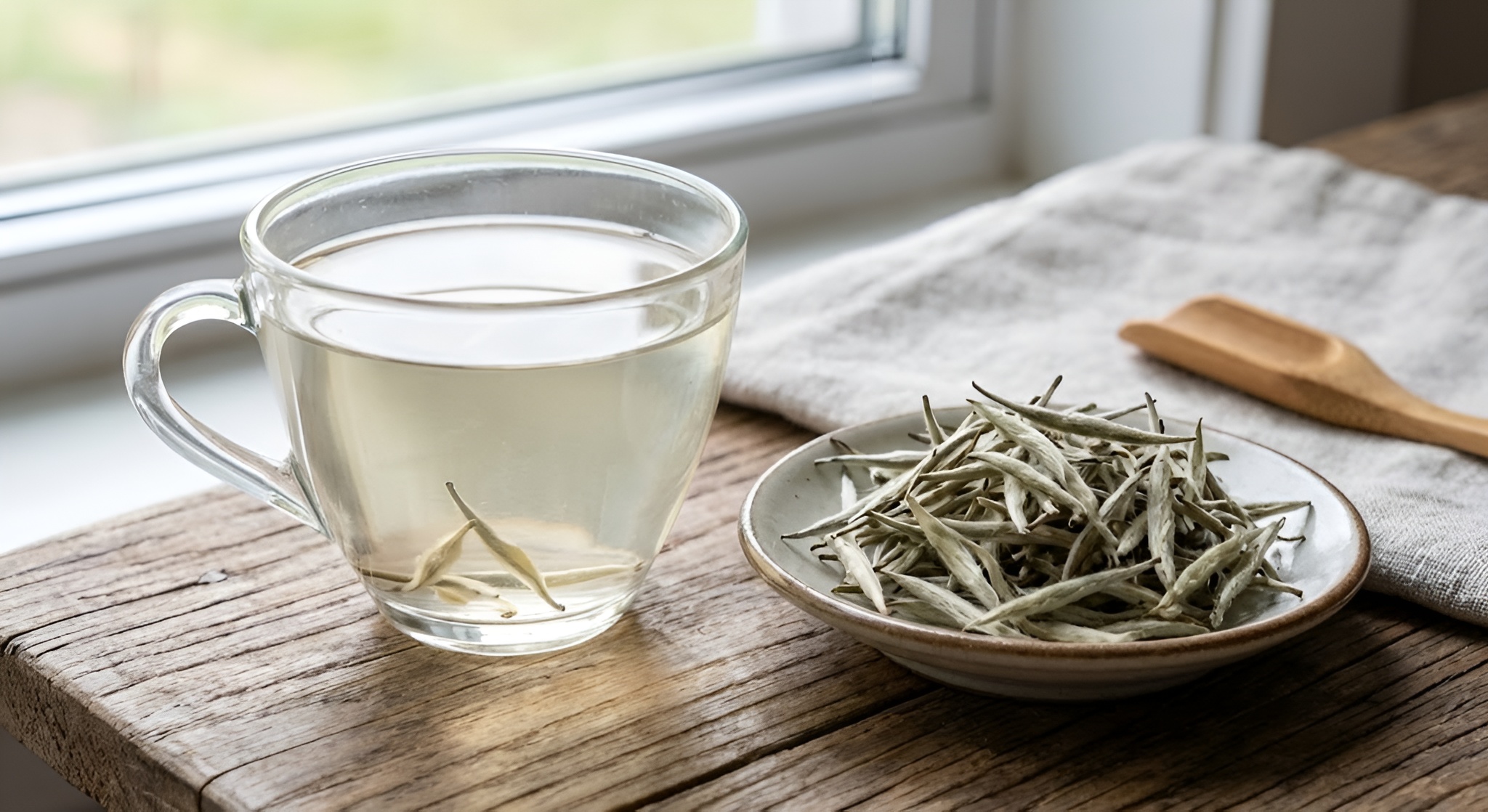
Silver Needle (Bai Hao Yin Zhen, 白毫银针) sits at the apex of the white-tea pyramid. It consists exclusively of unopened leaf buds, harvested in early spring—often in the two weeks before the Qingming Festival (early April)—and covered in fine silvery-white down. Because each bush yields only a small proportion of perfect buds, and because those buds must be picked within a narrow window before they unfurl, Silver Needle commands scarcity value and the highest per-kilogram prices in the white category.
Below Silver Needle you will encounter Bai Mudan (White Peony), which blends one bud with one or two young leaves; Gong Mei and Shou Mei, which incorporate progressively more mature leaves; and various regional or blended whites that may mix grades, cultivars or even processing tweaks. All remain 'white tea' by definition, but the proportion of buds to leaves—and the calendar date of harvest—moves the dial on both flavour and cost.
The Bud-Only Premium
If a tin is labelled 'white tea' but costs under £10 per 50 g, it almost certainly contains leaves as well as buds—which is not a quality fault, just a different grade. Check the product photo for the telltale mix of silvery tips and small green-brown leaves.
2. Why Prices Vary So Widely: Raw Material, Harvest Date and Provenance
The tenfold (or greater) price spread within white tea is not arbitrary marketing. Four variables explain most of the difference you see on a UK retail shelf: proportion of buds, harvest timing, cultivar or varietal, and geographic origin.
Bud-to-leaf ratio is the headline driver. Picking only unopened buds is labour-intensive—pluckers must visit each bush multiple times in a short spring window, selecting by hand—and the yield per hectare is a fraction of what a later, leaf-inclusive harvest delivers. A Bai Mudan or Shou Mei pluck, by contrast, can proceed faster and at greater volume, lowering the cost base immediately.
Harvest date compounds the scarcity. Pre-Qingming buds (picked before roughly 4–5 April) are smaller, tenderer and considered sweeter; they also represent the plant's first flush after winter dormancy, when amino-acid reserves are highest. Post-Qingming or late-spring pickings are more abundant and less delicate, so they fetch lower prices even if the buds look similar.
Cultivar matters, too. The two most celebrated Silver Needle cultivars are Da Bai (大白, 'big white') and Da Hao (大毫, 'big down'), both selected for plump buds and dense trichome coverage. A white tea made from a generic hybrid or a Longjing-type cultivar will taste different and usually costs less, even if the processing is identical.
Finally, provenance and terroir drive both perceived and real value. Fuding and Zhenghe counties in Fujian enjoy Protected Geographical Indication status in China; teas grown at elevation on the right soil, in the right microclimate, command premiums because flavour complexity and sweetness are consistently higher. White teas grown elsewhere in China, or in Kenya, Sri Lanka or Nepal, can be well made and pleasant, but they lack the same pedigree and typically sell at a discount.
3. What Published Research Says About Polyphenols, Amino Acids and Health Claims
White tea's reputation as an antioxidant powerhouse rests on sound foundations: because withering and drying do not deactivate polyphenol oxidase as aggressively as pan-firing (in green tea) or full oxidation (in black tea), many catechins—epigallocatechin gallate (EGCG) in particular—survive in higher proportions. Peer-reviewed studies confirm that white-tea extracts are rich in total polyphenols and that L-theanine content remains elevated, especially in early-spring harvests.
What the published literature does not support is the claim that Silver Needle contains two, three or five times the antioxidants of Bai Mudan or other white grades. Catechin and amino-acid concentrations vary by cultivar, soil, weather, pluck date and drying method; bud-only teas are not automatically richer in polyphenols than those that include the first young leaf. Some studies show that very young leaves can be higher in certain catechins than mature buds, because photosynthesis and secondary-metabolite pathways are most active in expanding tissue.
The honest summary: all minimally processed white teas offer a favourable polyphenol and amino-acid profile, and spring-harvested, carefully withered examples—whether pure bud or bud-and-leaf—will sit at the upper end of that range. If you are choosing Silver Needle primarily for a supposed health advantage over Bai Mudan, the evidence does not clearly support paying five times more. If you value flavour, rarity and ritual, that is a different conversation.
Be especially cautious of marketing copy that cites specific EGCG or L-theanine milligram counts without naming the laboratory, method or batch tested. Heavy-metal contamination risk (including arsenic and lead) exists across all tea categories and all origins; premium price does not guarantee cleaner leaves unless the supplier publishes independent, batch-level test certificates.
Ask for the Lab Certificate
Reputable UK sellers of high-end Silver Needle will share third-party test results for heavy metals and pesticide residues on request. If that document is not available, the premium becomes harder to justify on safety or purity grounds alone.
4. Flavour Expectations: What You Actually Taste in the Cup
Forget the flowery tasting notes for a moment. A well-made Silver Needle, brewed at 75–80 °C for two to three minutes, should taste naturally sweet—almost honey-like—with a silky mouthfeel, minimal astringency and subtle floral or hay undertones. The liquor is pale straw to champagne-gold, and the aftertaste lingers gently without bitterness. If you detect pronounced grassy, vegetal or tannic notes, you are likely tasting young leaves or slightly oxidised material, which moves the tea away from the orthodox Silver Needle profile.
Bai Mudan and other bud-and-leaf whites introduce more body and a broader flavour spectrum: you will pick up hay, light apricot, sometimes a touch of pleasant astringency that helps the tea 'grip'. These are not faults—they reflect the presence of polyphenol-rich young leaves—and many drinkers prefer the added structure over the gossamer delicacy of pure-bud Silver Needle.
Lower grades (Gong Mei, Shou Mei) shift further toward a fuller, earthier profile, with darker liquor, more tannin and flavours that can edge into autumn-leaf or even light woody territory. Again, this is a style choice, not a mark of poor quality, and these teas often respond beautifully to ageing, developing complexity that bud-only teas sometimes lack.
One practical check you can run at home: brew the same white tea at two price points side by side, using identical water, temperature and timing. If the cheaper option tastes almost indistinguishable from the premium Silver Needle, the price-placebo effect may be at work—or the expensive tin may not contain what the label promises. Conversely, if the premium tea delivers noticeably sweeter, cleaner and more layered flavour, you have objective confirmation that the extra cost bought better raw material and handling.
The Two-Steep Test
Genuine high-grade Silver Needle will yield three or four flavourful infusions from the same leaves, with sweetness persisting into the second and third steep. If the first brew is the only good one, the material is probably lower grade or stale.
5. The Psychology of Price and Placebo in Premium Tea
Price-placebo effects in food and drink are well documented in the neuroscience and sensory-science literature. When you know that a tea cost £35, your brain primes expectations of complexity, sweetness and rarity; those expectations can genuinely enhance the sensory experience you report, even if the liquid in the cup is chemically identical to a £10 alternative. This is not a character flaw—it is how human perception works—but it does mean that your subjective enjoyment of an expensive Silver Needle may be shaped as much by context and marketing as by the leaves themselves.
That is not an argument against buying premium white tea. Ritual, story, provenance and the pleasure of drinking something rare all contribute to value, and if you derive genuine joy from knowing your Silver Needle was hand-picked on a misty Fuding hillside before dawn, that joy is real. The caution is simply to separate sensory fact from psychological framing when you are deciding whether an upgrade is worth it. Blind tasting—asking a friend to pour two whites without revealing which is which—strips away the placebo and lets you evaluate the liquid on its own terms.
In practice, many experienced tea drinkers find a sweet spot in the middle tier: a good Bai Mudan from a named Fujian producer, purchased from a trusted UK retailer, often delivers 80–90 per cent of the sensory pleasure of top-tier Silver Needle at 40–50 per cent of the price. The last increment of delicacy and rarity costs disproportionately more, which is typical of luxury-goods curves across every category.
6. How to Shop for White Tea in the UK: What to Look For and What to Ignore
The UK market in 2026 offers more choice in white tea than ever before—specialist online retailers, subscription boxes, supermarket 'premium' ranges and direct-import micro-roasters all compete for your attention. Here is what separates signal from noise when you are evaluating a Silver Needle or any high-end white.
Harvest date and origin detail. A serious supplier will list the county (Fuding, Zhenghe, or another named region), the village or garden if available, the cultivar (Da Bai, Da Hao), and the month and year of harvest. If the packaging says only 'Fujian, China' or 'Spring 2026' with no further granularity, treat it as a commodity blend and adjust your price ceiling accordingly.
Photographic evidence. Reputable Silver Needle sellers show close-up images of the dry leaf. You should see plump, uniform buds covered in silvery-white down, with minimal stem, broken tips or leaf fragments. If the product photo is a generic stock image or shows a murky liquor shot, that is a red flag.
Price realism. As of October 2026, expect to pay roughly £18–£35 per 50 g for credible, directly sourced, pre-Qingming Silver Needle from Fuding or Zhenghe. Anything below £12 per 50 g is almost certainly a blend or a later, lower-grade pluck marketed under the Silver Needle name. Conversely, prices above £40 per 50 g should come with exceptional provenance (single-estate, competition-grade, or rare-cultivar material) and transparent documentation.
What to ignore: extravagant antioxidant claims without batch-level lab data; vague references to 'ancient tea trees' (white tea is cultivated, not wild-harvested); trademarked 'superfood' language; and any suggestion that white tea will cure, prevent or significantly alter disease risk. Well-made white tea is a pleasure to drink and fits into a healthful diet, but it is not medicine.
Finally, do not overlook the mid-tier. A carefully sourced Bai Mudan or even an Anji Bai Cha (technically a green tea, despite the name) can offer exceptional value and plenty of the delicate, sweet character that draws people to white tea in the first place. If you are new to the category, start there; once you have trained your palate, the incremental differences in a top-tier Silver Needle will be easier to discern and appreciate.
Try Before You Commit
Many UK specialists sell 10–25 g sample pouches of their premium Silver Needles. Buy two or three samples, taste them side by side, and then invest in a full tin of your favourite—you will learn more than any tasting note can teach.
7. Cold Brewing, Ageing and Other Ways to Explore White Tea
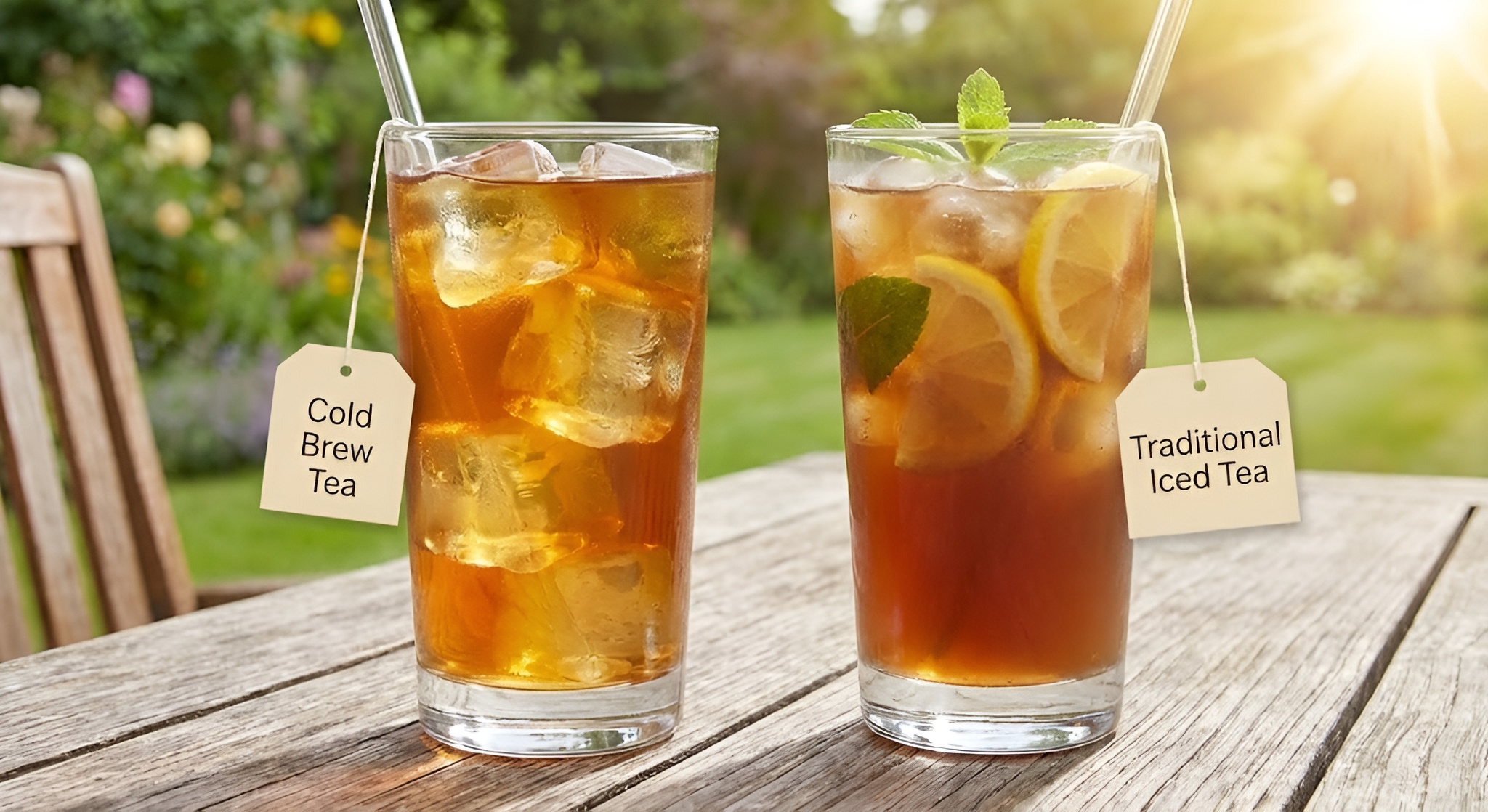
If you decide to invest in a higher-grade white tea, you can stretch its value—and explore different facour dimensions—by experimenting with preparation. Cold-brew white tea is surprisingly effective: place 5–8 g of Silver Needle or Bai Mudan in a litre of cool filtered water, refrigerate for six to twelve hours, then strain. The result is a naturally sweet, almost floral infusion with zero astringency, perfect for warm-weather sipping and a gentler showcase for delicate buds than a hot steep.
Ageing white tea at home has become fashionable in the past decade, inspired by Chinese collectors who cellar Fuding whites for five, ten or even twenty years. The transformation is real—fresh floral notes mellow into honey, dried fruit and sometimes a light incense or hay character—but it works best with bud-and-leaf grades (Bai Mudan, Shou Mei) that have enough structural tannin to evolve. Pure Silver Needle can age gracefully, but the delicate sweetness that justifies the premium price may fade rather than deepen, so many enthusiasts drink their Silver Needle fresh and age the sturdier grades instead.
If you enjoy the ritual and theatre of white tea, consider serving it in a glass gaiwan. The transparency lets you watch the silvery buds unfurl and dance in the water—a visual pleasure that complements the subtle flavour and justifies the premium in a way that words on a tin never quite can.
Save the Best for Hot Brewing
Cold brew is forgiving and delicious, but it mutes some of the floral high notes that make top-tier Silver Needle special. Reserve your most expensive teas for careful hot infusions; use mid-tier whites for cold-brew experiments.
8. The Verdict: When Premium White Tea Is Worth It—and When It Is Not
So: is a £30 Silver Needle worth five or six times the price of a good Bai Mudan? The honest answer is it depends what you value. If you are chasing a measurable health benefit, the premium is hard to justify—polyphenol and amino-acid profiles overlap significantly across white-tea grades, and no credible study shows that bud-only teas are radically superior in biochemical terms. If you are buying white tea to steep quickly in a travel mug on a busy morning, a carefully sourced mid-tier white will serve you just as well.
The premium does make sense if you drink tea slowly, mindfully and with attention to nuance; if you value rarity, provenance and the story behind the cup; and if you have already explored the mid-tier and find yourself wanting more delicacy, more sweetness and less astringency. In that case, a top-quality Silver Needle from a transparent UK supplier—complete with harvest date, village name and photographic proof—can be a revelation and a genuine pleasure, worth every penny.
The middle path, as so often, is the most practical: buy a small sample of a premium Silver Needle and a good Bai Mudan from the same producer, taste them side by side (ideally blind), and let your own palate decide. If the difference thrills you, invest in the upgrade. If the Bai Mudan gives you 90 per cent of the joy at half the cost, you have just discovered excellent value and can spend the difference on exploring Japanese first-flush greens, Darjeeling first flush or any of the other delicate, spring-harvested teas that share white tea's elegance and price-to-pleasure calculus.
Above all, ignore the health-halo marketing, the unsourced lab-style numbers and the vague superiority claims. White tea—at any grade—is one of the loveliest, most approachable and most honest categories in the tea world. Whether you spend £4 or £40, you deserve transparency, freshness and leaves that taste as good as they look. Demand that from your supplier, trust your own palate, and the question of whether premium white teas are 'worth it' will answer itself.



Comments