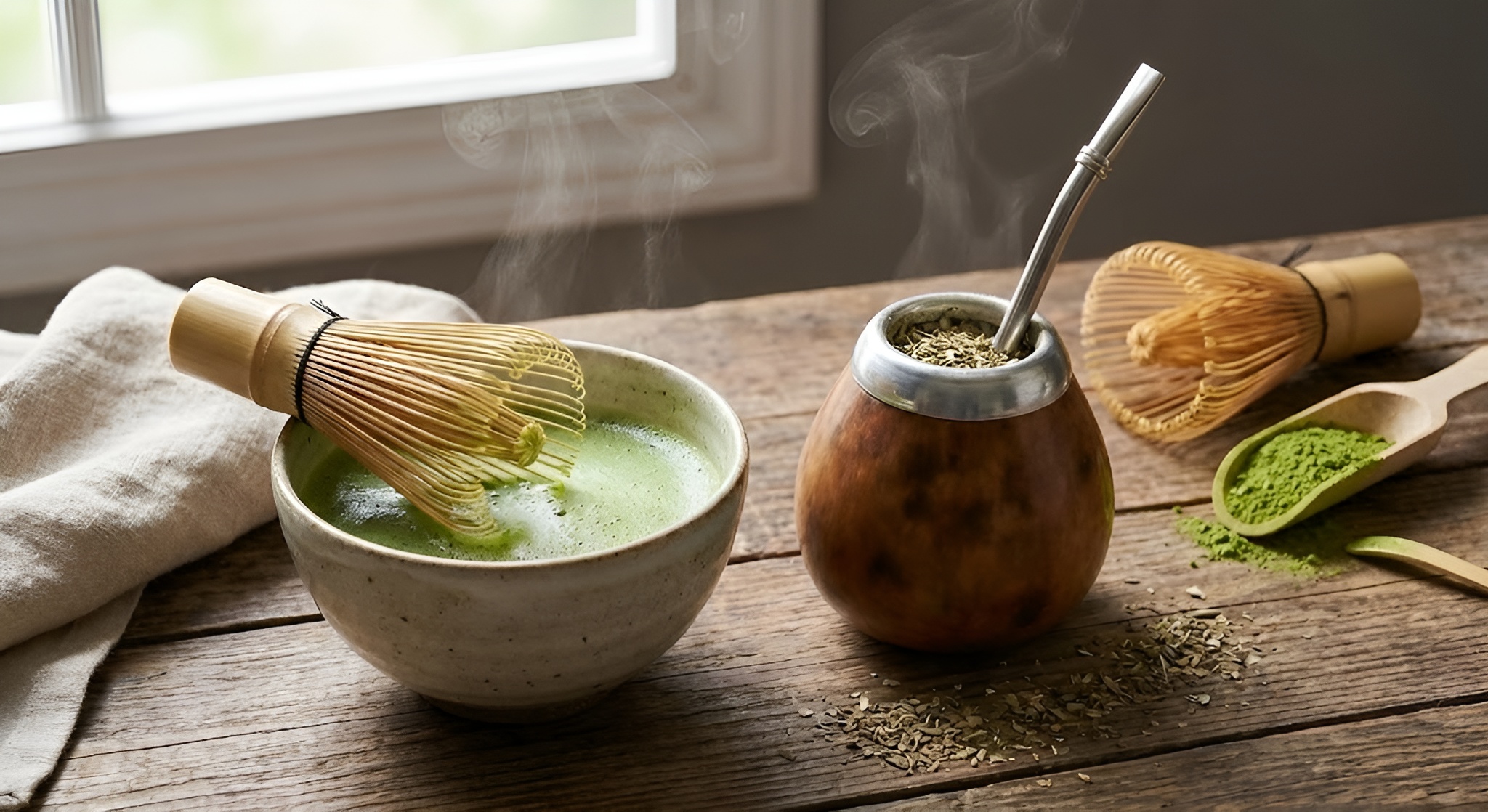
1. The Energy Curve: L-Theanine vs. Theobromine
While both contain caffeine, the "entourage effect" of the other chemicals changes how you feel.
Matcha (The Monk's Drink): High in L-Theanine. This amino acid crosses the blood-brain barrier and increases alpha-wave activity. It physically relaxes you while the caffeine wakes you up. The result is "Alert Calmness."
Yerba Mate (The Cowboy's Drink): Contains Theobromine and Theophylline. These are alkaloids found in chocolate. They act as muscle relaxants and mood enhancers. This is why Mate drinkers often describe a feeling of euphoria or physical well-being ("The Mate High") that makes you want to move and socialize.
Expert Tip: "Matteine" is a Myth
You might hear people say Mate contains "Matteine," a special type of caffeine that doesn't cause jitters. Chemically, this is false. It is standard caffeine. The difference in feeling comes from the other compounds (Theobromine) modulating the effect, not a different caffeine molecule.
2. Preparation: The Rituals
How you drink it defines the experience. Matcha is a "one-shot" drink. You whisk 2g of powder into water, drink it, and you're done.
Yerba Mate is a "session" drink. You fill a gourd 3/4 full with leaves (approx 30-50g!), insert a straw, and keep pouring hot water over it for hours. Because you use so much leaf, the cumulative caffeine intake over a morning of Mate drinking is often double that of a coffee or Matcha.
| Feature | Matcha | Yerba Mate |
|---|---|---|
| Plant Species | Camellia sinensis (Tea) | Ilex paraguariensis (Holly) |
| Part Consumed | Whole leaf (powdered) | Whole leaf infusion (steeped) |
| Serving Size | 2 grams | 30 - 50 grams (Gourd) |
| Antioxidant | EGCG (Catechins) | Chlorogenic Acid |
Expert Tip: The "Mountain" Technique
When drinking Mate, never flood the whole gourd at once. Bank the dry leaves against one side to create a "mountain" (Montañita). Pour water only on the lower side. As the flavor washes out, slowly erode the dry mountain. This keeps the flavor fresh for 15+ refills.
3. The Health Benefits Comparison
Matcha: The king of antioxidants. The high EGCG content makes it a metabolic booster and cancer fighter. It is alkaline and detoxifying.
Yerba Mate: Rich in Chlorogenic Acid (also found in green coffee beans), which aids in slow sugar release and heart health. It is also packed with Saponins, which boost the immune system and reduce inflammation.
Expert Tip: Smoked vs. Unsmoked
Some studies have linked drinking scalding hot Mate to esophageal cancer. However, this is largely due to the temperature, not the plant. Additionally, traditional Mate is smoke-dried (Barbacuá). If you are concerned about PAHs (smoke compounds), opt for Unsmoked (Sin Humo) brands like Kraus.
4. Taste: Acquiring the Palate
Let's be honest: both are acquired tastes.
- Matcha: Grassy, vegetal, seaweed, creamy. If poor quality, it tastes like fishy spinach.
- Mate: Earthy, bitter, herbal, woody, slightly smoky. If poor quality, it tastes like a strong cigar or burnt rubber.
For beginners, Matcha is often easier to adapt to (especially as a Latte). Mate hits the palate hard with bitterness, similar to a black coffee or IPA beer.
Expert Tip: Don't Burn It!
Just like Green Tea, Mate hates boiling water. Using 100°C water makes it intensely bitter. The golden temperature for Mate is 70°C to 80°C. If you don't have a thermometer, mix 2 parts boiling water with 1 part cold water.
5. The Verdict
Choose Matcha if: You want laser-focus for work, hate bitterness, enjoy creamy textures, and want a quick preparation routine.
Choose Yerba Mate if: You want high physical energy for the gym, you miss the ritual of sipping something all morning, you enjoy bitter/coffee flavors, or you want a social drink to share.
Ready to try the "Drink of the Gods"?
We've reviewed the top Yerba Mate brands for 2025, from beginner-friendly sweet blends to the potent energy cans for the gym. Find your match here: The 5 Best Yerba Mate Brands of 2025 →


Comments