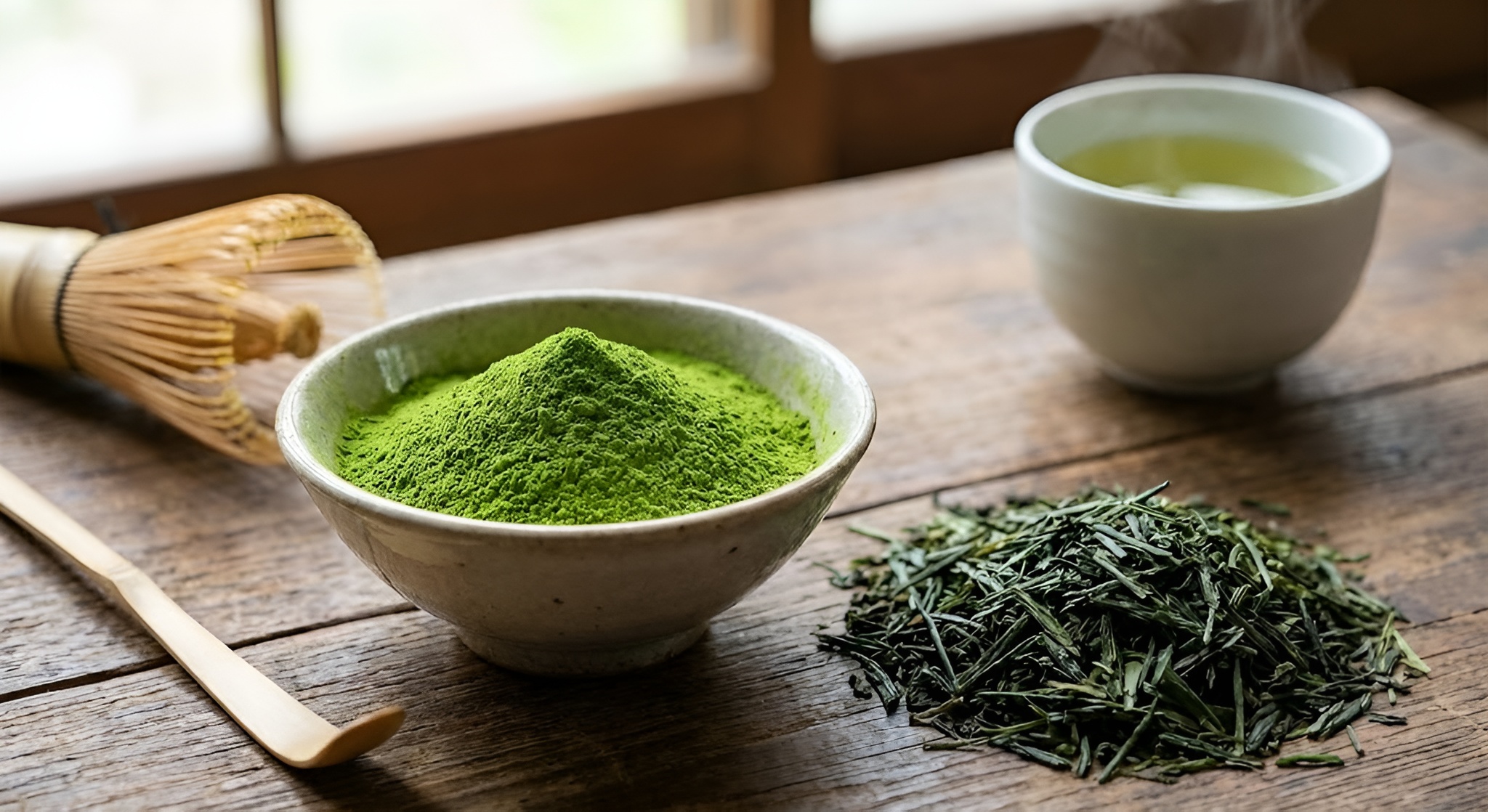
1. Infusion vs. Suspension: The Fundamental Difference
The primary difference is mechanical. Steeped Green Tea (like Sencha or Gunpowder) is an infusion. You use hot water to dissolve soluble compounds, and then you remove the leaf. Unfortunately, many vitamins (like Vitamin E) and antioxidants are not water-soluble, so they stay trapped in the wet leaf you throw in the bin.
Matcha is a suspension. The leaf is stone-ground into a microscopic powder. When you whisk it into water, it doesn't dissolve; it hangs in the liquid. When you drink it, you are ingesting the entire plant structure—fiber, vitamins, and all.
Expert Tip: Shake, Don't Stir
Because Matcha is a suspension, it will settle to the bottom if left alone. This is normal! If you are drinking it slowly, swirl or shake your cup occasionally to keep the nutrients suspended.
2. The EGCG Showdown (Antioxidants)
Epigallocatechin Gallate (EGCG) is the catechin responsible for most of green tea's fame—fat burning, cancer prevention, and heart health. A study by the University of Colorado found that the concentration of EGCG available from drinking Matcha is 137 times greater than the amount available from China Green Tips green tea.
While "137x" is an extreme case (comparing premium Matcha to low-grade bag tea), a more realistic comparison against high-quality Sencha still puts Matcha at 3x to 5x the antioxidant potency per cup.
| Nutrient (per serving) | Steeped Sencha | Matcha |
|---|---|---|
| EGCG (Antioxidants) | ~60 mg | ~180-200 mg |
| Total Catechins | ~150 mg | ~300+ mg |
| Fiber | 0 g | ~1 g |
| Vitamin C | Low (Heat sensitive) | High (Leaf content) |
Expert Tip: Don't Waste It on "Cooking Grade"
Be careful. "Culinary Grade" Matcha is often made from older, lower-quality leaves that are bitter and brown. These contain significantly fewer antioxidants than "Ceremonial Grade." To get the health benefits, you must drink the bright green stuff.
3. Energy: caffeine and L-Theanine
Matcha provides a distinct "buzz" compared to regular green tea. Because you are eating the leaf, the caffeine hit is much stronger—closer to a weak coffee.
However, Matcha is shade-grown (like Gyokuro). This shading process boosts the production of L-Theanine, an amino acid that promotes relaxation and alpha brain waves. The high L-Theanine content in Matcha counteracts the jitters of the high caffeine, creating a state of "Calm Focus" or "Zenth."
Steeped Sencha, grown in full sun, has less L-Theanine and less caffeine, making it a lighter, more refreshing stimulant.
| Component | Steeped Green Tea | Matcha |
|---|---|---|
| Caffeine | ~30 mg | ~70 mg |
| L-Theanine | ~8 mg | ~40 mg |
| Ratio (Calm:Energy) | Low Ratio | High Ratio (Ideal) |
Expert Tip: The "Crash" Test
If coffee gives you a crash at 2 PM, switch to Matcha. The L-Theanine slows down the body's absorption of caffeine, extending the energy release curve over 4-6 hours rather than the 1-2 hour spike of espresso.
4. Bioavailability: The Lemon Hack
Drinking EGCG is one thing; absorbing it is another. Catechins are notoriously unstable in the alkaline environment of the small intestine, where much of it is degraded before it enters your bloodstream.
The Fix: Add citrus. A study from Purdue University found that adding Vitamin C (lemon, lime, or orange) to green tea can increase the amount of available catechins by up to 5x. The acidity stabilizes the antioxidants, allowing your body to absorb more of them.
Expert Tip: Vitamin C Synergy
If you don't like lemon in your Matcha, simply drink it alongside a glass of orange juice or take a Vitamin C supplement. The effect is the same—better absorption of the green tea goodness.
5. Lead and Heavy Metals: The Downside
There is one downside to eating the whole leaf: you also eat everything the leaf absorbed from the soil. Tea plants are bio-accumulators, meaning they soak up heavy metals like lead and fluoride from the ground.
In steeped tea, 90% of the lead stays trapped in the leaf fiber and is thrown away. In Matcha, you ingest it. This is why sourcing is critical. Japanese tea generally has lower lead levels than Chinese tea, and organic certification ensures cleaner soil.
Expert Tip: Limit to 1-2°Cups
Because of the potency (and heavy metal risk), treating Matcha like water isn't recommended. Stick to 1 or 2 cups a day maximum. For hydration throughout the day, stick to steeped Sencha or Hojicha.
Ready to upgrade to Matcha?
We tested the top Ceremonial grades to find the ones that taste sweet, not bitter. See our top recommendations here: The Best Ceremonial Matcha: 2025 Buying Guide →
Comments