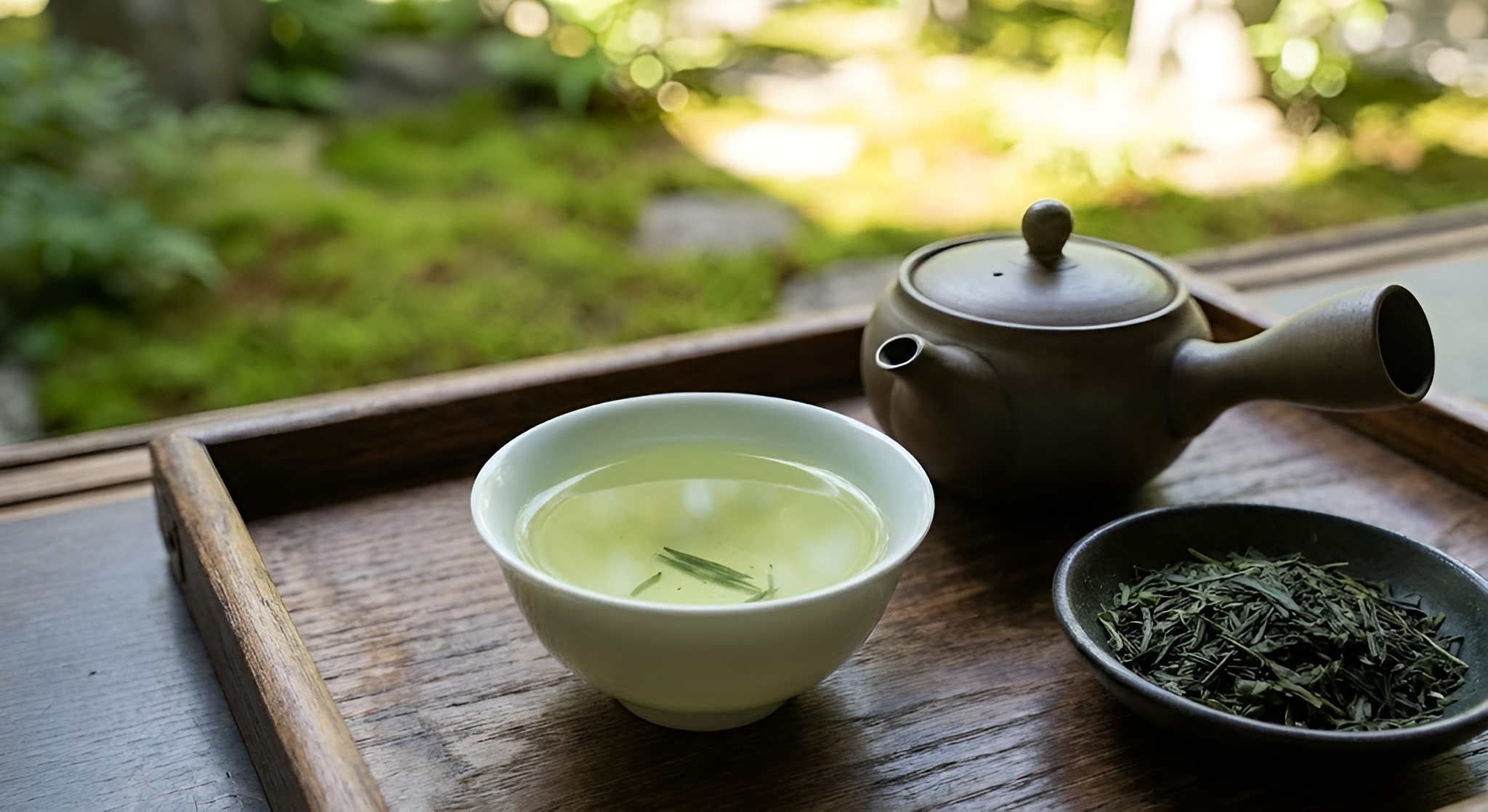
1. The "Oishita" Process: Growing in the Dark
The defining feature of Gyokuro is the shade. About 3 weeks before the spring harvest (Ichibancha), farmers cover the tea fields with black nets (cheesecloth) or traditional straw mats (honzu).
This cuts sunlight by 85-90%. The tea plant reacts to this stress by overproducing chlorophyll (turning the leaves a deep, dark green) and retaining amino acids. This is the same process used for Matcha (Tencha), but Gyokuro is rolled into needles instead of ground into powder.
| Tea Type | Shading Time | Flavor Profile |
|---|---|---|
| Sencha | 0 Days (Full Sun) | Refreshing, Grassy, Astringent (Vitamin C) |
| Kabusecha | 7 - 10 Days | Balanced (Sweet & Fresh) |
| Gyokuro | 20+ Days | Deep Umami, Brothy, Sweet (L-Theanine) |
Expert Tip: Why is it expensive?
Shading is risky. Without sun, the plants are weaker and prone to disease. The yield is lower, and the labor to install and remove the shading structures is high. This is why Gyokuro is a premium product.
2. Brewing: The "Low & Slow" Technique
You cannot brew Gyokuro like English Breakfast. If you use boiling water, it will taste like bitter spinach water. You need to treat it like a delicate soup stock.
- Temperature: 50°C to 60°C (Warm bath water temp).
- Leaf Ratio: High. Use 1g of leaf for every 10ml of water. (e.g., 6g leaf for a tiny 60ml cup).
- Time: 2 to 3 minutes.
Because you use so little water, the result is a tiny amount of "Tea Espresso"—thick, viscous, and concentrated.
Expert Tip: Eat the Leaves!
Gyokuro leaves are so tender from the shading process that they are edible. After you finish brewing, add a dash of soy sauce (ponzu) and sesame seeds to the wet leaves and eat them as a side salad. It's delicious and zero waste.
3. Cultivars: Not Just Yabukita
While the Yabukita cultivar dominates 75% of Japanese tea fields, it is actually not the best for Gyokuro. High-end farmers prefer cultivars bred specifically for high amino acid content and bright color.
- Saemidori: "Clear Green." Known for vibrant color and low astringency.
- Okumidori: "Deep Green." Known for a round, consistent flavor.
- Gokou: The connoisseur's choice. Has a unique "creamy" aroma often described as smelling like baked goods or milk.
Expert Tip: Look for Uji vs. Yame
The two main regions are Uji (Kyoto) and Yame (Fukuoka). Uji is traditional, elegant, and balanced. Yame is famous for producing "dento" (traditional) Gyokuro that is incredibly rich, sweet, and full-bodied.
4. Health Benefits: The Brain Booster
Because Gyokuro is shade-grown, it has the highest concentration of L-Theanine of any tea (even more than some Matchas). L-Theanine promotes alpha brain waves, leading to a state of "relaxed alertness."
It also contains high caffeine. The combination of high caffeine + high L-Theanine makes it the ultimate productivity drink for coding, studying, or meditation.
Ready to try the "Jade Dew"?
We've tasted the top authentic Gyokuros from Uji and Yame. Find out which ones offer that incredible umami blast without breaking the bank. See our list: The 6 Best Japanese Green Teas of 2025 →
Comments