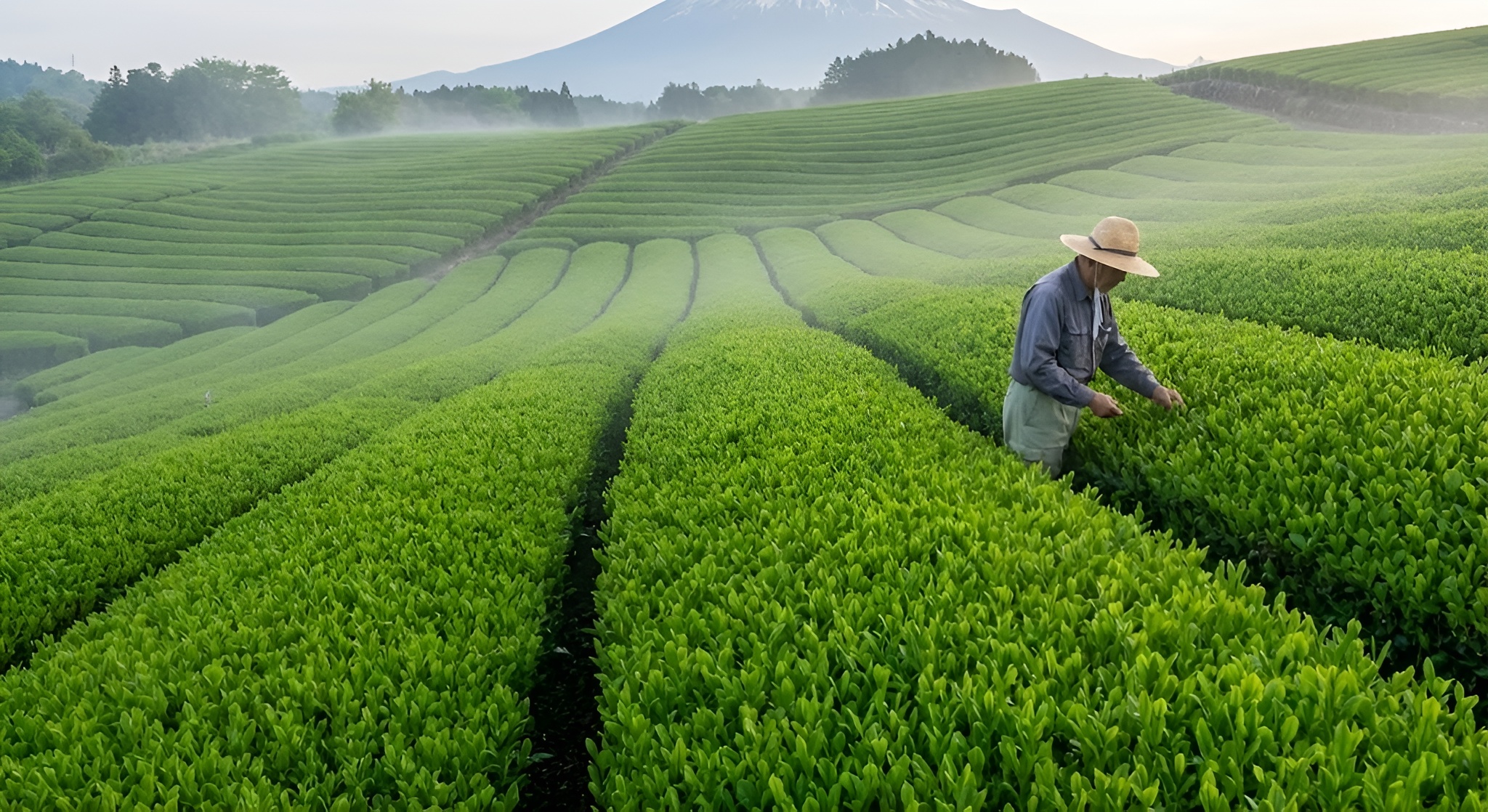
1. History: The Bamboo Grove Discovery
Before Yabukita, Japanese tea fields were "Zairai" (grown from seed). This meant every bush was different—some harvested early, some late, some tasted good, some bad. It was a nightmare for mass production.
Sugiyama Hikosaburo, a private breeder in Shizuoka, spent his life trying to find the perfect plant. In 1908, he identified two superior plants growing in a bamboo grove behind his house.
He named the one on the North (Kita) side of the grove (Yabu): Yabu-kita.
He named the one on the South (Minami) side: Yabu-minami.
While Yabuminami faded into obscurity, Yabukita proved to be a genetic miracle. It rooted easily from cuttings (making cloning cheap) and produced high yields. It was officially registered as **Cultivar #6** in 1953, just as Japan was industrializing its tea industry.
2. The Flavor Profile: Why It Defines "Sencha"
Why does Yabukita taste "green"? It comes down to two chemical factors:
1. Cis-3-Hexenol (The Aroma): Yabukita leaves are genetically predisposed to produce massive amounts of Leaf Alcohol when steamed. This gives the tea its refreshing, "forest-like" top note.
2. Catechin Balance (The Taste): Yabukita has a moderate to high level of Catechins (bitterness). When brewed correctly, this bitterness provides a "clean finish" that wipes the palate. This is known as "Noble Bitterness." It is not as sweet as modern cultivars like Saemidori, but it has more "impact" (Punch).
Expert Tip: Single Cultivar vs. Blends (Gogumi)
Because Yabukita is so common, it is often used as the "Base" of a tea blend. Tea masters then add small amounts of sweeter cultivars (like Saemidori) or darker cultivars (like Okumidori) to add complexity. A 100% Single Cultivar Yabukita is actually quite rare in the West and offers a very sharp, linear tasting experience.
3. The Problem with 75% Dominance
Having one plant dominate an entire country is risky.
The Harvest Bottleneck: Because every Yabukita bush is a clone, they all flush (sprout) on the exact same day. This creates a labor crisis every spring—farmers have a tiny window to harvest the entire country before the leaves get too old.
This is why farmers are now planting early-budding (Saemidori) and late-budding (Okumidori) cultivars to spread out the workload.
| Cultivar | Harvest Time | Flavor Profile | Best For |
|---|---|---|---|
| Yabukita | Standard (Mid-April) | Strong, Grassy, Balanced | Sencha |
| Saemidori | Early (4-6 days before) | Sweet, Low Bitterness, Bright Green | High-end Sencha, Gyokuro |
| Okumidori | Late (8 days after) | Deep, Savory, No grassiness | Matcha |
| Zairai | Random | Wild, Berry-like, Unpredictable | Regional Specialties |
4. Brewing Yabukita: Temperature Matters
Because Yabukita is relatively high in Catechins, it is unforgiving of boiling water.
The Rule: Use 70°C (158°F).
At this temperature, you extract the L-Theanine (Umami) and the Aroma, but you suppress the bitter Catechins. If you brew Yabukita at 100°C, it will taste harsh and astringent.
In contrast, low-catechin cultivars like Saemidori are more forgiving and can be brewed slightly hotter without becoming bitter.
Taste the Standard
We have reviewed the best Single Cultivar Yabukita Senchas from Shizuoka and Kagoshima. Experience the reference taste of Japan.
Best Sencha Teas
Comments