← Back to Learning Hub

Saemidori vs. Okumidori: Japanese Cultivars Explained

If you drink Japanese tea, you are almost certainly drinking Yabukita. This single cultivar dominates 75% of Japan's tea fields. But for the connoisseur, Yabukita is just the baseline. The real excitement lies in the "Alternative Cultivars" that are rapidly gaining ground in the premium market.

Two names constantly appear on high-end Matcha and Gyokuro labels: Saemidori and Okumidori. While they sound similar, they are genetically and functionally opposites. One is an early-budding, sweet, umami bomb; the other is a late-budding, deep, resilient workhorse. Understanding the difference between these two plants is the key to understanding modern Japanese tea terroir. In this guide, we dissect their genetics, flavor profiles, and why farmers choose one over the other.

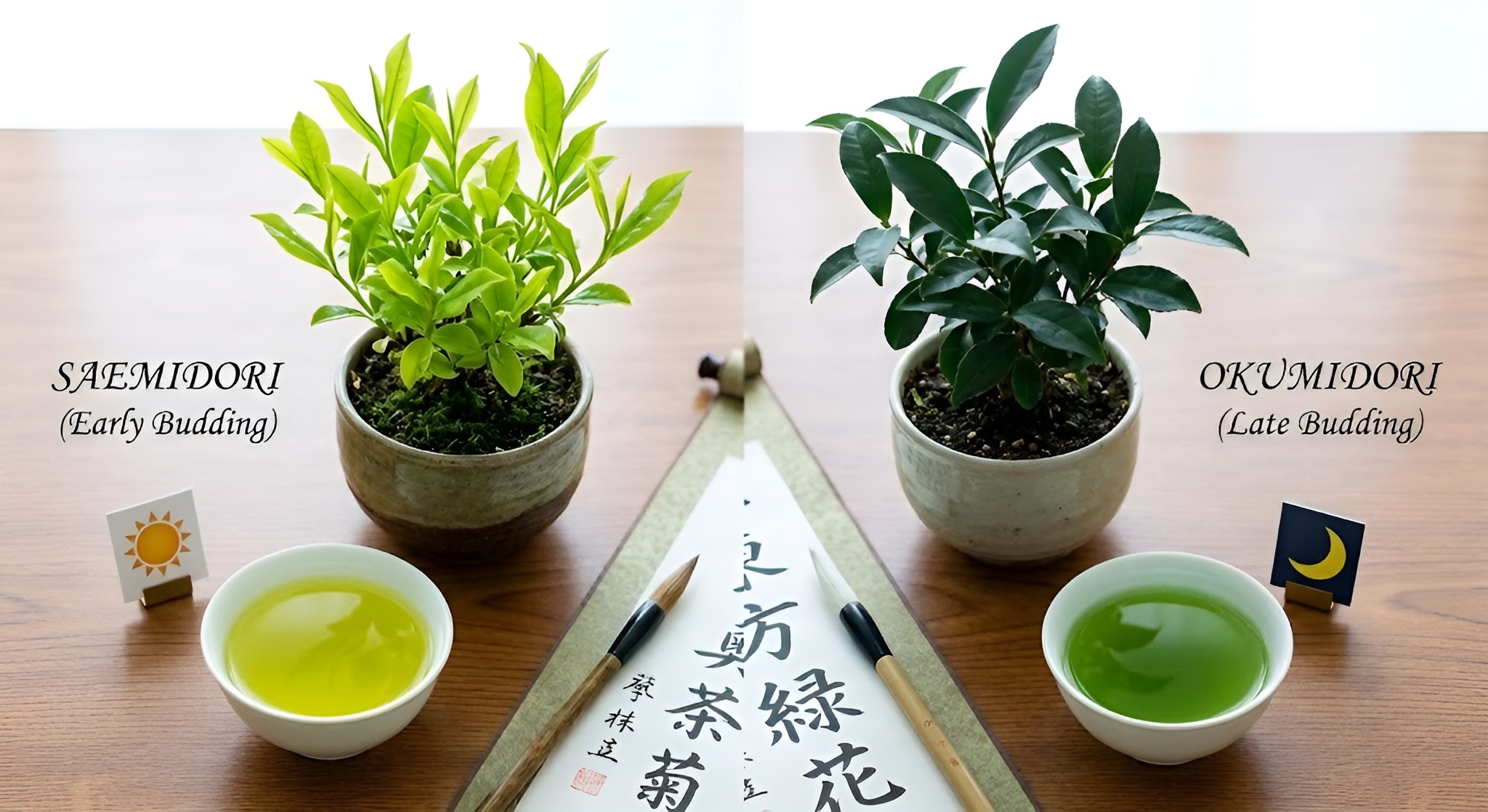
A side-by-side comparison of bright green Saemidori tea leaves and darker Okumidori leaves in a Japanese tea field.

Key Takeaways

The Yabukita Standard (Context)

Before we compare the challengers, we must understand the champion. Yabukita is the benchmark. It is reliable, has a strong aroma, and a sharp balance of bitterness and umami. Saemidori and Okumidori were both bred specifically to improve upon Yabukita's weaknesses—specifically, color, umami content, and harvest timing.

1. Saemidori (The Sweet Prince)

Name Meaning: "Sae" (Clear/Bright) + "Midori" (Green).
Registration: 1990 (Breeding started in 1969).
Genetics: Yabukita (Mother) x Asatsuyu (Father).

The Flavor Profile

Saemidori is famous for one thing: Umami. It inherits its low astringency and vibrant green color from its father, Asatsuyu (known as "Natural Gyokuro"). The liquor is bright neon green, and the taste is velvety, sweet, and rich in amino acids (L-Theanine). It lacks the sharp bite of Yabukita, making it incredibly approachable for beginners but complex enough for experts.

Agricultural Traits

Saemidori is an Early Budding (Wase) cultivar. It can be harvested 4-7 days earlier than Yabukita. This is a huge economic advantage for farmers, as the first tea of the season (Shincha) commands the highest price. However, this earliness makes it highly susceptible to Late Frost damage. It requires careful protection and a warmer climate (like Kagoshima or Southern Kyoto).

Why is Saemidori so Green?

The bright green color of Saemidori isn't just chlorophyll; it's genetics. Even without shading, Saemidori leaves are naturally greener than Yabukita. When shaded for Gyokuro or Matcha, the color becomes almost fluorescent. If you see a brilliantly green Matcha, it likely contains Saemidori.

2. Okumidori (The Deep Bench)

Name Meaning: "Oku" (Deep/Late) + "Midori" (Green).
Registration: 1974.
Genetics: Yabukita (Mother) x Shizu-Zai No. 16 (Father).

The Flavor Profile

Okumidori is the "Gentleman" of tea cultivars. It is known for having a perfectly round mouthfeel with no sharp edges. It is not as explosively sweet as Saemidori, but it has more depth and a very clean, lingering aftertaste. It has almost zero bitterness. Because it is so balanced, it is often used as a blending base to smooth out rougher teas.

Agricultural Traits

Okumidori is a Late Budding (Ban-sei) cultivar. It is harvested 7-10 days after Yabukita. This is crucial for farmers because it spreads out the labor workload. Instead of harvesting everything on day 1, they can harvest Saemidori, then Yabukita, then Okumidori. Additionally, because it buds late, it usually misses the deadly spring frosts, making it a "Safe" and reliable crop.

The Matcha Secret

While Saemidori is flashy, Okumidori is the backbone of the Premium Matcha industry. Its deep green color and neutral, savory profile make it the perfect canvas for blending. Many "Ceremonial Grade" matcha blends are actually 70% Yabukita/Okumidori for structure, with 30% Saemidori added for sweetness.

Comparison: Head-to-Head

Feature Saemidori Okumidori
Harvest Time Early (Wase) - Before Yabukita Late (Ban-sei) - After Yabukita
Flavor Key High Sweetness, High Umami Deep Body, Round, Clean Finish
Astringency Very Low Low
Color Brilliant Bright Green Deep Dark Green
Best For Single-Cultivar Gyokuro Matcha Blends & High-Grade Sencha
Weakness Frost Damage Can be too mild (needs blending)

Want to Taste the Difference?

We reviewed the best single-cultivar Japanese Green Teas available on the market. Find authentic Saemidori Sencha and Okumidori Matcha here.

Review: Best Japanese Green Teas

3. Brewing Differences

Because their chemical compositions differ, you should brew them slightly differently to maximize their potential.

Brewing Saemidori

Because it is rich in Amino Acids (Umami) and low in Catechins (Bitterness), you want to emphasize the savory notes.
- Temp: Low! 50°C - 60°C. High heat will waste its potential.
- Time: 2 minutes. Allow the umami to unfold slowly.
- Vessel: A flat Shiboridashi is ideal for concentrating the small volume of liquor.

Brewing Okumidori

Okumidori is robust and forgiving. It can handle higher heat without becoming astringent.
- Temp: 70°C - 80°C. This brings out the "roasted bean" or "vegetal" aromas that sit deeper in the profile.
- Time: 60 seconds. It extracts quickly.
- Vessel: A standard Kyusu Teapot works perfectly.

The Cold Brew Test

To truly understand the "pure" flavor of a cultivar without heat interference, try Ice Brewing (Koridashi). Place leaves over ice cubes and let them melt at room temperature. Saemidori will taste like pure soup stock (dashi); Okumidori will taste like fresh edamame and cream. Learn the science of Cold Brew here.

4. Regional Dominance

Single Cultivar vs. Blend

Most Japanese tea is blended (Gogumi). Master blenders mix Saemidori (for color/sweetness), Okumidori (for body), and Yabukita (for aroma/bite) to create a consistent product year-round. However, the modern trend is towards "Single Cultivar" tea, allowing you to taste the unique personality of the plant, much like Single Origin coffee. Read our Guide to Single Origin Teas.

Pairing with Food

Because Saemidori is so sweet and savory, it pairs beautifully with delicate white fish or simple rice dishes. Okumidori, with its cleaner finish, cuts through sweets brilliantly. Try pairing an Okumidori Matcha with a Wagashi sweet or white chocolate. See our Green Tea & Food Pairing Guide.