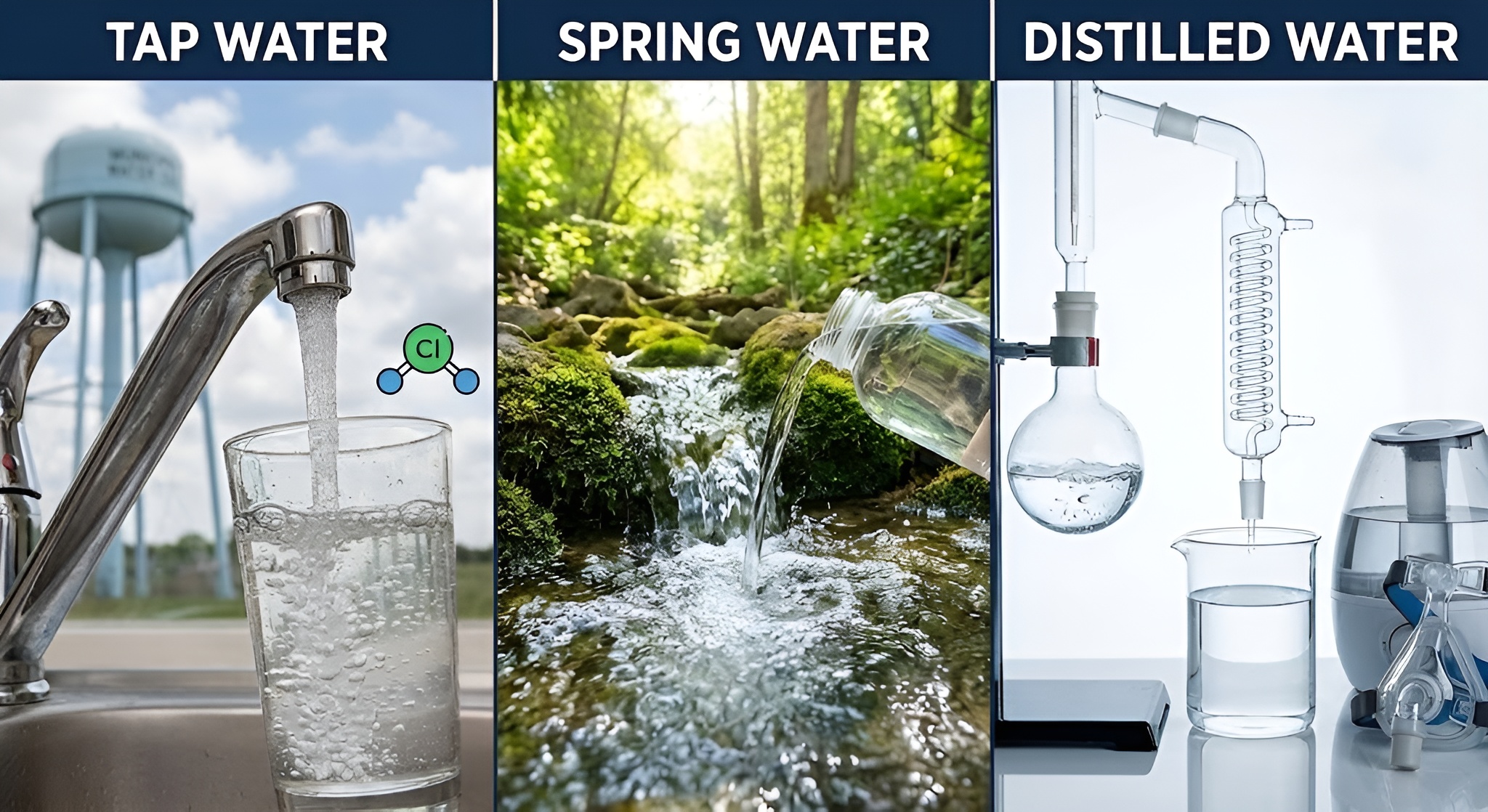
1. Tap Water: The Chlorine Cocktail
Tap water is a miracle of civil engineering, but a disaster for delicate tea. To make it safe to drink, municipalities add Chlorine or Chloramine to kill bacteria. While safe, these chemicals have potent flavors.
The Problems:
- Chlorine: Creates a "swimming pool" aroma that masks floral notes in Oolong or Darjeeling.
- Hardness (Scale): In many regions (like London), tap water is "Hard," meaning it is rich in Calcium and Magnesium. While Magnesium helps flavor extraction, too much Calcium creates Tea Scum—that iridescent, oily film that floats on top. It also neutralizes the bright acidity of tea, making it taste dull and chalky.
- pH Imbalance: Tap water is often slightly alkaline (pH 7.5-8) to protect pipes from corrosion. Tea prefers slightly acidic water (pH 6-7). High pH turns tea dark brown and flat.
Expert Tip: The Off-Gassing Trick
Chlorine is volatile and will evaporate if you leave a pitcher of tap water open in the fridge overnight. However, Chloramine (used by many modern cities) is stable and will not evaporate. You need a carbon filter to remove it.
2. Distilled Water: The "Uncanny Valley"
Distilled water is boiled into steam and then condensed back into liquid, leaving all impurities behind. It is 99.9% pure H2O. It sounds perfect, right? Wrong.
Why it Fails for Tea:
- The Extraction Problem: Tea flavor compounds (polyphenols and volatiles) bond to mineral ions like Magnesium during the steeping process. Without minerals to grab onto, the extraction is inefficient. The tea tastes "thin," "empty," or "flat."
- The Acidity: Pure distilled water absorbs carbon dioxide from the air, becoming slightly acidic (pH 5.8). This creates a sharp, sour profile in the tea.
- The "Uncanny Valley": Humans are evolved to taste minerals in water. When water is completely void of them, our brain registers it as "wrong" or "dead." It feels slippery in the mouth but doesn't quench thirst the same way.
Verdict: Distilled water is great for your steam iron or car battery, but terrible for your tea unless you re-mineralize it.
3. Spring Water: The Goldilocks Zone
Spring water comes from underground aquifers and is bottled at the source. It naturally contains minerals like Calcium, Magnesium, Potassium, and Silica picked up from the rocks.
Why it Wins:
- Magnesium: The hero mineral. It acts as a flavor carrier, enhancing sweetness and body.
- Bicarbonates: Act as a buffer, preventing the tea from becoming too acidic or too bitter.
- Terroir: Just like wine, water has terroir. Volcanic spring water (like Volvic) has a different mineral profile than limestone spring water.
However, not all spring water is equal. Some (like Evian) are very hard (high TDS) and will cause scum. Others (like Spa or Volvic) are softer and ideal for green tea.
4. The Chemistry of "TDS" (Total Dissolved Solids)
TDS measures the concentration of dissolved particles in water, usually in parts per million (ppm). This is the single most important number for a tea brewer.
| TDS Level | Water Type | Effect on Tea |
|---|---|---|
| 0-10 ppm | Distilled / ZeroWater / RO | Flat, empty, sour. Tea lacks body. |
| 50-150 ppm | Soft Spring / Filtered Tap | The Sweet Spot. Bright, aromatic, clear liquor. |
| 300+ ppm | Hard Tap / Hard Spring | Dull, dark, chalky. Tea Scum forms. |
Expert Tip: The Bamboo Charcoal Hack
If you are stuck with tap water, try adding a piece of Bamboo Charcoal to your kettle or pitcher. It absorbs chlorine and odors while releasing trace minerals, softening the water slightly and improving taste naturally.
5. Conclusion: What Should You Brew With?
For the best cup of tea, you want water that is clean, odor-free, and moderately mineralized.
- For Green & White Tea (Delicate): Use water with low TDS (50-100 ppm). Soft spring water is ideal to preserve the high notes.
- For Black & Oolong Tea (Robust): Use water with slightly higher TDS (100-150 ppm). A bit of mineral content helps extract the bold tannins and body.
- For Everyone: Avoid straight tap water if it smells like a pool, and avoid distilled water unless you add minerals back in.
Fix Your Water
Can't buy spring water every day? We reviewed the best filters and remineralization tools to turn your tap water into brewing gold.
Review: Best Water Filters for Tea
Comments