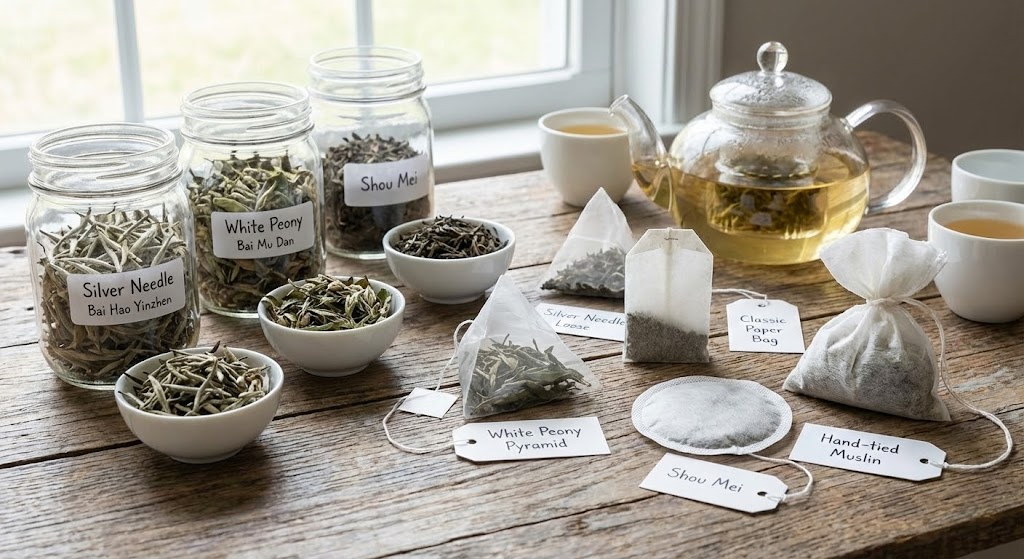
We tested over 15 different white teas from Fujian, Yunnan, and specialty importers to bring you this list. We judged them on fragrance (freshness), trichome density (the visible hairs on the bud), and mouthfeel.
1. Jasmine Silver Needle (Bai Hao Yinzhen)
Region: Fuding, Fujian | Harvest: Pre-Qingming
If you are looking for the "Glass Skin" tea that beauty influencers talk about, this is it. True Silver Needle consists entirely of the fat, downy buds of the tea plant before they open into leaves. This specific selection is scented with natural Jasmine blossoms, adding a layer of aromatherapy benefits to the experience.
The quality of Silver Needle is determined by the "hairs" (trichomes). This tea is covered in them. These hairs are rich in L-Theanine and antioxidants. It provides a thick, viscous mouthfeel that cheaper white teas lack.
Honeydew melon, fresh cucumber water, light jasmine, and a "bamboo" sweetness. Zero bitterness.
The Pros
- 100% Buds (Highest Grade).
- Incredible "thick" texture (soup).
- Rich in Theanine (calming effect).
The Cons
- Premium price point.
- Flavor is very subtle (requires attention).
2. Organic White Peony (Bai Mu Dan)
Region: Fujian | Harvest: Spring
While Silver Needle is for meditation, White Peony is for breakfast. It follows the standard of "One Bud, Two Leaves." Because it includes young leaves, the chlorophyll content is higher, resulting in a bolder, more distinct flavor profile that stands up well to a mug.
This is the perfect entry point for White Tea. It costs significantly less than Silver Needle but retains the floral sweetness. We chose this Organic variety because white tea is unwashed during processing, so organic certification is crucial to avoid pesticide residue.
Dried apricots, wildflowers, and fresh hay. It brews a golden-orange liquor, darker than the pale yellow of Silver Needle.
The Pros
- Great balance of flavor and delicacy.
- More affordable (Daily Drinker).
- Forgiving to brew (harder to ruin).
The Cons
- Leaves take up a lot of space (bulky).
- Can have slight astringency if boiled.
3. 2021 Aged White Tea Cake (Shou Mei)
Region: Fuding | Vintage: 2021
There is a famous Chinese saying about White Tea: "Year one it is tea; year three it is medicine; year seven it is treasure." This cake has been aging since 2021. Over time, the enzymes slowly oxidize the leaves, transforming the fresh grassy notes into deep, medicinal flavors.
Aged White Tea is trending heavily for gut health. The aging process encourages healthy microbial activity (similar to Pu-erh tea). This is the best tea for digestion after a heavy meal. Unlike fresh white tea, you can boil this on the stove without it getting bitter.
Jujubes (red dates), medicinal herbs, vanilla, and autumn leaves. It tastes nothing like fresh tea.
The Pros
- Very low caffeine sensation (relaxing).
- Can be boiled (very durable).
- Warming properties (Good for Winter).
The Cons
- Requires a tea knife to pry open.
- "Medicinal" flavor is an acquired taste.
Expert Buyer's Guide: Understanding White Tea
Buying white tea can be tricky because visual appearance is everything. Here is how to grade what you are buying.
1. The "Hair" Test (Trichomes)
High-quality white tea (especially Silver Needle) should look "fuzzy." These tiny white hairs are called trichomes. They are the plant's defense mechanism against insects, and they contain the highest concentration of essential oils and sweetness. If your Silver Needle looks shiny and smooth (hairless), it is low quality or harvested too late in the season.
2. The Grades Hierarchy
- Silver Needle (Bai Hao Yinzhen): 100% Buds. Picked for only a few days in early Spring. Most expensive. Lightest flavor.
- White Peony (Bai Mu Dan): 1 Bud + 2 Leaves. Picked slightly later. The perfect balance of cost and flavor.
- Gong Mei / Shou Mei: Mostly leaves, very few buds. Picked late Spring/Summer. Brownish color. Best for aging and pressing into cakes.
storage Tip: White Tea Gets Better With Age
Unlike Green Tea, which goes stale after 12 months, White Tea is shelf-stable. In fact, if you store it in an airtight container away from light, it will slowly ferment and become sweeter and more valuable over time. Don't be afraid to buy in bulk.
How to Brew for Maximum Antioxidants
Many people ruin White Tea by using boiling water. Because the buds are unoxidized, they are delicate. Check out our full Tea Brewing Guide for more details.
- Fresh White Tea (Silver Needle/Peony): Use water at 80°C - 85°C. Steep for 3-4 minutes. If the water is too hot, you "cook" the bud and lose the floral notes.
- Aged White Tea (Cakes): Go hotter! Use 100°C (Boiling) water. You generally need heat to break down the compressed leaves and release the deep, woody flavors.
Comments