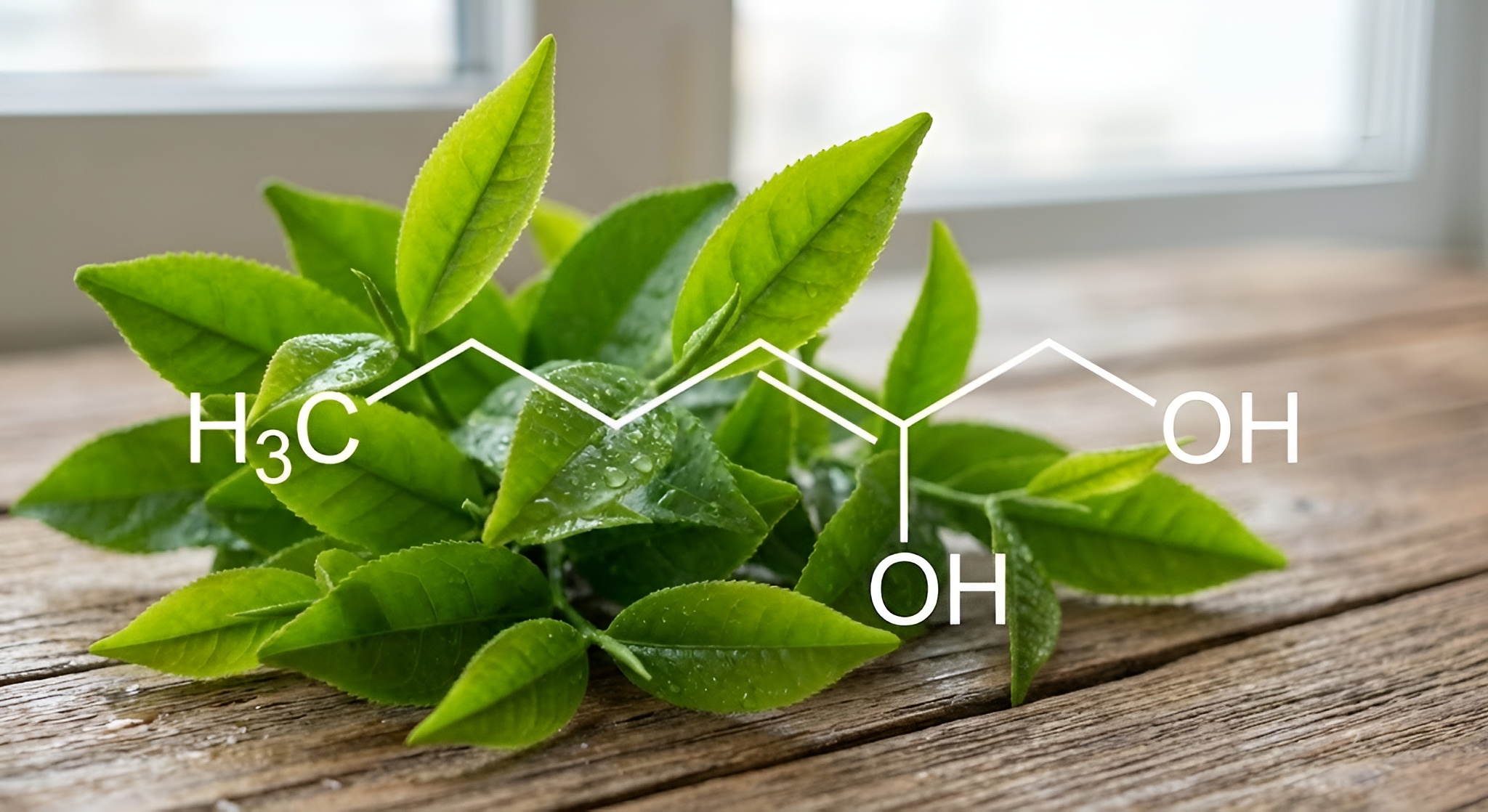
1. Biosynthesis: The Lipoxygenase (LOX) Pathway
Unlike Linalool or Geraniol which are stored as glycosides, Leaf Alcohol is produced de novo (from scratch) the moment the leaf is plucked.
The precursor is Linolenic Acid (a fatty acid in the cell membrane). When the leaf is damaged during harvesting, an enzyme called Lipoxygenase (LOX) attacks the fatty acids, breaking them down into 6-carbon aldehydes and alcohols.
This rapid enzymatic burst creates the intense "Green Smell" that fills a tea factory during the spring harvest.
2. Steaming vs. Pan-Firing: The Fate of the Molecule
Once Cis-3-Hexenol is created, the tea maker has a choice: keep it or kill it. This decision defines the difference between Japanese and Chinese Green Tea.
| Method | Process | Effect on Cis-3-Hexenol | Flavor Result |
|---|---|---|---|
| Steaming (Japan) | High steam blast for 30-60s | Preserved. Steam locks the leaf pores shut and deactivates oxidases without volatizing the heavy alcohols. | Vegetal, Grassy, Marine (Sencha) |
| Pan-Firing (China) | Hot metal wok contact | Destroyed. Direct conductive heat evaporates the volatile Leaf Alcohol. | Nutty, Toasted, Chestnut (Longjing) |
Expert Tip: The "Covered Aroma" (Ooika)
In shaded teas like Gyokuro, the lack of sunlight alters the lipid metabolism. Instead of pure Cis-3-Hexenol, the plant produces huge amounts of Dimethyl Sulfide (reminiscent of corn or seaweed) alongside the Leaf Alcohol. This combination creates the unique "Nori-like" aroma known as Ooika.
3. The Cultivar Connection: Yabukita
If you drink Japanese tea, you are drinking Cis-3-Hexenol. Why? Because 75% of all tea fields in Japan are planted with one cultivar: Yabukita.
Yabukita was selected in the 1950s specifically for its "refreshing aroma." Genetic analysis shows it has an unusually high potential for converting fatty acids into Cis-3-Hexenol.
Other cultivars like Sayamakaori produce even more, creating a sharp, almost aggressive bitterness and green snap. In contrast, Saemidori (a cross of Yabukita x Asatsuyu) is lower in Leaf Alcohol and higher in Amino Acids, making it sweeter.
4. Brewing: Managing the Green
Cis-3-Hexenol is highly volatile (boiling point 156°C) but easily detectable even at low temperatures.
The Water Temp: If you brew Sencha with boiling water (100°C), you will extract excessive Catechins (bitterness) alongside the Leaf Alcohol, creating a soup that tastes like boiled spinach.
The Sweet Spot: Use 70°C - 80°C water. This temperature is hot enough to volatilize the Cis-3-Hexenol (giving you the fresh aroma) but cool enough to keep the bitter tannins in check, allowing the L-Theanine sweetness to shine through.
Taste the Freshness
Want to experience the purest expression of Leaf Alcohol? Try a Deep-Steamed (Fukamushi) Sencha from Shizuoka.
Best Sencha Teas
Comments