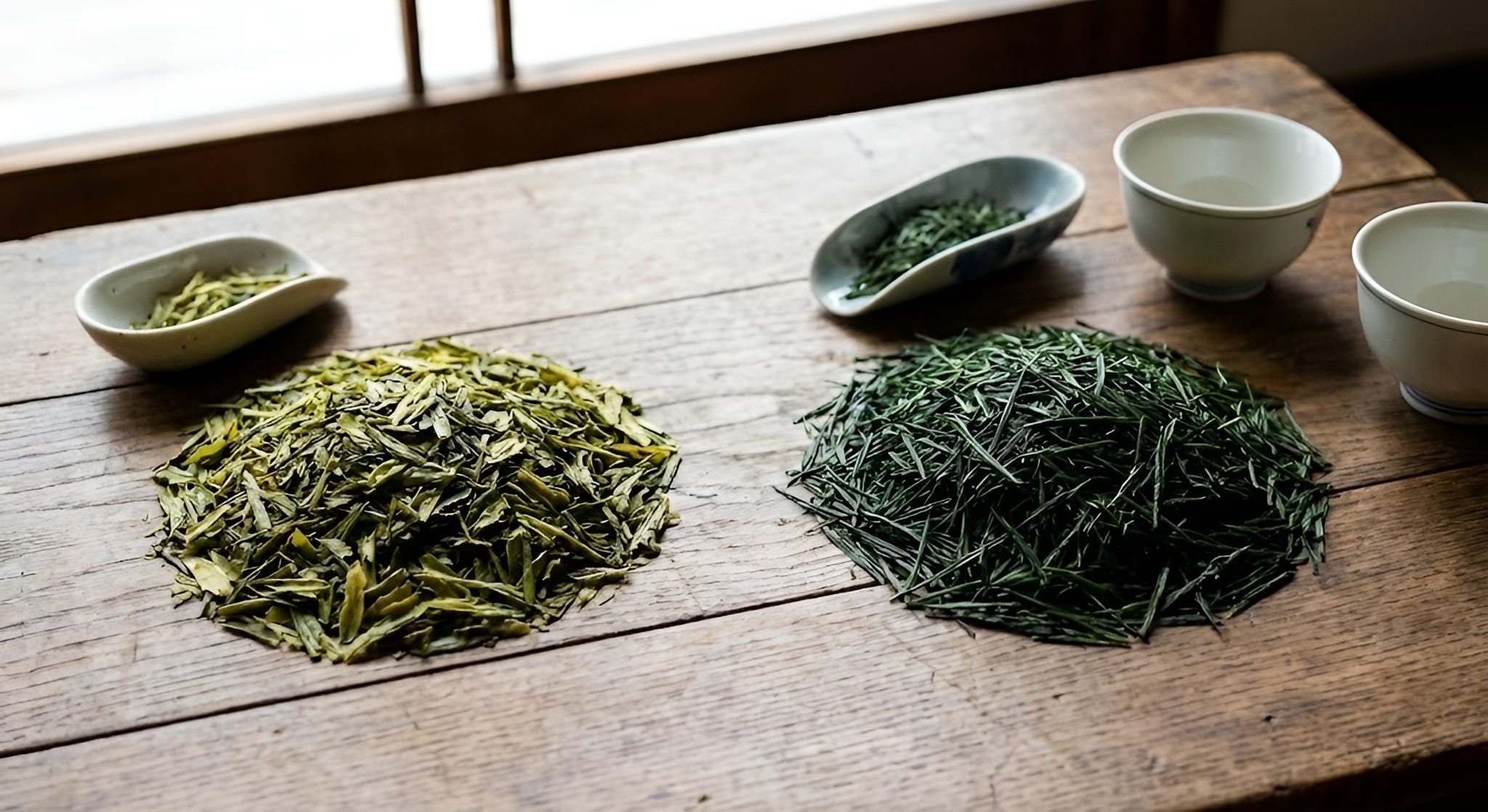
1. Sencha: The "King of Sunshine"
Sencha accounts for roughly 80% of all tea produced in Japan. It is the definition of "Green Tea" for most people. The bushes are grown in open fields, soaking up the sun.
Why does sun matter? Sunlight triggers photosynthesis, which converts the amino acid L-Theanine (sweet/savory) into Catechins (bitter/astringent). This sounds bad, but it isn't. Catechins give Sencha its refreshing "bite" and its high antioxidant content. A good Sencha strikes a perfect balance between sweetness and astringency.
Expert Tip: Asamushi vs. Fukamushi
Sencha comes in two main styles based on steaming time. Asamushi (Light Steam) leaves are intact, producing a clear, golden-green liquor. Fukamushi (Deep Steam) leaves are broken down, producing a cloudy, neon-green liquid with a richer body but less aroma. Fukamushi is often easier to brew.
2. Gyokuro: The "Jade Dew"
Gyokuro is the highest grade of Japanese loose leaf tea. Roughly 20 days before harvest, farmers cover the tea fields with black tarps (Tana) or traditional straw mats (Honzu). This blocks ~85% of sunlight.
This stresses the plant. In a desperate attempt to photosynthesize, the tea bush produces massive amounts of Chlorophyll (turning the leaves a deep, dark emerald color). Crucially, because there is no sun, the L-Theanine is not converted into Catechins. It remains in the leaf.
The result? A tea that is packed with amino acids. When brewed, it doesn't taste like tea; it has a thick, viscous mouthfeel and a savory flavor reminiscent of seaweed soup or broth.
Expert Tip: Kabusecha (The Middle Ground)
Can't decide? Try Kabusecha. It is "shaded tea," but only for 1 week (vs. 3 weeks for Gyokuro). It sits right in the middle: cheaper than Gyokuro, but sweeter and more savory than Sencha. It's the perfect entry point.
3. The Brewing Difference
If you brew Gyokuro like Sencha, you are wasting your money. High heat destroys the delicate amino acids and releases the few bitter compounds present.
| Feature | Sencha | Gyokuro |
|---|---|---|
| Water Temp | 70°C - 80°C (175°F) | 50°C - 60°C (140°F) |
| Leaf Ratio | 1 tsp per cup | Double (2 tsp) per cup |
| Steep Time | 60 seconds | 90 - 120 seconds |
| Experience | Refreshing thirst quencher | Slow sipping (Espresso style) |
Expert Tip: Eating the Leaves
After brewing Gyokuro, the leaves are so tender (due to the shading) that you can eat them! Add a dash of soy sauce and lemon juice (Ponzu) to the wet leaves and eat them as a side salad. It sounds strange, but it's delicious and zero waste.
4. Why is Gyokuro so expensive?
The price tag is driven by three factors:
- Labor: Setting up the shading structures is manual work.
- Yield: Shading stresses the plant, meaning it grows slower. Yields are lower compared to sun-grown bushes.
- Processing: Gyokuro is almost always hand-picked or picked with high-precision machines to ensure only the tenderest buds are selected.
Ready to taste the difference?
We've curated the best authentic Japanese teas available online, from affordable daily Sencha to premium Gyokuro. See our top picks: The 6 Best Japanese Green Teas of 2025 →
Comments