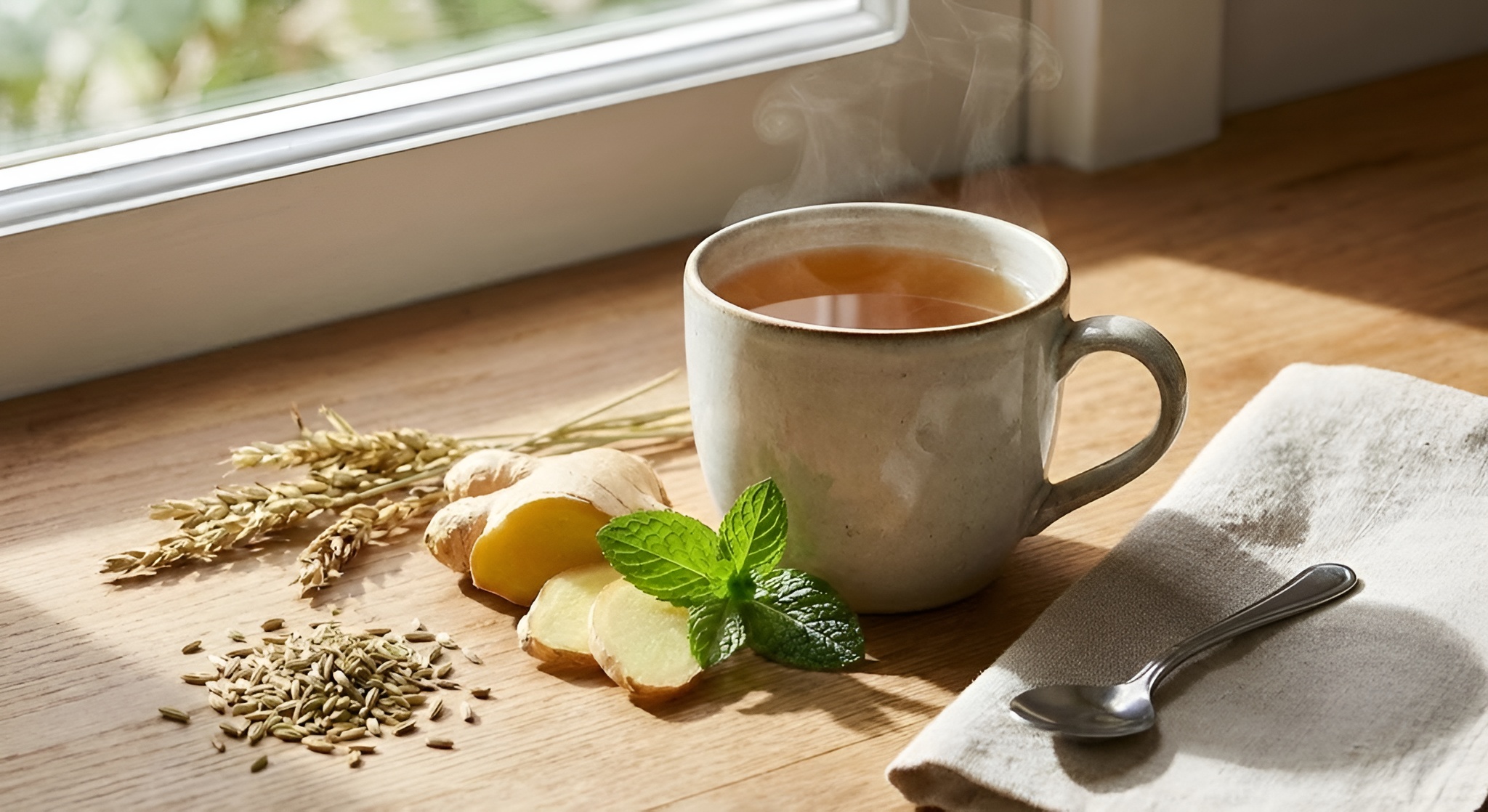
1. Ginger Tea: The "Stomach Mover"
If you feel like your dinner is just "sitting there" like a brick, reach for Ginger Tea. The active compounds, Gingerols and Shogaols, stimulate gastric motility.
In simple terms, Ginger tells your stomach to contract and push food into the small intestine. This relieves that heavy, full sensation and is the number one natural remedy for nausea.
Expert Tip: Fresh vs. Dry
Dried ginger (tea bags) is actually hotter and more potent for digestion than fresh ginger root. The drying process converts gingerols into shogaols, which are more effective at stimulating the stomach lining.
2. Peppermint Tea: The "Gas Buster"
Peppermint Tea is an antispasmodic. The menthol oil in the leaves acts as a muscle relaxant. When your intestines are cramping or spasming around a pocket of trapped gas, peppermint relaxes the walls, allowing the gas to move and be expelled.
However, this relaxing effect has a downside. It also relaxes the lower esophageal sphincter (the valve between your throat and stomach).
Expert Tip: The Reflux Warning
If your bloating comes with heartburn or acid reflux (GERD), avoid Peppermint. It will open the floodgates for acid. Use Ginger or Fennel instead, as they soothe the stomach without relaxing the valve.
3. Fennel Tea: The "De-Puffer"
Fennel seeds have been used for centuries in India (often chewed after meals) to aid digestion. The active compound, Anethole, has antimicrobial properties that can reduce the bacteria responsible for gas fermentation.
Fennel is also a mild diuretic, meaning it helps flush excess water and salt from the body. If your bloating feels more like "puffiness" or water retention (common after salty meals), Fennel is the superior choice.
Expert Tip: Chew the Seeds
If you have fennel tea bags that contain whole seeds, don't throw the bag away! You can actually tear it open and chew the softened seeds for an extra dose of beneficial oils and fiber.
Comparison: Which one do you need?
Identify your primary symptom to pick the right tea.
| Symptom | Best Tea | Why? |
|---|---|---|
| Nausea / "Brick" Stomach | Ginger | Speeds up digestion and empties the stomach. |
| Sharp Cramps / Trapped Gas | Peppermint | Relaxes intestinal spasms to release gas. |
| Puffiness / Salty Meal | Fennel | Diuretic effect flushes water weight. |
| Acid Reflux / Heartburn | Ginger (or Chamomile) | Soothes inflammation without relaxing the valve. |
4. The "After Dinner" Ritual: Timing Matters
Don't drink your tea with your meal. This dilutes stomach acid and can actually slow digestion down. Wait 30 to 45 minutes after eating. This gives your stomach acid time to work on the food before the warm liquid helps flush it through.
Expert Tip: Skip the Sugar
Sugar feeds the bad bacteria in your gut that create gas (fermentation). If you are drinking tea to fix bloating, do not add honey or sugar. This will just create more gas. Drink it plain or with a slice of lemon.
Ready to stock your medicine cabinet?
We've reviewed the most potent medicinal teas available, from high-gingerol rhizome bags to whole-leaf peppermint that actually works. See our top 5 picks here: The 5 Best Teas for Bloating & Digestion of 2025 →
Comments