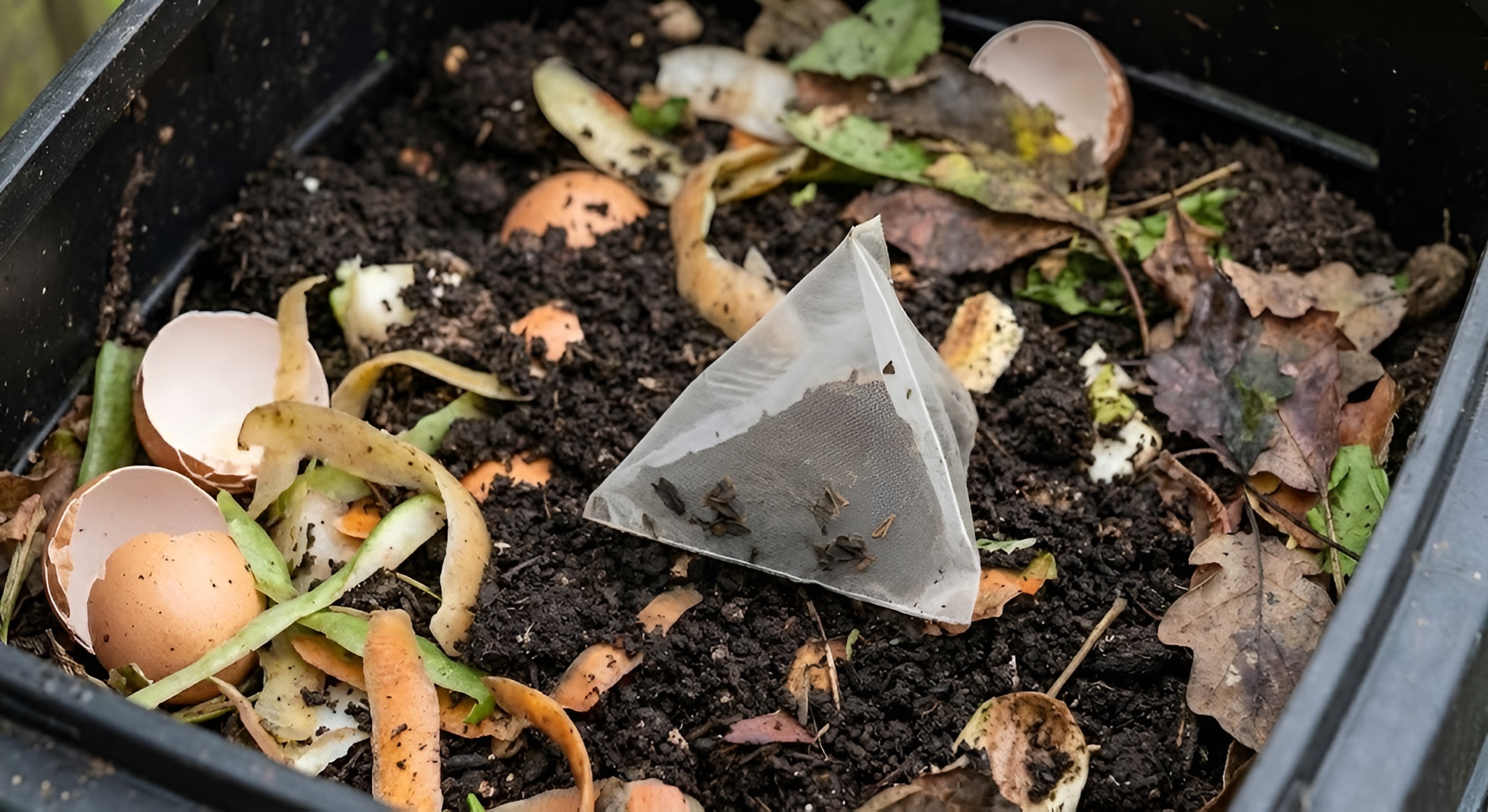
1. The Definitions: A Legal Grey Area
The confusion stems from a lack of strict global regulation on the word "Biodegradable."
| Term | Definition | Garden Safe? |
|---|---|---|
| Biodegradable | Breaks down naturally, but no time limit defined. Could take decades. | NO |
| Industrially Compostable | Breaks down in 12 weeks at high heat (60°C). | NO (unless you have a hot bin) |
| Home Compostable | Breaks down in 12 months at garden temp (20-30°C). | YES |
Expert Tip: Check the Logo
Don't trust the text. Trust the logo. Look for the TÜV Austria "OK Compost HOME" mark. If it just says "OK Compost" without the word "HOME," it requires an industrial facility and belongs in your food waste bin, not your garden.
2. The PLA Problem (Corn Starch Plastic)
Those fancy "silky" pyramid bags? They are usually made of PLA (Polylactic Acid). This is a bioplastic made from corn starch or sugarcane. While it is technically plant-based, it behaves like plastic in nature.
PLA requires specific conditions (high heat, specific microbes) to break down. If you throw a PLA bag into the ocean or a cold compost heap, it will remain intact for years, potentially harming wildlife just like petroleum plastic.
Expert Tip: The "Worm" Test
If you have a worm bin (Vermicompost), avoid PLA tea bags entirely. The tough mesh can tangle up worms, and they cannot digest the bioplastic. Stick to unbleached paper bags or loose leaf.
3. The Hidden Glue: Polypropylene
Even standard paper tea bags (the square ones) often contain plastic. To keep the bag sealed in boiling water, manufacturers add a thin layer of Polypropylene to the paper fibers so they can be heat-sealed.
When these bags rot, the paper disappears, but the polypropylene remains as microscopic dust—Microplastics—in your soil. You then grow vegetables in that soil, effectively eating your own tea bags.
Expert Tip: The "Lighter Test"
Want to know if your tea bag contains plastic? Empty the dry tea out. Hold the empty bag with tweezers and light it with a match.
Clean Ash: It's pure paper/cotton.
Melts/Drips: It contains plastic (polypropylene or PLA).
4. What Should I Buy?
To be 100% safe, look for brands that explicitly state:
- "Plastic-Free" (Not just biodegradable).
- "Stitched" or "Folded" (No heat seal = no glue).
- "Unbleached" (Brown color, usually better for soil).
Or, make the ultimate eco-switch: Loose Leaf Tea. It has zero waste, costs less per cup, and tastes significantly better.
Ready to ditch the plastic?
We've reviewed the top tea brands, highlighting which ones use plastic-free packaging and which ones are guilty of greenwashing. Find a safe brew here: The Best Plastic-Free Tea Bags of 2025 →



Comments