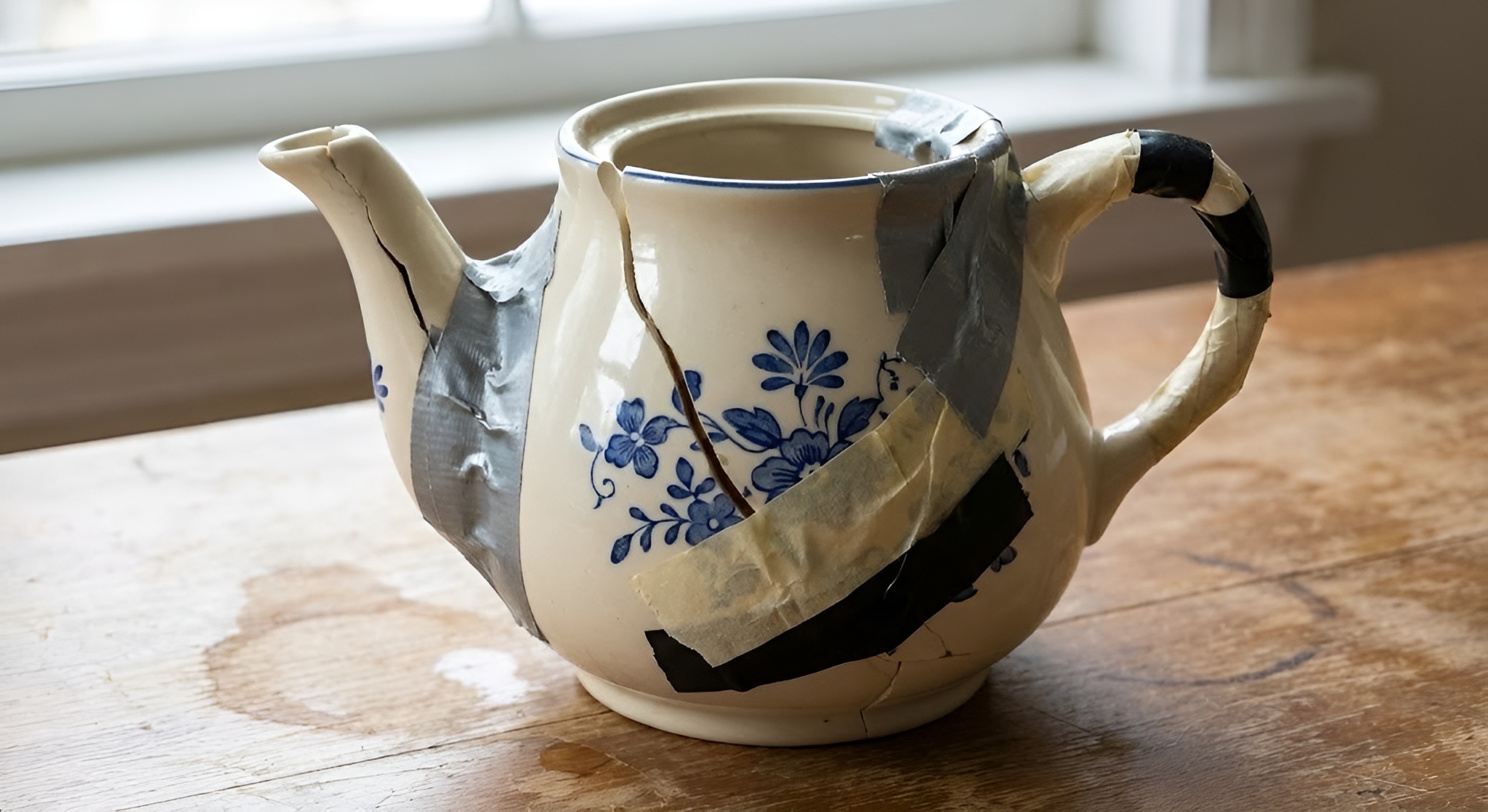

1. The Danger Zone: Why Superglue is Toxic
The most common mistake people make is using standard Krazy Glue or Gorilla Glue. These contain Cyanoacrylate. While strong at room temperature, this chemical is thermally unstable. [Image of superglue chemical structure]
When you pour 100°C boiling water into a pot glued with Cyanoacrylate:
- It Softens: The bond weakens immediately, leading to leaks.
- It Leaches: Chemicals migrate into your tea water.
- It Off-Gasses: In extreme cases, it can release trace cyanide fumes.
2. Method 1: The "Milk Boil" (For Hairline Cracks)
This sounds like an old wives' tale, but it is based on chemistry. Milk contains a protein called Casein. When heated, casein expands and acts as a natural plastic/glue.
The Protocol:
1. Place the cracked teapot in a large saucepan.
2. Cover it completely with whole milk (full fat is best).
3. Simmer on low heat for 45-60 minutes. Do not let it boil over.
4. Turn off heat and let it cool in the milk overnight.
5. Wash thoroughly.
The casein proteins seep into the microscopic crack, expand, and harden, creating a waterproof seal. This only works for hairline cracks, not snapped handles.
3. Method 2: Food-Safe Epoxy (For Handles & Spouts)
If you have a clean break (e.g., a handle snapped off), you need a structural bond. You need a Two-Part Epoxy.
What to buy: Look for "FDA Approved" or "Food Contact Safe" epoxy. Brands like PC-Clear or specialized ceramic glues are good. Ensure it is rated for temperatures up to 100°C.
The Protocol:
1. Clean the break surfaces with alcohol to remove grease.
2. Mix the resin and hardener (usually 1:1).
3. Apply a thin layer to both sides.
4. Press together and clamp (or use rubber bands) for 24 hours.
5. Wait 48-72 hours before using with hot water to ensure full cure.
Warning: Don't Glue Yixing!
If you have an unglazed Yixing Clay Teapot, do not use epoxy. The porous clay will absorb the chemical smell forever, ruining the flavor of your tea. For Yixing, you must use Kintsugi (natural lacquer) or professional silver staples. Read more about Yixing care: The Ultimate Yixing Guide →
4. Method 3: Kintsugi (The Art of Golden Repair)
Kintsugi (Golden Joinery) is the traditional Japanese art of repairing broken pottery with lacquer dusted or mixed with powdered gold, silver, or platinum. It treats the breakage as part of the history of the object, rather than something to disguise.
The Materials:
True Kintsugi uses Urushi (tree sap lacquer). It is 100% natural, food-safe, and heat resistant once cured. However, raw Urushi creates a poison-ivy-like rash if it touches skin, so you must wear gloves.
The Philosophy:
Instead of hiding the crack, you highlight it with gold. This aligns with the philosophy of Wabi-Sabi—finding beauty in imperfection. A Kintsugi teapot is often considered more valuable than a new one because it has a story.
5. Prevention: Understanding Thermal Shock
Why did your pot crack in the first place? Usually, it is Thermal Shock.
Ceramic expands when hot. If you pour boiling water (100°C) into a cold pot (20°C) on a winter morning, the inside expands faster than the outside. Snap.
How to prevent it: Always "Warm the Pot." Pour a little warm tap water into the pot and swill it around for 10 seconds before adding your boiling water. This pre-heats the clay and reduces the shock.
Need a Durable Teapot?
If you are tired of breaking delicate pots, consider switching to Borosilicate Glass (heat resistant) or Cast Iron. We reviewed the most durable teapots on the market. Check them out: The 6 Best Teapots That Last →
6. When to Let Go
Sometimes, a pot is too far gone. If the inside of the pot is shattering or glazing is flaking off into your tea, it is a health hazard. Swallowing ceramic shards is dangerous. If the structural integrity is compromised, turn it into a flower pot and buy a new vessel.
Comments