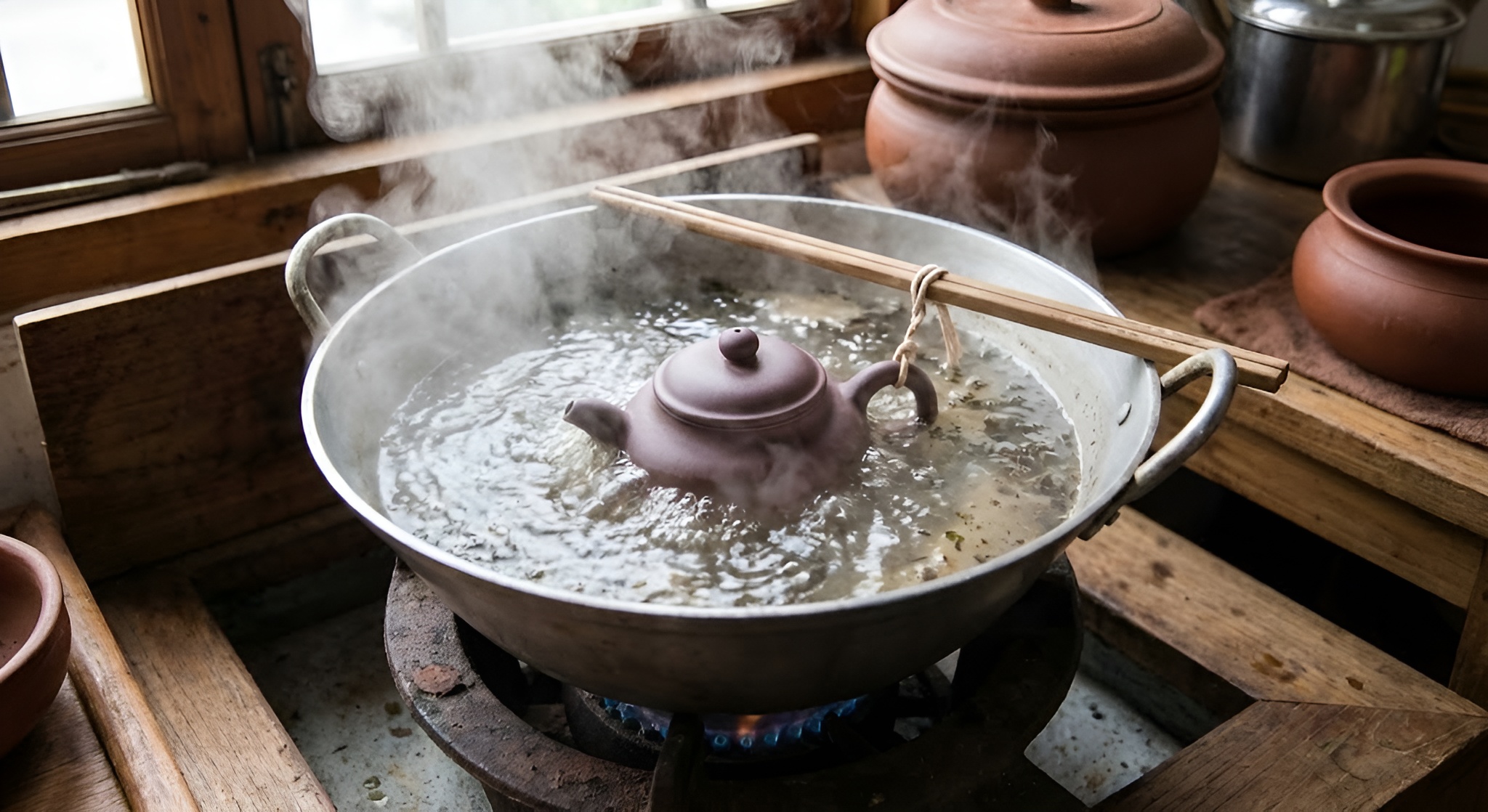
1. The History & Philosophy: What is "Yang Hu"?
In the West, we "clean" dishes. In the world of Gongfu Cha, we "raise" teapots. The Chinese term is Yang Hu (养壶), which translates to "Nurturing the Pot." This concept dates back to the Ming Dynasty (1368–1644), a pivotal era when tea culture shifted from powdered matcha whisked in bowls to loose leaf tea steeped in pots.
The scholars of the Ming era discovered that the purple clay (Zisha) found in Yixing, Jiangsu Province, had unique properties. Unlike porcelain, which reflected heat and flavor, Zisha absorbed it. Over years of use, a well-raised pot would develop a patina (a soft, oily shine) and retain the aroma of the tea so strongly that pouring plain water into an empty antique pot would produce a ghost of tea flavor.
Seasoning is the first step in this lifelong relationship. It is not just about hygiene; it is a ritual of welcoming the teapot into your service.
2. The Science: Understanding Zisha Clay
Why does Yixing clay need such specific treatment? The answer lies in its geology. Authentic Zisha clay is rich in quartz, mica, and iron. When fired at high temperatures (1100°C - 1200°C), it forms a double-pore structure.
- Primary Pores: Visible to the naked eye (if magnified), giving the pot its sandy texture.
- Secondary Pores: Microscopic channels connecting the primary pores.
This network allows the pot to hold heat incredibly well (low thermal conductivity) while allowing air to flow through the walls (breathability). When you buy a new pot, these pores are clogged with kiln dust, sand, and sometimes a protective wax applied for transport. If you don't boil these out, they will leach into your tea, killing the high notes and adding a gritty texture.
The Tofu Analogy
Think of Yixing clay like Tofu or a Cast Iron Skillet. It has no strong flavor of its own initially, but it absorbs whatever you cook it in. If you wash it with Fairy Liquid, you will be drinking soapy tea for the next decade. If you season it with cheap tea, it will remember that cheap flavor.
3. The Preparation: Safety First
Before you begin, ensure you have a clean workspace. You are about to boil porous clay, so the pot you boil it in matters.
- The Vessel: Use a large stainless steel stockpot. It must be absolutely clean—no residue of last night's spaghetti sauce or oil.
- The Padding: Place a clean white towel or cheesecloth at the bottom of the metal pot. Yixing clay is hard but brittle; the bubbling water can cause the teapot to rattle against the metal bottom and crack. The towel acts as a cushion.
- The Inspection: Smell the inside of your new pot. It should smell dusty or earthy. If it smells like chemicals, shoe polish, or burnt rubber, stop. You may have bought a "chemical pot" (fake clay). Check our guide on Real vs. Fake Yixing before proceeding.
4. Step-by-Step Seasoning Guide
Phase 1: The "Physical" Clean (Scrubbing)
Rinse the pot under lukewarm tap water. Use a dedicated toothbrush (one that has never touched toothpaste) to gently scrub the inside and outside. Focus on the spout and the filter holes where clay dust often accumulates. Remember: Absolutely no soap.
Phase 2: The "Clear" Boil (Sterilization)
This step removes the "fire taste" and opens the pores.
- Separate the lid from the body. Wrap the lid in a separate small cloth if possible to prevent it hitting the body.
- Place body and lid into your padded stockpot.
- Fill with filtered water (cold) until the teapot is fully submerged.
- Turn on the heat. Bring to a boil slowly.
- Once boiling, reduce to a gentle simmer for 30 to 45 minutes.
Warning: Thermal Shock
Never drop a cold Yixing pot into boiling water, and never run cold tap water over a hot pot. The rapid temperature change will cause the clay to snap. Always let the water heat up with the pot inside, and let it cool down naturally in the water after boiling.
Phase 3: The "Tea Marriage" (Flavor Infusion)
Now that the pores are open and clean, you must introduce the pot to its lifelong partner.
- Let the clear water cool down naturally. Remove the pot and rinse it with warm water.
- Refill the stockpot with fresh, filtered water.
- Add 3-4 scoops of the specific tea you intend to brew in this pot. If this is a Ripe Pu-erh pot, use Ripe Pu-erh. If it's for Iron Goddess, use that. Do not use waste tea or cheap tea—use good tea.
- Place the pot back in. Bring to a boil again, then simmer for 45 to 60 minutes.
- Turn off the heat. This is the crucial part: Leave the pot in the tea soup overnight. As the water cools, the clay contracts, pulling the tea oils deep into the pores.
The "One Pot, One Tea" Rule
Yixing teapots are strictly monogamous. You cannot brew a floral, delicate Green Oolong in a pot seasoned with smoky, heavy Lapsang Souchong or earthy Shou Pu-erh. The flavors will clash and ruin the brew. Serious tea drinkers often own 3-4 pots for different categories (e.g., one for Raw Pu-erh, one for Ripe, one for Roasted Oolong).
5. Advanced: The "Tofu & Sugarcane" Method
If you speak to old-school collectors from Taiwan or Malaysia, they might suggest an even more elaborate method involving Tofu. This is optional for modern high-quality clays, but effective for older clays that smell heavily of the kiln.
- The Tofu Step: After the clear boil, boil the pot with a block of firm tofu for 30 minutes. The theory is that tofu absorbs the "fire" (charcoal smell) from the clay better than water alone.
- The Sugarcane Step: Boil the pot with natural sugarcane. The sugar seasons the clay, removing any metallic bitterness and ensuring the first brews are sweet.
6. Aftercare: Maintaining the "Patina"
Once seasoned, your job isn't done. "Raising" the pot happens every time you use it.
- The Shower: During a tea session, pour leftover tea over the outside of the pot.
- The Polish: After using the pot, rinse it with hot water (no soap!). While it is still warm, rub the outside gently with a specialized "tea cloth" or a soft microfiber towel. This buffs the oils into the clay, creating a deep, lustrous shine over months and years.
- The Rest: Let the pot dry with the lid off. Never store a damp pot with the lid on, or it will grow mold.
Disaster Recovery: Mold?
If you accidentally leave wet leaves in your pot for a week while on holiday, it will grow mold. Do not throw it away. To reset the pot: Re-do the "Clear Boil" step (Phase 2) for 30 minutes. Then, let the pot sit in direct sunlight for 2 days. The UV light and heat will kill any remaining spores in the pores.
References
- Gu, J. (2002). Yixing Pottery: The World of Chinese Tea Culture. Shanghai Press.
- Lo, K. S. (1986). The Stonewares of Yixing: From the Ming Period to the Present Day. Sotheby's Publications.
- Zhang, W. (2014). Analysis of Microstructure and Thermal Properties of Zisha Clay. Journal of Ceramics.
Comments