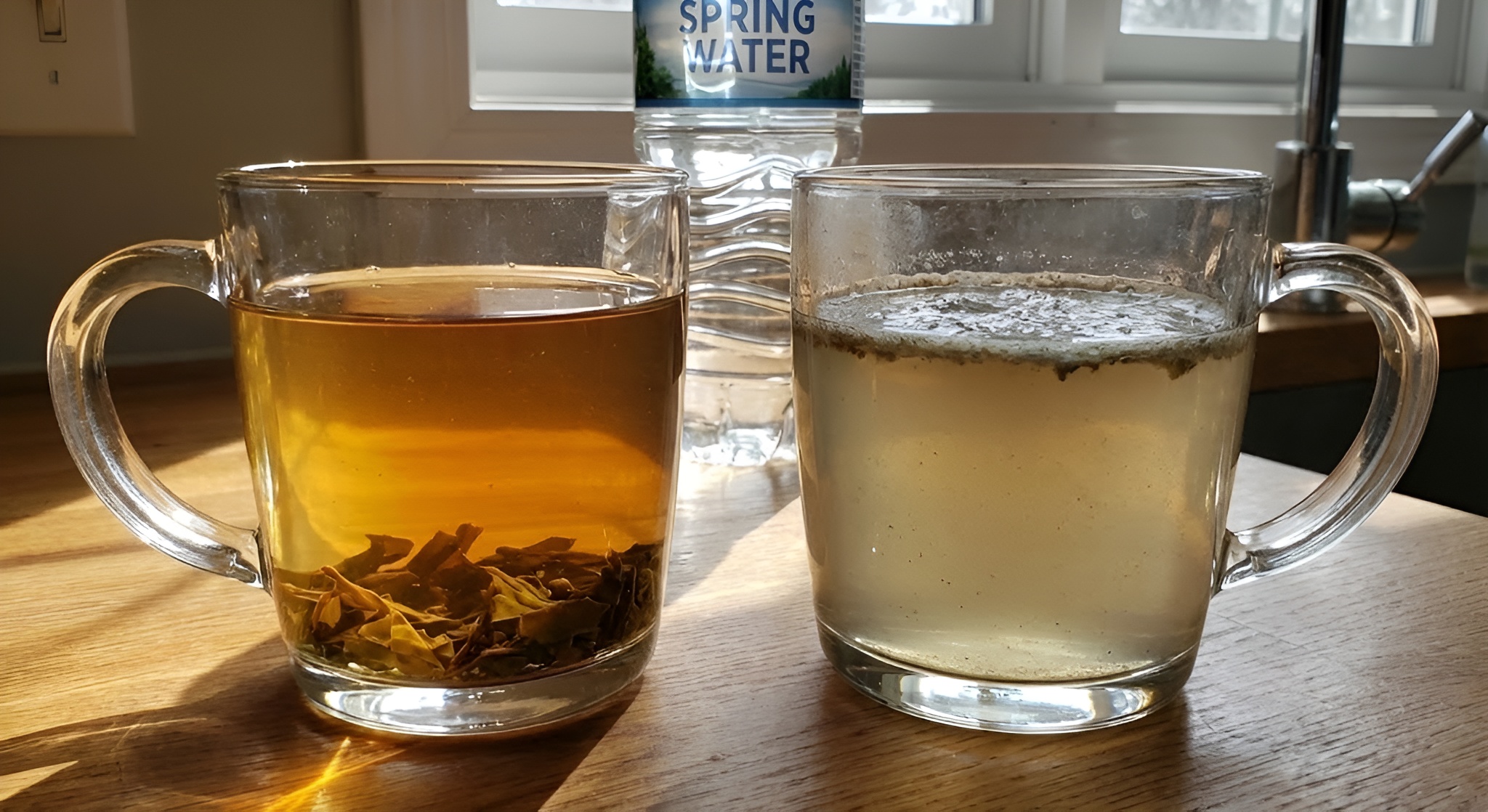
1. The Solvent: Why Minerals Matter
Tea brewing is chemistry. Water acts as a solvent to pull aromatic oils, amino acids, and polyphenols out of the leaf. However, water doesn't do this alone; dissolved minerals facilitate the bond.
Magnesium acts as a carrier for flavor compounds, enhancing sweetness and body. Calcium can buffer acidity but tends to mute delicate floral notes. If your water has too many minerals (Hard), the water is already "full," making it a poor solvent. If it has too few (Soft), it over-extracts, pulling out harsh bitterness.
Expert Tip: The "Kettle Fur" Sign
Look inside your kettle. Is there a layer of white, chalky scale on the heating element? This is Calcium Carbonate. If you have scale in your kettle, you have Hard Water. You are likely losing 30-40% of the flavor nuance in your high-end teas.
2. Hard Water: The Flavor Killer
Hard water is rich in calcium and bicarbonate. While safe to drink, it is disastrous for delicate teas like Dragon Well or Darjeeling-first-second-flush.html" class="internal-link">First Flush Darjeeling.
When calcium bicarbonate reacts with tea polyphenols (specifically tannins), it forms insoluble compounds that float to the surface. This is the dreaded Tea Scum—that oily, iridescent film that cracks like a tectonic plate on your tea. Not only does it look unappealing, but it effectively locks flavor compounds into a solid state where you can't taste them.
Expert Tip: The "Lemon" Hack
If you are stuck with hard water and your tea has a scum layer, add one drop of lemon juice. The acidity (citric acid) instantly dissolves the calcium carbonate bonds, making the tea clear and brightening the flavor immediately. Read more in our guide: What is the White Film on My Tea?
3. Soft Water: The "Flat" Trap
If hard water is bad, soft water must be perfect, right? Not exactly. Very soft water (like Scottish tap water or distilled water) lacks the minerals needed to give the tea "structure."
Brewing with distilled water often results in a cup that feels "thin" or "empty" in the mouth. Furthermore, without calcium to buffer the extraction, the water can pull out sharp, sour tannins too quickly, making the tea taste harsh or astringent. It lacks the rounded, savory mouthfeel (Umami) that makes tea satisfying.
Expert Tip: Adding salt?
Some historical tea cultures (like Tibet) add minerals or salt to tea. If your water is extremely soft, a microscopic pinch of Epsom salts (Magnesium Sulfate) or baking soda can artificially "harden" the water, bringing body back to a flat black tea.
4. The "Golden Ratio" for Tea Water
According to the Tea Association standards, the perfect water for brewing has specific parameters. If you are using bottled water, check the label for these numbers (often listed as Dry Residue or TDS).
- TDS (Total Dissolved Solids): 50 to 150 ppm (parts per million).
- pH Level: 6.5 to 7.5 (Neutral).
- Chlorine: 0 mg/L (Must be filtered out).
Spring water brands like Volvic or Ashbeck are legendary in the tea community because they sit naturally in this sweet spot. Mineral waters like Evian are too hard (300+ ppm). Distilled water is too soft (0 ppm).
Expert Tip: "Third Wave Water"
For the ultimate geek experience, you can buy "remineralization packets" (like Third Wave Water) designed for coffee and tea. You dissolve one stick into a gallon of distilled water to create the chemically perfect brewing solvent with exact magnesium levels.
Summary: Matching Water to Tea Type
If you can't change your tap water supply, change the tea you buy. Some teas are more forgiving than others.
| Tea Type | Best Water | Why? |
|---|---|---|
| Green / White / Oolong | Soft / Filtered (TDS ~50) | Delicate aromatics are crushed by heavy minerals. Hard water turns green tea brown/yellow. |
| Japanese Sencha | Very Soft | Japanese water is naturally soft. Hard water kills the "Umami" sweetness. |
| Strong Assam / Breakfast | Harder (TDS ~150) | Minerals buffer the harsh tannins. Soft water makes strong Assam taste painfully astringent. |
| Pu-erh / Dark Tea | Neutral (TDS ~100) | Needs some mineral structure to support the thick mouthfeel, but not scale. |
Is your kettle the problem?
If your water quality is good but your tea still tastes metallic or plastic, the issue might be your equipment. Check out our guide to safe brewing gear: The Best Teaware & Gear of 2025 →
Comments