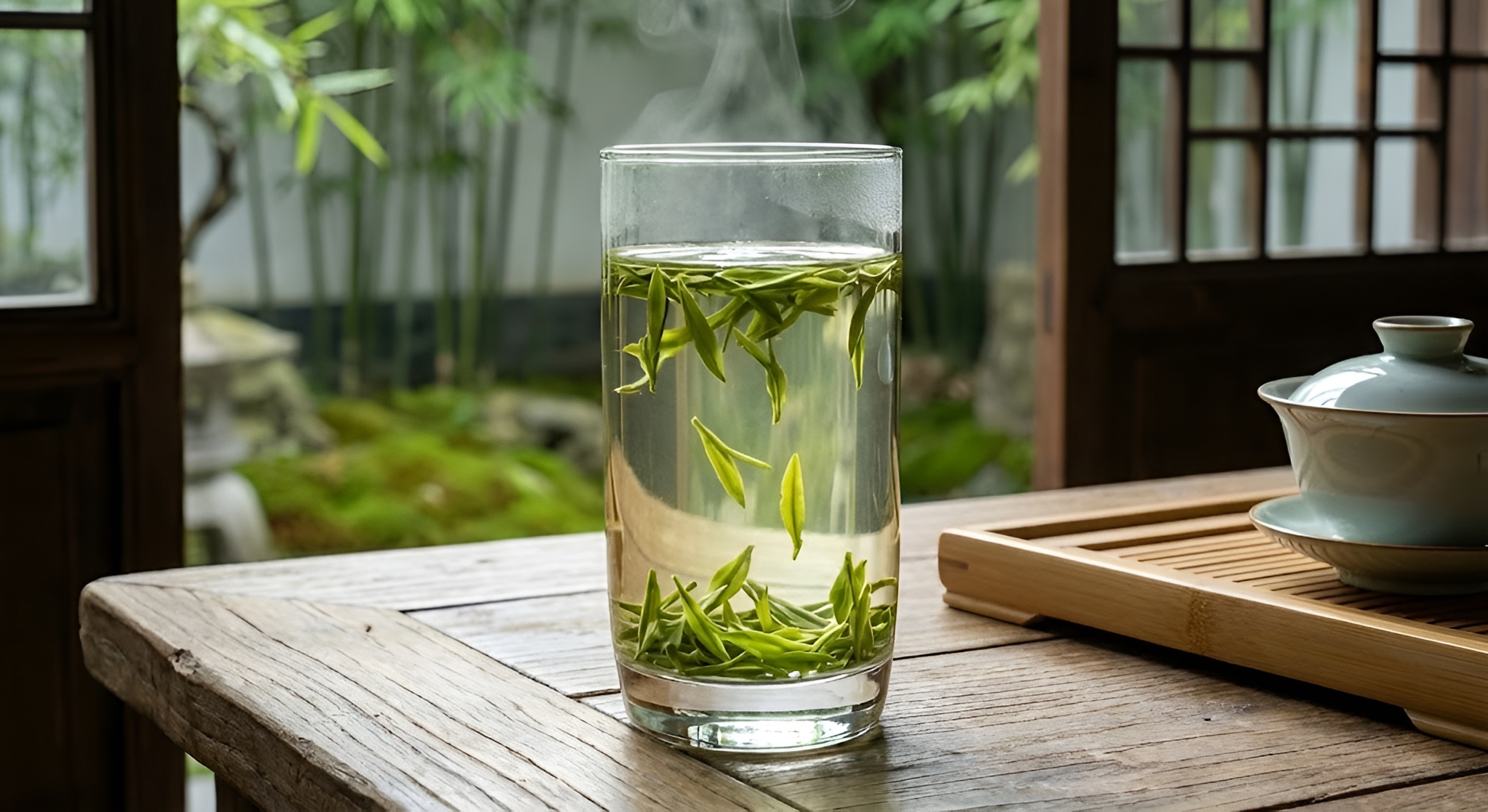
1. The "Color Test": Why Green is Bad
This is the biggest misconception. New buyers look for vibrant green leaves, thinking they are fresher. In the world of traditional Longjing (specifically the Quntizhong heirloom cultivar), the leaves are naturally a pale, yellowish-green.
If the leaves are neon green, it usually means:
- It is the Longjing 43 cultivar (bred for earliness, not flavor).
- It has been heavily fertilized with nitrogen to force growth.
- It is a fake from a different province (Sichuan or Guizhou) processed to look like Longjing.
Expert Tip: "Cao Qing" vs "Huang Lv"
When buying, look for "Huang Lv" (Yellow-Green). This indicates the traditional roasting process was done correctly. "Cao Qing" (Grass Green) usually indicates insufficient firing or the wrong cultivar.
2. Harvest Windows: Pre-Qingming vs. Yuqian
The price of Longjing crashes by 50% in a single day. The date April 5th (Qingming Festival) is the dividing line.
| Harvest Name | Date | Characteristics | Price |
|---|---|---|---|
| Ming Qian (Pre-Qingming) | Before April 5 | Tiny buds, extremely tender, subtle sweetness. | $$$$$ (Luxury) |
| Yu Qian (Before Rain) | April 5 - April 20 | Larger leaves, stronger "nutty" flavor. | $$ (Best Value) |
| Late Harvest | After April 20 | Darker, slightly bitter, good for iced tea. | $ (Cheap) |
Expert Tip: Don't Obsess Over Pre-Qingming
While Pre-Qingming is prestigious, many tea drinkers actually prefer Yu Qian tea. It has a bolder, nuttier flavor that stands up better to everyday brewing. Pre-Qingming is so delicate it can taste like "hot water" if not brewed perfectly.
3. The Pan-Frying Process
Longjing is unique because it is Pan-Fried (Chao Qing) by hand or machine in a large wok. This stops oxidation and flattens the leaves against the side of the wok.
This process creates the signature Chestnut / Toasted Soybean aroma. Steamed Japanese teas (like Sencha) taste vegetal and grassy. Longjing should never taste "fishy" or "spinach-like." If it does, it wasn't fired correctly.
4. West Lake vs. Zhejiang: The Label Game
Just like Champagne, location is everything.
- West Lake (Xihu) Longjing: Grown in the designated 168 sq km zone in Hangzhou (Lion Peak, Dragon Well Village). The soil is sandy and rich in quartz, giving the tea a unique mineral taste.
- Zhejiang Longjing: Grown elsewhere in Zhejiang province. Still real Longjing, but lacks the specific terroir complexity. Often sold as just "Longjing Tea."
Ready to find the real thing?
We've sourced the best authentic West Lake and Zhejiang Longjing teas available online, verifying their harvest dates and origins. See our top picks here: The 5 Best Dragon Well Teas of 2025 →
Comments