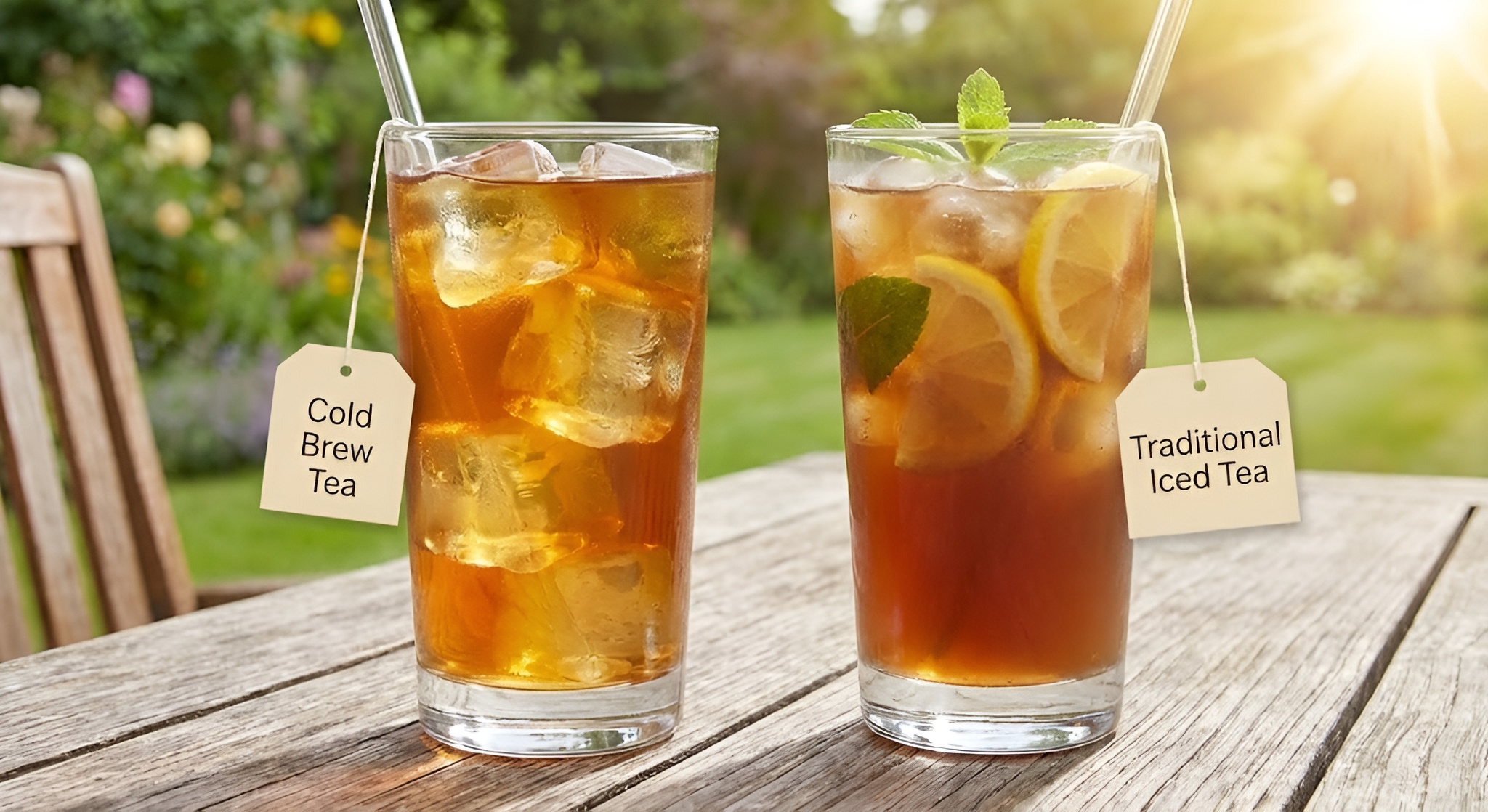
1. The Chemistry of Heat (Iced Tea)
Traditional Iced Tea is just hot tea that has been cooled down. When you pour boiling water over leaves, you extract everything: flavor, caffeine, and tannins.
Tannins are responsible for bitterness and the "dry mouth" sensation. This is why traditional Southern Iced Tea requires so much sugar—you are masking the bitterness extracted by the heat. This method is fast (5 minutes), but it lacks nuance.
Expert Tip: The "Shock" Method
To make the best hot-brewed Iced Tea, brew a concentrate (double strength) with hot water, then pour it immediately over a mountain of ice. This "Flash Chilling" preserves some of the aromatic top notes that usually evaporate during slow cooling.
2. The Chemistry of Time (Cold Brew)
Cold Brew relies on time rather than heat. Tannins and caffeine are highly soluble in hot water, but poorly soluble in cold water. Conversely, amino acids (sweetness/umami) and aromatic oils dissolve easily in cold water over time.
The result is a tea that is chemically different. A Cold Brew Sencha will taste sweet, grassy, and smooth, with zero bitterness, even if you steep it for 12 hours. It is impossible to "burn" or over-steep cold brew.
Expert Tip: Why Cold Brew is Clear
Ever notice your hot tea turns muddy when you put it in the fridge? This is called "Cream Down"—caffeine binding to tannins. Because Cold Brew doesn't extract enough tannins to bond, the liquid stays jewel-bright and crystal clear for days.
3. Comparison Table: Method vs. Result
| Feature | Iced Tea (Hot Brew) | Cold Brew |
|---|---|---|
| Time | Fast (5 mins + Cooling) | Slow (6 - 12 hours) |
| Taste | Strong, Tannic, Bitter | Sweet, Smooth, Light |
| Best For | Black Tea (with Lemon/Sugar) | Green, White, Oolong |
| Caffeine | High | Moderate (Slow release) |
Expert Tip: The Sugar Problem
Sugar doesn't dissolve in cold water. If you make Cold Brew, you cannot add granular sugar later. You must use Simple Syrup (liquid sugar) or, better yet, rely on the natural sweetness of the cold extraction method which often makes sugar unnecessary.
4. Which Tea Should I Use?
- Green Tea / White Tea: ALWAYS Cold Brew. Hot brewing and chilling often makes them bitter and metallic. Cold brewing brings out the melon/grass notes.
- Black Tea: Can be done both ways. Cold Brew Black Tea is surprisingly floral and light (like Darjeeling). Iced Tea (Hot) provides the classic "punch" needed for lemon tea.
- Herbal / Fruit: Hot Brew is usually better to extract the tartness from hibiscus or dried berries, then flash chill.
Expert Tip: Safety Warning
Never make "Sun Tea" (leaving a jar in the sun). The temperature (30-40°C) is the perfect breeding ground for bacteria like Alcaligenes viscolactis. Always brew in the fridge (4°C) or with boiling water (100°C) to ensure safety.
5. Caffeine Content
Does Cold Brew have more caffeine? Generally, no. Heat is a very efficient solvent for caffeine. A 5-minute hot brew extracts almost 100% of the available caffeine.
Cold water extracts caffeine very slowly. A 12-hour cold brew will reach roughly 70-80% of the caffeine level of a hot brew. However, because Cold Brew is often drunk in larger quantities (a pint glass vs. a mug), the total intake might be higher.
Ready to get brewing?
You don't need fancy equipment, but a good filter bottle makes life easier. We tested the best cold brew bottles and flash-chill pitchers on the market. See our winners here: The 5 Best Cold Brew & Iced Tea Makers of 2025 →
Comments