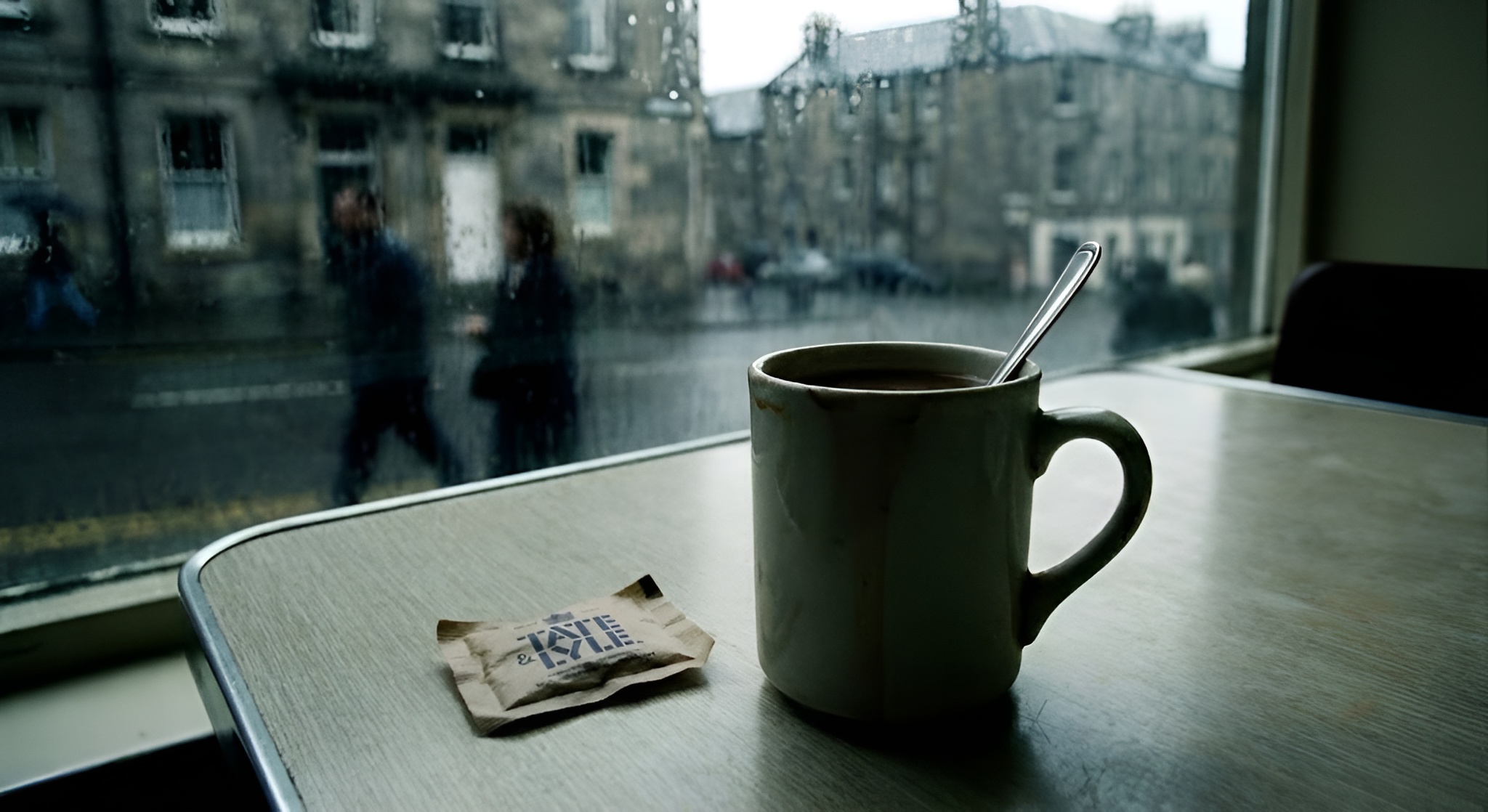
1. Scottish Tea Culture: Why It Hits Different
To understand the tea in *Trainspotting*, you have to understand the water. Edinburgh has some of the softest water in the UK. This is chemically distinct from the hard, chalky water of London, which often requires tea scum solutions.
The Chemistry of Soft Water: Soft water (low mineral content) is an aggressive solvent. It extracts flavor compounds from tea leaves rapidly and completely. If you brew a standard "English Breakfast" tea in Edinburgh water, it can easily become bitter and overpowering due to the rapid release of tannins. Because of this, Scottish tea merchants (like Brodies of Edinburgh) developed specific **"Scottish Blend"** teas.
These blends are designed to be brewed in soft water without over-extracting bitterness. They are typically robust, malty, and designed to take a *lot* of milk. In the film, when Renton's mother makes tea, it isn't a delicate Darjeeling; it is a dark, tannic, milky brew designed to shock the system back to life. It is utility tea, closer to the Best Everyday Teas found in working-class pantries than the fine bone china of the aristocracy.
Expert Tip: The "Pan Drops" Tradition
In Scottish working-class culture, strong tea was often accompanied by "Pan Drops" (strong mints) or tablet (super-sweet fudge). The intense sugar hit was a cheap source of energy in a cold climate. This tradition of "high sugar, high caffeine" permeates the film's aesthetic of desperation and energy spikes, mirroring the intense highs and lows of the characters' lives.
2. The "Sick Boy" Theory: Sugar & Shock
Throughout the film, characters are seen consuming vast amounts of sugar, often in tea. When Renton is locked in his childhood bedroom to go "Cold Turkey," his mother brings him soup, tomato juice, and endless cups of sweet tea.
The Physiology of Withdrawal: While tea cannot cure addiction, the body in withdrawal is in a state of metabolic chaos. Opiates suppress the nervous system; removing them causes a rebound effect—sweating, shaking, anxiety, and a massive drop in dopamine. The brain craves a replacement dopamine hit.
Sugar as a Crutch: Highly sweetened tea provides a rapid spike in blood glucose. This offers a fleeting moment of relief and energy to a body that feels like it is dying. The caffeine acts as a mild vasoconstrictor, which can help (slightly) with the pounding headaches. In *Trainspotting*, the cup of tea represents the family's desperate, futile attempt to "fix" Renton with domestic comfort. It is love expressed through glucose. For more on how tea aids recovery, see our guide on Tea for Hangovers.
3. The "Spoon" Duality
There is a dark visual poetry in the film regarding spoons. The spoon is the central tool of the heroin addict (cooking the drug). But the spoon is also the central tool of the tea drinker (stirring the sugar). This duality emphasizes how close the mundane world is to the underworld.
Boyle's direction often focuses on household objects—spoons, belts, lighters—that have been perverted from their domestic use. When Renton finally "Chooses Life" at the end, he is essentially choosing the *tea spoon* over the *heroin spoon*. He is choosing the boredom of stirring a cuppa in a London flat over the lethal excitement of the Edinburgh drug scene. It is a transition from the sublime/horrific to the mundane. Learn more about proper tea preparation in our Brewing Guide.
4. "Drying Out": Tea as the Anchor
In the UK, "Tea and Toast" is the universal remedy for shock, grief, and trauma. It is the first thing offered by paramedics, police officers, and mothers. It is the "Anchor to Reality."
In the famous "Breakfast Scene" where the gang sits around a table hungover and coming down, the presence of tea and food signals a momentary return to the land of the living. Spud, arguably the most empathetic character, is often associated with these softer moments. While Begbie drinks alcohol to fuel his rage, and Renton uses drugs to escape, Spud often just wants a quiet life. The cup of tea is the symbol of the "Quiet Life" that they all simultaneously crave and despise. For those seeking comfort, consider our list of Calming Teas for Anxiety.
Expert Tip: The "Builder's Brew"
The tea consumed in *Trainspotting* is almost certainly "Builder's Tea"—cheap tea bags, brewed strong, with milk and two sugars. This isn't about tasting "notes of orchid"; it's about warmth and calories. To replicate this, use a strong Scottish Blend tea bag, steep for 4 minutes, and don't skimp on the milk.
5. The History: Edinburgh, Tea Capital of the Empire?
It is an ironic twist of history that Edinburgh, the setting of this gritty tale, was once a hub of the global tea trade. In the 19th century, the port of Leith (where much of the film's poverty is centered) was a major entry point for goods from the Empire.
The Melrose Connection: Andrew Melrose, an Edinburgh grocer, was the first merchant to bring tea into Scotland outside of London in 1835 (after the East India Company monopoly ended). He famously hired clipper ships to race tea from China to Leith. The city has a deep, aristocratic history of tea rooms and refinement (The Balmoral, The Dome) which stands in stark, violent contrast to the squalor of Renton's existence. The film essentially shows the "rot" beneath the polite Victorian facade of Edinburgh.
6. "Choose Life": The Herbal Alternative
If Renton were truly "Choosing Life" and health in the modern day, what should he have been drinking to help his liver recover? Modern herbalism offers several options for detoxification and recovery.
- Milk Thistle: A traditional Scottish herb (related to the national emblem, the Thistle). It contains silymarin, which is clinically proven to support liver regeneration and protect against toxins.
- Dandelion Root: A powerful diuretic and liver tonic. It helps flush the kidneys and stimulates bile production. Ideally roasted, as a coffee substitute. Read our guide to Dandelion Root Detox Tea here.
- Peppermint: To soothe the intense stomach cramps associated with withdrawal. Explore Peppermint Tea Benefits.
7. Conclusion: The Mundane Salvation
Trainspotting ends with Renton walking away into a future of "dental insurance, soft ware, leisure wear, and luggage." He is walking towards the boring, safe life he mocked in the opening monologue.
Tea is the liquid embodiment of that boring life. It is reliable. It is safe. It wakes you up for work. It warms you up in front of the TV. For a recovering addict, the ability to enjoy a simple cup of tea without needing to enhance it is the ultimate victory. It signifies that the chaos is over.
So, choose life. Choose a job. Choose a career. And choose a really good cup of tea.
Choose Your Brew
Want to taste the difference of a true Scottish Blend (designed for soft water)? We reviewed the best everyday teas that pack a punch.
Review: Best Strong Tea Blends
Comments