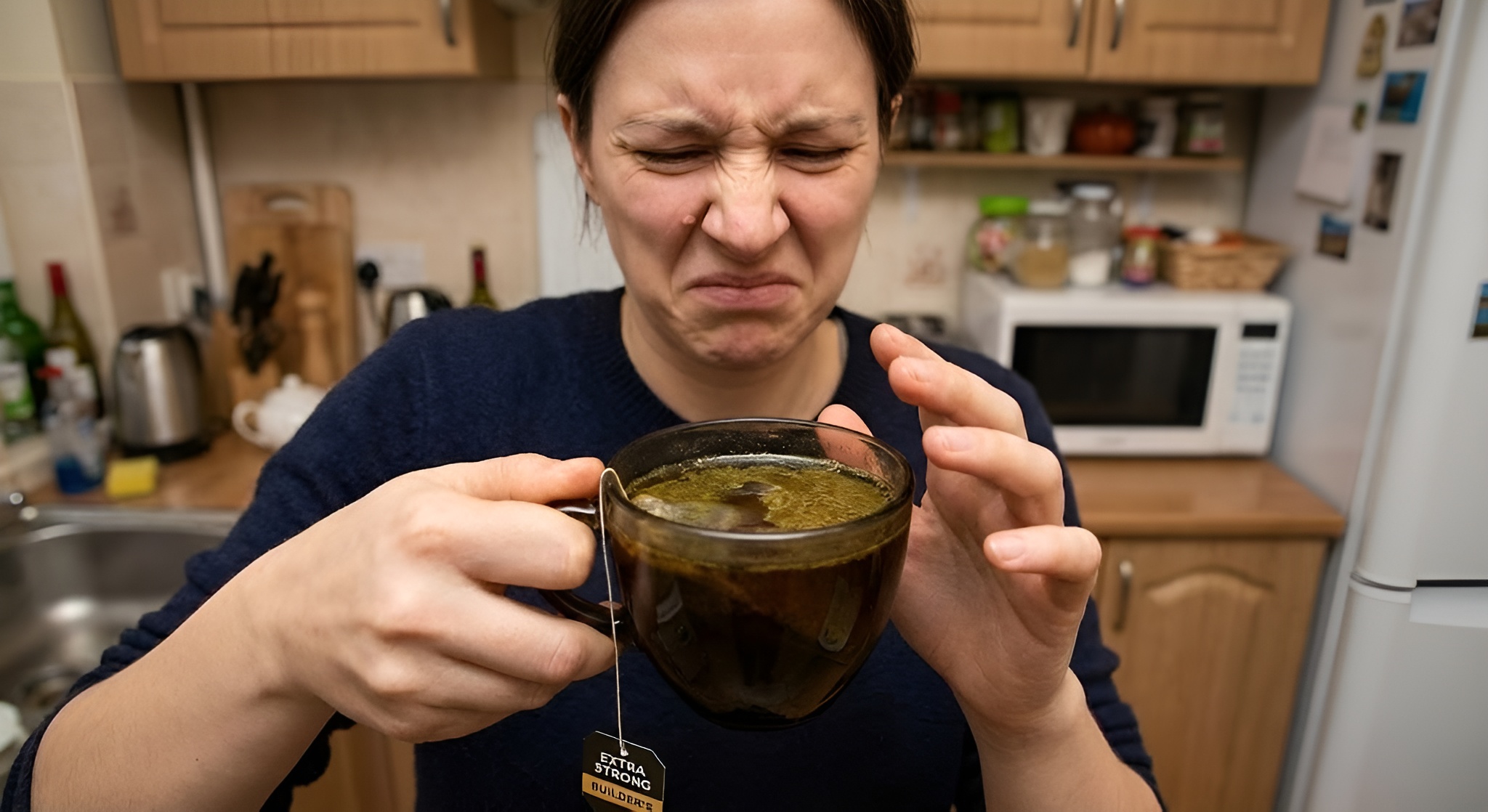
1. What Are Tannins? (The Plant's Defense System)
To a botanist, tannins aren't a flavor profile; they are a weapon. The tea plant (Camellia sinensis) produces thousands of chemical compounds called polyphenols. Tannins are a specific subgroup of these biomolecules.
Evolutionary Purpose: In nature, tannins act as a pesticide. They taste intensely bitter and astringent to discourage insects and herbivores from eating the leaves. When a bug bites a tea leaf, the tannins bind to the proteins in its saliva and gut, causing indigestion and a repulsive taste. Essentially, the plant is chemical warfare.
When you brew tea, you are extracting these defense chemicals. In small amounts, they provide structure, complexity, and that satisfying "grip" on the tongue. In large amounts, they trigger our biological rejection response (bitterness = poison warning).
The Chemistry of Classification
The term "Tannin" is actually an umbrella term for a large group of compounds. In tea, the primary players are:
- Catechins (Flavan-3-ols): The most famous is EGCG (Epigallocatechin Gallate). These are abundant in Green Tea and are responsible for its sharp, vegetal bite.
- Theaflavins & Thearubigins: In Black Tea, the oxidation process converts catechins into these larger, complex molecules. They provide the reddish-brown color and the "brisk" mouthfeel of a breakfast brew.
Expert Tip: The "Leather" Connection
The word "Tannin" comes from the ancient practice of using oak bark to "tan" animal hides into leather. The tannins bind to the collagen proteins in the skin, preventing rot and making it tough. When you drink strong tea, the tannins essentially try to "tan" the proteins in your tongue and cheeks, causing that dry, leathery sensation.
2. Astringency vs. Bitterness: Know the Difference
In Tea Tasting, these two terms are often used interchangeably, but they are physiologically distinct sensations.
Bitterness (Taste)
Bitterness is a Gustatory sensation detected by taste receptors (T2R) on the back of the tongue. It is a warning signal. In tea, bitterness comes largely from caffeine and certain Catechins. It is sharp, direct, and vanishes relatively quickly once you swallow.
Astringency (Touch)
Astringency is a Tactile sensation (mouthfeel). It is not a taste; it is a physical reaction. Tannins bind to the salivary proteins (proline-rich proteins) in your mouth, causing them to precipitate (clump together). This removes the lubrication from your saliva, leaving your tongue feeling rough, dry, and puckered—like eating an unripe banana or drinking a dry red wine.
The Golden Ratio: A great cup of tea needs a balance. Zero astringency feels watery and flat. Too much feels like sand. The goal is a "pleasant briskness" that cleanses the palate without drying it out.
3. The Physics of Extraction: The Race Against Time
Why does steeping time matter so much? It comes down to molecular weight and solubility. Not all compounds extract at the same speed.
The Early Birds: Amino Acids & Sugars
The "good stuff"—l-theanine (savory/umami), simple sugars, and volatile aromatics (floral notes)—are highly soluble small molecules. They rush out of the leaf almost immediately upon contact with water. Within the first 60-90 seconds, you have extracted the majority of the sweetness and aroma.
The Late Bloomers: Tannins & Caffeine
Tannins are larger, heavier, complex polyphenols. They dissolve much slower. They require sustained heat and time to migrate from the inner cellular structure of the leaf into the water.
The Brewing Curve:
- 0-1 Minute: High Amino Acids, Low Tannins. Sweet, light, fragrant.
- 2-3 Minutes: Balanced extraction. The "Body" arrives as tannins begin to dissolve, supporting the sweetness.
- 4+ Minutes: The Tannin Wave. The amino acids are exhausted, but tannins continue to pour out. The ratio shifts drastically toward bitterness. This is the "Over-Steeped" zone.
Expert Tip: The "Leaf Chop" Factor
The surface area matters. Whole Leaf tea extracts slowly (low surface area). Tea Bags (Dust/Fannings) have massive surface area, meaning tannins dump out almost instantly. This is why a tea bag goes bitter in 2 minutes, while a Whole Leaf Oolong can steep for 5 minutes without bitterness.
4. The Role of Temperature: Heat is Energy
Temperature is a catalyst. Heat increases the kinetic energy of water molecules, making them more aggressive solvents. However, different compounds respond to heat differently.
- Amino Acids (Sweet/Umami): Extract well at lower temperatures (60°C - 70°C).
- Catechins (Bitter): Require high energy to dissolve efficiently. At 100°C, catechins extract rapidly. At 70°C, they stay trapped in the leaf.
This is why you never boil Green Tea. By using water at 80°C, you are selectively extracting the sweet L-Theanine while leaving the bitter Catechins behind. Black Tea, which has fewer simple catechins (they have been oxidized into Theaflavins), requires 100°C to extract its bold body. If you brew Black Tea at 80°C, it tastes weak because the heavy polymers never dissolve.
5. Fixing the Mistake: Can You Save Bitter Tea?
You brewed it too long. It tastes like shoe leather. Is it ruined? Not necessarily. While you cannot chemically remove the tannins once they are in the cup, you can mask them using chemistry.
1. The Dilution Method
The simplest fix. Add hot water. By increasing the volume of the solvent, you reduce the concentration of tannins per sip. It won't bring back the lost delicate top notes, but it will make the drink palatable.
2. The Fat Binding Method (Milk)
This is why the British put milk in strong tea. The proteins in milk (Casein) act as a decoy. The tannins bind to the milk proteins instead of your tongue proteins. This neutralizes the astringency instantly, creating a smooth mouthfeel. This works best for Black Teas. (Do not put milk in Green Tea; the flavor profiles clash horribly).
3. The Cold Crash
Pouring over ice can numb the taste buds, reducing the perception of bitterness (though the astringency/dryness will remain). This is why sweet iced tea is often made with strong, tannic tea bases—sugar and cold mask the flaws.
Expert Tip: The "Cold Brew" Hack
If you have high-tannin tea that is always bitter hot, try Cold Brewing it. Cold water selectively extracts flavor and sweetness but is terrible at dissolving tannins and caffeine. You can steep green tea in the fridge for 8 hours and get zero bitterness.
6. The "Scum" Phenomenon: Tannins & Water Hardness
Have you ever seen an iridescent, oily film floating on your tea? That is Tea Scum. It is not oil; it is a chemical precipitate formed when Tea Tannins react with Calcium Carbonate (limescale) in hard water.
In soft water regions, this doesn't happen. But in hard water areas (like London), the Calcium ions bond with the polyphenols to form insoluble solids. This not only looks ugly but also robs the tea of flavor, as the tasty tannins are locked up in the scum rather than dissolved in the liquid. This is why filtering your water is the single biggest upgrade you can make. Read our full guide on Tea Scum here.
7. Conclusion: Respect the Chemistry
Tea brewing is not magic; it is extraction chemistry. Tannins are not the enemy—they provide the structure, the health benefits, and the "soul" of the tea. The goal is not to eliminate them, but to control them.
By understanding the interplay of time, temperature, and leaf surface area, you stop guessing and start engineering the perfect cup. Remember: Sweetness is fast, Bitterness is slow. Control the clock, and you control the cup.
Master Your Water Temp
You can't control tannin extraction if you can't control temperature. We reviewed the best variable-temperature kettles to save your Green Tea from burning.
Review: Best Variable Temp Kettles


Comments