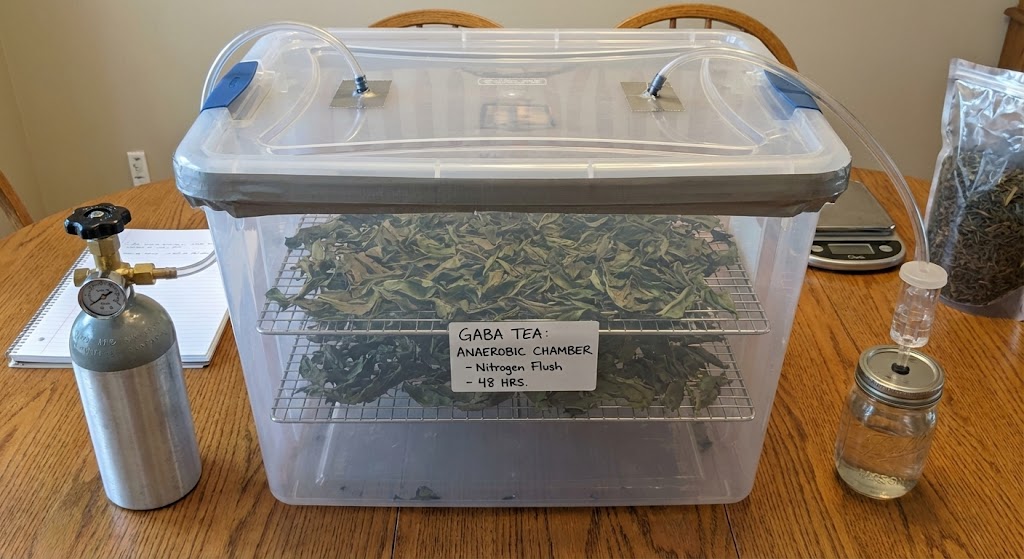
GABA Chemistry: Stress Response Becomes Wellness Tea
GABA tea (Gabaron tea, γ-aminobutyric acid tea) was invented in Japan in 1987 by Dr. Tsushida Tojiro at the National Research Institute of Vegetables, Ornamental Plants and Tea. The discovery: fresh tea leaves deprived of oxygen produce unusually high levels of gamma-aminobutyric acid (GABA), an inhibitory neurotransmitter linked to relaxation and stress reduction.
Normal tea GABA content: 5-20mg per 100g dried tea
GABA tea content: 150-400mg per 100g (10-80x increase)
The biochemical pathway:
- Normal conditions (with oxygen): Tea leaves metabolize L-glutamate via standard pathways. Glutamate is abundant amino acid (25-35mg/100g fresh leaves), used for protein synthesis and energy metabolism.
- Anaerobic conditions (no oxygen): Leaves activate stress-response enzyme glutamate decarboxylase (GAD). GAD cleaves CO₂ from glutamate, producing GABA as protective compound.
- GABA accumulation: Over 6-8 hours anaerobic treatment, glutamate converts to GABA at rate of 15-25mg/hour, peaking at 150-400mg depending on conditions.
Chemical reaction: L-Glutamate + GAD enzyme → GABA + CO₂
Why GABA forms: GABA is osmoprotectant—helps cells maintain function under stress (oxygen deprivation). By converting glutamate (excitatory) to GABA (inhibitory), leaves reduce energy demand and survive longer without oxygen. This survival mechanism = functional wellness tea.
Related plant stress responses: Tea withering also triggers stress enzymes, producing aromatic compounds. Puerh fermentation uses microbial metabolism instead of plant enzymes.
Expert Tip: GABA Health Claims
GABA tea is marketed for stress relief, sleep improvement, and blood pressure reduction. Evidence: GABA doesn't cross blood-brain barrier well when consumed orally (molecular weight 103 g/mol, hydrophilic). However, studies suggest peripheral GABA effects—GABA binds to enteric nervous system receptors in gut, triggering vagus nerve signaling to brain. Some users report calming effects; others notice nothing. Typical dose: 2-3g GABA tea (300-900mg GABA) brewed strong. Not FDA-approved medical treatment; consult doctor for anxiety/sleep disorders.
Professional vs. DIY GABA Production
Commercial GABA tea uses specialized nitrogen-flush chambers with precise oxygen control. Home production uses vacuum sealers as oxygen-exclusion method.
| Method | Oxygen Level | GABA Yield | Equipment Cost | Reliability |
|---|---|---|---|---|
| Professional N₂ Chamber | <0.5% O₂ (pure nitrogen flush) | 200-400mg GABA/100g | £5,000-15,000 (chamber + controls) | Very High (consistent batches) |
| Vacuum Sealer (Home) | 2-5% O₂ residual (95-98% removal) | 80-150mg GABA/100g | £50-150 (consumer vacuum sealer) | Moderate (variable, sealer-dependent) |
| Jar + Nitrogen Purge | 1-3% O₂ (nitrogen displacement) | 120-200mg GABA/100g | £30-60 (nitrogen tank rental + regulator) | Good (better than vacuum, cheaper than chamber) |
Why vacuum sealing works (imperfectly): Consumer vacuum sealers remove 95-98% of air, leaving 2-5% residual oxygen. This is enough to slow GABA production (oxygen inhibits GAD enzyme), but over 8-10 hours, leaves still produce 80-150mg GABA—functional amount for wellness tea. Professional nitrogen flush removes 99.5%+ oxygen, doubling GABA yield.
DIY improvement: Purge vacuum bag with nitrogen before sealing. Fill bag with nitrogen (food-grade N₂ tank, £30-50 rental), place leaves inside, quickly vacuum-seal. This reduces residual O₂ from 2-5% to <1%, improving GABA yield to 120-180mg/100g.
Fresh Leaves Requirement: Why Dried Tea Doesn't Work
GABA production requires metabolically active leaves. Dried tea (3-5% moisture) has inactive enzymes; fresh tea (40-50% moisture) has active GAD enzyme.
Fresh tea sourcing options:
- Grow your own: Camellia sinensis grows in USDA zones 7-9 (UK, Pacific Northwest, Southern US). Pluck 2-3 leaves + bud from established bush (3+ years old). Need 200-300g fresh leaves for 50-75g finished GABA tea.
- Buy from tea farmer: Contact small tea farms during harvest season (May-September in Northern Hemisphere). Request "fresh plucked, not withered" leaves. Ship overnight to maintain freshness. Cost: £10-20/kg fresh leaves.
- Farmer's market: Some specialty farms sell fresh tea leaves at farmers markets during growing season. Rare but possible in tea-growing regions.
- Import fresh: Order fresh leaves from Japan/Taiwan tea farms with express shipping. Expensive (£50-80/kg including shipping) but guaranteed fresh.
Moisture content check: Fresh leaves should feel pliable, slightly damp. Bend a leaf—should flex without snapping. If leaf snaps cleanly, moisture too low (<20%), GABA production will be minimal.
Alternative (partial rehydration): Some experimenters partially rehydrate dried tea by misting with water to 25-30% moisture. Results: 30-60mg GABA/100g (better than regular tea, worse than fresh leaves). Rehydration doesn't fully restore enzyme activity.
Temperature Control: The 35-40°C Sweet Spot
GAD enzyme activity is temperature-dependent. Too cold = slow reaction, too hot = enzyme denaturation.
GAD enzyme activity by temperature:
- 20-25°C (room temp): 30-40% GAD activity. GABA production slow, requires 12-16 hours for 80-100mg yield.
- 30-35°C: 60-70% GAD activity. Good compromise, 8-10 hours for 100-120mg yield.
- 35-40°C (optimal): 90-100% GAD activity. Peak enzyme function, 6-8 hours for 120-150mg yield.
- 40-45°C: 70-80% activity (enzyme begins denaturing). Still functional but declining.
- 45-50°C: 30-50% activity. Significant enzyme denaturation, GABA yield drops.
- 50°C+: <20% activity. Enzyme mostly denatured, minimal GABA production.
Home temperature control methods:
Method 1: Water Bath (Most Reliable)
- Fill large pot or container with water, heat to 38-40°C using immersion heater or stovetop (check with thermometer)
- Place vacuum-sealed tea bag in water, ensure fully submerged
- Maintain temperature 35-40°C for 6-8 hours (use aquarium heater for automatic control, £15-30)
- Check temperature every 2 hours, adjust heat as needed
Method 2: Heating Pad
- Use electric heating pad set to "medium" (typically 37-40°C)
- Place vacuum bag on heating pad, cover with towel for insulation
- Monitor temperature with probe thermometer inserted between pad and bag
- Less precise than water bath but simpler setup
Method 3: Dehydrator (Modified)
- Food dehydrator with temperature control set to 38-40°C
- Place vacuum bag on dehydrator tray (not plugged in to avoid air circulation—just use as warm chamber)
- Or: use sous vide cooker in water bath (precise 38°C control)
Expert Tip: Overnight Timing
Most convenient schedule: Start GABA treatment at 10-11 PM (vacuum-seal leaves, place in 38°C water bath). Run overnight for 7-8 hours. Wake at 6-7 AM, remove bag, proceed to drying. This avoids needing to monitor during day. Use aquarium heater with built-in thermostat (£20-35) for set-and-forget temperature maintenance. Insulate water bath with towels to reduce heat loss, preventing heater from overworking.
Step-by-Step DIY GABA Tea Production
Complete process from fresh leaves to finished GABA tea:
Equipment needed:
- 200-300g fresh tea leaves (40-50% moisture)
- Vacuum sealer + vacuum bags (FoodSaver or similar, £50-150)
- Large container + aquarium heater OR heating pad (for 35-40°C maintenance)
- Thermometer (probe type, £5-15)
- Food dehydrator OR oven for final drying (50-60°C capable)
Step 1: Prepare Fresh Leaves
- Pluck or acquire 200-300g fresh tea leaves within 24 hours of harvest
- Rinse gently under cool water to remove dust/insects
- Pat dry with towel (remove surface water but keep leaves moist internally)
- Spread on tray, allow to wilt at room temp for 2-3 hours (reduces moisture from 50% to 40-45%, prevents excess condensation in vacuum bag)
Step 2: Vacuum Seal
- Place 150-200g wilted leaves in vacuum bag (single layer, not packed tightly)
- Optional: Purge bag with nitrogen first (blow N₂ into bag, then immediately vacuum-seal)
- Vacuum-seal on highest suction setting (remove maximum air)
- Leaves should be compressed but not crushed—gentle vacuum pressure
Step 3: Anaerobic Incubation
- Heat water bath to 38-40°C (or set up heating pad at medium)
- Submerge vacuum bag in water or place on heating pad
- Monitor temperature—should stay 35-40°C for entire 6-8 hour period
- Incubate for 6-8 hours (longer = more GABA, up to ~10 hours; beyond 12 hours, diminishing returns)
Step 4: Remove and Assess
- After 6-8 hours, remove vacuum bag from heat
- Open bag carefully (some CO₂ pressure may have built up from decarboxylation)
- Leaves should smell slightly fruity-sweet (GABA has mild sweet aroma), different from fresh grassy smell
- Color may be slightly darker/browner than fresh (mild oxidation despite anaerobic conditions)
Step 5: Fix and Dry
- Heat-fix leaves to deactivate enzymes: spread on baking sheet, place in oven at 100-110°C for 10-15 minutes (OR steam for 2-3 minutes in bamboo steamer)
- This stops GABA production and prevents further oxidation
- Reduce to drying temperature: 50-60°C in food dehydrator or oven (door slightly open) for 2-4 hours until leaves are crisp and dry (3-5% moisture)
- Leaves will curl and darken during drying—normal for GABA tea
Step 6: Store and Age
- Let dried GABA tea rest in sealed container for 24-48 hours (flavors mellow)
- Store in airtight tin away from light/heat
- Brew within 6-12 months for peak GABA content (GABA stable but slowly degrades)
Flavor Profile: Sweet, Fruity, Umami
GABA tea tastes distinctly different from regular tea due to altered amino acid profile.
Tasting notes:
- Sweetness: GABA itself is slightly sweet (unlike bitter catechins). Tea tastes naturally sweet without sugar.
- Fruitiness: Anaerobic fermentation produces esters (fruity aromatics). Notes of plum, berry, dried fruit common.
- Umami: Residual glutamate (not all converts to GABA) contributes savory umami depth.
- Reduced astringency: GABA tea has 20-30% lower catechins than regular tea (some oxidize during anaerobic period). Less bitter, smoother mouthfeel.
- Earthy-oxidized: Color darker than fresh tea (partial oxidation), flavor slightly oxidized-earthy like oolong.
Similar flavor profiles: Oriental Beauty oolong (oxidized + fruity), honey-scented oolongs (sweet + fruity), aged white tea (oxidized + sweet).
GABA Content Testing (Optional)
Professional labs test GABA content via HPLC (high-performance liquid chromatography). Home testing not practical (equipment costs £20,000+), but you can estimate success:
Indirect success indicators:
- Fruity-sweet aroma: Strong indicator GABA formed (GABA + ester byproducts smell sweet-fruity)
- Reduced bitterness: Less catechin content suggests successful anaerobic metabolism
- Calming effect: If you feel relaxed after drinking 2-3 cups, GABA likely present (though placebo effect possible)
Commercial testing: Some food testing labs offer amino acid analysis for £80-150 per sample. Submit 20-30g dried GABA tea, receive GABA content report in mg/100g. Useful for verifying method effectiveness.
Troubleshooting Failed Batches
Problem: Tea tastes normal, no fruity-sweet character
- Cause: Insufficient anaerobic conditions (too much residual oxygen) OR leaves too dry (enzymes inactive)
- Fix: Use higher-quality vacuum sealer (cheaper models don't remove enough air). Ensure leaves are 40-45% moisture before sealing. Try nitrogen purge method.
Problem: Tea turns black and tastes rotten/sour
- Cause: Bacterial fermentation (oxygen leak allowed bacteria growth) OR temperature too high (>45°C cooked leaves)
- Fix: Check vacuum bag for leaks (submerge sealed bag in water, look for bubbles). Reduce temperature to 35-38°C max. Ensure leaves are clean (rinse before sealing).
Problem: Weak GABA effect, minimal difference from regular tea
- Cause: Incubation too short (<6 hours) OR temperature too low (<30°C) OR leaves were partially dried
- Fix: Extend incubation to 8-10 hours. Verify water bath stays 35-40°C entire time. Use freshest possible leaves (within 12 hours of plucking ideal).
Commercial GABA Tea vs. DIY: Cost Analysis
Commercial GABA Tea (100g):
- Japanese Gabaron: £40-60/100g (200-300mg GABA, premium quality)
- Taiwanese GABA oolong: £35-50/100g (150-250mg GABA, high-mountain oolong base)
- Chinese GABA tea: £25-40/100g (150-200mg GABA, variable quality)
DIY GABA Tea (100g equivalent from 250g fresh leaves):
- Fresh tea leaves: £5-10 (if purchased, free if home-grown)
- Electricity (heating 8 hours): £0.50-1
- Vacuum bag: £0.50 (reusable sealer amortized over 100+ batches)
- Total: £6-12 per 100g (80-150mg GABA)
Equipment investment: £50-150 one-time (vacuum sealer + aquarium heater). After 5-10 batches, DIY becomes cost-effective vs. commercial.
Verdict: DIY produces functional GABA tea (80-150mg/100g) at 1/4 the cost of commercial. Won't match premium Japanese Gabaron intensity (200-300mg), but adequate for wellness tea consumption. Best for: home tea growers with fresh leaf access, wellness enthusiasts wanting affordable GABA tea, experimenters exploring tea processing.
Scaling Up: Batch Production
For larger quantities (500g-1kg fresh leaves):
- Use chamber vacuum sealer (£300-800) instead of consumer FoodSaver (better air removal for large bags)
- Consider nitrogen purge system: food-grade N₂ tank (£30-50 rental) + regulator (£40-80 purchase). Flush bags before sealing.
- Larger water bath: use insulated cooler + sous vide circulator (precise temp control, £80-150). Can process 2-3kg fresh leaves simultaneously.
- Drying: commercial food dehydrator (£150-300) with multiple trays for faster batch drying
Professional producers use nitrogen flush chambers (£5,000-15,000) with automated temperature and gas controls, producing consistent 200-400mg GABA batches. Not practical for home use unless commercial production intended.
Conclusion: Accessible Amino Acid Engineering
GABA tea production demonstrates home-accessible biochemical modification. By creating anaerobic conditions (vacuum sealing) at optimal temperature (35-40°C) for 6-8 hours, fresh tea leaves convert glutamate to GABA via natural stress-response enzymes. Result: 80-150mg GABA per 100g tea (vs. 5-20mg in regular tea) at £6-12 DIY cost vs. £40-60 commercial.
Key success factors: Fresh leaves with 40-50% moisture (dried tea doesn't work), maximum oxygen exclusion (vacuum + optional nitrogen purge), precise temperature control (35-40°C sweet spot for GAD enzyme), adequate incubation time (6-8 hours minimum), proper heat-fixing after anaerobic period (stops GABA degradation).
DIY GABA tea offers wellness benefits (relaxation, stress reduction via peripheral GABA effects) plus unique flavor profile (fruity-sweet, reduced astringency). Requires fresh leaf sourcing (grow your own or buy from farmers), but processing is straightforward with consumer vacuum sealer + heating method.
Related tea processing techniques: oxidation chemistry (controlled enzyme reactions), withering stress responses (aroma compound formation), puerh fermentation (microbial vs. enzymatic transformation), roasting techniques (flavor development via heat).
Comments