1. The Visual Appeal Paradox: Why Fruit Pieces Look Better Than They Taste
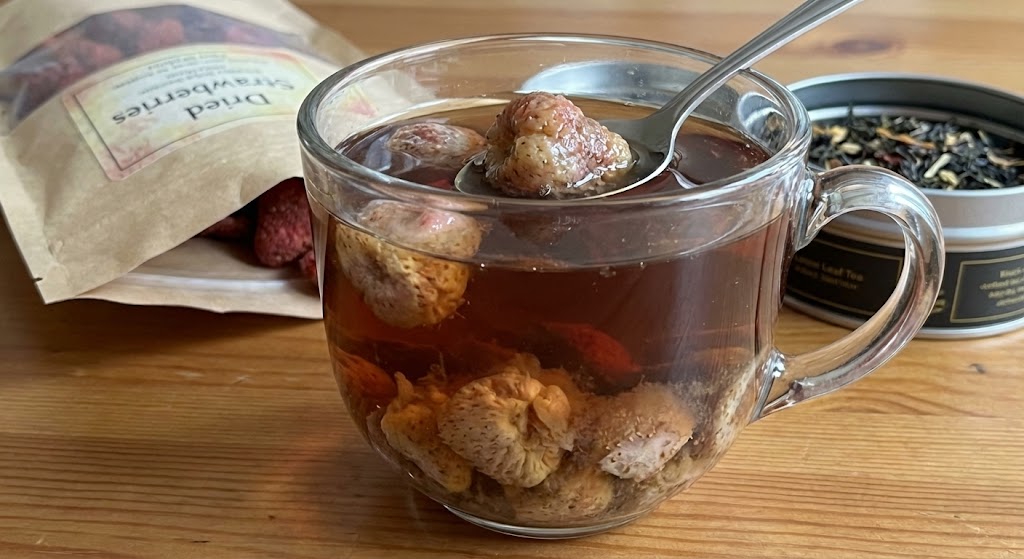
Marketing vs. sensory reality: Open a tin of "Strawberry Sensation" tea and you see vibrant red pieces mixed with tea leaves—visually appealing, suggesting fresh fruit flavor. However, brew the tea and those strawberry pieces contribute minimal taste, often described as cardboard-like or merely sweet without strawberry character. This disconnect between visual promise and flavor delivery defines the dried fruit inclusion problem that plagues fruit-flavored tea blends across the industry, see blending fundamentals.
Why brands include them anyway: Consumer research shows that 65-75% of shoppers prefer tea blends with visible fruit pieces over the same blend without pieces, even when blind taste tests reveal no preference or even slight preference for the piece-free version. The visual cue signals "real fruit" and "premium quality" triggering willingness to pay 20-30% more. Shelf appeal drives sales more than actual taste in impulse tea purchases, so brands optimize for appearance. The result: £8-12 fruit tea tins contain £0.30-0.60 worth of dried fruit that looks expensive but tastes generic, see cost component analysis.
2. Flavor Loss During Drying: The Volatile Compound Problem
Fresh strawberry flavor chemistry: A ripe strawberry contains over 360 volatile aromatic compounds creating its characteristic flavor—esters like ethyl butyrate (sweet fruity), furaneol (caramel-strawberry), aldehydes (green fresh notes), and terpenes (complexity). These volatiles are highly sensitive to heat and oxygen. When strawberries are dried at 60-70°C for 8-12 hours (commercial freeze-drying) or 50-60°C for 18-24 hours (air drying), 80-95% of these volatile aromatics evaporate or oxidize. What remains is mostly sugar, fiber, and trace amounts of degraded flavor compounds, see oxidation degradation patterns.
Why dried fruit tastes like "sweet cardboard": After volatile loss, dried strawberries retain primarily non-volatile compounds: sugars (fructose, glucose providing generic sweetness), cellulose and pectin (creating papery texture), and some organic acids (tartness without fruit character). The complex flavor balance of fresh fruit collapses to one-dimensional sweetness. Rehydrating during tea brewing doesn't restore lost volatiles—they're permanently gone. The strawberry pieces contribute sugar and mild acidity to the brew, but the specific "strawberry-ness" requires those missing volatile esters that disappeared during drying. Similar degradation affects all dried fruit inclusions: mango, peach, apple, raspberry. Citrus peel fares slightly better as its essential oils are less volatile and embedded in oil glands that partially protect during drying.
3. Nature-Identical Flavoring: How Real Fruit Flavor Gets Added
What "natural flavoring" means on labels: That intense strawberry flavor in commercial fruit teas comes not from the visible dried strawberry pieces, but from added flavoring extracts listed as "natural flavoring" or "natural strawberry flavor" in ingredients. These are concentrated aromatic compounds extracted from real strawberries (or sometimes other natural sources like bark, leaves, roots that happen to contain the same chemical compounds). The extract is sprayed onto tea leaves or the dried fruit pieces themselves, providing the strawberry character missing from the dried fruit, see flavoring integration techniques.
Nature-identical vs. natural vs. artificial spectrum: Natural strawberry extract comes from real strawberries but concentrated 50-100x, costing £80-150 per kilogram of extract. Nature-identical flavoring uses the exact same chemical compounds (like ethyl butyrate) but synthesized in a lab rather than extracted from fruit—chemically identical, costs £20-40/kg. Artificial flavoring uses related but not identical compounds creating strawberry-like flavor, cheapest at £8-15/kg. Most commercial fruit teas use natural or nature-identical to legally claim "natural flavoring" while managing costs. The irony: the dried fruit pieces are truly natural but flavorless, while the spray-on flavoring (natural-sourced or synthesized) provides all the actual strawberry taste consumers expect.
| Flavoring Source | Flavor Contribution | Cost per kg | Label Claim | Typical % in Blend |
|---|---|---|---|---|
| Dried Fruit Pieces (visible) | Generic sweetness, visual appeal, minimal fruit character | £3-8 | "Contains real fruit" | 5-15% by weight |
| Natural Fruit Extract | Strong authentic fruit flavor, volatile aromatics | £80-150 | "Natural flavoring" | 0.5-2% by weight |
| Nature-Identical Flavoring | Strong fruit flavor, identical chemical compounds | £20-40 | "Natural flavoring" (legally) | 0.5-2% |
| Artificial Flavoring | Similar fruit flavor, different chemical structure | £8-15 | "Flavoring" (must disclose artificial) | 0.3-1.5% |
| Essential Oil (citrus) | Concentrated authentic citrus flavor, long-lasting | £25-60 | "Natural flavoring" | 0.2-1% |
4. Freeze-Dried vs. Air-Dried: Does Method Matter?
Freeze-drying process and advantages: Freeze-drying (lyophilization) freezes fruit to -40°C then reduces pressure allowing ice to sublimate directly to vapor, bypassing liquid phase. This preserves 60-80% of volatile aromatics vs. 5-20% for conventional heat drying. Freeze-dried strawberries retain brighter color (less oxidation), better texture (crispy not leathery), and significantly more strawberry flavor than air-dried equivalents. However, freeze-drying costs £12-20/kg of finished product vs. £3-6/kg for air-dried, explaining why budget tea blends use cheaper air-dried fruit despite inferior taste.
Do freeze-dried pieces justify premium prices? Even freeze-dried fruit loses 20-40% of volatile compounds during processing. While noticeably better than air-dried pieces (you can smell strawberry when opening the tin, not just see red pieces), freeze-dried inclusions still contribute maybe 30-50% of the fruit flavor in the final brew. The remaining 50-70% comes from added flavoring extracts. Brands charging £15-20 for "premium freeze-dried fruit tea" vs. £8-10 for standard air-dried versions are offering marginal flavor improvement at 100% price increase. For consumers, the question becomes whether modest flavor enhancement justifies doubling the price, see premium pricing analysis.
5. Extract-Only Blends: When No Fruit Pieces Taste Better
Why some quality brands skip inclusions entirely: High-end tea companies like Harney & Sons or Mariage Frères often sell fruit-flavored teas with zero visible fruit pieces—just tea leaves with sprayed-on natural extracts. These blends typically taste more intensely fruity than inclusion-heavy competitors because all the "fruit budget" goes to high-quality extracts rather than splitting between cheap dried fruit (visual) and minimal extract (flavor). The result: stronger fruit flavor, lower cost to produce (extracts cheaper than freeze-dried fruit), and no consumer disappointment from biting into flavorless strawberry pieces in the brewed tea.
Consumer perception challenge: Despite superior flavor, extract-only blends face marketing headwinds. As noted, 65-75% of consumers prefer teas with visible fruit pieces when shopping. The solution some brands employ: add small amounts (2-5%) of freeze-dried fruit purely for visual appeal while relying on extracts for 95% of flavor delivery. This hybrid approach satisfies shelf appeal requirements while optimizing taste. Another strategy: transparent packaging showing beautiful tea leaves with "strawberry flavoring from real fruit extract" prominent on label, educating consumers that pieces ≠ flavor, see blend optimization strategies.
DIY Fruit Tea: Making Inclusion-Based Blends That Actually Taste Good
Fresh is best but impractical: The only way dried fruit inclusions deliver real fruit flavor is using them immediately after drying (within 1-2 weeks) before volatile loss accelerates. Home dehydrating strawberries at 50-60°C for 18-24 hours then immediately mixing into tea (5-10% fruit by weight) creates genuinely fruity tea for 2-4 weeks. Beyond that, even home-dried fruit fades to generic sweetness. Commercial viability requires 6-12 month shelf life, making this approach impossible for retail products but viable for personal use if you dry small batches monthly.
Boosting commercial dried fruit blends: If you have store-bought fruit tea that tastes weak, add 2-4 drops food-grade strawberry extract (available baking supply stores) per 100g of tea blend. Mix thoroughly and let rest 24-48 hours in airtight container for extract to absorb into tea leaves. This mimics what commercial blenders do but allows you to control intensity. Alternatively, steep dried fruit pieces separately in small amount of boiling water for 5 minutes, creating concentrated fruit "tea," then blend this liquid with your regular tea brew for enhanced fruit flavor without cardboard-tasting pieces in your cup, see extraction optimization.
6. Citrus Peel Exception: Why Orange/Lemon Work Better
Essential oil stability advantage: Unlike soft fruits (strawberries, peaches) where aromatics are water-soluble and evaporate easily, citrus flavor comes from essential oils stored in specialized peel glands (oil sacs). These oils—limonene (lemon/orange), citral (lemon), linalool (floral citrus)—are fat-soluble and remain trapped in dried peel structure even after months of storage. Dried orange peel retains 70-85% of its essential oils vs. strawberry losing 90-95% of volatiles, explaining why Earl Grey (bergamot oil) and orange spice teas taste authentically citrusy while berry teas often disappoint, see citrus oil chemistry.
Proper citrus peel preparation: Commercial citrus peel for tea undergoes careful drying at 40-50°C (lower than soft fruit) to minimize oil loss, then often receives additional essential oil spray to boost flavor to consistent levels. Home preparation: use organic citrus to avoid pesticide residues concentrated in peel, remove white pith (bitter tannins), and dry thin strips at 40-45°C for 24-36 hours until brittle. Store in airtight container; properly dried citrus peel maintains good flavor for 6-12 months vs. 2-4 weeks for berry pieces. Mix 5-10% dried citrus peel with black or green tea base for authentic citrus character without additional flavoring needed.
7. The Future: Encapsulation and Spray-Drying Technology
Microencapsulation of fruit volatiles: Emerging food technology addresses the dried fruit flavor problem through microencapsulation—trapping volatile fruit compounds in protective shells (usually maltodextrin or gum arabic) that release during hot water brewing. Spray-dried strawberry powder using this technique retains 75-90% of original volatile aromatics vs. 5-20% for traditional drying. The technology costs £40-80/kg (between air-dried and freeze-dried) but delivers freeze-dried flavor at lower price point. Currently used in premium instant teas and some luxury tea bag blends; expect wider adoption in specialty loose-leaf market 2026-2028, see specialty market trends.
Spray-dried fruit powder integration: Rather than dried fruit pieces, spray-dried fruit powder (particle size 50-200 microns) mixes uniformly with tea leaves and releases flavor more efficiently during brewing. A 1-2% addition of spray-dried strawberry powder provides more fruit flavor than 10-15% traditional dried pieces at similar or lower cost. Challenges include powder clumping (requires anti-caking agents), color stability (spray-dried powder oxidizes faster than pieces, turning brown), and consumer education (powder lacks visual appeal of whole fruit pieces). Brands positioning this as "advanced fruit integration technology" rather than cheap powder may overcome perception issues. The sensory advantage—dramatically better fruit flavor—could shift consumer preferences away from pieces-for-show toward powder-for-taste if marketed effectively.
Comments