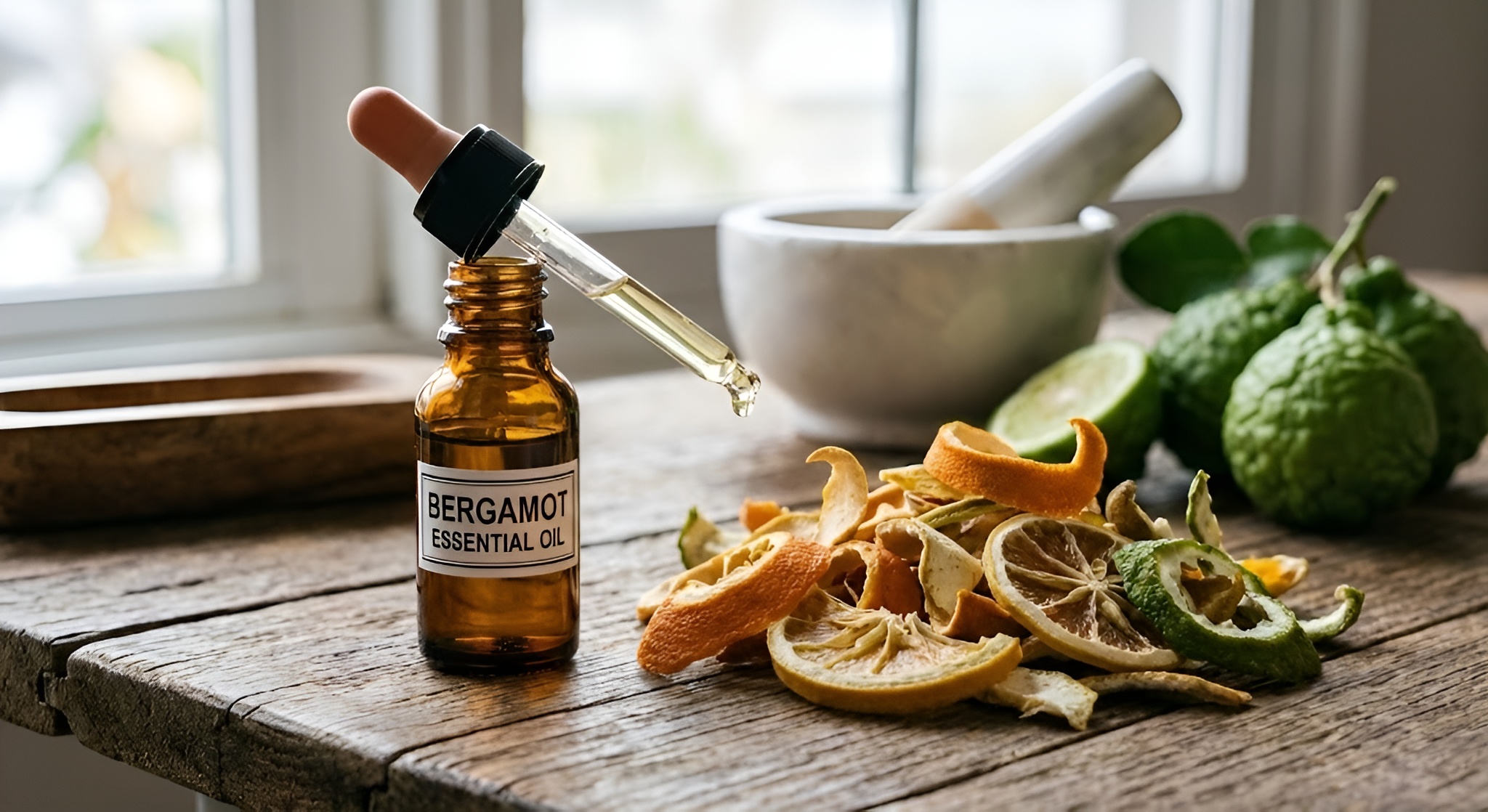
1. The Oil Method (Traditional)
This is how premium tea merchants create their blends. It relies on the tea leaf's natural hygroscopic ability to absorb moisture and aroma.
- Ratio: 4-6 drops of oil per 100g of tea. Start low!
- Technique: Do not drop oil directly on the leaves (it creates "hot spots"). Drop the oil onto the inside of the jar lid or the sides of the glass jar.
- Process: Add the tea leaves, seal the jar immediately, and shake vigorously to distribute the aroma.
- Curing: Store in a dark cupboard for 5-7 days. Shake daily. Open the jar and smell; if the alcohol/chemical scent is gone and only citrus remains, it is ready.
Expert Tip: The "Cotton Ball" Trick
If you are worried about oil staining your leaves, put the oil drops on a cotton ball. Place the cotton ball in the jar with the tea (ensure it doesn't touch the leaves directly, perhaps in a small mesh bag). The tea will absorb the scent from the air without getting oily.
2. The Peel Method (Lady Grey Style)
Commercial "Lady Grey" blends often include lemon and orange peel. Dried peels add visual flair and a subtler, sweeter citrus note that balances the sharp Bergamot.
Simply mix dried (completely dehydrated) citrus peels into your tea blend *before* doing the oil scenting process. The peels act as a "fixative," helping to anchor the volatile bergamot oil so the scent lasts longer in the tin.
3. The "Wild" Method (Monarda Didyma)
Gardeners know a secret: Monarda Didyma (Bee Balm) is often called "Wild Bergamot" because its leaves smell strikingly similar to the citrus fruit. Note: They are not botanically related; Monarda is a mint.
You can dry the red flowers and green leaves of the Monarda plant and blend them with black tea. This creates a strictly herbal, native-plant version of Earl Grey that is entirely unique and requires no essential oils.
Need the right materials?
Don't ruin good tea with bad oil. We have curated a list of the best food-grade oils, dried peels, and storage jars to get you started. See our DIY Earl Grey Shopping List →
Comments