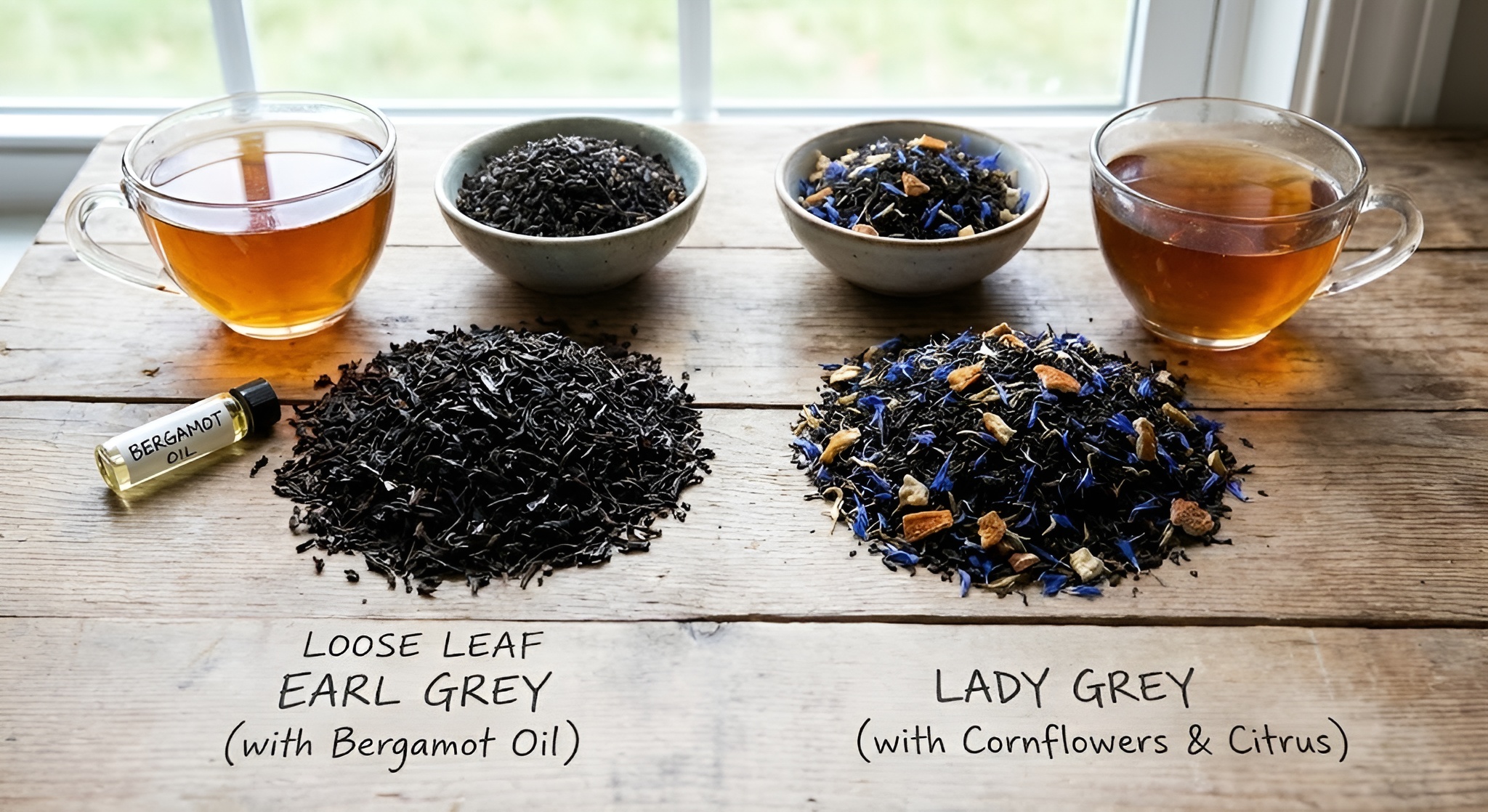
1. What is Earl Grey? (The Patriarch)
Earl Grey is a category, not a brand. It is any Black Tea flavored with the oil of the Bergamot Orange (Citrus bergamia). Bergamot is a small, bitter citrus fruit grown primarily in Calabria, Italy. It is too sour to eat, but its rind produces an incredibly aromatic oil.
The flavor profile of a good Earl Grey should be a balance of the maltiness of the tea and the sharp, floral astringency of the oil. It is robust, slightly dry, and commands attention.
Expert Tip: Why does my tea taste like soap?
If your Earl Grey tastes like "Fairy Liquid" or perfume, you are likely drinking a brand that uses synthetic bergamot flavoring rather than real essential oil. Synthetic linalool (a compound in bergamot) is also used in soap, triggering the association. Switch to a brand that lists "Bergamot Oil" on the ingredients.
2. What is Lady Grey? (The Modern Twist)
Lady Grey is technically a trademarked blend invented by Twinings in the early 1990s. The story goes that Nordic markets found traditional Earl Grey too pungent/strong, so Twinings created a milder version.
The Recipe: It starts with a Black Tea base but uses a significantly reduced amount of Bergamot. To compensate, they add:
- Seville Orange Peel: For sweetness.
- Lemon Peel: For zest.
- Blue Cornflowers: For visual beauty (though they add little flavor).
The result is a tea that smells like a fruit orchard rather than a perfume bottle. It is lighter, sweeter, and lacks the intense bite of the original.
Expert Tip: The "Generic" Versions
Since Twinings owns the name "Lady Grey," other tea companies produce identical blends under different names. Look for "Countess Grey," "Empress Grey," or simply "Citrus Earl Grey" to find the same flavor profile from premium brands like Vahdam or Fortnum & Mason.
3. The Comparison Table
A side-by-side look at the chemical and flavor differences.
| Feature | Earl Grey | Lady Grey |
|---|---|---|
| Key Flavor | Bergamot (Sharp/Floral) | Orange & Lemon (Zesty) |
| Ingredients | Black Tea + Bergamot Oil | Black Tea + Peel + Cornflowers |
| Best Served | Hot, with/without milk | Black, or Iced |
| Intensity | High (4/5) | Medium (2/5) |
Expert Tip: The London Fog Rule
If you are making a London Fog (Earl Grey Latte with Vanilla), always use traditional Earl Grey. The intense bergamot is needed to cut through the heavy milk and sugar. Lady Grey is too delicate and gets lost in the dairy, tasting just like warm sweet milk.
4. What about "French" or "Russian" Earl Grey?
You may see other variations on the shelf. These are distinct from Lady Grey:
- French Earl Grey: Adds rose petals and sometimes hibiscus. It is very floral and fruity.
- Russian Earl Grey: Often adds lemongrass and darker citrus peel for a sharper bite.
- Cream Earl Grey: Adds vanilla bean or flavoring. This turns the tea into a dessert-like beverage, smoothing out all the sharp edges of the bergamot.
Ready to find the real stuff?
We tested the best Earl Greys on the market to find the ones that use real Italian oil instead of perfume. See our top picks (including the best Lady Grey alternative) here: Real Oil vs. Fake Perfume: The 6 Best Earl Grey Teas →
Comments