
1. Why Autumn Transition Disrupts Sleep in the UK: Circadian Lag and the August–September Light Cliff
At 51–55°N latitude, the UK experiences one of the steepest rates of day-length change in late summer. Between the late-August bank holiday and the autumn equinox (21 September 2026), daylight shrinks by approximately 90 minutes, with the evening component—sunset—shifting from around 8:30 p.m. to 7:00 p.m. in southern England. This is not a gentle slope; the change accelerates as you approach the equinox. Human circadian rhythms, governed by the suprachiasmatic nucleus in the hypothalamus, are highly sensitive to the timing of light exposure, particularly the blue-wavelength evening light that suppresses melatonin. When sunset arrives an hour earlier but your routine (dinner, screen time, bedtime) hasn't adjusted, you're effectively extending your 'wake photoperiod' artificially, delaying melatonin onset and making it harder to fall asleep even when you feel tired.
Compounding this is the thermal transition: late August often brings the first cooler evenings, yet daytime temperatures may still peak in the low twenties. The body uses a drop in core temperature as a sleep signal; if your evening environment is inconsistent (warm indoors, cool outside), or if you're still drinking iced teas that lower core temp too aggressively, the signal becomes muddled. Add in the psychological and routine shifts—children back to school, end of summer holidays, return to commuting—and you have a perfect storm for sleep disruption. This is why the 'same' camomile tea that worked in July can feel ineffective in early September: the context has changed, and your evening ritual needs to adapt in tandem.
Track Sunset, Not the Clock
Set your evening tea timer to 90 minutes before local sunset for the first two weeks of September, then adjust to 90 minutes before your target bedtime. This trains your circadian system to the new light schedule rather than fighting it.
2. The Case for Warming Your Brew: Temperature, Ritual, and Melatonin Signalling
Throughout July and into early August 2026, many UK tea drinkers relied on chilled, caffeine-free infusions—cold-brewed white tea, iced peppermint, or refrigerated chamomile—to manage heatwave insomnia. These work by preventing the core-temperature spike that can delay sleep onset in hot bedrooms. But as evening temperatures drop into the mid-teens and indoor heating has not yet resumed, continuing to drink refrigerated teas can backfire: you're signalling 'cool down' to a body that is already cooling naturally, and you miss the opportunity to use warmth as a comforting, parasympathetic cue.
The act of holding a warm cup in the evening has measurable effects on heart-rate variability and vagal tone, markers of the shift from sympathetic ('fight or flight') to parasympathetic ('rest and digest') nervous-system dominance. A gently warmed infusion—ideally between 50–60°C at drinking temperature, rather than scalding—also encourages slower sipping, extending the ritual and creating a deliberate wind-down window. From a compound-extraction perspective, many of the nervine and adaptogen-rich herbals (linden, oatstraw, tulsi, passionflower) release their volatile oils and water-soluble actives more completely in warm water; cold extraction can leave behind key aromatics that contribute to the sensory relaxation response. The practical advice: begin transitioning your evening teas from refrigerated to room-temperature by the last week of August, then to warm (not hot) infusions by the first week of September, tracking how your sleep-onset latency responds.
3. The Autumn Sleep-Tea Toolkit: GABA, Theanine, Magnesium, and Adaptogens
Not all 'sleep teas' are created equal, and the compounds that matter most shift with the season. For the late-August-to-September transition, prioritise four categories: GABA-enriched teas, L-theanine-dominant cultivars, magnesium-bearing herbals, and adaptogenic nervines. GABA (gamma-aminobutyric acid) is the brain's primary inhibitory neurotransmitter, directly reducing neuronal excitability and promoting relaxation. Japanese Gabaron oolong and certain anaerobic-fermented teas (Korean sejak processed under nitrogen) contain naturally elevated GABA levels, sometimes 20–40 times higher than standard teas. While the bioavailability of ingested GABA across the blood–brain barrier remains debated, emerging evidence suggests that peripheral GABA receptors in the gut and vagus nerve may mediate calming effects even without direct CNS penetration.
L-theanine, an amino acid abundant in shade-grown Japanese greens (gyokuro, high-grade sencha, matcha) and some white teas, promotes alpha-wave brain activity and modulates serotonin and dopamine pathways, often described as 'alert calm.' In the evening, however, avoid any theanine source that also carries significant caffeine; instead, look to hojicha—a roasted Japanese green tea made from late-harvest leaves and stems, with minimal caffeine but retained theanine—or to decaffeinated gyokuro if available. Magnesium, a co-factor in over 300 enzymatic reactions including those regulating the HPA (hypothalamic-pituitary-adrenal) axis, is present in linden (lime) blossom, oatstraw, nettle, and tulsi. Finally, adaptogens—particularly tulsi (holy basil), ashwagandha (often blended in commercial 'sleep' tisanes), and schisandra—help the adrenal system adapt to the physiological 'stress' of seasonal change, reducing the cortisol spike that can sabotage sleep onset.
A practical autumn sleep blend might combine hojicha or bancha as a base (low caffeine, roasted warmth, theanine), linden and oatstraw for magnesium and nervine support, and tulsi for adaptogenic resilience. Brew at 80–85°C for 5–7 minutes, strain, and let cool to a comfortable sipping temperature. This formula addresses multiple pathways—neurotransmitter modulation, adrenal buffering, mineral support—without relying on a single 'active ingredient.'
Hojicha After 6 p.m.
Hojicha is one of the few Japanese greens safe for evening use: roasting at ~200°C volatilises much of the caffeine while preserving L-theanine. Choose stem-heavy (kukicha-style) hojicha for the lowest caffeine and sweetest, toasted flavour.
4. Timing Your Last Cup: Tracking Sunset and Melatonin Onset
In high summer, 'dim-light melatonin onset' (DLMO)—the point at which the pineal gland begins releasing melatonin in response to fading light—occurs relatively late, often 10–11 p.m. or later for many UK adults. By mid-September, DLMO shifts earlier, typically to 9–10 p.m., driven by the earlier sunset and reduced evening light exposure. If you continue to drink tea at 9 p.m. as you did in July, you're now consuming fluid (and any residual stimulants) much closer to natural melatonin onset, which can both delay sleep via bathroom trips and, if the tea contains even trace caffeine, via adenosine-receptor antagonism.
The solution is to front-load your evening tea ritual: aim to finish your final cup 60–90 minutes before your intended sleep time, and gradually move that window earlier as sunset moves earlier. A practical framework for late August into September: if you plan to sleep at 10:30 p.m., brew your tea at 8:30–9:00 p.m., finish by 9:15 p.m., and use the remaining time for a screen-free wind-down (reading, stretching, dimming lights). Track your own DLMO cues—yawning, slight chill, eye heaviness—and adjust timing so your tea ritual concludes just as those signals begin. This synchronisation reinforces the circadian cue rather than overriding it.
The 90-Minute Buffer
Finish your last evening tea 90 minutes before lights-out. This allows time for fluid processing, ensures caffeine (even trace amounts) has begun clearing, and leaves a wind-down window for melatonin to rise naturally.
5. Phasing Out Summer Cooling Teas: A Week-by-Week Transition Plan
Abrupt changes in evening ritual can themselves become stressors, so a phased transition works better than a hard cut-over. Week 1 (late August, e.g., 25–31 Aug 2026): Continue your existing summer teas (iced chamomile, cold-brew white peony, peppermint) but begin serving them at room temperature rather than refrigerated. Note any change in how quickly you feel sleepy. Week 2 (1–7 Sept 2026): Replace one-third of your base tea with a warming alternative—swap white tea for hojicha, or blend chamomile with a small amount of roasted barley tea (mugicha) or rooibos. Continue at room temperature. Week 3 (8–14 Sept 2026): Shift to fully warm infusions (50–60°C at drinking temperature) and increase the warming/adaptogen component—add tulsi, linden, or oatstraw to your chamomile or switch entirely to a hojicha-tulsi blend. Move your brew time 15 minutes earlier in the evening. Week 4 (15–21 Sept, approaching equinox): Fully adopt your autumn evening blend, served warm, timed to finish 90 minutes before bed. Monitor sleep-onset latency and adjust compound ratios (more GABA-rich if still wired, more magnesium if you're restless, more adaptogen if you're anxious).
This gradual layering allows your palate, routine, and circadian system to adjust in concert. It also lets you identify which specific change—temperature, compound, timing—has the most impact on your sleep, so you can fine-tune the ritual for your individual physiology.
6. Cultivar and Processing Choices: What to Buy for Autumn Sleep Support
When shopping for autumn sleep teas, prioritise processing and harvest timing over generic category labels. For true teas (Camellia sinensis), look for: Hojicha or bancha from late-summer or autumn harvest (often labelled 'aki-bancha' in Japanese)—the roasting and late picking reduce caffeine and increase the toasted, comforting aroma compounds (pyrazines, furans) that signal 'warmth' to the brain. Decaffeinated gyokuro or sencha (CO₂ or water-processed) retains L-theanine while removing the stimulant load; useful if you want the umami-rich, shade-grown profile without evening wakefulness. GABA oolong (Gabaron), typically from Taiwan or Japan, processed under anaerobic conditions to boost GABA content—confirm the GABA assay if possible (reputable vendors provide lab certificates). Avoid any 'sleep blend' that includes standard sencha, Chinese green, or breakfast-style black tea unless explicitly decaffeinated; even small amounts of caffeine (10–15 mg) can be problematic for sensitive individuals after 3 p.m.
For herbals, seek out organic linden (Tilia europaea) flowers, ideally wild-harvested from unpolluted areas, as magnesium and volatile-oil content degrade with pesticide exposure. Oatstraw (Avena sativa), harvested in the milky stage, is richer in nervine compounds than the grain itself. Tulsi (Ocimum sanctum or O. tenuiflorum) should be labelled by variety—Rama (green), Krishna (purple), or Vana (wild)—each with slightly different adaptogen profiles; blends of all three are common in quality sleep formulas. Rooibos (Aspalathus linearis), while not native to the UK, is widely available, naturally caffeine-free, rich in aspalathin (a flavonoid with potential anxiolytic effects), and produces a warm, sweet infusion that many find comforting as nights draw in. For a genuinely UK-focused option, consider locally foraged or small-batch British herbals—meadowsweet, chamomile from English farms, or lemon balm—available at farmers' markets and speciality online retailers in September 2026.
When selecting blends, read the ingredient list for order of predominance (first ingredient is most abundant) and check for additives (natural flavourings, sweeteners) that can sometimes include hidden stimulants or allergens. A high-quality autumn sleep blend should be simple: 2–4 complementary herbs or a single-origin tea, no 'proprietary blends' that obscure ratios, and ideally organic certification to minimise pesticide residues that can interfere with neurotransmitter pathways.
Check the Roast Date
For hojicha and roasted blends, ask for the roast date (not just the harvest). Roasted teas are best within 6–12 months; older stocks lose the volatile aromatics that contribute to the calming sensory experience.
7. Brewing Method Adjustments: Temperature, Vessel, and Steeping Time for Evening Infusions
Evening brewing should prioritise gentleness and extraction efficiency over the precision needed for high-grade, caffeine-rich teas. For hojicha, bancha, and GABA oolongs, use 80–85°C water (boil, then wait 3–4 minutes, or mix boiling with room-temperature 2:1) and steep for 5–7 minutes—longer than typical Japanese greens—to fully extract theanine, GABA, and water-soluble minerals without bitterness (roasting and low caffeine mean tannin astringency is minimal). For linden, oatstraw, and tulsi herbals, use full boiling (100°C) and steep 7–10 minutes covered to capture volatile oils; these are tough plant materials that benefit from sustained heat. Rooibos and chamomile similarly prefer full boil and long steep (8–10 minutes).
Vessel choice matters: a ceramic or glass teapot with a lid retains heat and aromatics better than an open mug. If you're transitioning from cold-brew pitchers used over summer, repurpose them by brewing warm tea in the pitcher, steeping covered, then letting it cool naturally to room temperature for a 'middle-ground' option in late August. Avoid metal infusers (especially aluminium) for magnesium-rich herbals; some mineral content can react with metals, and ceramic or stainless steel is preferable. Strain thoroughly—particulate matter in the final cup can cause micro-aspiration if you drink lying down, triggering coughing and waking.
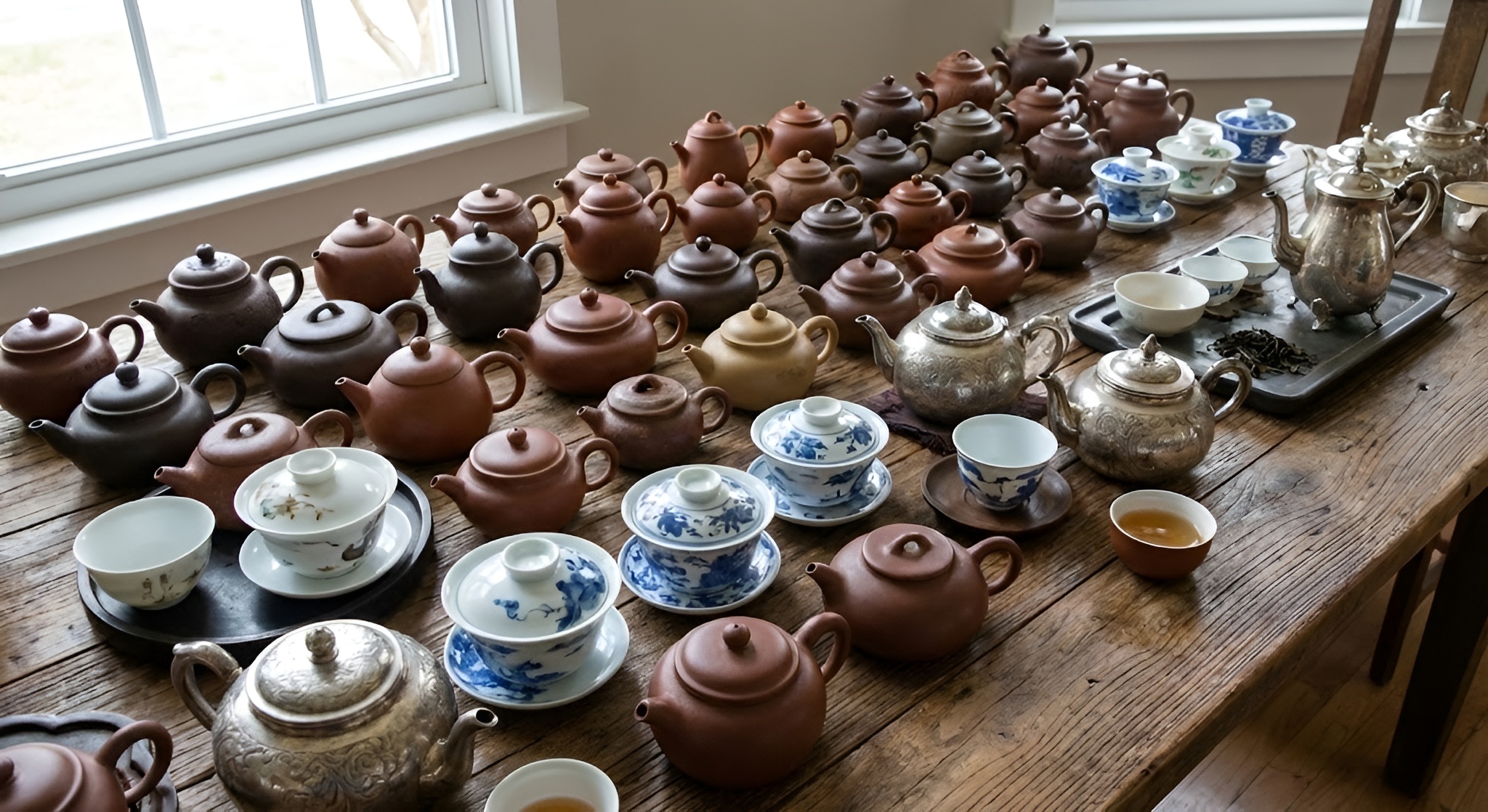
For those who enjoy ritual, consider a small evening-specific tea set: a 200–300 ml kyusu or gaiwan used only after 6 p.m., creating a sensory boundary between daytime (caffeinated, alert) and evening (decaf, calming) tea moments. The act of switching vessel reinforces the circadian cue and can enhance the placebo-adjacent 'ritual effect' that contributes to sleep readiness.
8. Tracking, Troubleshooting, and Individual Variation: When to Adjust Your Autumn Routine
Sleep is highly individual, and what works for one person may be ineffective—or counterproductive—for another. Keep a simple two-week sleep log as you transition: note your evening tea (type, temperature, time consumed), sleep-onset latency (how long to fall asleep), number of night wakings, and subjective morning restfulness (1–5 scale). Look for patterns: does hojicha work better than rooibos? Does finishing tea by 8:30 p.m. improve sleep more than 9:15 p.m.? Are you more restless on nights you skip the ritual entirely? This log also helps identify confounders—late-summer colds, poor air quality from wildfire smoke, or residual jet lag—that can mask or amplify the effect of your tea choices.
Common troubleshooting scenarios: Still wired at bedtime despite caffeine-free tea? Check for hidden stimulants (some commercial 'sleep blends' include green tea or yerba maté for flavour; read labels). Consider adding a GABA-rich component or increasing magnesium-bearing herbs. Falling asleep fine but waking frequently? May indicate fluid overload; reduce evening tea volume to 150–200 ml and finish earlier. Alternatively, low blood sugar can cause night waking—pair your tea with a small protein or fat snack (almond, cheese) if you eat dinner early. No noticeable improvement after two weeks? The issue may be non-tea factors (screen light, bedroom temperature, anxiety)—tea supports sleep hygiene but cannot override major circadian or environmental disruption. In such cases, prioritise light-responsive rituals (morning bright-light exposure, evening dimming) and consider your tea routine as one piece of a broader strategy.
Finally, remember that the goal is not perfection but gentle recalibration. The UK autumn transition is biologically challenging; even modest improvements—falling asleep 10 minutes faster, waking once instead of three times—represent meaningful progress. Your evening tea is a tool, a ritual anchor, and a sensory cue; refine it iteratively, and allow it to evolve further as the season deepens into October and beyond.
Morning Light Matters More
Evening tea helps, but morning bright-light exposure (ideally outdoors, 20–30 minutes before 10 a.m.) is the single most powerful lever for resetting circadian rhythm as autumn days shorten. Pair your evening brew with a morning ritual for best results.


Comments