1. Why Tea and Blackberry Foraging Pair So Well—And Why Most Get It Wrong
The British hedgerow in late August is a working larder: blackberries, sloes, rosehips, elderberries, and the last of the wild raspberries crowd the same bramble-tangled verges where hawthorn, hazel, and dog rose compete for light. Foraging these requires time—an hour or more bent over thorny canes, fingers stained purple, mouth puckering from tasting under-ripe fruit—and the walk itself is thirsty work. Tea, properly chosen and thermally managed, offers hydration, warmth against cooling air, and a flavour bridge between the sharp acids of wild fruit and the green, vegetal notes of the hedgerow itself. Yet most foragers either skip tea entirely (relying on water alone) or bring builders' blend in a cheap flask, which cools to tepid within an hour and clashes harshly with the tannins in blackberry skins.
The mistake lies in treating outdoor tea as an afterthought. Wild blackberries (Rubus fruticosus sensu lato, actually a complex of over 300 microspecies) contain significant levels of ellagic acid, anthocyanins, and malic acid, all of which interact with tea polyphenols. High-astringency teas—think brisk Kenyan or Japanese sencha—amplify the mouth-drying sensation when combined with tart fruit, leaving a metallic aftertaste. Conversely, malty, lower-tannin blacks and medium-roast oolongs complement the fruit's acidity, their sweetness and body rounding out the sharpness. Understanding this interplay—oxidation level, roast, astringency—is the first step toward pairing tea with the hedgerow rather than merely drinking it alongside.
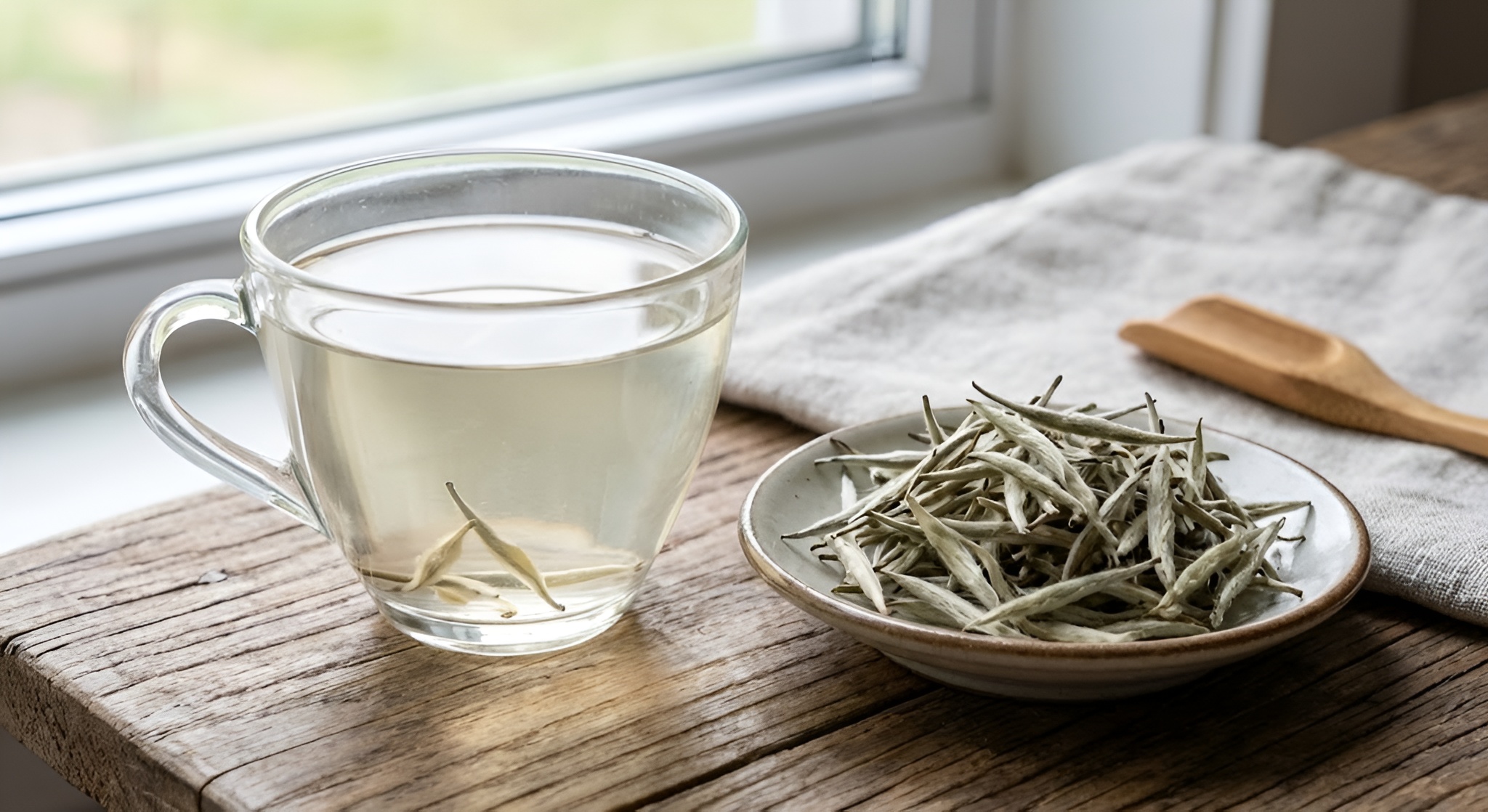
Then there is the question of timing and temperature. A foraging walk is not a controlled tasting; you steep at home or at the car boot, drink intermittently over two to four hours, and never have the luxury of a second brew. This demands thermos discipline: pre-warming, slightly longer steep times to compensate for cooling, and choosing teas that hold flavour as temperature drops. White and green teas, delicate at 70–80°C, turn thin and astringent when drunk lukewarm; robust blacks and roasted oolongs remain pleasant even at 50°C. These are not minor details—they are the difference between a walk enhanced by tea and one marred by a flask of cold disappointment.
Taste Before You Walk
Brew a test cup the evening before your foraging trip, let it cool to room temperature, then taste alongside a handful of blackberries from the same hedgerow. If the combination turns mouth-puckeringly dry, choose a maltier tea or lower your steep time by 20%. Cold tea reveals astringency that hot brewing masks.
2. The Chemistry of Pairing Tea with Wild Blackberries and Hedgerow Fruit
Blackberries are chemically complex. Ripe fruit contains around 4–6% total acids (predominantly malic and citric), 5–7% sugars (glucose and fructose), and high concentrations of anthocyanins (cyanidin-3-glucoside being the most abundant), which give the berries their deep purple hue and contribute astringency of their own. The skins also carry tannins—ellagitannins, particularly sanguiin H-6—which interact directly with the catechins and theaflavins in tea. When you sip black tea after eating a blackberry, you are layering two sources of polyphenolic astringency, and the result can be either harmonious or harshly drying depending on the balance.
The key variable is oxidation and roast. Fully oxidised black teas (Assam, Dian Hong, Keemun) develop theaflavins and thearubigins that bring malty, slightly sweet notes and a rounder, less sharp astringency. These complement blackberry acidity without doubling down on the pucker. Lightly oxidised teas—white, green, and some oolongs—retain higher levels of catechins (particularly EGCG), which are more astringent and less sweet, and when combined with malic acid can leave the mouth feeling stripped and metallic. Medium-roast oolongs (Dong Ding, Yancha, Baozhong) occupy a middle ground: enough oxidation to develop body, enough roast to mute sharp edges, and enough residual floral or stone-fruit character to echo the blackberry itself.
Sloes (Prunus spinosa), which ripen on the same hedgerows from late August, are even more tannic and astringent than blackberries and are rarely eaten raw. If you're tasting sloes while walking—testing ripeness ahead of autumn harvest—pair them only with very robust, malty blacks or heavily roasted oolongs; anything lighter will be overwhelmed. Rosehips and elderberries, both present in late summer hedgerows, carry different flavour profiles (rosehips are floral and slightly sweet; elderberries are musky and earthy) but respond to the same logic: match fruit acidity with tea body, not sharpness.
3. Which Teas Work Best in a Thermos for Late Summer Hedgerow Walks
Not all teas survive the thermos. Delicate whites and greens, brewed at 70–80°C, lose their nuance as they cool and turn vegetal or bitter if over-steeped to compensate for heat loss. Lightly oxidised oolongs (High Mountain, Tieguanyin) can turn sour if held too long at moderate temperatures. The teas that thrive in a flask are those with structural resilience: robust oxidation, malty or roasted character, and enough body to taste pleasant even at 50–55°C. These are not the teas you would choose for a gongfu session, but they are the ones that make sense on a windswept verge in September.
Top tier for foraging walks: Assam TGFOP or FTGFOP (malty, full-bodied, low astringency), Yunnan Dian Hong (honey-sweet, smooth, holds flavour well), Keemun Mao Feng (slightly smoky, medium-bodied, pairs beautifully with blackberry jam notes), and medium-roast Taiwanese oolongs like Dong Ding or Baozhong (stone-fruit sweetness, balanced astringency, complex enough to sip slowly). These teas can often be sampled in discovery sets before committing to larger quantities. For those who prefer a roasted profile, Yancha (Wuyi rock oolongs) such as Da Hong Pao or Shui Xian offer mineral depth and roasted grain notes that echo the earthiness of the hedgerow itself.
Avoid: brisk, astringent blacks (Kenyan, high-grown Ceylon), Japanese greens (sencha, gyokuro—unless you are confident in your thermos and plan to drink within 90 minutes), and any tea that requires precise temperature control. Also skip flavoured or scented teas (Earl Grey, jasmine); their aromatics dissipate in the flask, and the bergamot or floral oils can turn soapy when combined with fruit acids. If you want complexity, choose it from the leaf itself, not from added flavouring. One exception: a lightly smoked Lapsang Souchong can work if you are foraging near woodland or moorland where the scent of smoke feels contextually appropriate, but it is a polarising choice and best saved for solo walks.
The 90-Minute Window
Even the best thermos loses 10–15°C in the first hour. Brew your tea slightly stronger and hotter than usual—bump your steep time by 30 seconds and water temp to 95–100°C for blacks—so it remains flavourful as it cools. Aim to finish your flask within 90 minutes for whites and greens, 3–4 hours for blacks and oolongs.
4. Thermos Engineering: Choosing and Prepping a Flask for Hedgerow Use
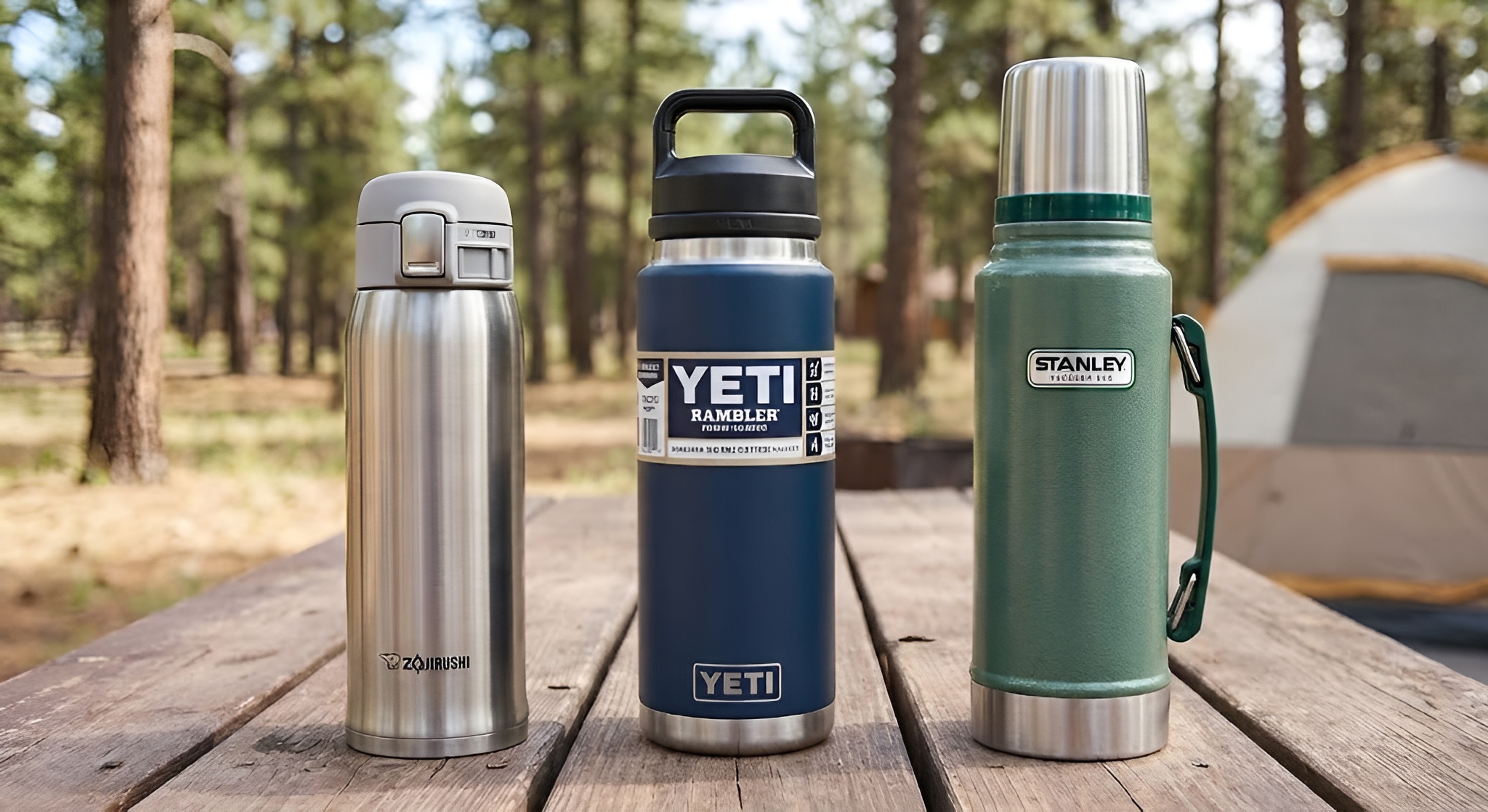
Not all thermos flasks are equal, and the difference becomes stark when you are standing in a cooling breeze at 6pm, two miles from the car, hoping for a hot cup. The critical spec is heat retention duration: a good vacuum flask should hold liquid above 60°C for at least six hours. Most supermarket flasks (thin stainless walls, poor vacuum seal) drop below 50°C within two hours, rendering green and white teas undrinkable and robbing even robust blacks of their appeal. For serious foraging walks, invest in a double-walled stainless steel vacuum flask with a capacity of 500–750ml (enough for 2–3 generous servings without adding excessive weight to your pack).
Pre-warming is non-negotiable. Rinse the empty thermos with boiling water, seal it, and let it stand for two minutes while you prepare your tea. This raises the internal flask temperature by 15–20°C and dramatically improves heat retention. Pour out the warming water, immediately add your freshly brewed tea, seal tightly, and do not open the flask until you are ready to drink—every unseal loses heat. If you are walking with others, bring individual flasks rather than sharing one large one; repeated opening to pour cups dissipates warmth far faster than a single-pour system. For a detailed comparison of outdoor brewing gear, see our guide to camping and wild-swimming tea kits, which covers flask testing in field conditions.
Lid design matters more than most realise. A screw-top with an integral cup is practical but sacrifices some insulation; a push-button pour-through lid retains heat better but can clog with leaf particles if you brew loose tea directly in the flask (a method some swear by for wild camping and fire-side brewing). Compromise solution: brew your tea in a pot or infuser at home, strain thoroughly, then pour into a pre-warmed flask with a high-performance lid. Carry a second, smaller 350ml flask filled with plain hot water for rinsing hands—blackberry juice and nettle sap are sticky and acidic, and you do not want them on your tea cup or lips.
5. Practical Steeping Strategies: Timing, Temperature, and On-Site Adjustments
The logistics of outdoor tea depend on your walk. If you are driving to a known foraging site (a hedgerow near a public footpath, a stretch of bridleway, a farm lane with permission), the simplest approach is to brew at home, immediately transfer to a pre-warmed thermos, and walk. This gives you maximum control over steep time and temperature and ensures you arrive at the hedgerow with tea at its peak. Brew as you would normally—3–4 minutes for blacks, 4–5 for oolongs—but add 20–30 seconds to compensate for cooling in transit. Cap the flask the moment you pour, and resist the urge to check temperature until you reach your spot.
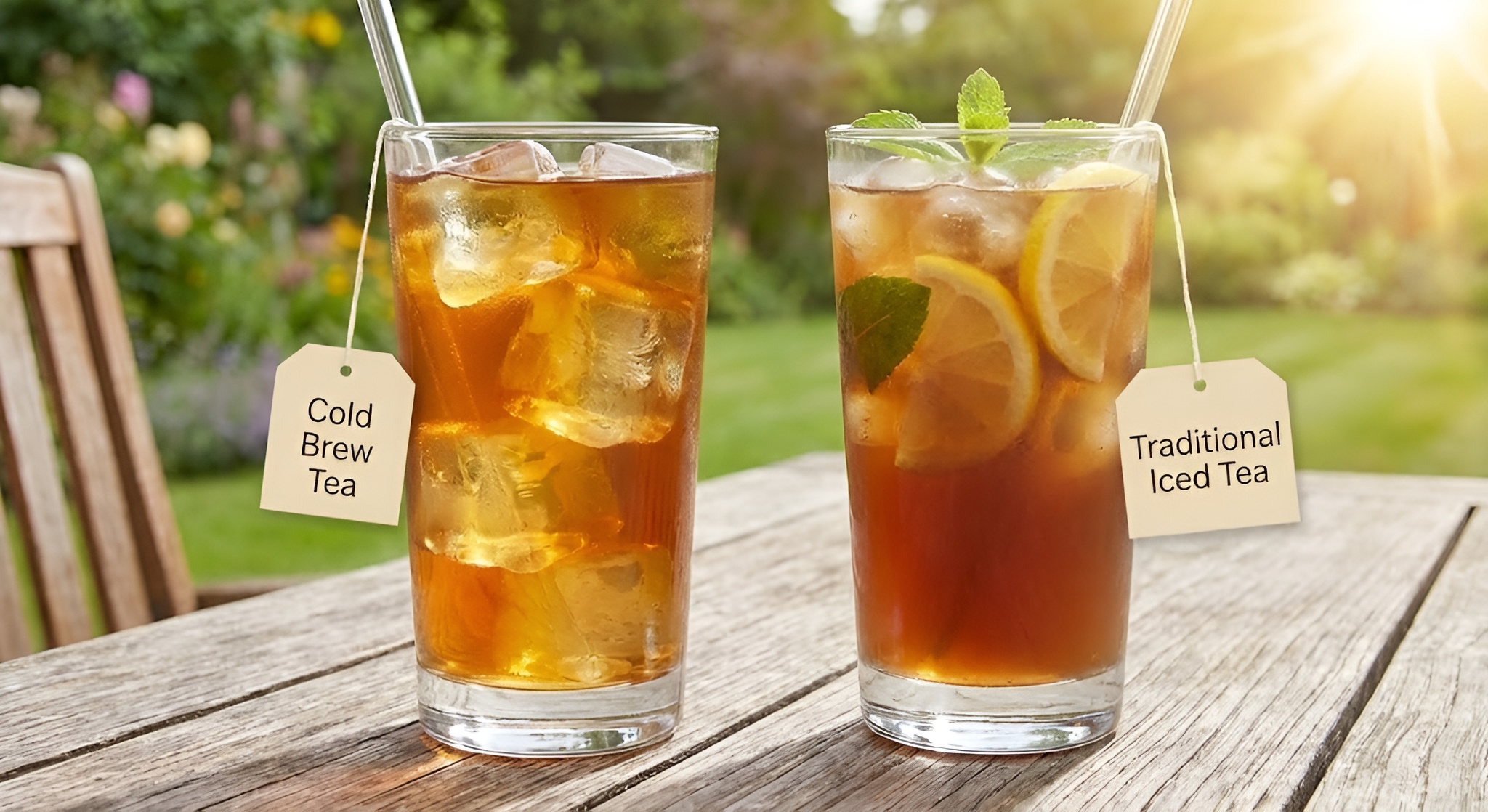
If you are walking from home or starting a longer ramble (e.g., coastal path or moorland loop that happens to pass blackberry-laden hedges), you may prefer to carry tea leaves and brew on-site using a lightweight stove or Kelly Kettle. In this case, choose teas that tolerate longer steep times without turning bitter—Assam, Yunnan Gold, roasted oolongs—and consider cold-brew methods. Pack tea leaves in a small infuser bottle (some cold-brew coffee makers work well for tea), fill with cool water in the morning, and let it steep passively as you walk; by the time you reach the brambles (2–3 hours), you will have a smooth, low-astringency tea that pairs beautifully with fresh fruit and requires no heat source.
On-site adjustments are sometimes necessary. If your tea cools faster than expected (windy day, thin-walled flask, longer walk), embrace it: a lukewarm Assam or Dian Hong is still pleasant, and the lower temperature can actually reduce astringency, making it a better match for tart blackberries. If your tea is still too hot when you arrive (rare, but possible on a warm August afternoon), pour a small amount into your cup, let it cool for a minute, then taste with fruit. Do not rush; the whole point of this exercise is to savour the pairing in the context of the walk, not gulp tea as if you were late for a train.
Double-Flask Method for Long Foraging Sessions
Carry a 500ml flask of robust black tea for the first 90 minutes, and a second 350ml flask of roasted oolong for the latter half of your walk. As the black cools, switch to the oolong, which tastes better at moderate temperatures and offers a flavour shift that resets your palate. This works especially well for 3–4 hour foraging trips.
6. Pairing Tea with Fresh-Picked Blackberries and Other Hedgerow Fruit: A Tasting Protocol
Pairing tea with blackberries as you pick them is a different discipline from pairing tea with dessert at home. The fruit is at ambient temperature (12–18°C in late summer), often dusty, sometimes under-ripe, and you are tasting intermittently between bouts of foraging rather than in a composed sitting. The tea must therefore do double duty: refreshment and palate cleanser, not merely accompaniment. The protocol is simple: pick a handful of ripe berries, eat them slowly, then sip your tea and notice what happens to the aftertaste. Does the tea cut through the fruit's sweetness, or does it amplify the acidity? Does the combination leave your mouth feeling clean or coated?
For fully ripe, sweet blackberries (deep purple, yielding when pressed), malty blacks and roasted oolongs work best. Assam's caramel notes echo the fruit's jammy sweetness; Dian Hong's honey character bridges the gap between berry and leaf; Yancha's roasted grain and mineral depth provide contrast without clash. For under-ripe or red-tinged berries (higher malic acid, more astringent), step down to a medium-oxidation oolong or even a robust white like Bai Mudan, which has enough body to stand up to the fruit but less tannin to compound the pucker. Never pair under-ripe blackberries with high-astringency greens or brisk blacks—the result is mouth-puckeringly unpleasant.
If you are also picking sloes (for later gin-making, see our harvest pairing guide), taste them sparingly; raw sloes are intensely astringent and will overwhelm any tea. For rosehips, which are milder and slightly sweet, whites and light oolongs work well—try a Bai Mudan or a Baozhong. For elderberries, which carry a musky, earthy note, favour roasted oolongs or even a lightly smoked black if the setting permits. The hedgerow offers a tasting menu, and your thermos should be versatile enough to complement the range. Further insights on balancing fruit astringency and tea can be found in our astringency and dessert pairing guide, which covers the chemistry in greater depth.
7. Outdoor Etiquette, Safety, and Common Mistakes to Avoid
Hedgerow foraging in the UK is legal on public rights of way and common land, provided you pick for personal use and do not uproot plants or damage hedges. But tea drinking outdoors—especially in late summer when wasp activity peaks—requires awareness. Never leave your tea cup unattended on the ground or a fence post; common wasps (Vespula vulgaris) and German wasps (Vespula germanica) are drawn to warmth and any residual sweetness, and drinking from a cup that has hosted a wasp can result in a sting to the mouth or throat. Use a lidded travel mug, sip promptly, and reseal between sips. For a comprehensive analysis of wasp behaviour and tea safety, see our guide to outdoor brewing and insect management.
Avoid adding sugar or honey to your thermos before the walk; even trace amounts of sweetness leaching into the air around your cup will attract insects. If you must sweeten, carry a small dropper bottle of honey and add it to the cup after pouring, then stir and reseal immediately. Similarly, do not pour tea directly onto the ground when finished—polyphenols and tannins can inhibit seedling growth in sensitive habitats, and discarded liquid attracts flies and wasps. Carry a small sealable pouch or bottle for leftover tea and dispose of it at home or in a designated waste point.
Common mistakes: bringing too much tea (a heavy, overfilled flask is a burden on a long walk; 500–750ml is ample for 2–4 hours), using a flask with a faulty seal (test at home by filling with boiling water, sealing, and leaving overnight—if it is not still hot in the morning, replace it), and failing to rinse hands before handling your cup (bramble juice, nettle sap, and hawthorn sap all carry acids and compounds that will transfer to your tea and alter its flavour). Carry a small cloth or pack of biodegradable wipes, or use the second flask of plain hot water as a rinse station. Finally, respect private land: if you are foraging on farm margins or estate boundaries, check local signage and ask permission if in doubt. Tea and trespass are a poor combination.
The Lidded-Mug Rule
On any walk from August through September, use a travel mug with a screw or snap lid—not an open cup. Wasps peak in late summer, and an open mug of warm tea is an invitation. This single habit prevents 90% of outdoor tea mishaps.
8. Where to Source Hedgerow-Friendly Teas and What to Look For
The ideal foraging-companion tea is affordable enough to brew generously, robust enough to survive thermos conditions, and distinctive enough to enhance rather than merely accompany the walk. This rules out both the cheapest supermarket blends (which lack body and turn metallic when cooled) and the most precious, competition-grade teas (which are wasted in a flask and lose their nuance outdoors). The sweet spot is mid-tier single-origin blacks and roasted oolongs from reputable UK importers and specialist blenders, many of whom offer sample sizes or discovery sets ideal for testing pairings before committing to bulk purchase.
For Assam, look for TGFOP or FTGFOP grades from second-flush harvests (June–July), which bring the maltiest, most full-bodied character; avoid CTC (crush-tear-curl) Assam, which brews strong but thin and turns bitter in a flask. For Yunnan blacks (Dian Hong), seek out golden-tip grades with visible golden buds, which indicate careful processing and a smooth, honey-sweet cup. Keemun from Anhui should be labelled Mao Feng or Hao Ya for the best balance of smoke, sweetness, and body. Taiwanese oolongs—Dong Ding, Baozhong, or Alishan—are more expensive but worth exploring if you value complexity; buy 25–50g samples first to confirm the roast level suits your taste and thermos performance. Discovery sets from specialist retailers are an efficient way to trial multiple origins without waste.
Avoid teas sold without provenance detail (e.g., 'Chinese black tea', 'oolong tea' with no regional or cultivar information); these are usually blended commodity grades that lack the character needed for thoughtful pairing. Also steer clear of heavily scented or flavoured teas marketed for 'outdoor adventure'—these are almost always low-grade bases with added oils that fade in a thermos and clash with wild fruit. If you want local provenance, Cornish tea growers and blenders offer some interesting UK-grown blacks and blends, though yields are small and availability seasonal. For those interested in broader outdoor tea strategies, our portable tea kit guide covers storage, transport, and field brewing in greater depth.
Buy by the 100g for Walk Testing
Order 100g of any tea you plan to take foraging, brew it at home, let it cool to room temperature, then taste alongside blackberries from your target hedgerow. If the pairing works cold, it will work in a thermos. This simple test saves money and disappointment.



Comments