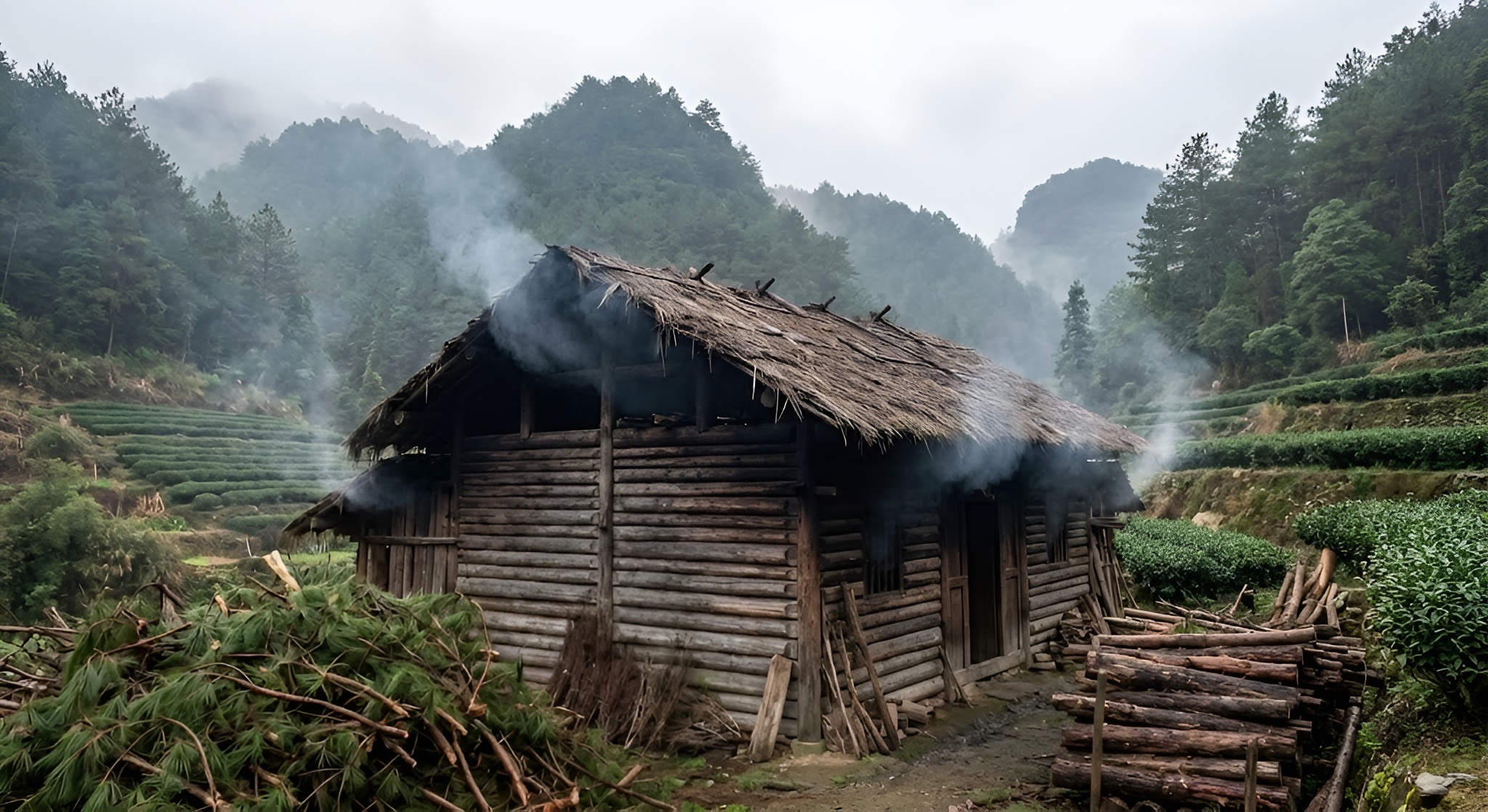
1. The Legend of the Army
The story goes that during the late Ming or early Qing dynasty, an army passed through the Wuyi Mountains. They decided to camp in a tea factory, sleeping on top of the fresh tea leaves that had just been picked.
The body heat of the soldiers and the physical crushing of the leaves accelerated oxidation (turning the green leaves dark). The next morning, the soldiers left, but the tea was ruined—it was dark and damp. To salvage the crop and dry it quickly for market, the farmers lit fires using the only wood available: the local resin-rich pine trees. The tea absorbed the smoke, creating a flavor never tasted before.
Expert Tip: The First Black Tea?
While we can't verify the army story, historians agree that Lapsang was likely the first "Black Tea" (Hong Cha) produced. Before this, tea was steamed (Green) or partially oxidized (Oolong). The heavy oxidation and smoke drying created a tea that could survive the long sea voyage to Europe.
2. How It Is Made: The "Qinglou"
Traditional Lapsang is smoked in a multi-story wooden building called a Qinglou.
- Ground Floor: Pine wood fires burn, generating heat and smoke.
- Upper Floors: The tea is spread on bamboo mats. The smoke rises through cracks in the floor, passing through the tea layers.
The leaves are smoked during the withering phase AND the drying phase. This double-smoking embeds the aroma deep into the leaf fiber, which is why Lapsang retains its scent even after multiple infusions.
Expert Tip: Pine vs. Liquid Smoke
Cheap "Lapsang" is often just low-grade black tea sprayed with "natural smoke flavor" or liquid smoke. Authentic Lapsang has a clean, resinous pine note. Fake Lapsang smells like burnt rubber or bacon. Check the ingredients for "flavoring."
3. The Split: Smoked vs. Unsmoked
In the 2000s, a new trend emerged in China: Jin Jun Mei (Golden Eyebrow). This is a version of Lapsang made entirely from buds (tips) and is unsmoked. It became incredibly expensive and popular.
This shifted the market. Now, most high-end domestic Lapsang (Zheng Shan Xiao Zhong) is unsmoked or very lightly smoked, highlighting the natural floral and longan fruit flavors of the Wuyi tea bush. The heavily smoked "tarry" style is produced almost exclusively for export to Europe and the USA.
| Feature | Export Style (Smoked) | Domestic Style (Unsmoked) |
|---|---|---|
| Aroma | Pine, Tar, Campfire, Whiskey | Dried Longan, Cocoa, Sweet Potato |
| Leaf | Older, larger leaves (Souchong) | Buds and young leaves |
| Price | Affordable | Premium / Luxury |
Want to try both styles?
We've curated a list of the best Lapsang Souchong available, including the intense Western style and the sophisticated unsmoked Chinese style. Find your favorite here: The 5 Best Lapsang Souchong Teas of 2025 →
Comments