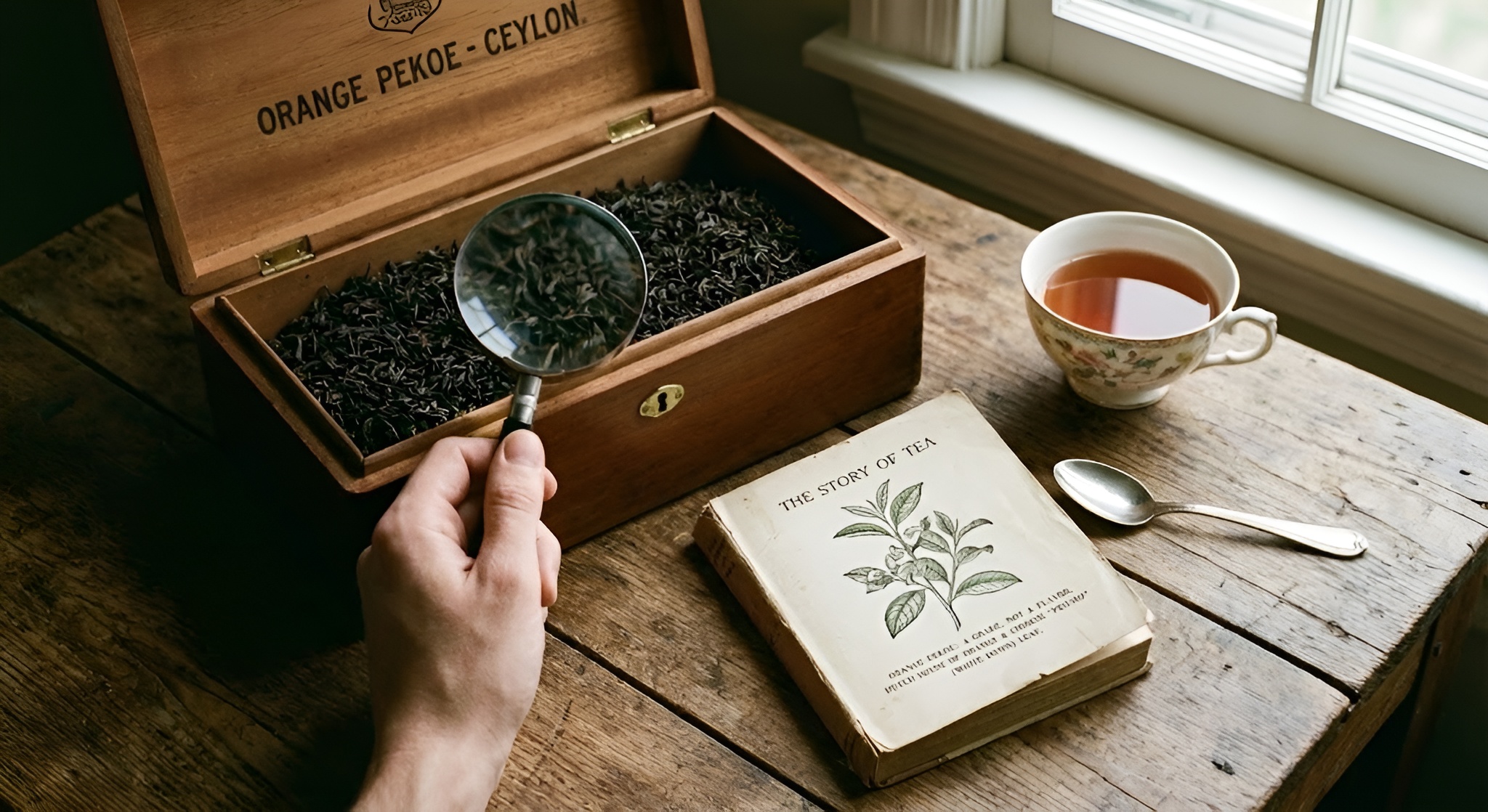
1. The History: Why "Orange"?
The term dates back to the 1600s and the Dutch East India Company, the first multinational corporation to bring tea to Europe. At the time, the Netherlands was ruled by the House of Orange-Nassau.
To market their tea as "royal" and "premium," merchants added the word "Orange" to the highest grade leaves. "Pekoe" is derived from the Chinese dialect word for "white hair" (peh-ho), referring to the fine white down on young tea buds. So, "Orange Pekoe" essentially meant "Royal Bud Quality."
Expert Tip: Don't Confuse with "Earl Grey"
Many people confuse Orange Pekoe with Earl Grey. Earl Grey is a flavor (tea scented with bergamot oil). Orange Pekoe is a grade (leaf size). You can have an Orange Pekoe grade Earl Grey, but they describe different things.
2. The Grading System: Whole vs. Broken
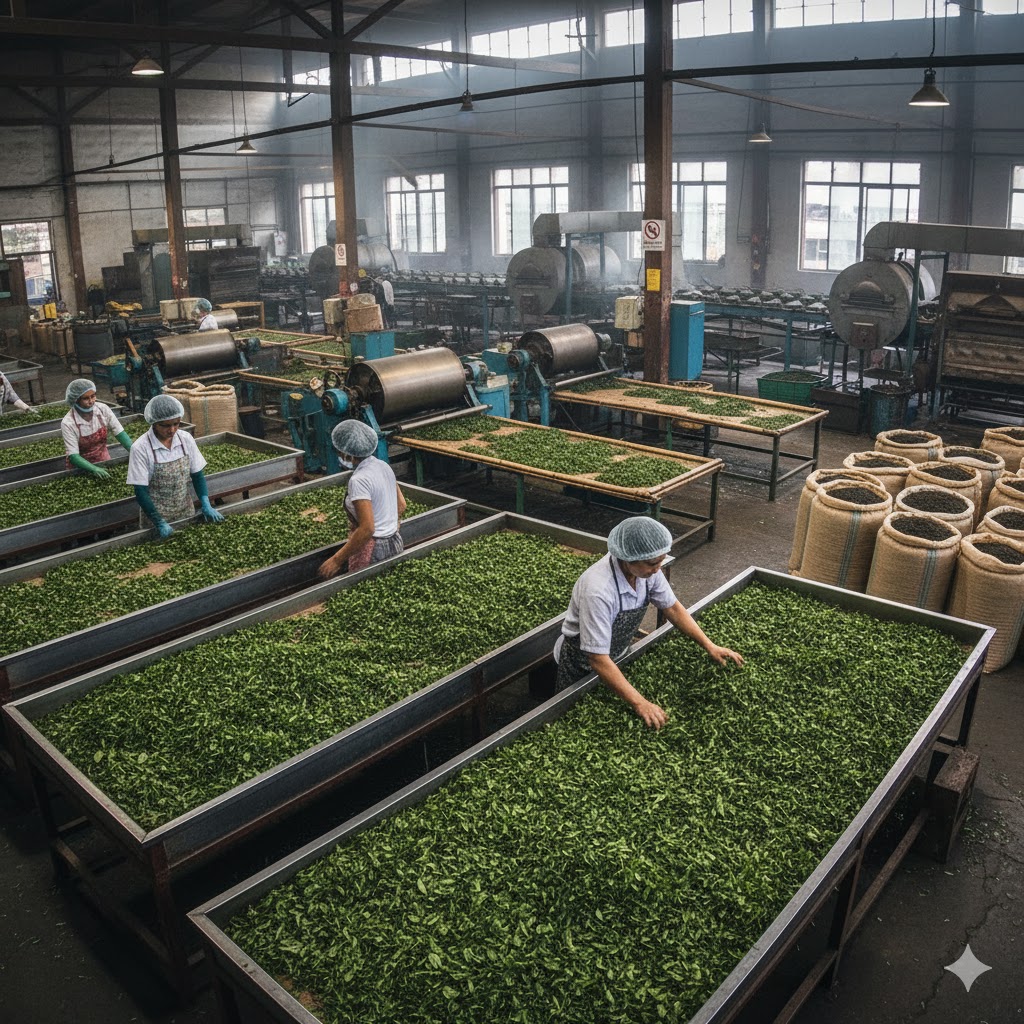
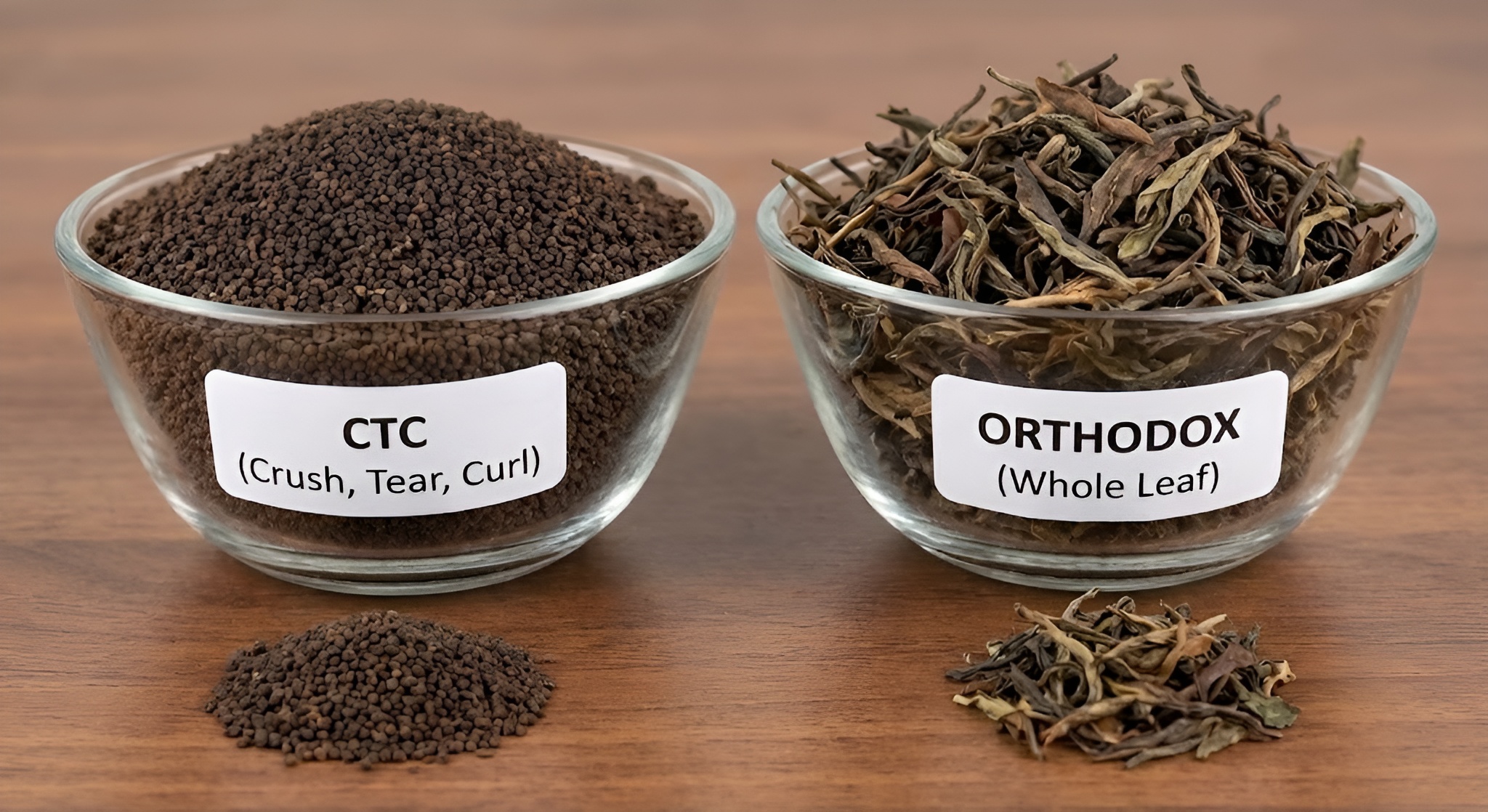
When tea is processed, it is sifted through mesh screens to separate the leaves by size. This is crucial because leaf size dictates brewing speed. Small particles brew fast and strong (Breakfast Tea); large leaves brew slow and nuanced.
| Grade | Abbreviation | Characteristics |
|---|---|---|
| Orange Pekoe | OP | Whole, long, wiry leaves. Lighter brew. |
| Broken Orange Pekoe | BOP | Broken chunks. Brews darker and stronger. Standard for loose leaf tea. |
| Fannings | F | Tiny particles. Used in premium tea bags. |
| Dust | D | Powder. Used in cheap tea bags. Fast extraction, high bitterness. |
Expert Tip: Why Surface Area Matters
Broken leaves (BOP) have more surface area exposed to water than whole leaves (OP). This releases tannins quickly. If you like strong, milky tea, buy BOP. If you drink it black with lemon, buy OP.
3. Decoding the Acronyms (FTGFOP)
If you buy premium loose leaf, you will see letters like "TGFOP" on the tin. This isn't random; it's a code describing the quality of the pluck.
| Letter | Meaning | Context |
|---|---|---|
| F | Flowery | Contains buds (tips), giving a floral aroma. |
| G | Golden | Buds are golden in color (high quality). |
| T | Tippy | Abundance of tips. |
| F | Finest | Top tier selection. |
Example: FTGFOP stands for "Finest Tippy Golden Flowery Orange Pekoe." (Tea merchants jokingly say it stands for "Far Too Good For Ordinary People"). This is the highest grade of whole leaf tea, usually found in Darjeeling.
Expert Tip: Quality vs. Taste
Higher grade doesn't always mean "better taste" for everyone. FTGFOP is delicate and subtle. If you want a punchy "builder's brew" that stands up to milk and sugar, a lower grade BOP or Fannings is actually superior.
4. Is "Orange Pekoe" High Quality?
Not necessarily. While "Orange Pekoe" sounds fancy, it is actually the base grade for whole leaf tea. It sits in the middle of the quality spectrum.
- Higher Quality: FOP (Flowery Orange Pekoe), GFOP, TGFOP.
- Lower Quality: Pekoe (P), Pekoe Souchong (PS), Souchong (S) - these use larger, older leaves lower down the stem.
In the supermarket, a box labeled simply "Orange Pekoe" is usually a decent, reliable Ceylon or blend, but it is rarely a "top shelf" luxury tea.
Ready to taste the difference?
Now that you know the grades, try brewing whole leaf vs. broken leaf side-by-side. Check out our guide to the best teas for everyday drinking: The 5 Best Breakfast Teas of 2025 →


Comments